


Contractors have a lot coming at them every day—last‑minute dispatch changes, waiting on approvals, scrambling for parts, and customers calling nonstop for status updates. Without the right system, that means extra phone calls, lost details, and techs stuck in the middle.
In the field service industry, the most effective operations run on a single connected system—where scheduling, asset management, and invoicing work together for every team, whether they specialize in HVAC, plumbing, electrical, refrigeration, glass, fire protection, or mechanical service.
Here’s what we’ll cover:
- Choosing the best FSM software for your team
- 6 key features every FSM software needs
- Best for commercial contractors
- Best for residential contractors
- Best for general contractors
- Other notable contractor field service software
- 7 benefits of using FSM software for contractors
- 4 important FAQs answered about FSM software
Let’s start by breaking down what to look for when choosing an FSM software for your team.
Choosing the best FSM tool for your team
In the real world, FSM software either keeps up with live dispatch and asset-heavy work, or it turns into another office-only tool your crews ignore. When you’re comparing options, don’t get distracted by demos. Put each platform through the same pressure test your ops team faces every day.
- Adoption and rollout – How quickly can dispatchers, coordinators, and techs start using the system on real jobs, and what level of training and support is typically required? How much of the setup and ongoing configuration (forms, task codes, rate tables, workflows) can our internal team handle on their own versus relying on your team or paid services?
- Integrations and data flow – Does the platform maintain a single, consistent job record from intake through invoicing, even as data flows to and from your accounting, CRM, and communication tools? Does it reliably sync labor, materials, and other costs with your external accounting, inventory, and payroll systems at the right level of detail (task, cost code, contract type)?
- Field execution and offline reliability – Does FSM software for contractors work in basements, rooftops, and dead zones without crashing? Can techs capture labor, parts, photos, and signatures in a clean closeout flow? Does offline sync prevent duplicates and missing time?
- Dispatch control and capacity planning – Can dispatch assign by skills, certifications, and service zones? Does it handle emergency inserts without blowing up planned PM routes? Can you rebalance crews across shops and regions in minutes?
- Cost control and job visibility – Does a field service management software show earned vs. burned hours by job and task? Can you see NTE exposure and WIP aging without exporting reports? Do alerts flag margin leaks like runaway labor, parts spikes, or repeat callbacks?
- Software features – Does the field service software include asset history, PM scheduling, and digital checklists that tie back to sites and equipment? Can it manage truck stock, inventory consumption, and replenishment tied to jobs? Does it support photo markup, change orders, customer updates, and drill-down reporting without spreadsheets?

6 key features every FSM software needs
The best FSM software shows up when the day goes sideways—two no-shows, a parts delay, and a “can you be here in 30?” call from a facility manager. In those moments, the right platform keeps dispatch moving, keeps techs focused, and keeps billing clean—without your ops team playing phone tag across five systems.
1. Scheduling and dispatch integration

When FSM software links the board to the field, dispatch stops “hoping” and starts controlling capacity with real constraints like travel time, skill tags, certifications, and SLA clocks using tools like field service scheduling and smart dispatch software. When a refrigeration rack alarms at 9:12 a.m., the dispatcher filters for EPA-certified techs, sees who can break free soonest, and drags the emergency call onto their calendar. The system bumps a low-priority visit to another crew and sends updated ETAs to both customers so the rest of the day stays on track.
2. Mobile app built for the field
A field service software lives or dies on what happens on a phone in a stairwell, on a roof, or behind a chiller—so a solid technician mobile app needs fast work order access, offline mode that actually holds up, clean photo/document capture, and a closeout flow that doesn’t force techs to bounce between five screens. Take this scenario: A fire tech finishes a wet‑system repair in a dead zone, logs their time and key materials in the app, snaps a few photos, grabs the customer’s signature, and just keeps working—everything sits on the phone and then automatically syncs to the office as soon as they’re back in cell service, so nothing gets lost and nobody is chasing paperwork later.
3. Accurate time tracking tied to cost codes
Labor eats margin when your hours land in the wrong bucket, so field service management software needs time tracking that mirrors how crews work—split shifts, task-level capture, overtime rules, and approvals that supervisors can handle by exception. Say an HVAC crew pivots from a PM to a no-cool at a hospital: the lead splits the timer, assigns hours to the emergency task code, and the job cost reflects reality before the van leaves the dock.
4. CRM with asset history and service context

Service gets faster when every call starts with context, and field service CRM should keep site contacts, contract terms, asset records, warranty flags, past quotes, and service notes in the same record your dispatcher and tech see. In practice, when a property manager reports repeat tripping on an RTU, your coordinator should spot the last motor swap, the warranty status, and the recommended kit—then book the right tech with the right parts instead of rolling a truck to “take a look.”
5. Quote-to-cash connection

Closing a ticket should trigger billing and collection without extra data entry, so field service management software should connect invoicing with payments in the same workflow. In the real world, that looks like this: you finish an emergency glass replacement, document the work with photos, get sign-off, and the office sends the invoice that afternoon—then the customer pays by card or ACH from a link tied to that exact job, with no chasing, no duplicate posting, and no “we’re missing the backup.”
6. Reporting that protects margin and SLAs
Good teams don’t wait for end-of-month surprises, so best FSM software needs reporting that tracks first-time fix, response time, utilization, WIP aging, callback rates, and profitability by customer/site/asset/tech—with drill-down that answers “why” fast. For instance, if boiler repairs blow past estimated hours by noon, your dashboard should flag the exception early, show the labor burn by task, and help you course-correct while the job still has daylight.
Other valuable features for contractors
Other valuable features for field service contractors
The six essentials carry the daily load, but these add-ons round out your FSM software and tighten handoffs across field and office
- Service agreement automation – Standardize pricing, scope, and renewals with a service agreement tool so PM visits, invoices, and compliance steps stay consistent
- Fleet tracking and coordination – Use a connected fleet management system to feed GPS and vehicle status into dispatch, reduce deadhead miles, and validate arrivals with geofences
- Quoting and pipeline handoff – Keep proposals, alternates, and NTEs organized with quoting software so approved work converts into scheduled jobs with parts and labor codes already loaded
Want to see how we can help?
Equip your field service crew with the tools they need to get jobs done faster.
Best for commercial contractors: BuildOps

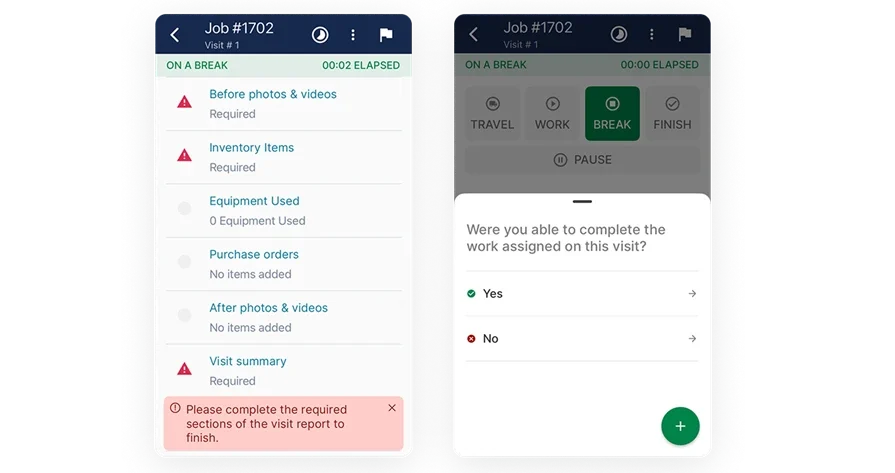
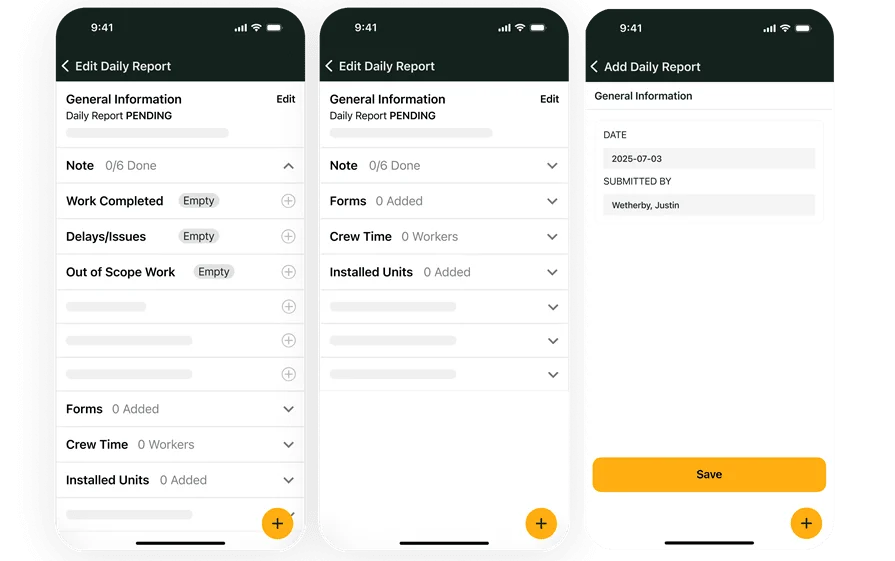
BuildOps gives field service contractors a connected platform that carries work from intake to sign-off. It links dispatch, scheduling, work orders, assets, PMs, and billing so approved scopes turn into routed jobs with parts, labor codes, and documentation already in place. Designed around heavy service operations, it keeps quote approvals, site updates, and post-job billing tied to the same record—so nothing falls between systems or teams.
How pricing works: BuildOps uses a custom pricing model based on company size and needs, with advanced capabilities that scale as operations grow.
Features beyond FSM basics:
- Integration with scheduling, dispatch, and invoicing
- AI-capable visit summary
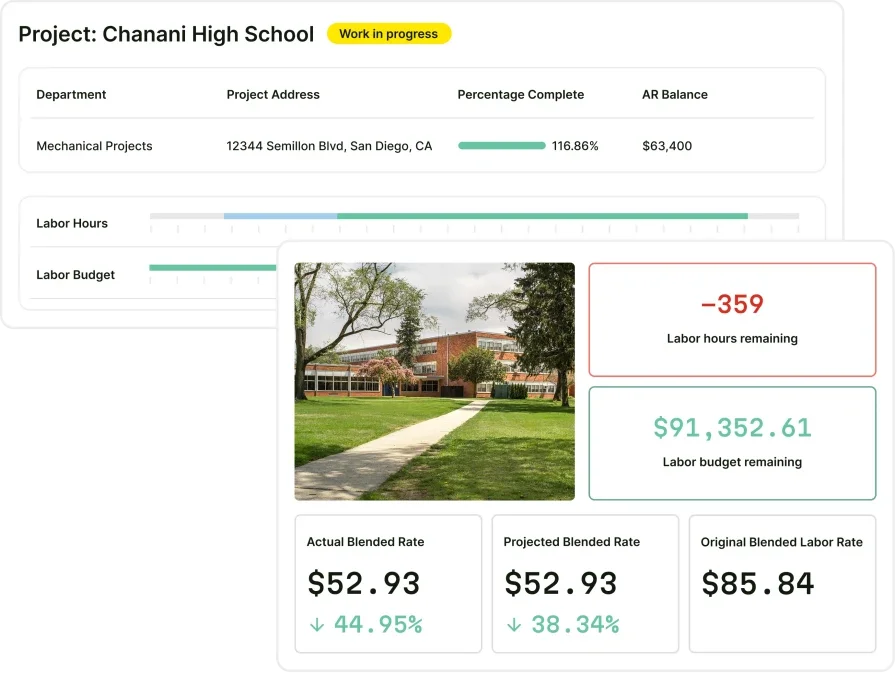
- Live labor and material costs tracked per work order
- CRM context for follow-ups and site history
- Field-ready mobile tools so techs edit or create from the job site
What sets it apart for commercial: BuildOps serves field service contractors who need a platform that connects service with project workflows. Field teams, coordinators, and managers work from the same system—so dispatch decisions, service history, and billing stay aligned while work keeps moving.
Hit SLAs and protect margins with BuildOps
See scheduling, dispatch, and billing work together all in one platform.
Best for residential contractors: Housecall Pro

Image Source: Housecall Pro
Housecall Pro fits residential service teams that want quick setup and a clean mobile flow for booking, scheduling, work orders, and payments. Templates, digital approvals, and a lightweight CRM help crews move fast on single-visit jobs. However, limited customization, asset depth, and dispatch controls can hold back shops that manage multi-site portfolios, strict SLAs, or detailed cost codes.
How pricing works: Housecall Pro uses tiered subscriptions. Advanced automation and reporting typically sit in higher tiers.
Features beyond FSM basics:
- Online booking that converts customer requests into jobs
- Automated alerts that keep homeowners updated on status
- Built-in payments for deposits and completed work
What sets it apart for residential: Speed with minimal setup. Great for startup crews and small teams focused on one-off repairs or installs. Contractors that need enterprise integrations, asset-level planning, or rigorous cost tracking may outgrow it.
Deep Dive
Take a look at our head-to-head breakdown of BuildOps and Housecall Pro’s features here to see which one has the suite of FSM software your specific crew needs the most.
Best for general contractors: Joist

Image Source: Joist
Joist gives general contractors a mobile-first way to create quotes, send them to clients, capture signatures, and issue simple invoices from a phone or tablet. It turns around documents quickly and looks clean for homeowners and small GC requests. That said, Joist lacks dispatch boards, technician tracking, asset records, and structured workflows found in fuller FSM tools, which limits teams handling recurring maintenance or routed service.
How pricing works: Joist offers free and paid plans. Financing options and estimating insights sit in paid tiers.
Features beyond FSM basics:
- Integrated e-signature for fast approvals in the field
- Quick-add libraries for parts, labor, and common services
- Client-friendly layouts designed for transparency
What sets it apart for contractors: Ideal for solo trades and very small crews that need fast paperwork without a big learning curve. For shops that rely on coordinated dispatch, PM schedules, and asset history, a broader FSM tool will fit better.
Other notable contractor FSM software
Not every shop needs a full enterprise platform. These options cover specific needs and tighter budgets while still handling core FSM software workflows like dispatch, work orders, mobile execution, and billing. Use them when you want a focused toolset and simpler packaging, but expect trade-offs once you need deeper job costing, complex approvals, or heavier reporting.
Service Fusion

Image Source: Service Fusion
Service Fusion covers day-to-day field ops with quoting, scheduling, dispatch, service agreements, payments, and job costing, plus add-ons like VoIP and fleet features for teams that want more in one place. It’s built to keep routing and admin moving without getting overly complex, which can be a fit for growing teams that need predictable pricing. The trade-off usually shows up when you need more advanced analytics, tighter project controls, or deeper configuration for multi-branch commercial workflows.
Industry specializations: HVAC, electrical, plumbing, refrigeration, appliance repair, locksmithing, landscaping, cleaning, painting, security, home remodeling, plus many additional trades
How pricing works: Tiered subscriptions with flat monthly or annual rates
What sets it apart: Plans that support unlimited users, so adding techs doesn’t automatically stack per-seat costs
Key features:
- Skill tags and service zones that sharpen dispatch
- Multi-trade support for varied service mixes
- Cloud platform with mobile access and broad integrations
ServiceTrade

Image Source: ServiceTrade
ServiceTrade leans into commercial service—especially fire and life safety—where recurring work, compliance documentation, and customer visibility matter as much as dispatch speed. It supports long-term agreements, customer communication, and planning for recurring routes with a solid mobile experience for techs doing inspections and service calls. Reporting has improved over time, but some contractors still find it lighter than what margin-focused ops teams want when they need deeper cost and productivity analysis.
Industry specializations: Fire safety, HVAC, electrical, refrigeration, kitchen exhaust cleaning
How pricing works: Contact ServiceTrade for pricing; packages typically align to technician count
What sets it apart: Customer-facing status updates and self-serve tools that reduce inbound “where’s my tech” calls
Key features:
- Strong recurring scheduling for inspection and PM routes
- Inventory controls that help avoid overstock or stockouts
- Customer portals and notifications that cut back-and-forth
Workiz

Image Source: Workiz
Workiz is built for high-velocity service work where keeping the phone lines, dispatch, and invoicing connected matters more than deep enterprise controls. It blends lead handling, job scheduling, field communication, and billing to help smaller teams keep trucks busy and reduce missed handoffs from call to closeout. As operations scale into more asset-heavy commercial work, teams can run into limits around complex workflows, advanced reporting, or multi-department coordination.
Industry specializations: HVAC, electrical, plumbing, locksmithing, appliance repair, cleaning, junk removal, garage doors, and other niche trades
How pricing works: Tiered plans on monthly or annual terms; some tiers cap user counts
What sets it apart: Strong lead tracking and call management baked into the service workflow
Key features:
- Built-in call tracking and lead intake tied to booking
- Fast scheduling and dispatch for high-volume days
- Mobile-friendly job updates with invoicing support
ServiceTitan

Image Source: ServiceTitan
ServiceTitan is widely known in field service for having good scheduling, dispatch, mobile quoting, invoicing, and offline access. It suits residential and small commercial teams that want an end-to-end system with robust CRM and customer reminders. Asset management, native job status tags, multi-day job handling, and hands-on implementation support can feel limited for complex commercial service.
Industry specializations: HVAC, plumbing, electrical, garage door, chimney sweeping, roofing, plus many additional trades
How pricing works: Contact ServiceTitan for a demo and pricing details
What sets it apart: CRM strength and appointment reminders that keep homeowners informed
Key features:
- Offline job and customer data access for field work
- Techs can create and deliver quotes and invoices on site
- AI assists scheduling and dispatch by suggesting time slots and available skills
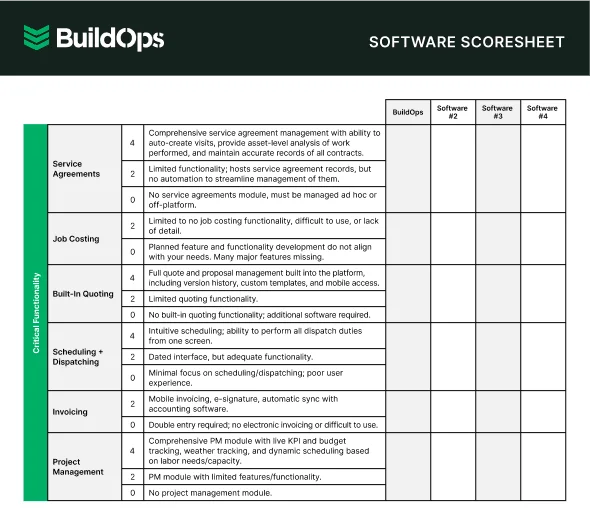
Get the Software Scoresheet
Compare top FSM tools at a glance with this easy-to-use software scoresheet.
7 benefits of using FSM software for contractors
A strong FSM software setup does real work in the field. It speeds handoffs, protects margin, and gives leaders live visibility so crews stay on task and customers stay informed. Here are the day-to-day gains commercial service teams see when the system matches how you actually run work.
1. Faster approvals with calendar-ready jobs

When a customer gives the go-ahead, the job should hit the board with labor type, skills, and travel logic already set. Teams that run on modern field service scheduling software cut the lag between approval and first wrench turn because the system drops work straight into routes without spreadsheet detours. On a busy morning at a distribution center, that means an urgent call gets assigned to the nearest certified tech while a lower-priority PM slides to a later window automatically.
2. Fewer errors across tickets and work orders
Double entry causes bad rates, missing parts, and wrong task codes. A structured field service ticketing system keeps every note, photo, checklist, and part tied to the same record from intake through billing so the office doesn’t rebuild the story at the end of the day. When a boiler repair starts as a phone call and turns into a multi-step visit, the required forms, asset data, and warranty flags follow the work so nothing gets lost in handoffs.
3. Tighter margins through live job cost control
Labor and materials need to post as they happen, not after the week closes. The best FSM software shows burn by task and cost code in real time so supervisors catch drift early and correct it while the crew still has daylight. Mid-pull on a chiller, if the job runs two hours long and parts usage spikes, the lead sees it immediately, updates the NTE conversation before it turns into a surprise, and keeps the job inside guardrails.
4. Clearer performance insight across projects and services

Leaders need to see which workflows win, where bottlenecks form, and how crews stack against SLAs across service plus project work. Good contractor project management connects tasks, dependencies, and approvals so reporting mirrors what’s happening in the field instead of what someone remembered to update later. During a retrofit rollout, that clarity shows which buildings trend behind plan, where approvals stall, and which crews need backup before you miss a milestone.
5. Smoother coordination between dispatch and techs

Dispatchers juggle routes, access windows, permits, and emergency inserts all day. With structured contractor dispatch management, assignments respect skills and certifications while ETAs update customers automatically based on what’s really happening in the field. On a storm day, the board rebalances routes in minutes, techs get clean changes on their phones, and site contacts stop calling for status checks.
6. Cleaner documentation and stronger customer relationships
A connected record of assets, contacts, and approvals builds trust and speeds repeat work. For FSM software for contractors, a solid contractor CRM ties site history, equipment data, contracts, and quotes to each account so the office and field stay on the same page. When a property manager calls about repeat RTU issues, your coordinator already sees the last fix, warranty status, and recommended kit—so you send the right tech with the right parts instead of rolling a “diagnostic” truck.
7. Scalable operations without process drift
As the shop grows, process drift quietly kills margin—different closeout habits, different forms, different pricing rules by branch. Strong field service management software locks in standardized workflows so every crew follows the same playbook, even when you add new teams fast. In peak season, that consistency lets you spin up routes, PMs, and documentation rules across new hires without duct-taped spreadsheets or “we’ll fix it later” clean-up.
4 important FAQs answered about FSM software
Field crews don’t need a textbook definition. You need quick, field-ready answers that help you judge workflows, costs, and rollout habits while you’re running calls, inspections, and emergency work.
1. What is an FSM tool
FSM software unifies dispatch, work orders, asset history, inspections, and billing in a single, connected workflow. Techs capture time, materials, photos, and signatures in the field—online or offline—giving the office real-time visibility, rock-solid documentation, and invoice-ready closeouts. It automatically maintains inspection and compliance trails for regulated work.
For regulated service, prioritize offline capture, role-based approvals, and audit logs that hold up under customer and AHJ scrutiny.
2. How do FSM tools work across field and office
One work order. One source of truth. From dispatch to closeout, every labor hour, part, photo, and signature lives on the same ticket—so you kill double entry, stop hunting through disconnected systems, and get everyone working off the same page.
3. Is it worth the price
FSM software for contractors pays off when it removes hidden costs you feel every day: fewer rerolls from missing info, fewer calls to confirm status, tighter control over labor creep, and faster closeout-to-cash. If your team runs SLAs, recurring inspections, emergency inserts, or multi-site customers, value shows up in response time, first-time fix, and fewer “where’s the backup” disputes.
Did you know
BL Glass connected quoting, scheduling, dispatch, mobile updates, and billing in one workflow. Quotes are getting approved 63% faster than last year—cutting approval time from nearly 10 days to just 3.5 days on average. The success story breaks down the process changes, KPIs, and the day-to-day habits that helped the team move from “waiting on signatures” to getting work on the board fast.
4. What are best practices when using FSM tools
Pros get value from habits, not licenses. Field service management software works when you enforce the same closeout standard on every job, every tech, every site. Keep it simple, keep it mandatory, and review exceptions daily.
- Standardize rate tables, task codes, and item catalogs before rollout
- Define dispatch rules for skills, certifications, zones, and access windows
- Require photos, checklists, and signatures at closeout for every regulated visit
- Track time by task or cost code and approve by exception each day
- Lock required fields so inspection records can’t close with missing proof
- Use one deficiency workflow for quote, approval, return trip, and completion
- Tie truck stock to jobs and reconcile bins on a fixed weekly cadence
- Trigger customer status updates from dispatch events, not manual texts
- Review dashboards daily for labor burn, SLA risk, and reroll patterns
- Audit forms, permissions, and templates quarterly to cut clutter and drift
The best field teams don’t win because they “work harder.” They win because their operation is built to stay tight when the day goes sideways—approved quotes move, dispatch knows exactly what’s next, techs have what they need the moment they roll up, and the office isn’t piecing together job details from memory at 6 p.m.
When you’re evaluating the software options, narrow the lens: can it actually run the full loop—scheduling, dispatch, mobile execution, asset history, and billing—without forcing your team to babysit multiple systems? Plenty of platforms say they “do it all,” but the gap shows up in the details that protect your margins: offline closeouts that don’t break in the field, documentation that stands up to inspections, real-time visibility into every job, and handoffs that don’t introduce chaos. BuildOps ties those pieces together in one commercial-ready platform built around the way service contractors really work.
If you’re questioning whether your current tech stack is helping or hurting, a short walkthrough is often all it takes to see where hours are leaking out of your day—without tearing down what’s already working. No pitch. No pressure. Just a clear picture of what a tighter, more predictable field service operation can look like.
Unify your FSM with BuildOps
See how we tie scheduling, dispatch, mobile, assets, and billing into a single workflow.