

When project information lives in too many places, the cost shows up fast.
The Problem?
Scattered RFIs, submittals, drawings, and change orders do more than slow teams down. They lead to rejected extras, denied T&M, withheld pay apps, and missed margin. What looks like paperwork chaos in the moment can turn into very real financial impact by the end of the job.
That’s why more commercial contractors are looking for one source of truth for projects — not just a place to store documents, but one connected system that keeps work moving.
In One Source of Truth For Projects, Alex Manske, BuildOps Customer Experience, breaks down why when document lives in a different inbox, folder, or GC portal, teams spend more time chasing paperwork and less time protecting the job-- and what to do about it.
The Solution
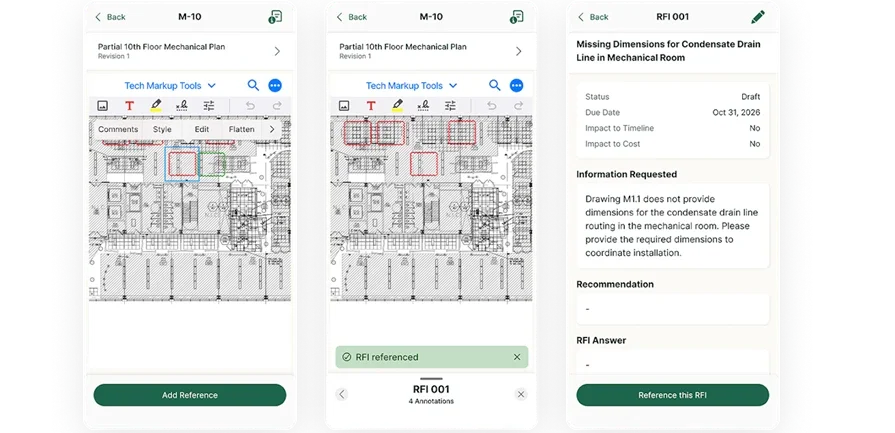
A connected workflow where RFIs, submittals, drawings, and change orders live together instead of being managed in pieces, means more work gets done with less paper chase. When teams can create an RFI from the drawing, turn the response into a change order, and check status from the field without jumping between systems, they move faster and with fewer misses. The work is easier to track, easier to back up, and easier to turn into dollars collected.
And when documentation is structured from the start, OpsAI jumps in to keep the work moving. It can help flag stalled approvals, spot missing backup, and cut down on the manual follow-up that slows teams down.
This is especially relevant for project-driven mechanical, electrical, and fire/life-safety contractors — and for service shops taking on more multi-month work — who are tired of losing time and margin to paperwork.
Ready for More?
Check out our FAQ document featuring expanded answers to some of the session's biggest questions.