Transforming Ops With Agentic AI Field Service Tools

You’ve probably seen the term agentic AI thrown around a lot lately. If you’re like most folks running field crews, you’re wondering what it actually means and whether it’s worth your time.
Spoiler: it is. And it’s just a fancy term that describes tools you’re probably already using in part.
Let’s break down what agentic AI is and how it can transform your field operations. To do that, we’ll cover:
- What makes a field service tool an “Agentic AI”?
- How field service crews use Agentic AI tools to improve ops efficiency
- Top 4 benefits of implementing an Agentic AI in field service operations
- How field service businesses face challenges when implementing Agentic AI tools
- How BuildOps turns Agentic AI into real-world wins
Let’s start with the basics:
What makes a field service tool an “Agentic AI”?
Agentic AI in field service is a type of artificial intelligence-powered tool that’s capable of making a decision based on pre-established rules and workflows that you designate. It can complete tasks for you based on rules you set and even respond to changing conditions—all without human input.
In field service, these can be things like detecting a failed asset, checking service history, assigning the right tech to the right job, and scheduling the job all on its own.
Plenty of tools today advertise the fact that they are “AI,” but most aren't agentic, so they still depend on someone to push things along. They offer suggestions, pull reports, or highlight issues, but the follow-through is left to a person.
How field service crews use Agentic AI tools to improve ops efficiency
Agentic AI enables real work to get done. For commercial contractors dealing with tight labor, complex jobs, and rising customer demands, AI agents can lighten the load and keep things moving without more admin overhead.
Here’s how agentic AI tools can show up across key parts of your field operations.
1. Using Agentic AI to schedule field service technicians

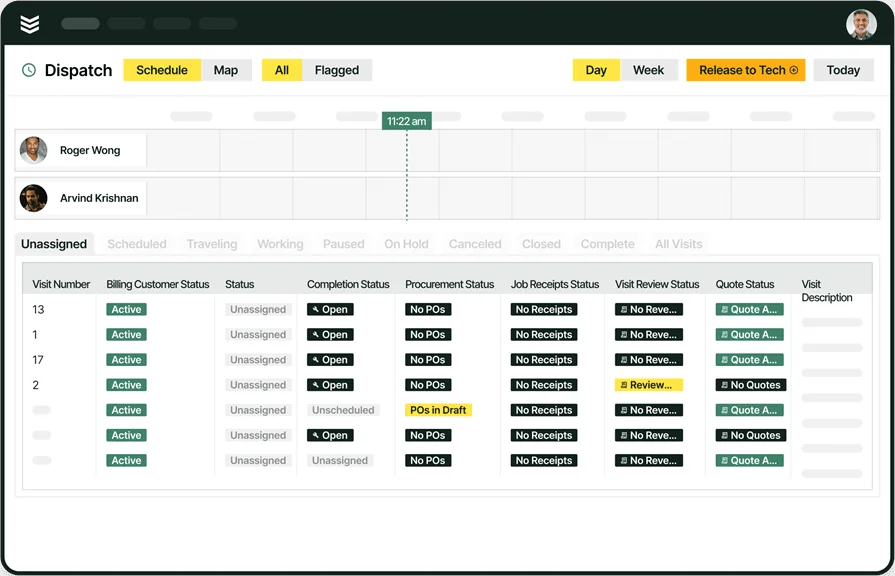
In field service work, missed windows, last-minute changes, and overbooked techs cost time and money. Agentic AI tools help by analyzing workload, job urgency, technician certifications, and even home base or starting location to assign the right person automatically.
When a tech finishes early, the system can slot in a smaller nearby job to fill the gap. If a customer cancels or reschedules, AI agents can instantly rebalance the board without the usual round of texts, calls, and spreadsheet updates.
This kind of AI-powered dispatching removes busywork and keeps your schedule flexible and efficient in real time. That means less idle time, fewer wasted miles, and more jobs getting done without piling extra work on your dispatch team.
2. Boosting workflow to put information at your techs’ fingertips

When a technician arrives on-site, agentic AI tools can instantly surface the exact support needed for the equipment in front of them, like wiring diagrams, service history, replacement part numbers, and step-by-step troubleshooting guidance. No need to dig through binders, call the office, or Google a model number on their phone.
The AI processes unstructured data in the background to match the unit on-site with verified manuals and service records, so the tech has everything ready the moment they scan or identify the asset. That means fewer delays, less guesswork, and a lot fewer calls to OEM support lines.
With accurate, real-time information delivered directly in the workflow, techs can diagnose problems faster, avoid getting stuck mid-job, and dramatically improve one-visit resolutions.
3. Using AI Agents for predictive maintenance
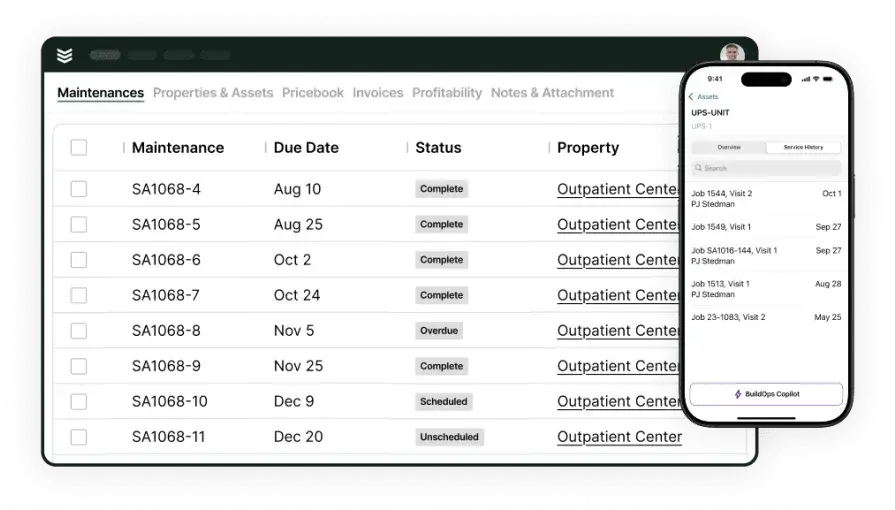
Predictive maintenance plays a crucial role in most service operations, and commercial refrigeration is a clear example of where AI in field service can make an immediate impact. For contractors servicing grocery stores, restaurants, or cold storage facilities, even small performance issues can lead to major losses.
Agentic AI-powered tools can monitor live data for environmental conditions like temperature fluctuations, track compressor runtimes through sensor data, and pull historical job records to spot patterns that signal trouble ahead. When asset trends start to drift, the system can predict failures before they turn into downtime and trigger a service visit automatically.
Instead of showing up after a freezer goes down, a technician arrives at the job site while there’s still time to act. It’s a proactive approach that reduces emergency calls, improves resolution time, and keeps operations running smoothly.
This same predictive maintenance approach applies to technicians across field service operations, from electrical systems showing load irregularities to plumbing assets trending toward failure. The result is fewer emergency calls, faster resolution times, lower service costs, and stronger customer satisfaction—all while keeping critical systems running without disruption.
4. Converting unstructured data into actionable field intelligence
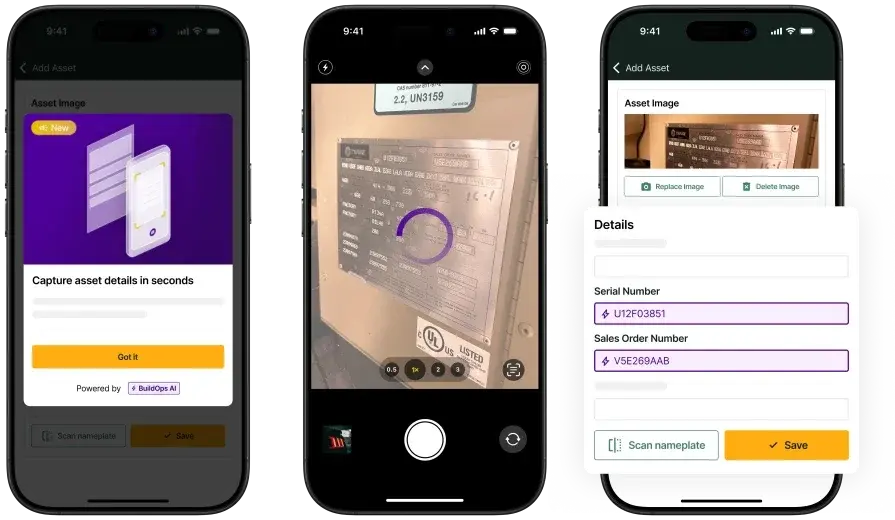
Agentic AI can scan attachments, extract line items, and drop them where they’re needed to save time, reduce entry errors, and keep field operations moving. The image above shows how BuildOps Nameplate Capture does it.
Top 4 benefits of implementing an Agentic AI in field service operations
No more copying data from PDFs or chasing part numbers across emails and job folders. Agentic AI acts behind the scenes to handle repetitive administrative tasks that slow your techs down.
By reducing errors and improving response times, AI-powered agents help transform field operations teams and support better business outcomes through informed decision-making, lower operational costs, and continuous improvement. Here’s how an Agentic AI agents can drive real results for your field service teams.
1. Reducing repetitive tasks to cut down on operational costs
Manual data entry is one of the biggest time-wasters in any industry. Across the U.S., it costs companies an average of $28,500 per employee every year. An Agentic AI can eliminate more of these low-value tasks — whether it’s logging visit summaries, organizing asset records, or updating schedules — these tools handle the repetitive work automatically so your team can focus on jobs that actually drive revenue.
2. Scaling field operations without hiring more staff
With 47% of commercial contractors reporting that nearly a quarter of their positions are unfilled, hiring more techs isn't a viable solution to carry the ever-increasing workload.
By using agentic AI to handle routine tasks, you reduce the need for constant human input. These tools use continuous learning to adapt and respond appropriately to your service operations.
With instant access to schedules, job histories, and service team availability, agentic AI systems help field operations move faster, smoother, and with fewer missed deadlines. That means more jobs completed with the team you already have and better service delivery across every call.
3. Reducing tech burnout
Nearly 70% of contractors report rising burnout across their teams, and it’s no surprise. Techs are spending too much time updating systems and chasing paperwork instead of focusing on field operations.
Agentic AI changes that by handling routine admin tasks like logging updates, organizing job notes, and tracking compliance. These behind-the-scenes actions ease the admin load so techs can stay focused and spend more time doing essential field operations work.
And it's effective: 96.5% of companies using automation report a significant drop in workload. That translates to reduced burnout, higher job satisfaction, and crews that can take on more jobs without compromising service delivery or customer satisfaction.
4. Enhancing service delivery for complex tasks and jobs
74% percent of contractors say operations are more complex than ever, and 84% point to regulations as a major factor according to the BuildOps report on the future of AI for construction teams. For commercial crews, that means more documentation, more steps, and more chances to miss something critical.
Autonomous agents help manage that complexity by working across existing systems to streamline tasks without requiring manual input. During an FLS safety inspection, for example, AI can track code compliance in real time, surface system prompts when documents are missing, and queue up follow-up work automatically.
Whether it's coordinating inspections across multiple sites or managing multi-step compliance workflows, this level of AI transformation improves response times, increases first-visit success rates, and enhances customer satisfaction, all while reducing friction across day-to-day field operations.

How field service businesses face challenges when implementing Agentic AI tools
Agentic AI has the power to transform field operations, but adopting it isn’t always straightforward. Many crews struggle to get their teams using them—and using them effectively.
Existing systems and fragmented workflows create roadblocks
According to our report, 30% percent of construction leaders say fragmented systems are slowing them down. When scheduling lives in one app, asset tracking in another, and reporting is buried in spreadsheets or email threads, there’s no clean way for AI systems to take action.
This kind of fragmentation forces your field team to waste time double-entering info, chasing approvals, or rechecking work. Fixing the system foundation is what lets agentic AI deliver results by turning scattered data into seamless workflows that actually move work forward.
Lack of training limits operational agility
The #1 blocker to AI adoption? According to the Pivot Point report, 31% of non-users say that it's a lack of training.
And yet—78% of contractors believe AI can improve operational efficiency, and 81% feel confident they can adopt it. The interest is there. The potential is huge. What’s missing is the guidance to close the gap.
Even the best agentic AI tools won’t make an impact if your team doesn’t understand why they matter or how to use them. To truly enhance operations, field teams need clear, hands-on support that shows how AI fits into their day-to-day.
How BuildOps turns Agentic AI into real-world wins
BuildOps puts agentic AI to work across your operation, using real-time data to cut admin, streamline tasks, and drive efficiency gains so your team can focus on the job.
Here's how we help you drive better outcomes on every job:
- Smarter dispatch: AI recommends best-matched techs techs by skill, availability, and location to reduce delays and improve service quality.
- Instant asset history: One tap pulls up all past jobs, parts, and notes—no digging required.
- Clean payroll, less admin: Automatically applies pay rates and overtime rules—no micromanaging.
- Data from docs: AI extracts line items from PDFs and images to reduce errors and manual entry.
- Search that works: Find what you need—jobs, assets, visits—fast, even from the field.
- Fleet accountability: GPS and behavior tracking flags issues without human input.

If you're ready to improve service efficiency and drive better business outcomes without overwhelming your team, agentic AI isn’t a someday solution. It’s here, and BuildOps makes it work for you. Schedule a demo today to see it in action.