How AI Field Service Assistants Help with Field Ops

According to BuildOps’ Pivot Report survey, nearly 75% of contractors say operations are more complex than ever. AI field service assistants offer solutions to job complexity, simplifying and streamlining tasks that take time in the field and add to the administrative burden in the office.
We will dive into the artificial intelligence that’s helping field service businesses today, covering these topics:
- What do AI field service assistants do?
- 6 ways AI field service assistants improve business operations
- How AI can help with field service scheduling and business management
By the end, you’ll understand how this AI field service assistants can improve field service operations, leading to happier employees and customers–while reducing operational costs and improving the bottom line.
What do AI field service assistants do?
AI field service assistants streamline how techs, dispatchers, and office teams get work done. They use real-time data, automation, and machine learning to automate previously manual tasks, reduce errors, and keep jobs moving efficiently. AI assistants combine large language models with operational data to understand intent, automate routine tasks, and surface the right information at the right moment.
AI field assistants evaluate natural-language requests—spoken or typed—and analyze context like job history, asset data, schedules, and workflows to deliver accurate, action-ready responses. They augment human expertise by handling time-consuming admin work, flagging issues before they escalate, and guiding teams through complex processes.
The result is faster decisions, fewer errors, data-driven decision-making, and more time to focus on the work that actually drives revenue.

6 ways AI field service assistants improve business operations
AI field service assistants reduce contractors’ administrative burden, support technicians in the field, and help teams operate more efficiently—ultimately improving the customer experience and profitability.
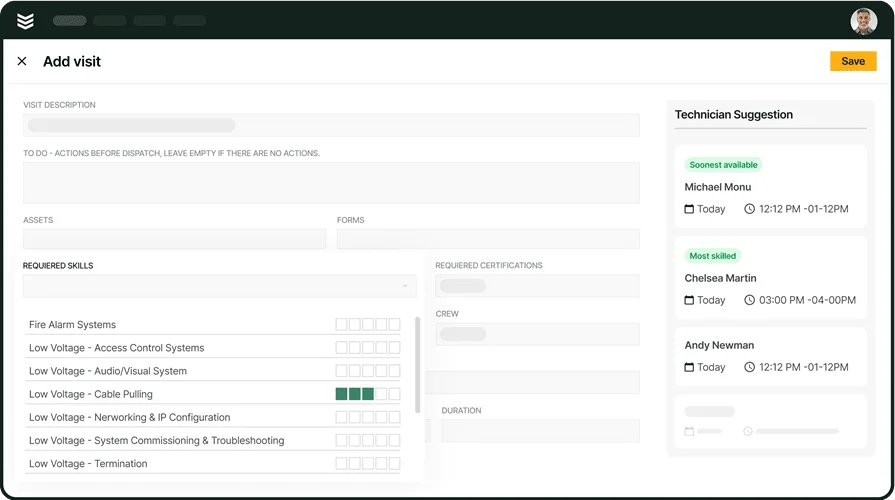
- Smart scheduling and dispatching match jobs with the right technician in real time based on skills, certifications, location, workload, and equipment.
- Route optimization automatically plans the most efficient routes based on traffic, job priority, and technician proximity.
- Real-time job support allows techs to instantly access manuals, wiring diagrams, equipment histories, past work orders, and troubleshooting steps, as well as recommend fixes based on similar jobs or manufacturer guidance.
- Automated workflows handle routine tasks like closing out work orders, updating job statuses, recording time, and ordering parts.
- Invoicing and back-office support capture billable items, generate invoices, and sync with accounting systems.
- Predictive insights identify patterns like equipment nearing failure or recurring issues at specific sites.
How AI can help with field service scheduling and business management
AI scheduling tools drastically reduce manual planning and improve resource utilization. Here are some of the ways AI assistants successfully streamline operations for field service contractors.
AI automates scheduling, dispatching, and route optimization

AI field service software continuously analyzes the variables that make or break a day in the field—technician skill sets, certifications, travel time, job duration, parts availability, customer priority, and even real-time delays. It optimizes technician routes to each job by evaluating traffic and weather conditions.
Instead of relying on manual judgment or static calendars, AI-powered field service scheduling evaluates every option in seconds and assigns the most qualified technician instantly. As conditions change, it reshuffles the schedule automatically, protecting high-priority work and keeping the day on track.
As a result, companies see fewer callbacks, less windshield time, and far more predictable workloads. Most importantly, dispatchers gain control of the schedule instead of constantly fighting it, and technicians show up prepared, informed, and one step ahead.
Example From the Field
An HVAC company has three main employees—let’s call them Technicians A, B, and C. Tech A is certified for commercial units, Tech B specializes in residential AC, and Tech C handles both. The AI system receives a last-minute urgent request: a commercial unit at a downtown office needs repair.
The tool instantly evaluates the schedule and finds Tech A is already booked for a residential job across town, Tech B can’t handle commercial units, and Tech C is nearby and qualified.
The system auto-optimizes by assigning Tech C to the urgent commercial job, shifting their other tasks to available windows later in the day–and notifies the technician and the customer of the change. As a result, the urgent job is completed on time, travel is minimized, other appointments are adjusted seamlessly, and the dispatcher doesn't have to manually juggle scheduling the entire day.
AI boosts technician productivity
With 76% of contractors surveyed saying skilled labor is still in short supply, according to The Pivot Point, employees must have the resources they need when they need them. From equipment histories and past work orders to troubleshooting guides, wiring diagrams, and step-by-step instructions, AI-powered tools deliver exactly what techs need to complete each job efficiently. It can also recommend fixes based on similar jobs, alert techs to parts shortages before they arrive, and capture real-time insights for accurate reporting.
“AI is not going to replace the process or remove the worker, but will enable that worker to be an information router,” said Harvard Business School Professor Chris Stanton, keynote speaker at BuildOps Forge 2025.
The result is faster first-time fixes, fewer callbacks, and more time spent on billable work—helping field teams get every call done right, on time, and with confidence.
Example From the Field
A technician is dispatched to repair a commercial rooftop HVAC unit that has an intermittent cooling issue. When they arrive, the AI-powered field assistant immediately provides the unit’s full service history, previous repair notes, and a diagnostic guide tailored to the model. It also alerts the technician that a specific replacement part is already loaded on their truck. Following step-by-step instructions, the tech can identify the problem quickly and complete the repair on the first visit.
AI schedules proactive maintenance (and improves customer satisfaction)
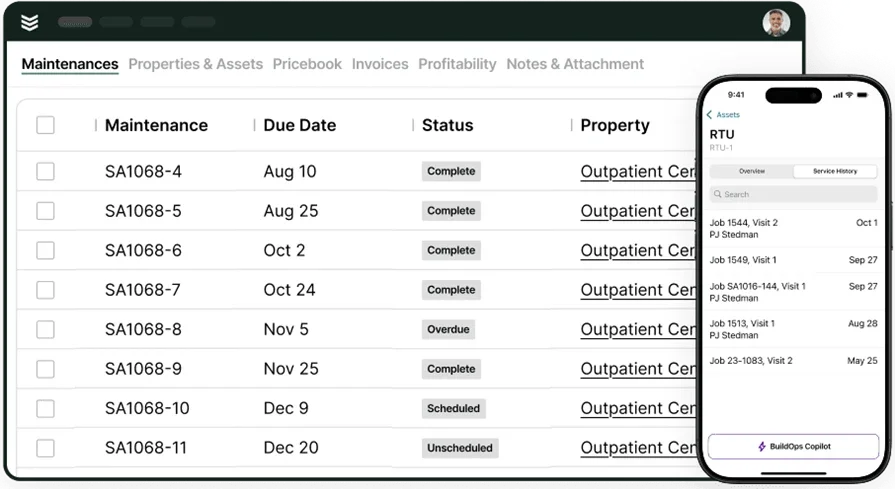
By analyzing equipment data like history, usage patterns, manufacturer recommendations, seasonal trends, and customer history, field service AI's predictive analytics evaluates when a unit is likely to need service and automatically places a preventive maintenance appointment on the calendar. It can coordinate with technician availability, parts inventory, and customer preferences, ensuring visits happen before issues escalate.
This level of automation reduces emergency callouts, extends equipment life, and leads to higher customer satisfaction, while helping field service teams plan workloads more efficiently and avoid costly downtime.
Example From the Field
A commercial building has multiple HVAC units with varying ages and usage patterns. The AI system reviews maintenance logs, run hours, and seasonal load data, and predicts that one rooftop unit is likely to fail within the next month if it isn’t serviced. It automatically schedules a preventive maintenance visit for that unit, assigning a qualified technician whose route already passes near the site. The system checks parts availability, adjusts the timing to avoid conflicts with other appointments, and sends the customer a notification.
The technician arrives prepared, the unit is serviced before a failure occurs, other jobs continue on schedule, and the building avoids an unexpected breakdown. This predictive, automated approach keeps equipment running smoothly, reduces emergency callouts, and improves overall customer satisfaction.
AI reduces customer no-shows
AI-powered tools automate reminders, confirmations, and provide real-time updates. It can send text messages, emails, or app notifications before an appointment, allow customers to easily confirm or reschedule, and even suggest alternative times if conflicts arise. By keeping the schedule transparent and interactive, the system significantly lowers missed appointments.
Companies that use AI-driven reminders and confirmations often see drastically reduced no-show rates, which keeps technicians on track, maximizes billable hours, and improves overall customer satisfaction.
Example From the Field
A field service company has a technician scheduled to install a new water heater at a customer’s office. The AI system automatically sends a text reminder two days before the appointment and then another one a few hours prior that includes the estimated arrival window. When the customer realizes they’ll be unavailable, they click a link to reschedule directly in the system. The tool instantly updates the schedule, assigns another nearby technician to a different job that fits the freed-up time slot, and notifies the office team.
AI streamlines invoicing and provides back-office support

Nearly 40% of contractors have turned to field service AI to streamline admin and recordkeeping, according to The Pivot Point. With AI in field service, work orders and field notes sync instantly so nothing slips through the cracks, and technicians can generate and send invoices with one click—eliminating manual data entry and administrative bottlenecks.
Built-in pricing rules and markups ensure consistency, while flexible payment options help customers settle invoices faster. Real‑time invoice tracking provides visibility into what’s paid versus overdue, helping owners control cash flow and reduce collection delays.
This automation cuts billing time dramatically, improves accuracy, and frees office staff to focus on high‑value tasks instead of chasing down paperwork and payments.
“When all these parts of the project actually live on one connected system, you stop managing documents and start managing profitability,” said BuildOps CTO Duncan Grazier at BuildOps Forge 2025.
Some AI-powered field service invoicing tools like BuildOps can even write an invoice summary for you based on work done in the field, adding those notes to the invoice for you to cut down on manual work.
Example From the Field
A field technician finishes a commercial HVAC installation. As soon as the job is completed, the work order and parts used are automatically synced to the back office. The AI-powered invoicing system generates a professional invoice, and sends it to the customer via email with payment options. The office team can see in real time whether the invoice has been viewed or paid, and any overdue payments are flagged for follow-up.
The technician can move on to the next job without worrying about paperwork, the customer receives an accurate invoice immediately, and the business accelerates cash flow while reducing errors and administrative overhead.
AI models provide the support field service contractors need. Artificial intelligence streamlines every part of the day to improve field service efficiency. By connecting real-time data with the right people, tools, and processes, it keeps jobs on track, reduces downtime, and ensures technicians are prepared for every appointment to improve operational efficiency.
The result is field service organizations with more productive teams, faster billing, and happier customers, all while taking the manual work out of managing the day so field service teams can focus on what matters most: Getting the job done right.