Electrical Marketing Plan: Turn Calls Into Booked Work

A marketing plan keeps your phone ringing with work you actually want, not random calls that clog dispatch and burn tech hours. For established shops, an electrical marketing plan works best when it ties straight into how you run service: capacity by crew, response-time targets, recurring maintenance, and what your field service software shows about close rates and call-back risk.
In the ever-growing world of easy access to information, that connection matters in the electrical service industry where schedules shift fast, and reputation travels even faster.
Here’s what we’ll cover:
- What is an electrical marketing plan?
- Key elements of an electrical marketing plan
- How to execute a successful electrical contractor marketing strategy
Up next, we will break down what separates a clean plan from a noisy campaign, then map it into an electrical business marketing strategy your operation can actually execute.
What is an electrical marketing plan?
An electrical marketing plan is a written roadmap for what work you want, who you serve, and how you win leads, with channel choices, budget targets, and tracking tied to booked jobs, based on service area coverage, crew capacity, and response-time goals. It ties follow-up speed to dispatch.
It should pull from field service data so you push what you can staff well, target the zones you cover fast, and track each step from call to booked work, then adjust before gaps or overload hit the schedule.
{{related-content-block="/resources/electrical-contractor-software"}}
Why an effective electrical marketing plan is so important
A strong electrical marketing strategy keeps work steady so you can plan hiring, trucks, inventory, and coverage based on real capacity instead of guesswork. Margins disappear when you chase every single call. Your electrical marketing should attract the right mix of service work for your team and your territory, supported by fast follow-up and proof that you show up on time, do it right, and leave the site clean.
You cannot improve what you cannot see. A clear electrical marketing plan gives your office and field teams one shared scoreboard with metrics like lead source, speed to lead, booking rate, and revenue per call. That way, every dollar you spend on marketing stays connected to completed, profitable work.
Key elements of an electrical marketing plan
If you run a field crew, marketing cannot sit off to the side. It has to match how you actually operate: service radius, tech skill mix, on-call coverage, and what your job history says you close fast with clean margins. The elements below keep your plan practical. This is the wide-angle view. The next section gets into specific plays.
- Online presence & branding: Your digital first impression and your on-site reputation working together, so prospects trust you before they call. Think local SEO service pages by city, a tight Google Business Profile, photos that prove clean work, and a consistent look across trucks and uniforms. When the story looks solid everywhere, buyers hesitate less and booked calls climb.
- Sales & marketing: The channels that create demand plus the follow-up habits that turn interest into scheduled work. This is where paid search and Local Services Ads, email and SMS maintenance reminders, and social posts that show real jobsite proof can live. Without consistent follow-up and clear messaging, leads leak out while your techs wait for the next call.
- Customer relationship management: The system for capturing leads, tracking every touch, and staying in front of repeat customers without dropping handoffs. That can look like call tracking, quote follow-ups, service agreement renewals, review requests after closeout, and reminders tied to job history. Repeat work and referrals do not happen by accident, and CRM keeps your pipeline warm even when the crew stays busy.
- Analytics & reporting: The scoreboard that ties spend and effort to booked jobs, revenue, and crew utilization. You are looking at lead source by booked job, speed-to-lead, estimate conversion rate, revenue by job type, and callback rate by scope. Once you can see what pays, you stop guessing and start funding what keeps your schedule full.
Next, we will zoom in on execution and lay out an electrical contractor marketing strategy you can run week to week without creating dispatch chaos.

How to execute a successful electrical contractor marketing strategy
A plan on paper does nothing if it never reaches dispatch, the phones, and the techs in the field. Execution comes down to consistency: how you show up online, how fast you respond, and how cleanly you turn a lead into a completed job.
Use the strategies below as your weekly operating rhythm. Each one connects back to field service reality, like coverage area, crew capacity, and the handoff between office and truck.
1. Design a professional website that books calls
Treat your website like a dispatcher that works after hours. Build pages around the service lines you want, the cities you actually cover, and proof that you run a tight job: licensing, safety, photos, and reviews.
Keep forms simple, put click-to-call front and center, and route every web lead into one inbox your team actually watches. When project leads come in, you need a clean path from inquiry to kickoff, which is where a workflow like electrical contractor project management software helps keep follow-up from falling through.
2. Use consistent brand messaging across every touchpoint
Pick a clear promise and repeat it everywhere: trucks, proposals, service notes, Google profile, and the way your CSRs answer the phone. Keep it specific to how you win, such as fast response, clean work, or strong documentation for property teams. Consistency makes your shop feel dependable before you even show up, and it cuts down the back-and-forth that drags out booking.
3. Focus on local SEO and marketing around your service zones
Go narrow and dominate. Build city and neighborhood pages for your real coverage map, tighten your Google Business Profile, and ask for reviews right after closeout while the job is fresh. Track which zip codes convert into booked work, then lean into those pockets instead of chasing every corner of the metro. Local visibility works best when it matches how quickly you can roll a truck.

If your electrical business marketing strategy needs stronger alignment with scheduling, job costing, and follow-up, tie marketing decisions back to operational data. This guide on electrical business management software breaks down how that connection supports steady growth without wrecking the board.
4. Leverage social media to show proof, not hype
Skip the generic posts. Share quick, real jobsite proof: panel swaps, labeled runs, clean terminations, safety checks, before-and-after photos, and short clips of your process. Assign one person to collect photos from techs each week, then post on a set cadence. A solid mobile stack makes this easier, and this roundup of the best electrical apps can help you tighten what the crew uses day to day.
5. Drive traction with email and SMS follow-up tied to maintenance cycles
Service shops win when they stay in front of existing accounts. Use email and SMS to remind customers about inspections, PM schedules, and seasonal checks, then make booking painless. Segment by account type, such as property managers, facilities, and repeat residential clients, so messages stay relevant. If maintenance is a core revenue lane, connect reminders to your workflow with electrical maintenance software so follow-up stays consistent.
6. Make paid ads earn their keep with tight tracking
Paid leads get expensive fast, so treat ads like a job: scope, budget, and a clear pass-fail metric. Run separate campaigns by service line, send clicks to matching landing pages, and track calls by source so you know what actually books. Conversion jumps when you quote fast and accurately, and this guide on electrical cost estimating covers habits that keep pricing tight under pressure.
7. Manage your client lists like an asset
Your list is future revenue. Clean up duplicates, tag contacts by building type and service history, and set a follow-up cadence for quotes that went quiet. Keep notes on decision-makers, site access quirks, and preferred hours so repeat work stays smooth. A disciplined list turns “we should check in” into scheduled work that fits your calendar.
8. Dispatch technicians and manage your fleet with live data
Marketing sets the table, dispatch closes the loop. Use real-time scheduling, route planning, and job notes so the office can book confidently without guessing. Track response time, travel time, and call outcomes, then adjust marketing spend toward the areas and job types your team can serve fastest. If your goal is steadier demand without bottlenecks, connect execution to tools like electrical field service software so the handoff from lead to job stays clean.
{{related-content-block="/resources/classic-electric-scales-business-with-buildops"}}
A strong electrical marketing plan only works if it’s grounded in how you actually run the field. If leads come in faster than your team can respond, or quotes sit while techs are already rolling, all that marketing spend just turns into noise.
When lead intake, response times, estimating, scheduling, and closeout reporting are connected, you stop guessing. You start building a steady, realistic calendar your team can execute on—without overloading the schedule or leaving revenue on the table.
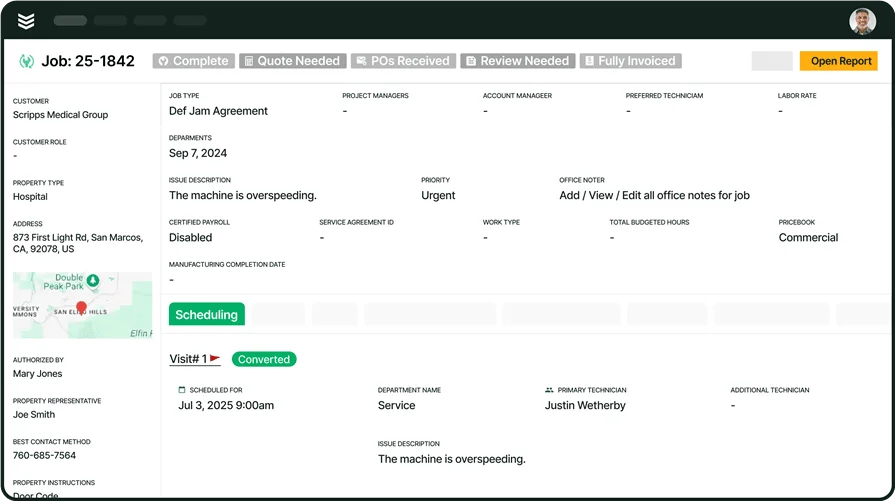
BuildOps goes beyond a basic electrical marketing plan. It connects your entire service operation in one system: customer history, quotes, job costing, dispatch, mobile job notes, maintenance tracking, and reporting. Most tools scatter those capabilities across multiple platforms—or don’t include them at all. BuildOps brings them together so every marketing decision ties directly to what happens in the field and on the job.
Want to see what that looks like with your workflows? Schedule a free demo. No pressure, just a focused walk-through of how electrical contractors use BuildOps to keep leads, jobs, and tech schedules moving in sync.