

Some of the most expensive slowdowns in commercial contracting start with a simple problem: too much critical knowledge lives in a few people’s heads.
That works for a while: until a senior lead goes on PTO, someone retires, a manager gets pulled into five other problems, or a newer tech hits a situation they have never seen before. Then the cracks show up fast: inconsistent jobs, more callbacks, slower handoffs, frustrated teams, and managers stuck firefighting instead of coaching.
That is the experience bottleneck. And for contractors trying to grow, it can quietly limit quality, retention, and speed all at once.
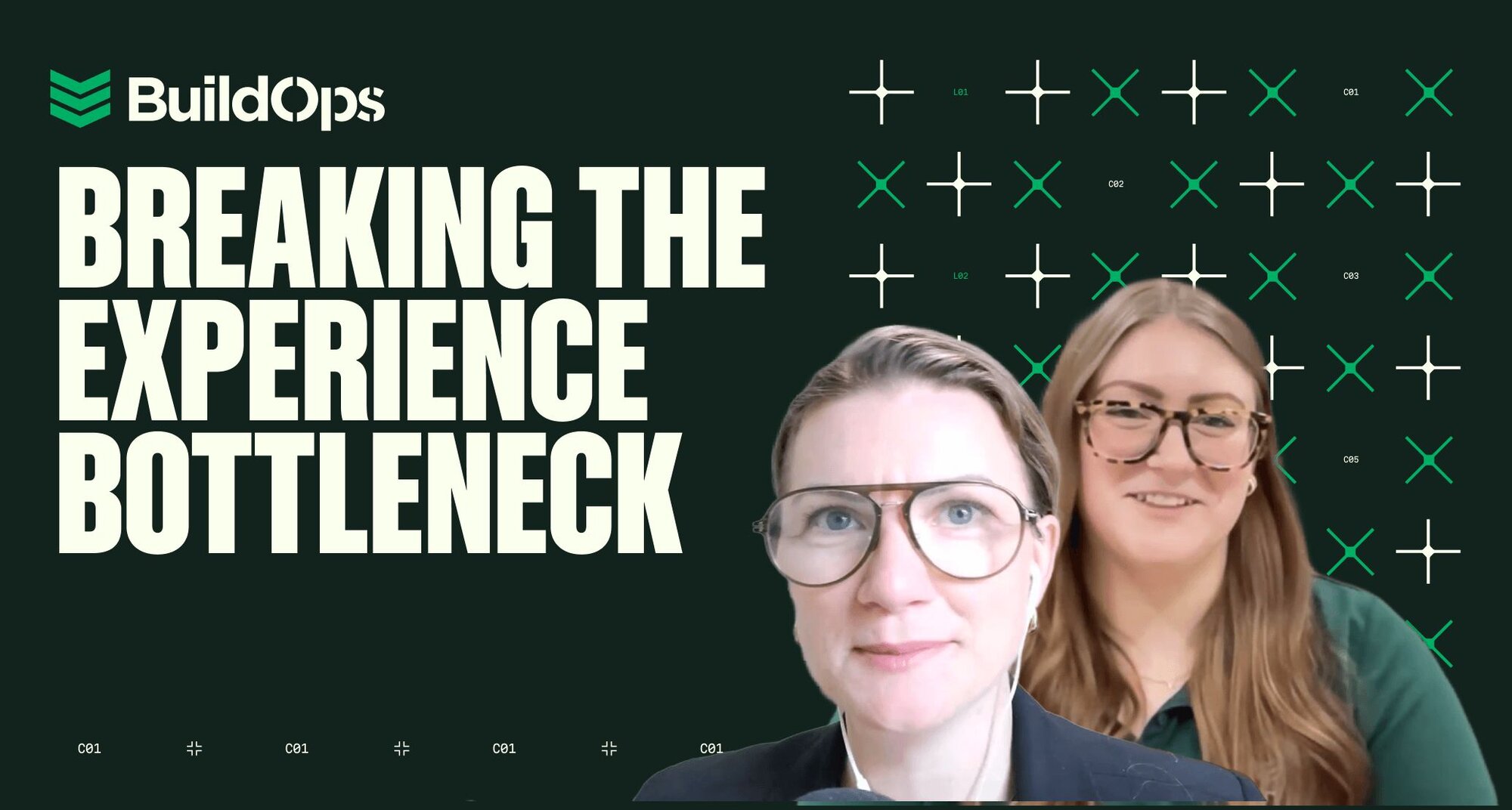
In our Breaking the Experience Bottleneck in the Trades, we caught up with with Manja Horner, Founder of Boost Learning & Development, and Abby Evans, Team Lead of Solution Architects at BuildOps, to unpack how to put knowledge into systems not just people.
Why this matters now
Retirements and turnover do not create knowledge gaps as much as they expose the ones that were already there. If the business still runs on tribal knowledge, every staffing change becomes a stress test.
What actually helps
The fix is not to turn every senior employee into a full-time trainer. It is to make their know-how easier to capture, repeat, and use.
A few practical steps stand out:
1. Define what “good” looks like
If teams are expected to deliver consistent work, they need a shared definition of what success looks like on every job. That can mean required photos, closeout notes, materials logged, service steps followed, or customer-facing standards that happen every time.
2. Capture knowledge in small, usable ways
Long manuals are not always the answer. Often, the most useful tools are the simplest ones: checklists, short videos, screen recordings, annotated notes, and quick process documentation tied to the exact moment someone needs help.
3. Give managers better ways to coach
A lot of field leaders were promoted because they are great at the work itself — not because they were trained to coach others. Clear expectations, earlier visibility into performance, and better documentation make it easier for managers to guide people before mistakes turn into bigger problems.
4. Put knowledge into systems, not just people
This is where technology can help. In the webinar, Abby Evans shared how BuildOps supports this with gated workflows, OpsAI-powered visit recaps, and a company knowledge hub — tools that make it easier for teams to access the right information in the field, even when the usual expert is unavailable.
The bottom line
When experience stays trapped in a handful of people, growth gets harder than it needs to be. But when knowledge is documented, standardized, and built into daily workflows, teams can move faster, onboard better, and deliver more consistent work without depending on the same few heroes every time.