Why Fire & Life Safety Teams Can’t Afford Reactive Ops
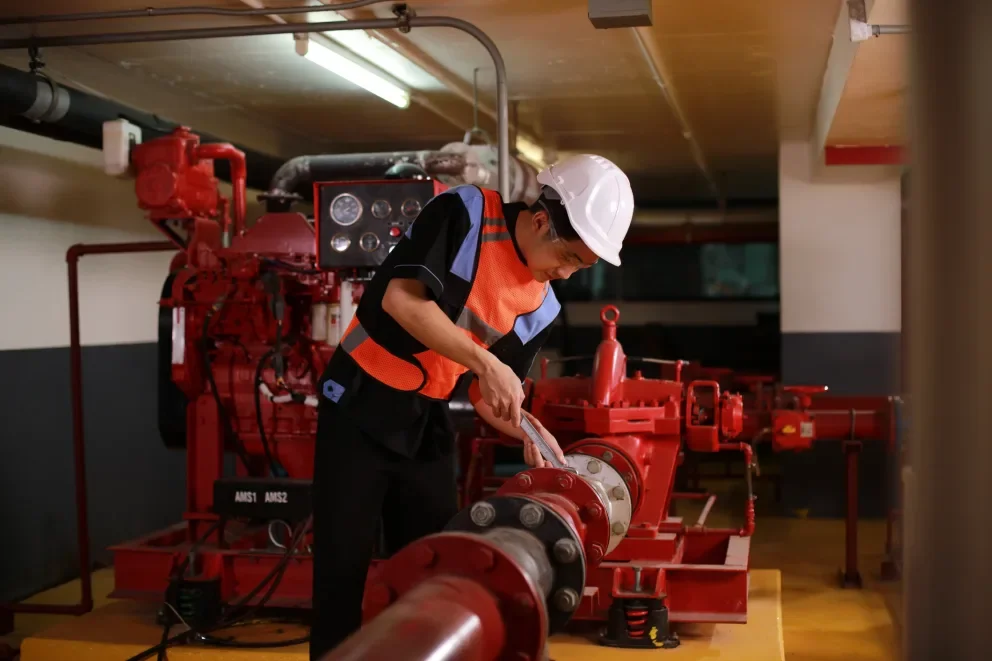
Fire and life safety is a corner of the trades governed by fixed compliance timelines and strict documentation standards. Inspection risk is enforced, and when handoffs between installation, service, and repair break down, the result is risk exposure.
Installing fire safety systems like fire sprinklers, smoke detectors, fire alarm systems, and fire extinguishers that pass inspection and are tested and documented on schedule is expected and routine. But when something goes wrong—a system fails, documentation is incomplete, or an inspection uncovers gaps that could cause fire hazards—everyone pays attention fast.
In the fire and life safety industry, reactive operations increase risk and create inefficiency contractors can’t afford.
In this article, we’re going to cover:
- Why fire & life safety teams can’t afford reactive operations
- Understanding fire protection preventative and regular maintenance contracts
- How much value recurring fire protection maintenance contracts contribute to your business
- 5 strategies to sell more fire protection maintenance contracts to your customers
- 3 best fire protection preventative maintenance contract templates
Let’s get started with the why.
Why fire & life safety teams can’t afford reactive operations
Best practices for fire protection systems live in a code book. Standards published by the National Fire Protection Association (NFPA) define inspection frequencies by local authorities, maintenance tasks, documentation requirements, and testing protocols down to the detail.
Contractors relying on reactive operations struggle to meet fixed compliance timelines. Risk creeps in when contractors:
- Wait for the reminder email
- Scramble when inspections are scheduled
- Discover open deficiencies
However, 32% of contractors report their teams don't have enough time to stay compliant, according to The Pivot Point, a survey by BuildOps. Software can automate this process to help fire and life safety teams stay on top of regulations and standards. In fact, 40% of contractors surveyed are turning to compliance software or AI to ease the burden.
What are the costs associated with reactive fire safety measures?
Reactive fire protection measures create real, measurable costs, some of which are obvious while others are buried until it’s too late.
- Failed inspections and reinspection fees - When documentation is incomplete or systems aren’t fully compliant, failed inspections can trigger reinspection fees, additional labor, and expedited corrective work. That means double dispatch, unplanned overtime, and margin erosion.
- Delayed Certificates of Occupancy (CO) - If suppression systems don’t pass final inspection, a building may not receive its CO. That can expose owners to lost rent, liquidated damages, or contractual penalties, and damage their relationship with the contractor.
- Emergency repair premiums and overtime labor - When deficiencies aren’t tracked early, they become urgent efforts for maintaining equipment. Urgent work means after-hours dispatch, premium labor rates for licensed technicians, rushed material procurement, and compressed schedules that hurt productivity.
- Increased liability exposure - Missed inspections, a lack of regular maintenance, or unaddressed impairments can increase legal exposure if an incident occurs. Even if a contractor is ultimately cleared, legal defense costs, insurance impacts, and reputational damage are expensive.
- Lost recurring revenue - Competitors are quick to step in when safety measures aren’t proactively managed. A missed renewal or poorly handled inspection can cost contractors multi-year maintenance agreements worth tens, hundreds, or thousands of dollars over time.
What’s the NFPA 1915 standard for fire apparatus preventive maintenance?
Fire protection regulations don’t stop at sprinkler systems and fire alarms. NFPA 1915, Standard for Fire Apparatus Preventive Maintenance Program, includes minimum requirements for contractors operating fire apparatus. It defines:
- Inspection systems
- Service frequencies
- Preventative maintenance tasks
It complements NFPA 1911, which outlines inspection, testing, and preventive maintenance requirements for in-service emergency vehicles.
Why sell fire protection systems maintenance agreements to your customers?
Maintenance agreements turn unpredictable calls into structured, recurring compliance work for preventive measures, and offer the following benefits to your business:
- Predictable compliance for your customer - Most building owners don’t live inside the NFPA handbook. They rely on contractors to manage inspection frequencies by local authorities and documentation. A maintenance agreement removes guesswork and reduces their inspection risk.
- Operational stability for the team - Recurring contracts level-load labor. Instead of scrambling to meet surprise deadlines, contractors build their team’s calendar around known compliance timelines.
- Stronger asset history and upsell opportunities - When contractors own recurring inspections, they own the data. They can see repeat deficiencies, potential fuel source hazards, aging components, and patterns that justify upgrades. Data moves the contractor from vendor to long-term partner.
Understanding fire protection preventative and regular maintenance contracts
Fire protection preventive maintenance contracts are structured agreements for the fire and life safety employees responsible for performing inspection, testing, and maintenance at required intervals.
But strategically, they’re a:
- Compliance roadmap
- Scheduling plan
- Documentation system
- Recurring revenue stream
Done right, preventative maintenance plans connect install, inspection, service, and repair into one continuous and reliable loop.
How do fire protection preventive maintenance contracts work?
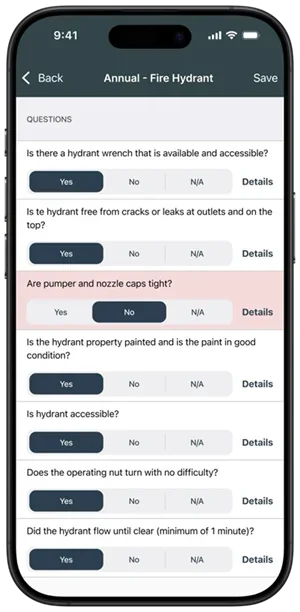
A fire protection preventive maintenance contract offers your customers a pre-defined recurring schedule on which your team will inspect and test their fire equipment, working through a checklist of items to make sure the equipment maintains compliance standards. Regular maintenance also detects deficiencies early, so small problems can be fixed quickly before they become detrimental.

Most recurring contracts define covered fire protection measures like fire sprinklers, fire alarm systems, fire suppression systems, and backflow, referencing applicable standards. They set inspection and testing frequencies based on code and regulations. Preventive maintenance contracts deliver documented reports for compliance records and outline how deficiencies are quoted and resolved.
By creating clarity through well-defined scopes, these contracts avoid disputes and build trust.
What kind of work does a fire protection preventive maintenance contract usually include?
While scope varies by fire suppression system type, recurring contracts often include:
- Visual inspections
- Functional device testing
- Flow tests and valve inspections
- Alarm panel and initiating device testing
- Documentation, tagging, and reporting
- Identification and categorization of deficiencies
Corrective repairs are typically quoted separately, but the recurring inspection drives that work. If deficiencies are tracked cleanly and connected to assets, contractors close loops instead of creating liability gaps.

4 components to include in a fire protection preventative maintenance contract structure
A strong preventative maintenance contract protects compliance, margin, and reputation. Here are key components contractors should include in every contract.
- Clearly defined scope and frequencies: List fire suppression systems covered and inspection intervals, and reference applicable standards. If the scope is not defined, it’s disputable.
- Documentation requirements: Spell out the reporting format, delivery timelines, and record retention. Inspection risk often lives in incomplete paperwork.
- Deficiency management process: Define how deficiencies are categorized, quoted, authorized, and tracked to close the gap between inspection and repair and prevent missed handoffs.
- Renewal and pricing structure: Include term length, escalation clauses, and renewal conditions. Recurring revenue should grow alongside costs.
How much value recurring fire protection maintenance contracts can contribute to your business
All businesses are different, but recurring fire protection maintenance contracts can be quite lucrative. For example, a mid-size commercial property could generate $7500 annually through a contract that outlines $4500 in inspection and testing and $3000 in average deficiency repair.
Secure 50 similar contracts, and a contractor is looking at $375,000 in annual revenue that’s largely forecastable and tied to fixed compliance timelines. And that doesn’t include modernization projects driven by long-term asset data.
Recurring maintenance is stability, visibility, and growth contractors can plan around.
5 strategies to sell more fire protection maintenance contracts to your customers
Selling maintenance contracts is about clarity, risk reduction, compliance control, and operational stability. In fire and life safety, those are mission-critical benefits.
1. Attach maintenance at system turnover
The best time to sell a recurring service is the day the system goes live. At turnover, the owner is in a risk-aware mindset and already thinking about inspections, warranties, and compliance timelines. That’s the best time for contractors to position maintenance as the logical continuation of installation.
Instead of saying, “We also offer maintenance,” say: “This system now enters its NFPA inspection cycle. We’ll manage that for you.”
2. Lead with compliance management
Most building owners don’t wake up thinking about inspection frequencies under standards like NFPA 25 or NFPA 72, but they do worry about failed inspections.
When contractors frame contracts as full compliance management, they elevate the conversation from cost to protection. Explain that an agreement includes:
- Tracking inspection timelines before they lapse
- Delivering documentation in AHJ-ready format
- Managing deficiencies from identification to resolution
- Maintaining asset-level history
3. Use data to show patterns
Nothing closes a maintenance conversation faster than a clean inspection history. Showing data-driven maintenance trends builds urgency and makes the case for structured maintenance without the sales pitch.
Walk the customer through:
- Repeat deficiencies on the same device
- Aging components approaching end-of-life
- Open impairments that lingered too long
4. Standardize proposals
When teams work from structured templates, they sell contracts with confidence. Standardized maintenance agreements:
- Protect margins
- Reduce scope creep
- Shorten sales cycles
- Improve internal handoffs
5. Offer multi-year agreements with built-in escalation
Offer multi-year contracts with transparent pricing escalators. This allows the customer to lock in a compliance partner and the contractor to stabilize recurring revenue and reduce sales friction year over year.
Position the arrangement as a long-term relationship, and not a one-year transaction.
3 best fire protection preventative maintenance contract templates
We researched some and found these top options for preventative maintenance contract templates that can streamline the development of building your own agreements.
1. Fire Alarm Inspection Forms by NFPA
These forms align inspection tasks directly with NFPA standards and frequency requirements. It includes strong code alignment where every line item ties back to a compliance requirement.
2. Preventive Maintenance Agreement Template by PandaDoc
This option is a customizable contract template that structures scope, frequency tables, and renewal clauses clearly. It offers clear formatting that reduces scope confusion and protects expectations on both sides.
3. Facilities Maintenance Contract by ServiceChannel
This contract separates recurring inspection scope from corrective repair authorization. It provides clear revenue separation between inspection work and quoted repairs to protect profitability.
Regain control of your fire protection preventive maintenance with BuildOps
Fire and life safety teams operate under fixed compliance timelines. Inspection risk is real, missed handoffs create liability gaps, and early visibility into assets, contracts, and deficiencies matters more than anywhere else.
BuildOps was built for commercial contractors who can’t afford reactive operations. With BuildOps, fire protection teams can:
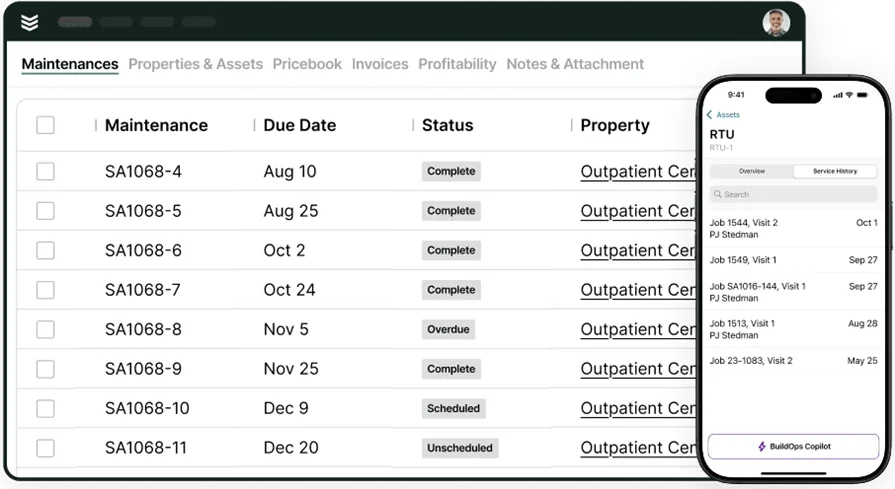
- Track recurring inspections by asset and required frequency
- Surface compliance deadlines before they become problems
- Connect install, service, and deficiency repair in one system
- Log every visit instantly for inspection-ready documentation
- Forecast recurring revenue and labor demand with real-time visibility
This is mission control for field service contractors. Because the teams protecting buildings–and the people inside them–deserve systems as reliable as the work they perform every day.