How To Sell More HVAC Preventive Maintenance Contracts
If you're running a commercial HVAC company and still relying on one-off jobs to keep the lights on, you're making things harder than they need to be.
HVAC maintenance contracts are how contractors build stable, profitable businesses. It locks in recurring payments from clients who need regular maintenance services to keep their rooftop units, AHUs, chillers, and other commercial HVAC equipment running.
Most contractors understand the benefits. Few are selling them as aggressively as they should.
In this article, we’re going to cover:
- Understanding HVAC preventative maintenance contracts
- 4 components to include in an HVAC preventative maintenance contract structure
- How much value recurring HVAC maintenance contracts contribute to your business
- 5 strategies to sell more HVAC maintenance contracts to your customers
- 4 best HVAC preventative maintenance contract templates
- How to scale your commercial HVAC maintenance program
Let's get into it.
Understanding HVAC preventative maintenance contracts
A preventative maintenance agreement is a legally binding contract between your company and a customer to perform scheduled maintenance on their HVAC systems at agreed-upon intervals. It includes defined terms and services so there are no surprises for either party.
How do HVAC preventive maintenance contracts work?
An HVAC preventative maintenance contract functions like a retainer. The client pays a set fee for a defined schedule of maintenance services, and the contractor agrees to maintain the facility’s heating, air conditioning, and ventilation equipment at specific intervals.
This service contract locks in recurring revenue for your HVAC company while giving clients priority assistance and predictable costs.
The mechanics are straightforward: the document outlines the scope of services, invoicing, termination clauses, and response times. From the first visit forward, both the contractor and the other party know exactly what's covered and what isn't.
What kind of work does an HVAC preventive maintenance contract usually include?
Most commercial HVAC preventative maintenance contracts are built around two scheduled visits per year, typically spring and fall, though larger facilities with complex HVAC systems may require quarterly or monthly services depending on equipment type and usage.
A standard scope focuses on maintenance tasks that keep rooftop units (RTUs), air handlers, chillers, boilers, and other commercial components running efficiently while catching problems before they become costly repairs:
- Clean evaporator and condenser coils
- Replace or inspect air filters
- Check refrigerant levels and pressures
- Inspect ductwork and dampers for leaks or airflow issues
- Test electrical connections, contactors, and motor voltages
- Inspect belts, pulleys, and bearings for wear and alignment
- Verify operation of VFDs
- Clear and test condensate drains and pumps
- Inspect economizers and outdoor air dampers
- Calibrate thermostats, sensors, and building control systems
Beyond routine service tasks, technicians perform a full inspection during each visit, documenting:
- System readings and operating measurements such as temperatures, pressures, and airflow
- Components showing early signs of failure
- Repair parts likely needed before the next maintenance window
- Notes on overall system condition for client reporting and maintenance history
What these contracts typically don’t cover are major repairs, replacement parts, or property damage resulting from deferred maintenance or equipment failures outside the scope of scheduled service.
Why sell HVAC maintenance agreements to your customers?
Selling an HVAC maintenance agreement isn't just good for your business — it's genuinely good for your customers. When you can show them what's in it for them, the contract sells itself.
- Avoid costly repairs before they happen. Regular maintenance catches small HVAC problems before they turn into more costly repairs. A filter change or refrigerant check on a scheduled visit costs a fraction of what an emergency breakdown runs. Customers who understand that pay for prevention willingly.
- Control energy costs. A well-maintained HVAC system runs more efficiently, which shows up directly on energy bills. For commercial clients operating large facilities, like office buildings, hospitals, schools, or warehouses, that's real money saved every month.
- Priority service when it matters most. Contract customers get to the front of the line. When a system goes down in the middle of summer, that priority service is worth more than the cost of the agreement itself — and your clients know it.
- Budget predictability. Nobody likes surprise invoices. A maintenance program with clear payment terms lets customers plan their facility costs in advance instead of getting hit with repair bills they didn't see coming.
- Extend the life of their equipment. Routine maintenance keeps HVAC systems running longer. That means customers push back costly replacements, protecting their capital in the long run.

4 components to include in an HVAC preventative maintenance contract structure
Your contract sets the tone for the entire client relationship. Vague agreements create scope creep, payment headaches, and disputes that damage trust. A well-built contract makes expectations clear on both sides and gives your HVAC company a professional foundation to grow from.
Here's what every solid HVAC preventative maintenance contract needs.
1. Detailed equipment inventory
Before any maintenance services are scoped or priced, document every piece of HVAC equipment covered under the agreement. That means unit make, model, serial number, filter sizes, belt sizes, and physical location within the facility.
A thorough inventory eliminates ambiguity about what's included, creates a starting point for tracking asset history, and makes future repair or replacement conversations a lot smoother.
2. Defined scope of work & schedule
Spell out exactly which services will be performed, on which parts, and how often. Then define what falls outside the agreement, like significant repairs or replacement parts. A clearly defined scope protects your margins and prevents the kind of misunderstandings that sour client relationships.
3. Reporting & documentation
After every visit, deliver something tangible. A written report covering system readings, flagged components, completed maintenance, and upcoming recommendations turns a routine service call into a value-add that clients notice. It also builds the paper trail you need to justify repair recommendations and position your team as a long-term partner rather than a vendor.
4. Business terms
Cover the full business side of the agreement clearly — total cost, payment terms, billing cycle, response time commitments, and termination clauses. Include how the contract handles changes in scope, such as new HVAC systems being added to a facility.
Clients who know exactly what they're paying for, what assistance they're entitled to, and how the other party can exit the agreement are far less likely to create problems down the road.
How much value recurring HVAC maintenance contracts contribute to your business
Recurring HVAC maintenance agreements drive additional service work, improve margins, and create the kind of predictable revenue that stabilizes your business.
Pull-through revenue multiplies the value of every contract
The real money in maintenance agreements is the pull-through work that comes out of routine visits. When technicians are onsite inspecting equipment, they catch worn belts, airflow problems, and aging systems before they become emergencies.
Across the industry, that pull-through revenue typically runs $1 to $3 in additional repair and replacement work for every $1 of maintenance agreements you hold.
So if you sell a $2,000 maintenance contract, the inspections tied to that agreement can uncover another $2,000 to $6,000 in service or repair work over time. That work didn’t require a sales call. Your tech was already there doing the inspection.
Maintenance agreements deliver stronger margins
Maintenance agreements generally have much higher gross margins than installation work. They commonly run around 40% gross margin, compared to roughly 24% on installation jobs that required bidding and price competition.
Recurring contracts strengthen business value
Maintenance contracts also change how your company looks to buyers or investors.
If someone is evaluating your company and sees $10 million in one-off construction revenue, they have no idea what next year will look like. A $4 million maintenance contract base tells a very different story. These agreements typically renew at around 90% year over year, which means a large portion of next year’s revenue is already predictable.
That kind of stability makes the company easier to operate and more valuable if you ever decide to sell.
A contract base keeps crews working year-round
HVAC work naturally moves in cycles. A solid maintenance program smooths those swings because inspections continue through slow seasons. Those visits generate repair work. That repair work keeps technicians productive even when new project work slows down.
Instead of starting every month from zero, you start with work already on the calendar. That stability is one of the biggest reasons experienced contractors push hard to build their maintenance contract base.
5 strategies to sell more HVAC maintenance contracts to your customers
Building a strong contract base takes a deliberate approach. Here's what works.
1. Start with your existing customers
Your existing customers are the lowest-hanging fruit when building a maintenance contract base. You've done work for them, they trust you, and you likely already know their equipment inside and out.
Reach out to past and current clients first, walk them through what a maintenance program covers, and explain what it can cost to go without one.
2. Lead with their pain points
Before pitching anything, ask questions. What are they spending on repairs? How old is their equipment? Have they dealt with unexpected downtime that hurt their operations?
Customers respond to contractors who take time to understand their specific needs. When you build a maintenance agreement around what they're actually dealing with, it feels like a solution rather than an add-on.
3. Show them the cost of doing nothing
Most customers underestimate what deferred maintenance actually costs them. Break it down clearly.
Neglected HVAC systems run less efficiently, driving up energy costs month after month. Emergency breakdowns mean rushed labor costs and replacement parts at premium prices. Laying out that math in plain terms makes the value of a maintenance agreement obvious.
4. Make the contract clear and straightforward
A maintenance agreement that confuses customers stalls sales. Be specific about everything upfront — services included, labor coverage, payment terms, and any termination clauses or liability clauses that apply. Write it in plain language and review it with them in person before anyone signs.
5. Offer tiered service options
Customers have different budgets and different HVAC systems. A tiered approach gives them options. There are basic inspections at one level and full preventative maintenance with priority service and labor coverage at another.
Tiered pricing also opens the door to selling additional services as the relationship develops. Customers who start at a basic level and see the value tend to move up.
4 best HVAC preventative maintenance contract templates
A solid contract template saves time and keeps your agreements consistent across every client. Here are four options worth knowing about, ranging from simple downloadable documents to full software platforms built for commercial HVAC businesses.
1. HVAC Service Platform | BuildOps
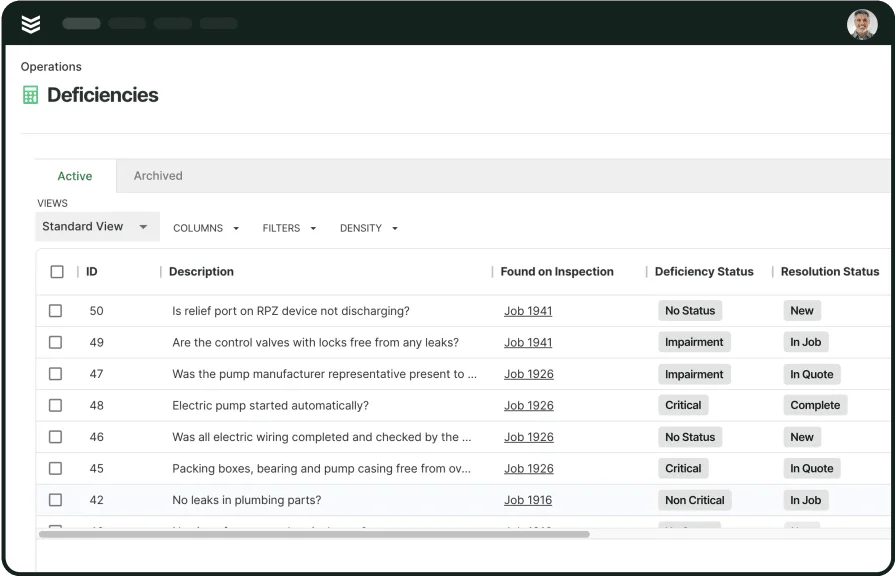
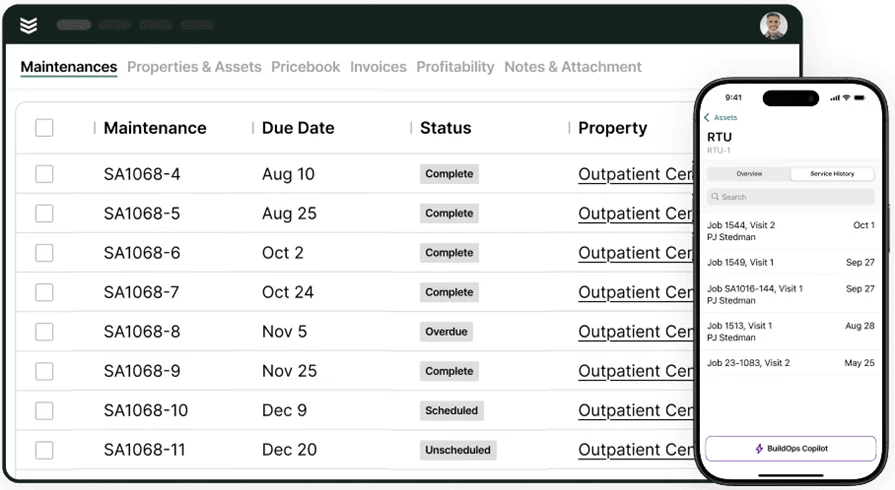
BuildOps is an all-in-one platform that handles HVAC service agreements, scheduling, invoicing, and technician dispatch in a single system. Customizable contract templates, automated renewal reminders, and integrated invoicing mean nothing slips through the cracks.
What To Take From This Template:Automated renewal reminders and integrated invoicing keep your contract base running without anyone having to manually track expiration dates or chase payments.
2. HVAC Contract | Rocket Lawyer
Rocket Lawyer's HVAC service contract template covers the essential building blocks of a solid maintenance agreement — payment schedules, scope of work, and liability protection — in a legally reviewed, editable format. It's a straightforward option for contractors who need a clean, customizable starting point without building a contract from scratch.
What To Take From This Template: The built-in liability protection and legally reviewed clauses give contractors a level of legal coverage that a basic homemade agreement typically won't.
Get Rocket Lawyer’s HVAC contract template here.
3. HVAC Service Contract Template | Template.net
Template.net offers a collection of HVAC service contract templates built for different business needs, with editable sections for pricing, terms, and conditions. Templates are available in Excel, Google Docs, and PDF formats, making them a practical option for teams that need multiple people accessing and updating contracts regularly.
What To Take From This Template: The flexibility of multiple file formats means your team can work in whatever document environment they're already using.
Get Template.net’s HVAC service contract template here.
4. HVAC Service Contract Template | DocHub
DocHub offers a straightforward collection of HVAC contract templates that contractors can edit, sign, and store entirely online. The platform handles the full document workflow — customizing fields, collecting e-signatures, and keeping completed contracts in cloud storage for easy retrieval. Free access covers the basics, with premium plans available for more advanced features.
What To Take From This Template: Built-in cloud storage means your completed contracts are organized and accessible without managing a separate filing system.
Get DocHub’s HVAC service contract template here.
How to scale your commercial HVAC maintenance program
Scaling an HVAC preventive maintenance program means having systems built for the volume. In a survey on the biggest obstacles to growing a service division, a third of contractors pointed to a lack of clear processes, and nearly one in five said they didn't have the scheduling and tracking tools to support it.
BuildOps gives commercial HVAC contractors the infrastructure to run service as its own operation. It centralizes asset history, automates maintenance schedules, dispatches techs based on skill and availability, and tracks pull-through revenue directly to maintenance agreements. Everything from field documentation to invoicing to real-time reporting lives in one platform.
When that foundation is in place, service contracts stop feeling like administrative overhead and start running like the scalable service line it's supposed to be.