When your organization is small, problems surface quickly and corrections happen before costs compound.
You catch RFIs flagging a clash between ductwork and structure and resolve it before fabrication moves forward. You notice a change order sitting unsigned and you escalate it before it delays billing.
What you know and what you do move at almost the same speed.
But as you take on more and bigger projects, that feedback loop slows down. The gap between spotting a problem and fixing it gets wider. Eventually, you’re no longer adjusting the work in real time. You’re reviewing what already happened and dealing with the fallout.
That shift is tied to the tools supporting your daily operations. The manual, disconnected system that got you here can't get you any further.
Here's how outdated systems force you into a reactive stance and how to break out of it.
How Manual Systems Force Reactive Leadership
Spreadsheets and email chains can’t keep up as you scale because they operate as lagging indicators. They confirm what already happened. By the time information is collected, updated, and reconciled across systems, the work has moved on.
Field data lives in daily reports. Billing milestones sit in accounting software. Change orders move through inboxes. Each system captures part of the picture, but none connect it in real time. You see fragments instead of a live, unified view of performance.
That delay changes what adjustments are possible when problems surface.
An electrical crew can drift over labor for days before the job cost report reflects it. Early in that drift, adjustments are simple: shift manpower, resequence work, clarify scope. If you notice it a week later, overtime has accumulated, other trades are affected, and recovery becomes more complicated.
The longer visibility is delayed, the fewer options remain and the more expensive those options become.
With average construction cost overruns hovering around 28%, timing carries real weight. In an environment where exposure is already high, lagging indicators make leadership reactive by design.
What Early Visibility Actually Changes
Early visibility changes when a problem is addressed, and that timing determines how expensive it becomes.
Every issue on a commercial project moves through three stages:
- Before impact – A small discrepancy surfaces while work is still in motion: a drawing conflict, a scope question, a time entry that doesn’t align. At this stage, correction is simple and contained.
- During impact – The issue begins affecting multiple people or trades. Sequencing shifts, schedule pressure builds, and alignment requires meetings, calls, and documentation. The fix now takes effort.
- After impact – Work is installed, materials are committed, payroll is processed, or schedules are impacted. Correction involves rework, negotiation, absorbed expense, or strained relationships.
The further an issue moves down that progression, the more it costs to resolve.
Rework alone can account for 12–20% of total project value. On a $10 million job, that’s $1–2 million tied up in do-overs. And most rework doesn’t begin with a catastrophic mistake. It starts with small issues that weren’t addressed early, like outdated documentation, unclear communication, or inconsistent processes.
The same pattern shows up in day-to-day operations. The average company makes 15 payroll corrections per pay period, and each mistake costs around $291 in direct and indirect expenses. Individually, those corrections seem manageable. Across multiple crews and projects, they chip away at margin.
Early visibility keeps issues in the first stage, where adjustments are straightforward and contained. Once they move into coordination or recovery, options narrow and costs escalate.
Timing doesn’t eliminate risk, but it determines how much control you have when it shows up.
How BuildOps Closes the Gap
Visibility is what determines how complex and expensive problems get before you’re able to take action.
BuildOps is designed to give commercial contractors that visibility by connecting field, project, procurement, and financial data in one system. Instead of waiting on reports, you see performance as it unfolds.
Here’s how BuildOps helps you protect margin and maintain control at scale.
Catch Drifts Before They Become Overruns
- Real-time reporting and dashboards give you immediate visibility into labor, job costs, invoices, and technician performance.
- Accurate labor costing using actual crew pay rates ensures job costs reflect reality, including prevailing wage scenarios, without manual reconciliation.
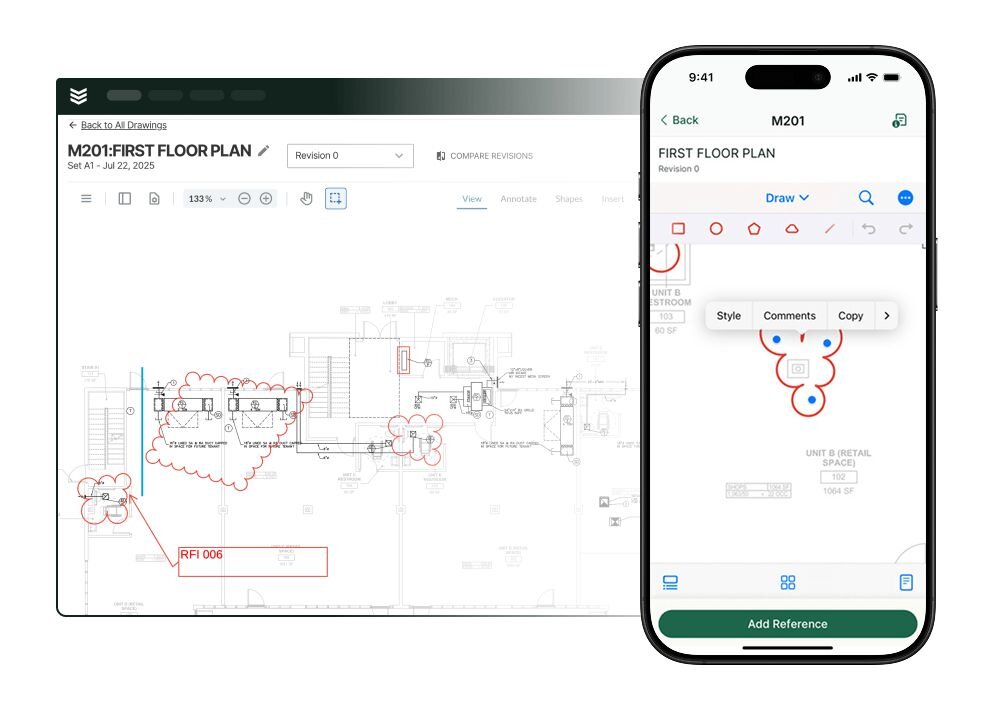
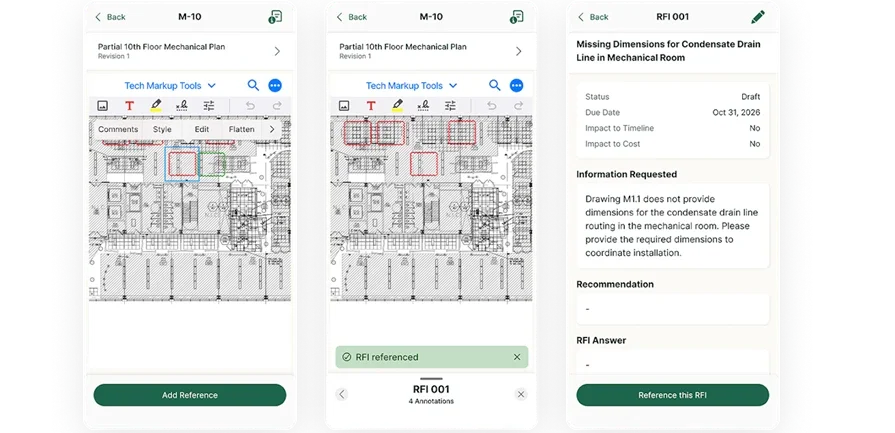
- Mobile RFIs tied directly to drawings surface scope conflicts early, before they cascade into fabrication errors or rework.
Contain Issues Before They Spread
- Change management tools connect RFIs to potential change orders and flag out-of-scope work in daily reports, protecting recoverable revenue.
- Three-way matching (POs, receipts, bills) keeps commitments, invoices, and job costs aligned so surprises don’t surface at month-end.
- Scheduling + Dispatch with skills and certifications tracking assigns qualified technicians efficiently, reducing callbacks, delays, and avoidable labor waste.

Minimize Financial Fallout
- Bulk invoicing and accounting integrations accelerate billing cycles and eliminate double entry, shortening the gap between production and payment.
- Payments+ enables faster collections through digital payment links and ACH/credit card options, strengthening cash flow.
- Digital time tracking with in-app approvals and payroll export keeps labor data accurate and aligned with job costing.
When these systems work together, you protect your margin as complexity increases instead of watching it erode. That level of control is what allows commercial contractors to pursue larger, more complex projects with confidence, not guesswork.
Stop letting small issues become costly, complex problems.
See how real-time visibility can protect your margin and restore control.