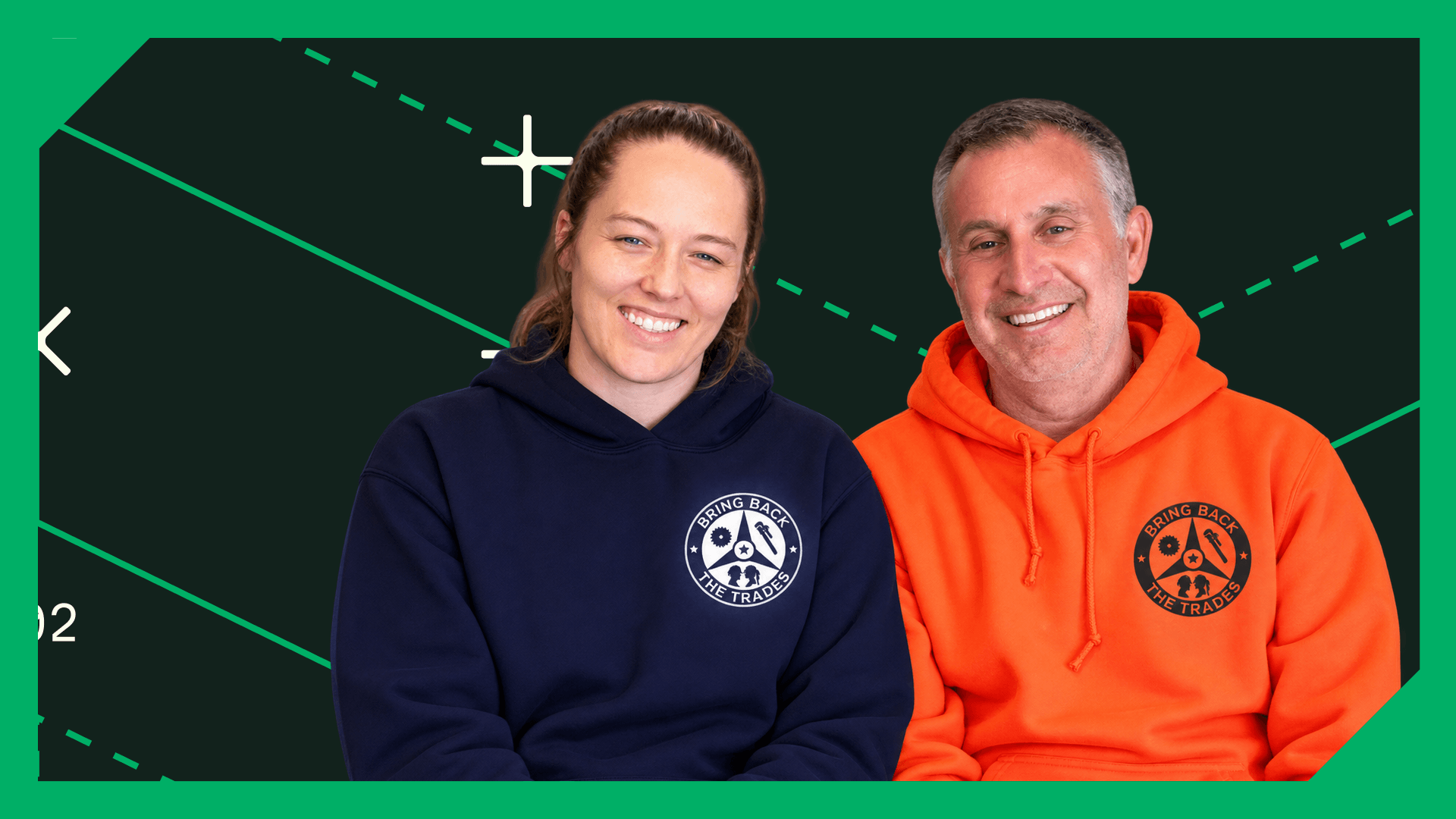
Brooke Liang + Eric Hyatt: The Skilled Trades Need the Next Generation
What the next generation of tradespeople is facing, and building, right now..

In this episode of Commercial Grade, host RC Victorino talks with Brooke Laing and Eric Hyatt, steamfitting apprentices from Toronto and co-hosts of Two Bolts Short of a Flange, about what it’s really like starting a career in the trades in 2026.
Choosing the Trades (on Purpose)
Both tried (or were pushed toward) the “safe” path first.
- Brooke started a health program with nursing in mind. Three weeks in — plus a serious volleyball injury — she knew hospital life wasn’t for her. Raised by a hands-on dad, she pivoted into welding and then steamfitting through her union.
- Eric grew up with a millwright dad and a mom from a healthcare family. A trade-fundamentals program exposed him to multiple crafts; he chose plumbing, became an apprentice at 18, then moved into union steamfitting at 20.
For both, this wasn’t a consolation prize. It was a calculation: good wages, strong benefits, and real job security. Brooke’s Type 1 diabetes makes benefits non‑negotiable — her insulin pump supplies alone would cost around $10,000/month without coverage.
Eric points out that wages in the trades trend upward and that work is there, especially as retirements accelerate.
Apprenticeship, For Real
On union jobs, there’s almost always an apprentice on the crew — but almost never formal training on how to teach them.
They’ve both seen the best and worst of that:
- At its best: journeypeople who go out of their way to teach because apprentices show up ready to learn.
- At its worst: “lemons” who don’t want to teach — or, in Brooke’s case, refuse to work with her because she’s a young woman.
Layered over all of this is a quiet crisis: halls that are cautious about new intakes today but facing a wave of retirements tomorrow. Eric calls out the short‑term thinking: “They’re not really thinking that far ahead, just about how many guys they’re gonna need right away.”
Being a Woman in the Hall — and Building the Sisterhood
Brooke’s experience as a woman in the trades is “very hit and miss.”
She’s had supportive journeypeople happy she’s there and willing to work — and she’s dealt with sexual harassment that followed her off site, plus journeymen and foremen who simply refuse to work with her.
She also sees a sharp generational split:
- 40+: more likely to resist working with or teaching her.
- 40 and under: “absolutely no issue — gender, race, sexual preference, anything like that. They’re just happy that you’re there and you’re willing to work.”
To make sure women aren’t navigating this alone, Brooke helps lead the Sisterhood of Trades — a community where women in (or exploring) the trades can compare notes, share job leads, and, eventually, access scholarships.
Why They’re Speaking Up
Neither of them had to start posting on LinkedIn or launch a podcast. They chose to.
Eric wants younger workers to see the upside of the trades — getting paid to learn at 18 and building a real career without crushing debt.
Brooke wants to counter a narrative where women’s stories are only told when things go wrong.
“I haven’t had very many negative experiences,” she says. “I want to show the side of, ‘Hey, this is a very rewarding career, regardless of your gender, race, anything like that.’”
Together, on Two Bolts Short of a Flange, they’re turning their daily debrief calls into something bigger: a real‑time record of what the next generation of tradespeople is facing, and building, right now.
{{related-content-block="/resources/commercial-grade-rich-malachy"}}