AI is changing how work gets done—but not in the way many headlines suggest. The shift isn’t sudden replacement. It’s gradual and highly dependent on the type of work being performed.
For commercial contractors, that creates a unique position:
- AI can significantly improve how work is managed
- But the human core of the work itself remains resistant to automation
This is the defining tension: high operational upside, low replacement risk.
Contractors are more and more interested in applying AI to their workflow. According to BuildOps’ Pivot Point Report, 81% of contractors surveyed feel confident in their ability to adopt AI.
What AI Is Actually Changing
AI’s biggest impact isn’t on entire jobs—it’s on specific tasks within those jobs.
In many industries, especially tech, finance, and admin-heavy roles, AI is already being used to:
- Draft and summarize documents
- Process large datasets
- Generate reports and analysis
- Assist with coding and technical workflows
But even in those fields, adoption is still catching up to capability.
That gap matters.
AI can do more than companies are currently using it for. And where adoption lags, opportunity exists.
Where Contractors Gain the Most
Service and new construction are full of high-friction workflows:
- RFIs and submittals
- Scheduling coordination
- Budget tracking
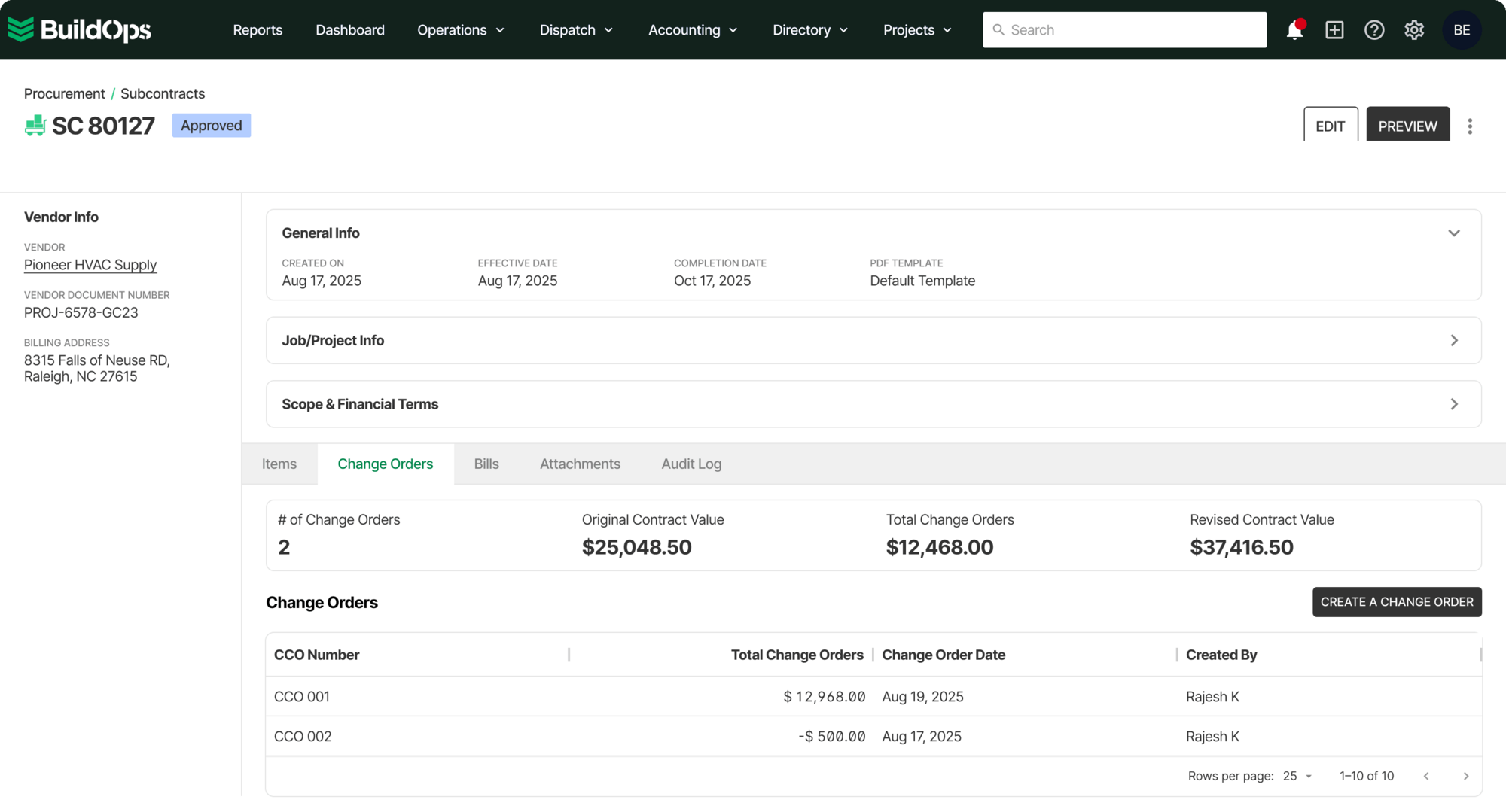
- Change order documentation
- Billing and compliance
These are not the core product—but they directly impact margin, schedule, and cash flow.
This is where AI fits.
AI doesn’t replace the work. It removes the drag around the work.
With AI applied to operations, contractors can:
- Surface inconsistencies across documents
- Track cost movement in real time
- Identify delays before they cascade
- Accelerate bid and reporting cycles
- Reduce manual coordination across stakeholders
The result is not fewer people.
It’s faster, clearer decision-making at scale.
Why the Trades Are Naturally “AI-Resilient”
While AI is accelerating digital work, the trades remain grounded in the physical world.
Core activities still require:
- On-site presence
- Manual skill and installation
- Real-time adaptation to changing conditions
- Coordination across unpredictable environments
AI can assist with planning.
It cannot:
- Install systems
- Manage field conditions dynamically
- Replace skilled trades
- Execute complex physical work
That creates a structural boundary.
The closer work is to the jobsite, the lower the AI exposure.
Where AI Has Immediate Impact
Did you know
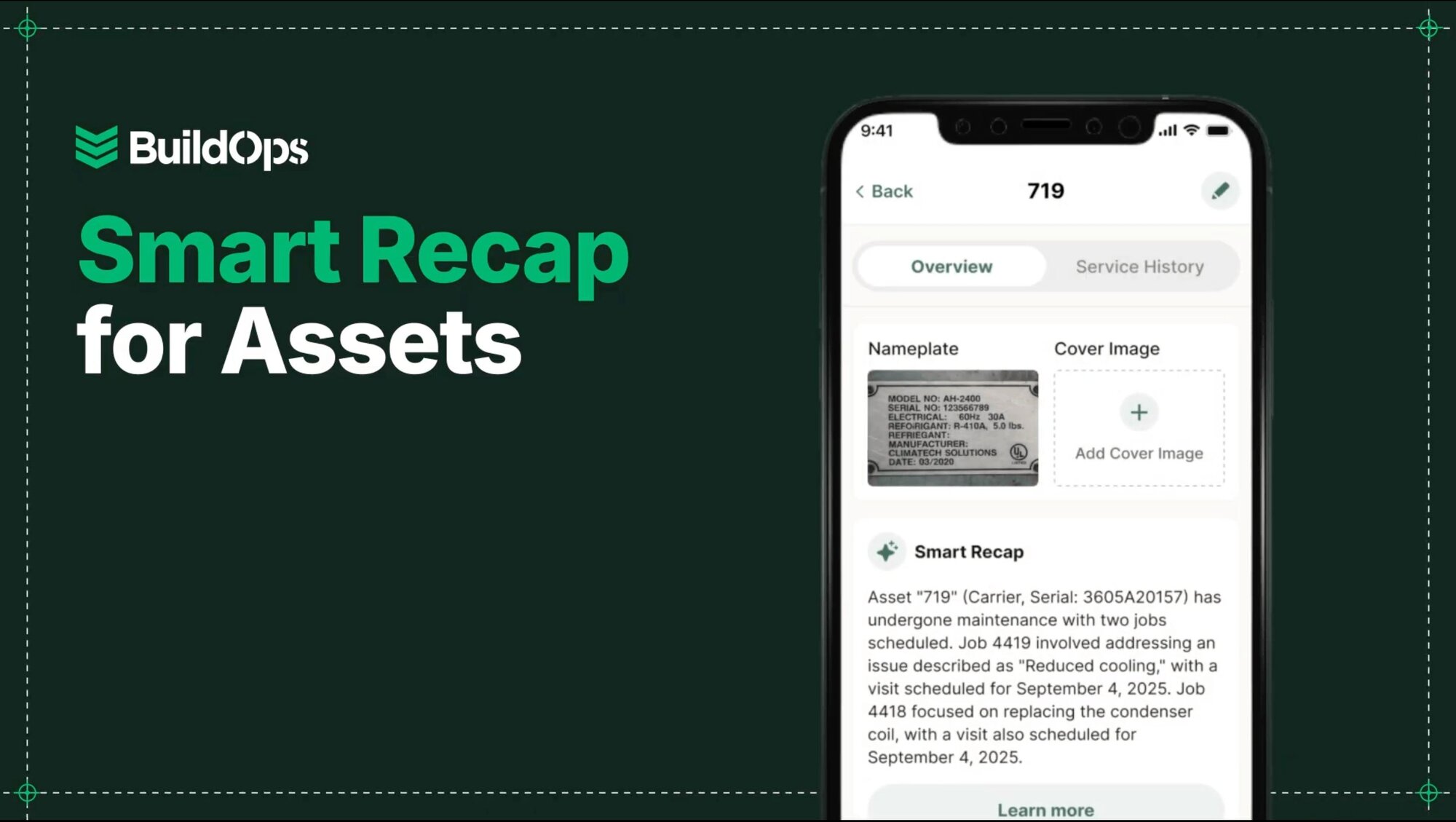
- RFIs summarized and clustered by issue
- Submittals tracked against active scope
- Budget vs actuals flagged continuously
- Schedule conflicts identified early
- Change order triggers detected automatically
- Invoice gaps surfaced in real time
- Documentation generated without rework
- Cross-team communication streamlined
The Shift Isn’t Job Loss—It’s Timing
The real change AI introduces is when you see problems.
Without AI:
- Cost overruns show up in monthly reviews
- Delays surface after schedules slip
- Billing gaps appear after cash flow tightens
With AI:
- Signals appear during execution
- Issues are flagged while they’re still fixable
- Teams can act before impact compounds
A Tale of Two Labor Markets
AI is not affecting all industries equally.
In digital-heavy fields:
- Entry-level hiring is tightening
- Work is being consolidated with AI assistance
- Fewer people can handle the same output
In the skilled trades:
- Labor shortages persist
- Demand remains strong
- Skilled roles are still difficult to fill
This creates an unusual advantage.
While other sectors compress, the trades remain capacity-constrained.
AI doesn’t remove that constraint—it helps manage it.
The Productivity Effect
Efficiency doesn’t always reduce labor demand.
In many cases, it expands output.
When teams can:
- Process information faster
- Reduce administrative overhead
- Make decisions earlier
They don’t shrink—they scale.
For contractors, that means:
- Taking on more projects simultaneously
- Increasing bid volume
- Improving margins without increasing headcount proportionally
78% of contractors surveyed in BuildOps' Pivot Point report say AI can improve operational efficiency. AI becomes a growth lever, not a cost-cutting tool.
Why Adoption Will Lag (and Why That Matters)
Even with clear benefits, adoption won’t happen overnight.
Barriers include:
- Fragmented systems across teams
- Legacy workflows and documentation
- High risk tolerance requirements
- Field-to-office disconnects
This slows rollout—but creates opportunity.
Right now, only 38% percent of contractors report using AI for admin + recordkeeping. Early adopters gain a visibility advantage before the market catches up.
Why Human Judgment Still Decides Outcomes
AI can:
- Detect patterns
- Flag anomalies
- Surface risks
- Organize complexity
But it cannot:
- Negotiate a change order
- Prioritize one project over another
- Decide when to absorb vs escalate cost
- Manage client relationships
- Set financial strategy
AI informs decisions. People make them.
The Long View: Hybrid Operations
The trades can't be automated end-to-end, but they can be augmented at the task level.
That leads to a hybrid model:
- AI handles data-heavy workflows
- Humans handle execution and judgment
Over time:
- Office functions become more automated
- Field work remains human-led
- Decision-making becomes faster and better informed
Conclusion
Commercial contractors sit in a rare position.
They are:
- Highly exposed to AI upside in operations
- Naturally protected from AI disruption in execution
That combination matters. AI isn’t coming for the jobsite.
It’s coming for:
- Delays
- Blind spots
- Manual coordination
- Missed signals
Contractors who adopt it gain:
- Earlier visibility
- Faster decisions
- Stronger margins
- Greater capacity
Those who don’t won’t be replaced by AI. They’ll be outperformed by competitors who use it.