

An electrician management app gives field service contractors a single platform to handle dispatching, job tracking, invoicing, and crew coordination across every service call. For teams operating in the electrical service industry, choosing the wrong tool means lost time, missed revenue, and techs stuck waiting on information that should already be at their fingertips.
Here's what we'll cover:
- How to choose an electrician management app that fits your workflow
- 6 key features to look for in an electrician management app
- 8 best electrician management apps for the field
- 7 benefits of using an electrician management app in the field
- 4 important FAQs about electrician management apps answered
This guide evaluates the leading platforms based on features, pricing, and real-world fit for electrical field service operations, so you can land on a decision that actually holds up once your techs are in the field. First, here's how to narrow down what to look for before comparing specific tools.
How to choose an electrician management app that fits your workflow
The difference between a tool that checks boxes and one that actually runs your operation comes down to how well it fits the way your team already works. Before comparing platforms, these are the questions worth answering first.
- Team size and structure - How many techs are dispatched daily? Do you run separate crews for service, maintenance, and project work? Are dispatchers managing one region or coordinating across multiple territories?
- Job complexity - Are your techs handling multi-phase work orders across properties? Do jobs frequently require return visits or escalation to senior electricians? How are change orders tracked once a tech is already on-site?
- Office-to-field communication - How are dispatchers relaying job updates to techs today? Are CSRs and field crews working from the same data in real time? What happens when a job scope changes mid-call?
- Billing and payment workflow - Are invoices generated on-site or batched at the office? How long does it take to move a completed job to a closed invoice? Can techs collect signatures and payments before leaving the property?
- AI and automation capabilities - Does the platform use AI to optimize dispatch routing or tech assignment? Can it flag recurring equipment issues across service history? Are workflows automated from job creation through invoicing without manual handoffs?
- Field service feature depth - Does the app support scheduling, dispatching, asset tracking, and reporting within a single system? Can it scale as your operation adds crews or expands service territories? Are features built to handle the full service lifecycle from first call to final invoice?
The next section covers the specific features that separate a basic scheduling tool from a full electrical business management app built for field operations.

6 key features to look for in an electrician management app
The features below define whether a platform can actually manage electrical field service operations or whether it stalls out at basic job tracking. Each one plays a direct role in how efficiently techs get dispatched, how fast invoices go out, and how much visibility the back office has on active work.
1. Field service CRM
Every repeat customer, service location, equipment record, and communication history should live in one place. A field service CRM designed for trade contractors lets office staff pull up a property's full service history before a tech even rolls out, giving the team context on past issues, installed systems, and open quotes. For electrical contractors managing hundreds of commercial accounts, this eliminates the guesswork that slows down diagnostics and frustrates long-standing clients.
2. Scheduling and dispatching

Electrical contractors running daily service calls need field service scheduling that accounts for tech certifications, job priority, and geographic density across open work orders. A missed assignment or a double-booked tech costs the operation billable hours and damages client trust. Equally critical is smart dispatch software that gives dispatchers real-time board visibility so they can reassign jobs on the fly when emergency calls come in or a tech runs long on a previous job. For any electrician management app, this is the operational backbone that everything else depends on.
3. Mobile access for field crews
Techs need job details, customer history, and asset records accessible on-site without calling the office. A technician mobile app that mirrors back-office data in real time means electricians can update job statuses, attach photos of panel work, and capture signatures before leaving the property. The result is fewer callbacks, faster documentation, and a field team that operates independently without creating data gaps for the office.
4. Invoicing and payment collection

Revenue only moves as fast as your billing cycle. Integrated field service invoicing eliminates the lag between job completion and invoice delivery by pulling labor, materials, and job notes directly into a billable document. Pairing that with on-site payment collection shortens the cash cycle even further, allowing techs to close out the financial side of a job before they leave the property. For any electrical business management app, this workflow directly impacts how quickly completed work converts to collected revenue.
5. AI integration
AI in field service is past the hype phase and into practical application. Platforms with field service AI capabilities can analyze dispatch patterns to recommend optimal tech assignments, surface recurring equipment failures across service history, and flag jobs trending toward budget overruns before they get there. For electrical contractors managing high call volumes, AI-driven automation reduces manual decision-making and keeps the operation moving without adding headcount.
6. Real-time reporting and performance tracking
Gut-feel decisions do not scale. Field service reporting dashboards that track revenue per tech, job completion rates, average invoice time, and open work order volume give owners and managers the data to identify bottlenecks before they compound. A strong service management app for electricians surfaces this information without requiring manual exports or spreadsheet assembly, putting operational performance in front of decision-makers daily.
Get the Electrical Service Work Toolkit
We cover successful strategies and real-life examples so you can improve workflows.
Other notable management features for electricians
Beyond the core six, a few additional capabilities separate platforms that cover the basics from those that handle the full operational picture for electrical field service teams.
- Service quoting - Generating accurate quotes on-site keeps the sales cycle tight and reduces back-and-forth between techs and the office. A platform with built-in service quoting software lets electricians present pricing to the customer while still on the property, converting approved quotes into work orders without re-entry.
- Fleet management - Knowing where every van is at any given time matters when dispatchers need to reroute a tech to an emergency call across town. Integrated fleet tracking ties vehicle location to technician availability, giving the dispatch board a complete picture of field capacity.
- Service agreements - Recurring maintenance contracts are a revenue anchor for electrical contractors, but only if renewals and scheduled visits are tracked automatically. Service agreement management keeps planned maintenance on the calendar, flags upcoming renewals, and ensures no committed work slips through the cracks.
- Time tracking - Accurate labor records drive payroll, job costing, and profitability analysis. Built-in field service time tracking captures clock-in and clock-out data per job, removing manual timesheets and giving managers a clear view of where labor hours are going across the operation.
With features covered, the next section stacks up the top platforms to see which ones deliver on these capabilities for electrical field service teams.
8 best electrician management apps for the field
These platforms highlight the best options for electrical contractors who want more control over field service. We compare each one’s features, pricing, and support for growing commercial and industrial teams, and note any gaps so contractors can quickly see which tools fit their workflow.
1. Best for commercial: BuildOps

BuildOps is purpose-built for commercial electrical contractors managing large-scale service, maintenance, and installation work. The platform connects scheduling, dispatching, quoting, invoicing, CRM, and reporting into a unified system that mirrors how commercial operations actually run.
Where it stands apart is in its ability to handle multi-site job tracking, asset history across properties, and real-time visibility between the office and field teams. For contractors juggling service agreements, tenant improvement work, and emergency calls across a portfolio of commercial properties, the depth of operational coverage here is difficult to match.
Industry Specialization: Commercial
How Pricing Works: BuildOps offers custom pricing based on business size, with weekly live demos and personalized sessions available to help contractors find the best fit for their operations.
Key Features: The platform delivers end-to-end field service management, including drag-and-drop dispatch boards with real-time tech tracking, a mobile app that gives electricians full access to job details and customer history on-site, built-in AI that optimizes tech assignments and flags recurring equipment issues, and integrated invoicing that allows techs to generate and collect payment before leaving the property.
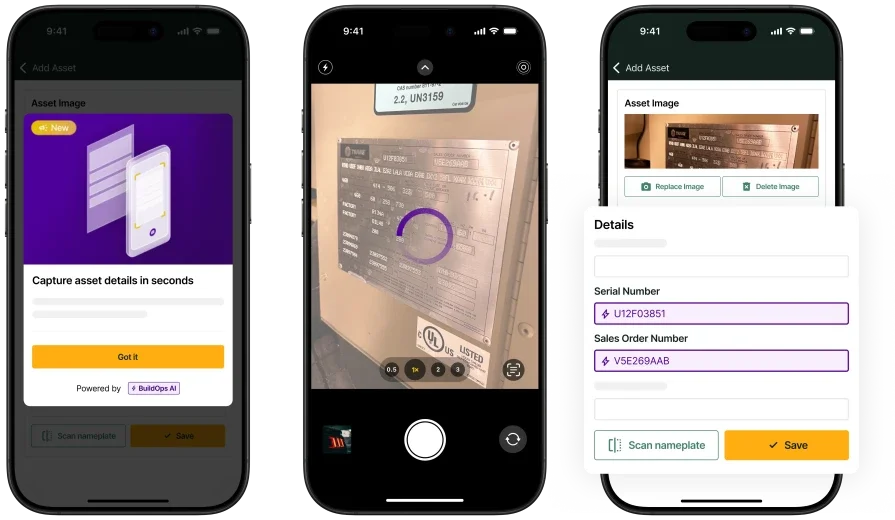
See BuildOps in action
Access job details, provide accurate quotes, and keep projects moving.
2. Best for residential: Housecall Pro

Image Source: Housecall Pro
Housecall Pro is a cloud-based field service platform widely adopted by residential electrical contractors running high-volume, in-home service calls. The interface is clean and quick to learn, making it a practical option for smaller teams that need scheduling, dispatching, online booking, and invoicing without a long onboarding curve. The drag-and-drop calendar and automated customer notifications help keep daily operations moving with minimal office overhead.
Where it may fall short is for commercial contractors who need deep reporting, multi-crew coordination, or asset-level tracking across complex job sites. Feature depth on lower-tier plans is limited, and essential tools like GPS tracking and QuickBooks integration require upgrading to higher pricing levels.
Industry Specialization: Residential
How Pricing Works: Housecall Pro offers tiered monthly plans starting at $59/month (billed annually) for basic scheduling and invoicing, scaling up to custom-priced enterprise plans for larger teams.
Key Features: The platform covers core residential workflows including online booking that converts leads after hours, automated appointment reminders and follow-ups, a mobile app for field techs to manage jobs and collect payments, and a built-in price book for consistent estimate generation.
Deep Dive
If you want to dig in and see which tool has better electrician management features that meet your specific team’s needs, check out our side-by-side comparison of our tool and Housecall Pro.
3. Best for general contractors: Jobber

Image Source: Jobber
Jobber provides a clean, user-friendly platform designed for contractors juggling different types of field work, including electrical. It combines customer management, quoting, invoicing, scheduling, and job tracking in a central desktop and mobile app. For smaller teams that need to get organized fast without a heavy implementation process, Jobber delivers solid fundamentals. The drag-and-drop calendar, automated client communications, and route optimization keep day-to-day operations efficient.
However, commercial electrical contractors who need multi-crew dispatching, deep job costing, or asset-level service history may find that Jobber lacks the operational depth required for complex field service environments.
Industry Specialization: Residential and commercial
How Pricing Works: Jobber offers tiered monthly plans starting at $29/month for solo operators, scaling up to $529/month for larger teams with advanced features.
Key Features: Jobber handles quoting with pre-set labor and material rates, GPS-based technician tracking, batch invoicing with automated follow-ups, and two-way client messaging that keeps customers informed throughout the job lifecycle.
4. Best for diagnostic and troubleshooting: MeasureQuick

Image Source: MeasureQuick
MeasureQuick operates in a different lane from traditional field service platforms. Rather than handling dispatching or invoicing, the app focuses entirely on field diagnostics, connecting to Bluetooth-enabled smart tools to stream live measurement data directly to a technician's device. Electricians working alongside HVAC systems or handling combined mechanical-electrical service can use it to run standardized tests, generate branded performance reports, and catch system issues that would otherwise go undocumented.
The AI-enhanced guided workflows reduce variability between techs and give managers visibility into diagnostic quality across the team. Because MeasureQuick does not cover scheduling, dispatching, CRM, or billing, it functions as a diagnostic layer that pairs with a broader electrician management app rather than replacing one.
Industry Specialization: Residential (diagnostics-focused)
How Pricing Works: MeasureQuick offers a free tier for basic diagnostics. Premier access runs $49/user/month on a month-to-month subscription with no long-term commitment required.
Key Features: The platform delivers AI-enhanced guided diagnostic workflows, wireless smart tool integration across 10+ manufacturers, professional branded reports that document system health, and remote diagnostic streaming that lets office support assist techs in the field.
5. Best for growing residential teams: ServiceTitan

Image Source: ServiceTitan
ServiceTitan targets residential and light commercial contractors running large service operations with dedicated office staff. The platform covers scheduling, dispatching, pricebook management, mobile invoicing, marketing attribution, and granular performance reporting under one roof. For established electrical businesses with 20+ technicians and the infrastructure to support a complex rollout, ServiceTitan delivers serious operational depth.
The tradeoff is cost and commitment. The implementation process can span multiple weeks, and the platform's breadth of features requires a meaningful investment in setup and training before teams see full return.
Industry Specialization: Residential and light commercial
How Pricing Works: ServiceTitan does not list pricing on its website. Quotes are provided through a sales consultation based on technician count and selected feature modules. Annual contracts and onboarding fees are standard.
Key Features: ServiceTitan provides a real-time dispatch board with drag-and-drop scheduling, a mobile app with integrated pricebook and on-site estimate presentation, automated SMS and email communication tied to job status updates, and performance dashboards that track revenue, close rates, and technician productivity by job type.
See how BuildOps stacks up when it’s compared directly to ServiceTitan.
6. Best for independent contractors: FieldEdge

Image Source: FieldEdge
FieldEdge is a cloud-based field service management platform from Xplor Technologies, built for home service contractors in electrical, HVAC, and plumbing. The system centers on a dispatch board with skill-based job assignment, a visual flat-rate price book, native QuickBooks integration, and a mobile app that keeps techs connected to customer data and job details from the truck. For solo operators or small electrical shops that need a reliable daily workflow without heavy configuration, FieldEdge covers the essentials.
The platform requires a structured five-week onboarding process, and features like proposal builders and marketing tools sit behind additional pricing tiers. Contractors running complex, multi-crew commercial work will likely outgrow the platform's operational ceiling quickly.
Industry Specialization: Residential
How Pricing Works: FieldEdge offers three tiered plans (Select, Premier, and Elite) with pricing based on team size and selected add-ons. A demo consultation is required to receive a custom quote.
Key Features: The platform delivers a dispatch board with map-based routing and technician skill matching, a flat-rate price book that syncs in real time with QuickBooks, a mobile CRM with full access to customer history and equipment records, and service agreement management with automated renewal reminders.
7. Best for project-focused contractors: Knowify

Image Source: Knowify
Knowify is a construction-focused job management and accounting platform designed for trade contractors balancing long-term projects with day-to-day service calls. Its strength sits in job costing, budget tracking, AIA billing, change order management, and progress invoicing, making it a natural fit for electrical contractors taking on tenant improvement, renovation, or new construction work alongside routine service. The bi-directional QuickBooks sync is one of the tightest integrations on the market, keeping project financials aligned without manual reconciliation.
Where Knowify loses ground is in field service operations. Scheduling, dispatching, and mobile tools exist but lack the real-time sophistication that high-volume service teams need. Contractors whose primary revenue comes from service calls rather than project-based work will find the platform better suited as a financial management layer than a full service management app for electricians.
Industry Specialization: Residential and commercial (project-focused)
How Pricing Works: Knowify offers tiered annual plans starting at $999/month for essentials, $249/month for advanced features, and custom pricing for unlimited access.
Key Features: Knowify provides live budget-to-actual job costing that updates as labor and materials are logged, AIA billing and progress invoicing for commercial contracts, change order tracking with automated contract adjustments, and a mobile app for field time entry and daily project updates.
Compare Knowify and BuildOps directly to see which one has the better app when it comes to electrical field work.
Best for small crews scaling operations: FieldPulse

Image Source: FieldPulse
FieldPulse is a field service management platform built for small to mid-sized trade businesses, supporting electrical contractors with teams of 5 to 200. The system covers scheduling, dispatching, CRM, estimating, invoicing, and pricebook management within an interface designed to get teams operational fast without a drawn-out implementation process. Its ClearPath workflow tool lets the office guide techs through each stage of a job, helping maintain consistent service quality across the crew.
For electrical teams that need a centralized platform without the complexity of enterprise-grade systems, FieldPulse delivers a practical starting point. Where it falls short is in advanced reporting, deep commercial customization, and multi-crew coordination across large service territories.
Industry Specialization: Residential and light commercial
How Pricing Works: FieldPulse offers tiered custom pricing based on team size and feature needs. A guided demo is required to receive a quote tailored to your operation.
Key Features: FieldPulse includes drag-and-drop scheduling with live GPS-based technician tracking, an on-site estimate builder that converts approved quotes to invoices in one click, a built-in pricebook with flat-rate pricing and service bundling for consistent field estimates, and custom dashboards tracking job profitability and crew utilization in real time.
See how BuildOps stacks up when it’s compared directly to FieldPulse.
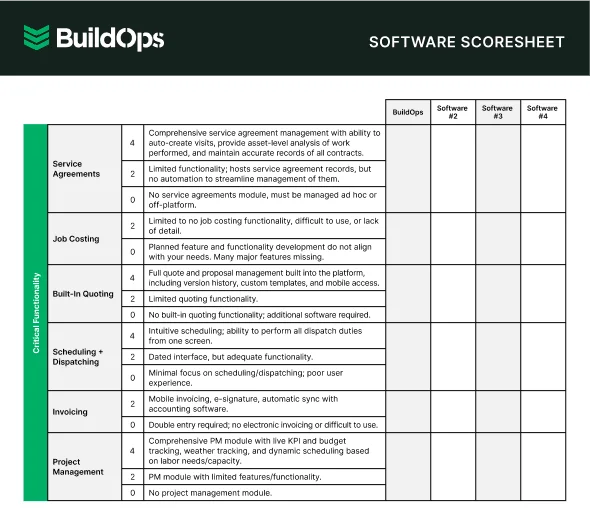
Get the software scoresheet
Compare top tools at a glance with this easy-to-use scoresheet.
7 benefits of using an electrician management app in the field
The operational payoff of a strong electrician management app shows up in every part of the workflow, from how fast a tech gets dispatched to how quickly a completed job converts to collected revenue. These are the benefits that directly impact how electrical field service teams perform day to day.
1. Faster dispatching and response times
When dispatchers can see every tech's location, certification, and current job status on a single board, assigning the next call takes seconds instead of phone chains. An electrical business management app with real-time dispatch visibility eliminates the lag between a customer request and a tech rolling to the site, which directly affects first-call resolution rates and customer retention across service agreements.
2. Centralized customer and property data
Pulling up a commercial property's full service history, installed equipment, and open quotes before a tech arrives changes the quality of every interaction. A platform with a built-in CRM for electrical contractors keeps every record in one place, so field teams walk into jobs with full context instead of starting from scratch on every visit.
3. Accurate estimating and quoting in the field
Generating quotes on-site with pre-loaded labor rates, material costs, and service bundles removes the back-and-forth between the truck and the office. Platforms that integrate AI-powered electrical estimating take this further by adjusting pricing based on job history and scope, helping techs present numbers that protect margins without slowing down the sales cycle.
4. Real-time job visibility across the operation
Knowing where every job stands at any given moment, whether a tech is en route, on-site, or wrapping up, gives managers the ability to make decisions without waiting for end-of-day updates. Field service reporting tools built into the platform surface this data automatically, turning live job activity into actionable intelligence for the back office.
Deep Dive
AI is transforming how electricians handle dispatch, diagnostics, and closeout—matching techs to calls by skills and location, spotting repeat equipment issues early, and reducing manual decisions across the service lifecycle.
The top AI use cases in field service break down how electrical teams are converting job data into faster response times, fewer callbacks, and stronger margins.
5. Streamlined documentation and compliance tracking
Electrical work carries inspection requirements, permit documentation, and code compliance that vary by jurisdiction and job type. A service management app for electricians that captures photos, signatures, inspection results, and job notes directly from the field keeps documentation tied to the work order, reducing the risk of missing records when audits or warranty claims surface months later.
6. Stronger job costing and profitability analysis
Understanding which job types, service territories, or individual techs generate the strongest margins requires data that updates as work happens, not a spreadsheet assembled after the fact. Platforms with built-in field service dashboards and field reporting give owners and managers a live view of labor costs, material spend, and revenue per job, making it possible to course-correct before profitability slips.
7. Reduced administrative overhead
Every manual handoff between the field and the office, whether it is re-entering job notes, transcribing timesheets, or chasing down missing paperwork, adds time that does not generate revenue. An electrician management app that automates the flow from job creation through invoicing and payment collection removes those bottlenecks, freeing up office staff to focus on scheduling, customer communication, and growth.

4 important FAQs about electrician management apps answered
These are the questions electrical contractors ask most when evaluating management software for their field operations.
1. What is an electrician management app?
An electrician management app is a platform that centralizes dispatching, scheduling, job tracking, invoicing, CRM, and mobile field access into one system designed to run electrical service operations from first call to final payment.
These platforms also offer asset tracking, service agreement management, reporting dashboards, and technician mobile apps that keep field teams connected in real time—all in one system. Some solutions focus on specific trades or markets, while others support a broader range of field service operations.
2. How do electrician management apps work?
The app is your business command center. Service requests come in, dispatch assigns the right tech by availability, location, and certification, and the tech gets everything they need on their phone—customer history, property details, equipment records. On-site, they update the job, add notes, snap photos, and send an invoice or quote before they leave.
The platform tracks work orders and tech performance, syncs financials with accounting software, and reports on revenue, job costs, and efficiency—keeping office and field aligned on one data set without manual handoffs or duplicate entry.
3. Are electrician management apps worth the cost?
Without a dedicated platform, every day costs electrical contractors in missed revenue, slow invoices, and scheduling chaos. An electrician management app pulls everything into one system so jobs finish faster and cash hits the account sooner.
The payoff doesn’t just add up—it multiplies. Dispatch runs smoother, job costs update in real time, service agreements never slip, and leadership finally sees what’s working and what’s not.
That’s how Classic Electric scaled with BuildOps, instead of getting stuck in a jumble of disconnected tools that were never built to grow.

4. What are some best practices for using electrician management apps?
Adopting the platform is step one. These practices ensure the team gets full value from it.
- Standardize workflows from job creation to closeout so every tech and CSR follows the same process on every call.
- Require mobile app usage across the entire field team with no exceptions.
- Build out customer and property records completely during onboarding, including equipment details and service history.
- Review reporting dashboards daily, not monthly, to catch scheduling and margin issues early.
- Update your pricebook on a recurring cadence as labor rates and material costs shift.
- Link service agreements directly to the scheduling engine so preventive maintenance visits are auto-calendared and invoiced.
- Set up automated notifications for job status changes so dispatchers, techs, and customers stay aligned without manual follow-up.
- Use job costing data to identify which service types and territories generate the strongest margins, then allocate resources accordingly.
- Train new hires on the platform during onboarding, not after, so they operate within the system from day one.
- Audit your workflows quarterly to identify where manual workarounds have crept in and bring those steps back into the platform.
The electrician management platform you choose determines how your entire operation runs—from the first service call to the final invoice. Most tools on this list cover pieces of that journey. But as you grow, those gaps turn into workarounds, bolt‑on apps, and manual processes that slow your team down.
BuildOps was built specifically for commercial electrical contractors who want scheduling, dispatching, CRM, invoicing, reporting, and AI working together in one connected system—so the whole lifecycle runs on a single, purpose‑built platform.
If you want to see how it fits your operation, schedule a free demo and walk through it with the team. No commitment, no pitch deck. Just a look at whether the platform matches the way your crews already work.
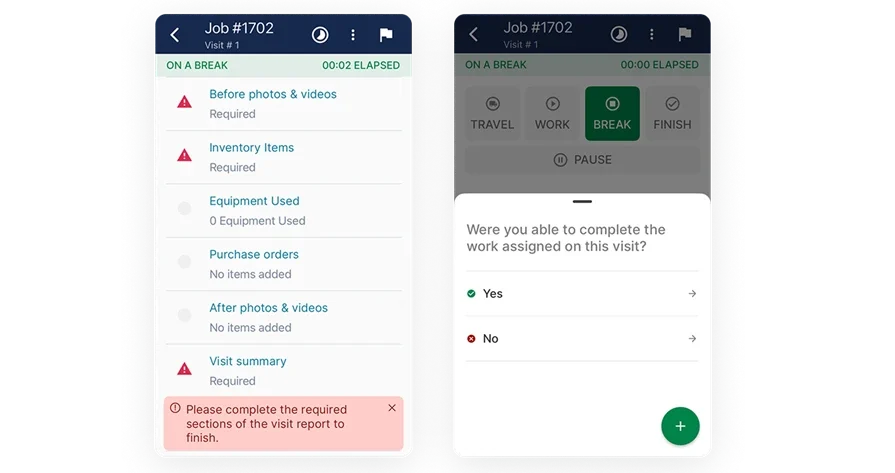
Unify your FSM with BuildOps
See how BuildOps helps electricians manage day-to-day operations with ease.