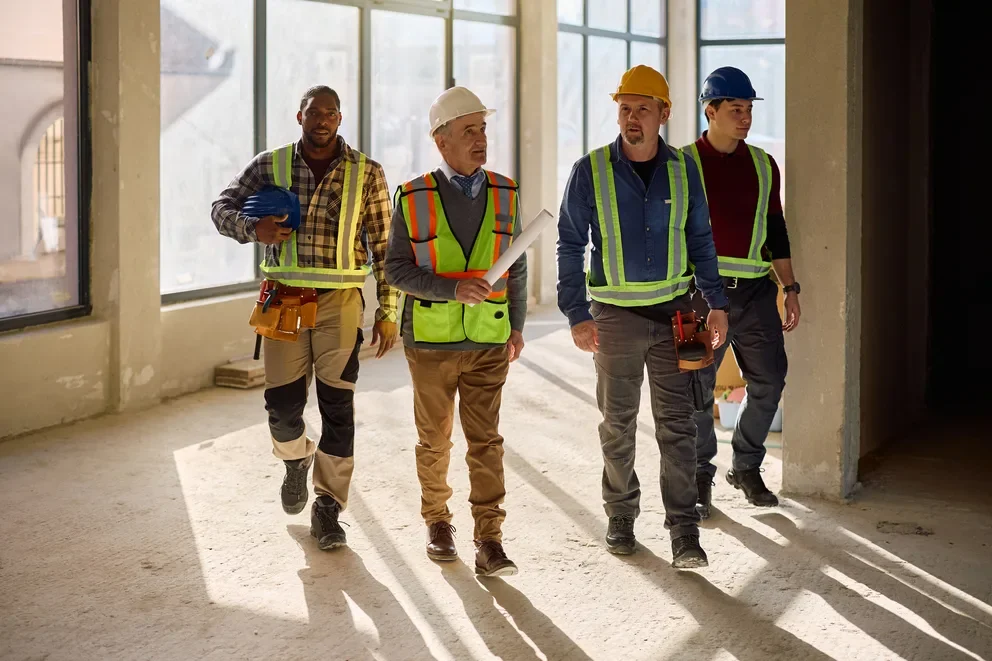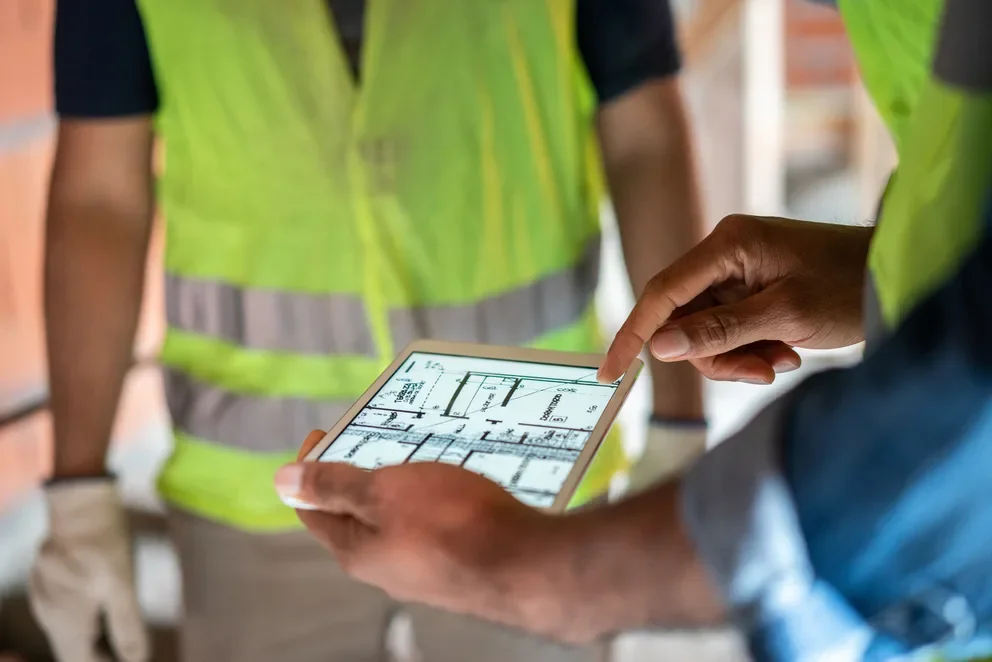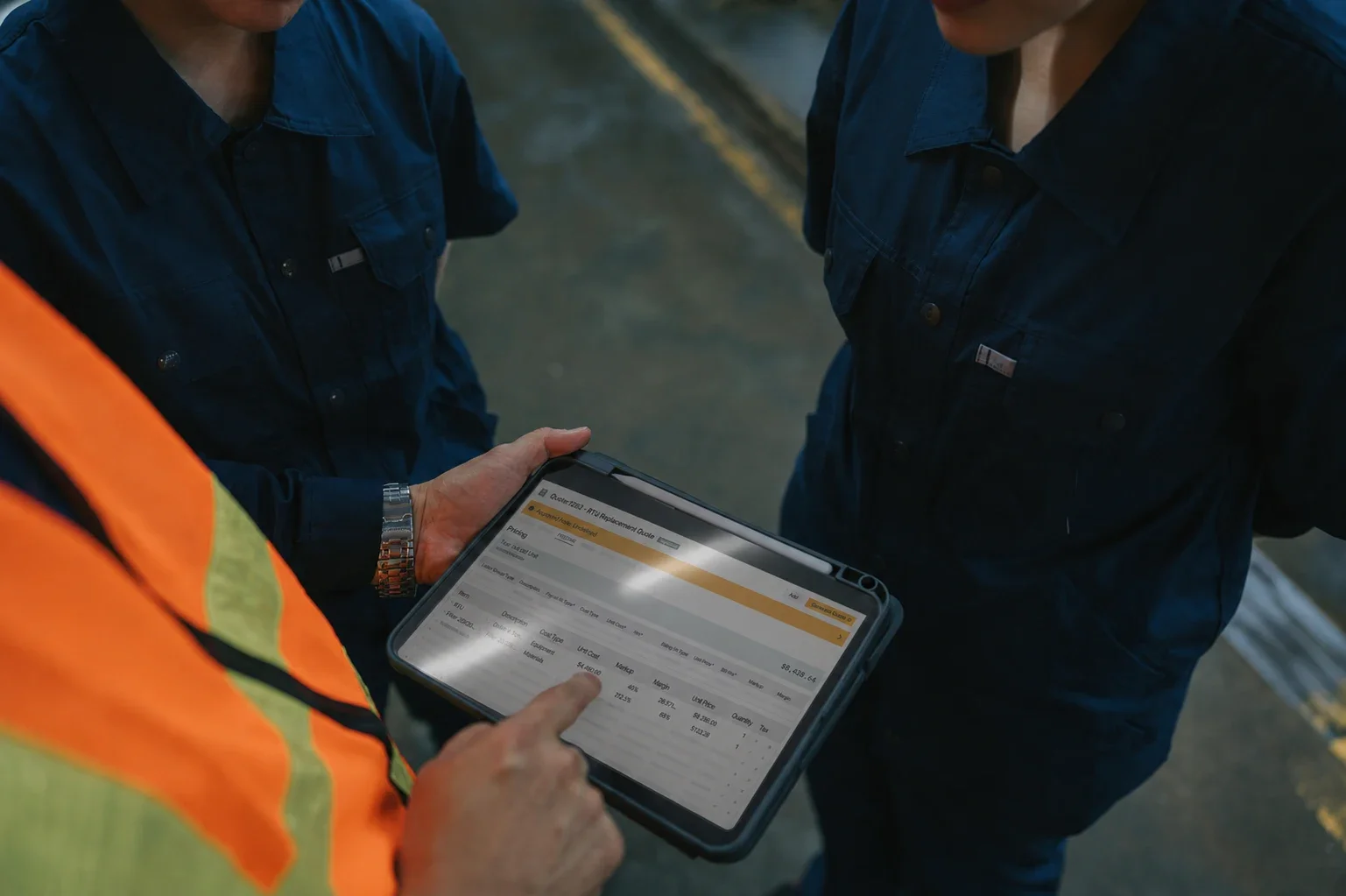
We surveyed 606 commercial contractors in our Pivot Point: AI and the Future of Commercial Contracting report, and the data paints a clear picture for anyone working in the trades: 30% say outdated tech is limiting their growth, and 80% believe AI will be essential to stay competitive within three years.
If you lead an organization that handles HVAC systems, encompassing everything from new construction and large-scale installation projects to routine maintenance and emergency service calls—it is time to stop waiting on AI. In the HVAC service industry, leveraging AI automation is the fastest way to drive construction efficiency, optimize installation schedules, reduce costly callbacks on service work, protect job margins, and achieve sustainable growth without overextending your essential office and field teams.
The question isn't if you should adopt AI, but how. This comprehensive guide provides the blueprint, detailing:
- How AI automation supports every HVAC role
- The four primary categories of AI tools available for HVAC services
- How to scale HVAC service operations with AI and automation
We begin by examining how AI automation tools optimize every critical role involved in your construction, installation, maintenance, and servicing processes.
How AI automation supports every HVAC role
AI now ties together every stage of HVAC service work—from construction projects to emergency calls—through a single, continuous flow of data. With one unified job record, dispatch runs more smoothly, technicians work faster in the field, invoices come out cleaner, and P&L stays up to date. The payoff is a leaner operation with fewer errors, less missed revenue, and a better customer experience.
Here’s how every role—from the field to the office—benefits from and contributes to a cohesive HVAC operation powered by AI.
HVAC technicians and field crews
AI tools help HVAC techs diagnose issues fast across installs, maintenance, and service calls. With instant access to equipment history, likely failure points, and on-the-spot wiring diagrams or refrigerant charts, even newer techs can tackle complex work—like controls troubleshooting or compressor changeouts—with veteran-level confidence.
On the admin side, AI cuts the paperwork. Techs speak their notes, and the system turns that into a complete job record—photos, readings, and parts included—shared with the office in real time for quick processing.
Deep Dive
AI is transforming HVAC service from first call to final invoice. It analyzes service history and equipment data to spot issues early, speed up diagnostics, reduce callbacks, and boost capacity without adding headcount.
The top AI use cases in field service break down exactly how leading HVAC contractors are turning field data into faster, smarter job management.
Office administration and dispatch teams
AI turns HVAC logistics into a smart, skills-first operation. It assigns the right tech to every job by weighing EPA certifications, licenses, workload, location, and experience with systems like VRF, chilled water, RTUs, and building automation—so jobs finish quicker and callbacks drop.
All work—service calls, PMs, construction, and emergencies—feeds into one live dashboard that keeps routes, priorities, and schedules dialed in. When something urgent hits—a failed compressor, a downed system on an install, or a hot/cold complaint—the board updates in real time, customers get notified, and high-risk jobs surface automatically, freeing your office team to focus on solutions, not shuffling tickets.
Commercial HVAC business owners and executives
AI gives leaders with immediate, granular visibility into profitability and performance that static spreadsheets simply cannot offer. It flags where labor hours are exceeding estimates, excessive material use is occurring, or specific service work is trending toward a loss—identifying issues long before they impact the P&L statement.
By collecting real-time data from the field—including labor, parts, change orders, and compliance checks across construction and service work—AI rigorously compares every job against its original estimate. It proactively highlights budget overruns, helping executives reallocate crews, tighten project scopes, and effectively manage risk across all active installation and maintenance work.
Field supervisors and project managers
AI gives construction and installation leaders a clear, real-time read on every phase—from initial equipment setup and duct rough-in to startup, commissioning, and final Test and Balance (TAB). It highlights schedule risks early, shows how a delay on one floor or system will ripple through trades and inspections, and helps keep projects moving.
Project managers use predictive scheduling to shift technicians between service, install, and construction work based on skills, location, and labor budgets. The result: higher utilization without burning people out. At the same time, safety managers tap into the same data to spot patterns in risk—like refrigerant handling or rooftop work—and act before those issues turn into incidents.
Customers and facility managers
Clients hiring commercial HVAC pros don’t want to chase updates—they want instant clarity. AI delivers it with live dashboards and automated notifications that show when techs arrive, if work is on schedule, and where risks are forming, no phone calls required.
Behind the scenes, AI powers smarter maintenance for RTUs, chillers, boilers, cooling towers, and VRF systems. It flags patterns that signal future failures, shifting you from emergency break-fix to planned, profitable service. The result: happier clients, higher renewal rates, and more recurring maintenance revenue.
Vendors and equipment suppliers
AI keeps HVAC suppliers one step ahead. It reads project timelines, service schedules, and past usage to predict demand—then triggers early releases, cuts rush freight, and times deliveries so critical parts hit the site the moment crews are ready.

4 types of AI tools used in the commercial HVAC industry
AI offers comprehensive solutions to optimize your entire HVAC operation, spanning initial construction estimating, scheduling and field deployment, to final service invoicing and customer engagement.
1. Agentic AI
Agentic AI is autonomous software that uses real-time HVAC data to spot issues—like temperature swings, short cycling, or pressure anomalies—then draws on service history to identify the most likely fix and automatically dispatch the right certified tech.
This capability extends to automatically scheduling the necessary visit, generating an estimate for the client, ordering parts, and managing follow-up reminders. Tasks that previously required significant manual office effort are now handled by agentic AI in field service, running silently in the background based on your defined business logic, crew expertise, and real-time availability.
2. Predictive AI
Predictive AI turns your service history into a warning system for your HVAC fleet—spotting issues before they become no-heat or no-cool emergencies. By tracking run time, refrigerant trends, and failure patterns across boilers, chillers, and RTUs, it flags at-risk units so you can schedule repairs on your terms and grow planned maintenance revenue.
3. Generative AI
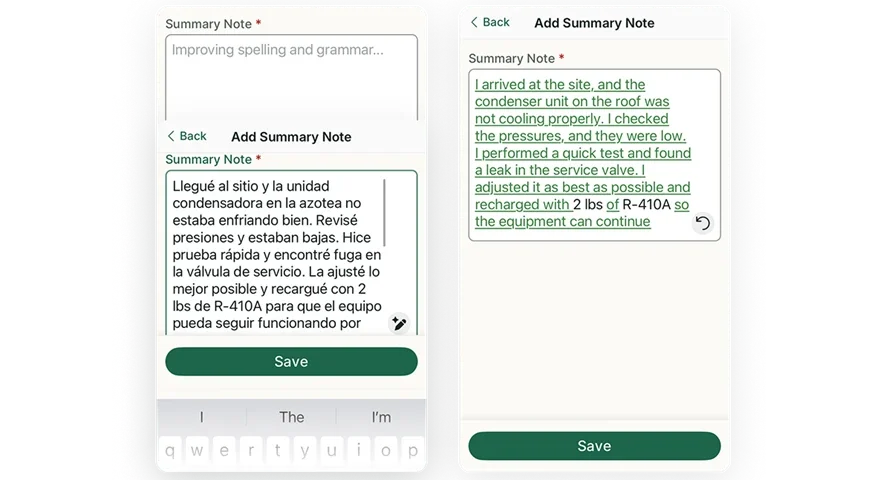
Generative AI turns field inputs—voice notes, photos, and readings—into polished HVAC service and install reports in seconds, capturing key measurements and code references so the office can invoice faster.
4. Computer vision AI
Computer vision AI turns jobsite photos and video into structured HVAC data in seconds. Techs snap a picture of a nameplate and instantly capture manufacturer, model, tonnage, and refrigerant type—while the same system checks for PPE, proper refrigerant handling, and rooftop safety compliance in real time.
BuildOps AI for Field Service
See how OpsAI auto-optimizes your work across the whole field service ops.
How to scale HVAC service operations with AI and automation
AI-powered field service management helps commercial HVAC teams move faster, eliminate costly mistakes, and stay on top of every job—from first install to final invoice.
1. Scheduling and dispatch
AI-driven scheduling systems analyze every technician's qualifications—including EPA certifications, specialized licenses, current workload, and proximity—to ensure the perfect fit is assigned to every job, whether it’s a construction rough-in or an emergency service call.
When a critical job arrives—like a data center's no-cool emergency or a major compressor failure on a construction site—the AI instantly rebalances the daily schedule, automatically reassigning less urgent filter changes or PM visits. It notifies affected customers without any manual intervention from the dispatcher. This level of automated scheduling combined with smart dispatch tools ensures field crews remain highly productive and eliminates costly downtime, boosting utilization rates across the board.
2. Field documentation and reporting automation

Upon completion of installation commissioning, a rooftop unit PM, or a major service repair, the HVAC technician can quickly document the work. By snapping photos of gauge readings and nameplates, and using voice input for observations, AI generates a comprehensive service report automatically. This report includes critical details such as refrigerant levels, airflow measurements, superheat and subcool readings, and relevant code references.
Every piece of data captured in the field, including labor time, installed assets, and parts used, is converted into a measurable metric via reporting automation. Technicians are freed from spending long periods manually typing notes at the shift’s end, and the office receives clean, complete documentation the instant the job is closed, regardless of whether it was construction or service related.
3. Fleet route optimization
AI optimizes the route sequencing for work orders by factoring in job criticality (emergency vs. planned maintenance/construction), technician certifications, local traffic patterns, and location. This ensures HVAC crews follow the most efficient and productive path across their daily schedule.
Should a sudden emergency occur—like a gas leak on a rooftop unit or a chiller trip at a commercial high-rise—AI instantly recalculates optimal routes and reassigns the nearest, most qualified technicians without disrupting the overall dispatch board. For commercial contractors managing teams across wide service areas, this capability, often delivered via robust fleet management features, can translate into hundreds of saved hours of "windshield time" annually.
4. Invoices and purchase orders

The manual processing of subcontractor invoices, equipment orders, and coil shipments across multiple active service and construction projects frequently creates bottlenecks that harm cash flow. AI is used to automatically read, extract, and categorize key financial data from scanned purchase orders and invoices. This includes vendor names, line items, quantities, and totals, which are then accurately recorded against the correct project budgets.
Advanced invoicing tools linked to a payment processing tool can leverage field notes from a completed chiller overhaul or RTU installation to auto-generate the final invoice. This accelerates the billing process and significantly shortens the service-to-cash cycle for HVAC firms.
5. Asset capture and lifecycle management
AI provides instant identification and logging of HVAC assets, including air handlers, boilers, cooling towers, chillers, rooftop units, and VRF systems, simply when a field technician photographs or scans a nameplate.
Crucial data such as manufacturer, serial number, model, and installation date are immediately captured and linked to the customer's equipment record, eliminating manual inventory tracking. Over time, the data gathered via the technician mobile app creates a comprehensive history for every piece of equipment your company installs or services. This empowers your team with the data necessary to proactively sell service agreements and schedule predictive maintenance, maximizing equipment uptime for the client.
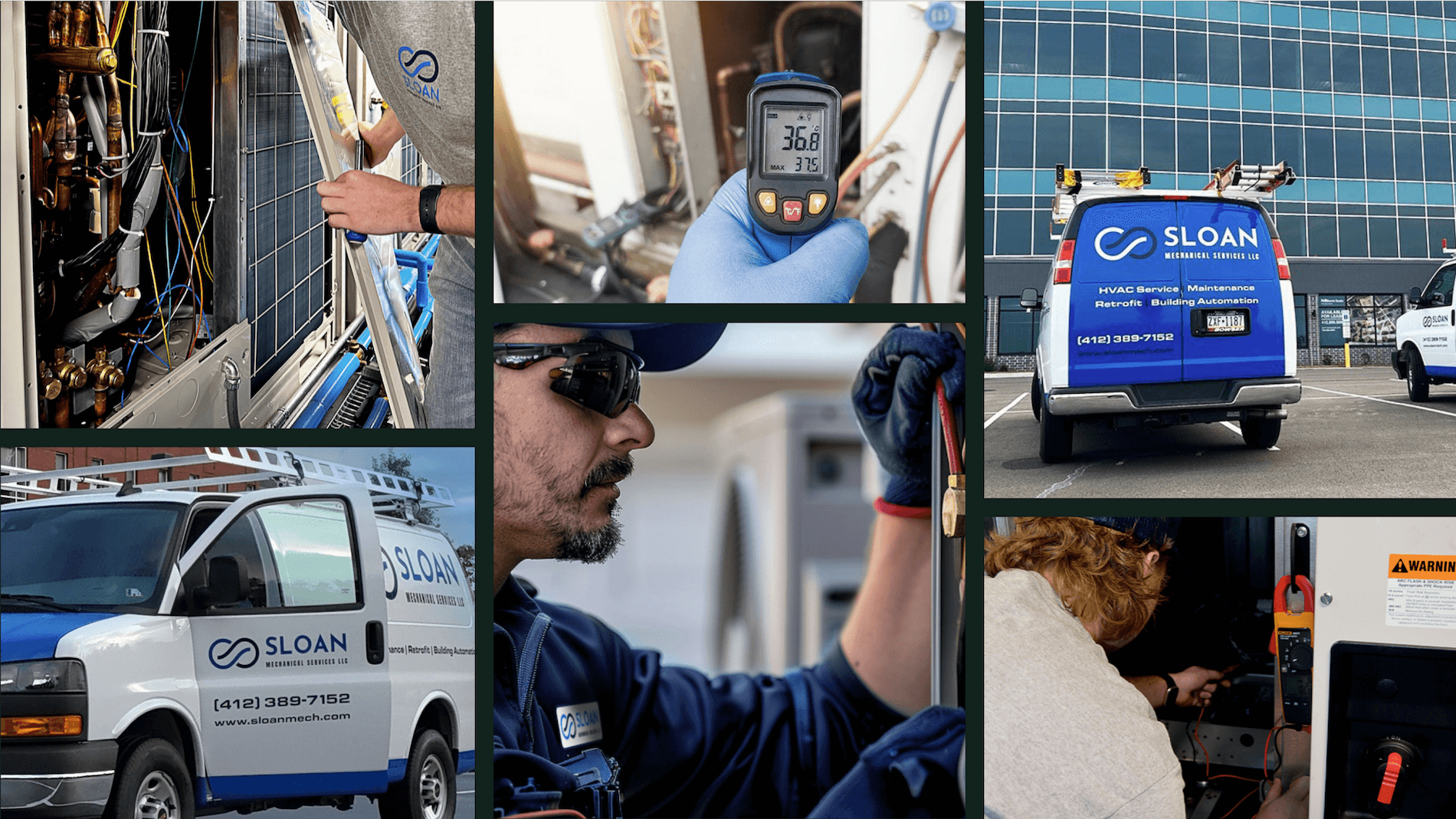
Artificial intelligence is changing how commercial HVAC teams run field service—from the office to the rooftop. BuildOps is the AI‑native platform built for commercial contractors, and OpsAI is the intelligence layer that connects your entire operation: dispatch, quotes, work orders, maintenance, and reporting.
With OpsAI, techs diagnose issues faster, prevent surprise shutdowns, and close out work with less rework—so you boost margins, protect your best customers, and scale without burning out your team.
Download our Pivot Point: AI and the Future of Commercial Contracting report to see how leading commercial HVAC service companies are putting AI‑driven field operations into practice today.
Ready to explore what this could look like for your team? Set up a demo with BuildOps to see how OpsAI can start eliminating manual busywork and streamlining every step of your commercial HVAC workflow.
The AI Pivot Point
Key insights on how leading HVAC field teams are using AI to power up their ops.