The trades don’t just have a hiring problem. They have a retention problem, a training problem, and a leadership problem.
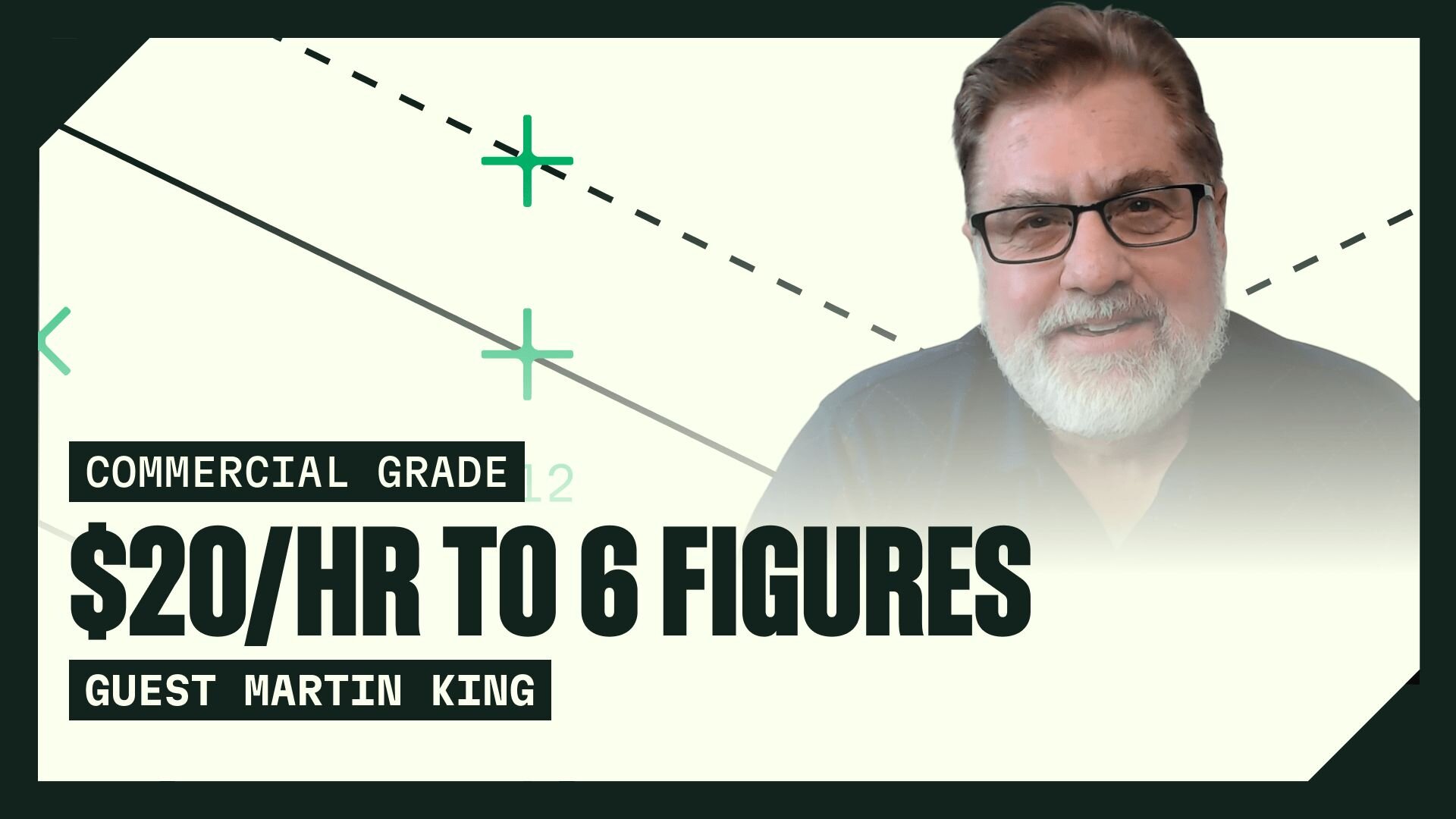
In this episode of Commercial Grade, host RC Victorino sits down with Martin King — HVAC veteran, entrepreneur, and founder of Skilled Trades Rescue — to talk about what growth actually costs in the trades, and why the industry’s labor challenge goes well beyond hiring.
Martin’s story starts in a familiar place: technical training, a union apprenticeship, and one old blue Ford van. From there, he built an HVAC company into a 30-plus-truck operation. But his biggest lesson wasn’t about growth for growth’s sake. It was about what growth actually costs.
As Martin puts it, business success isn’t about the “hot sweats.” It’s about the cold sweats — the stuff owners carry when they’re trying to make payroll, keep good people busy, and stay ahead of problems before they hit. In the trades, that pressure doesn’t go away as a company grows. It just changes shape.
The Labor Problem Goes Beyond Hiring
That matters now more than ever, because today’s labor challenge goes way beyond finding bodies. Martin points to a workforce that’s more mobile, more expensive, and more selective about where they stay.
The best techs know they have options. If a company wants to keep them, pay alone won’t do it. They need connection, purpose, and a real path forward.
Financial Literacy Still Gets Overlooked
That’s also what sits behind Skilled Trades Rescue. Martin isn’t just talking about the labor gap — he’s trying to do something about it. Through coaching, content, and guidance, he’s helping business owners, tradespeople, parents, and career explorers understand what a real future in the trades can look like.
That includes a piece the industry doesn’t talk about enough: financial literacy. When wages rise fast, but money management doesn’t, opportunity can slip away just as fast.
AI Will Help the Trades, Not Replace Them
When the conversation turns to technology, Martin’s take is grounded: AI will help the trades before it replaces them.
It can make techs faster, sharper, and better supported in the field. But skilled labor still matters. A tool can surface information. It can’t replace judgment, dexterity, or experience on a rooftop, in a mechanical room, or standing in front of a control panel.
What the Trades Need Next
The takeaway is simple: the future of the trades won’t be built by recruiting alone. It’ll be built by companies that know how to train better, lead better, and give good people a reason to stay.
Want to catch the full episode? Check out Commercial Grade on Spotify, YouTube, and Apple Podcasts.