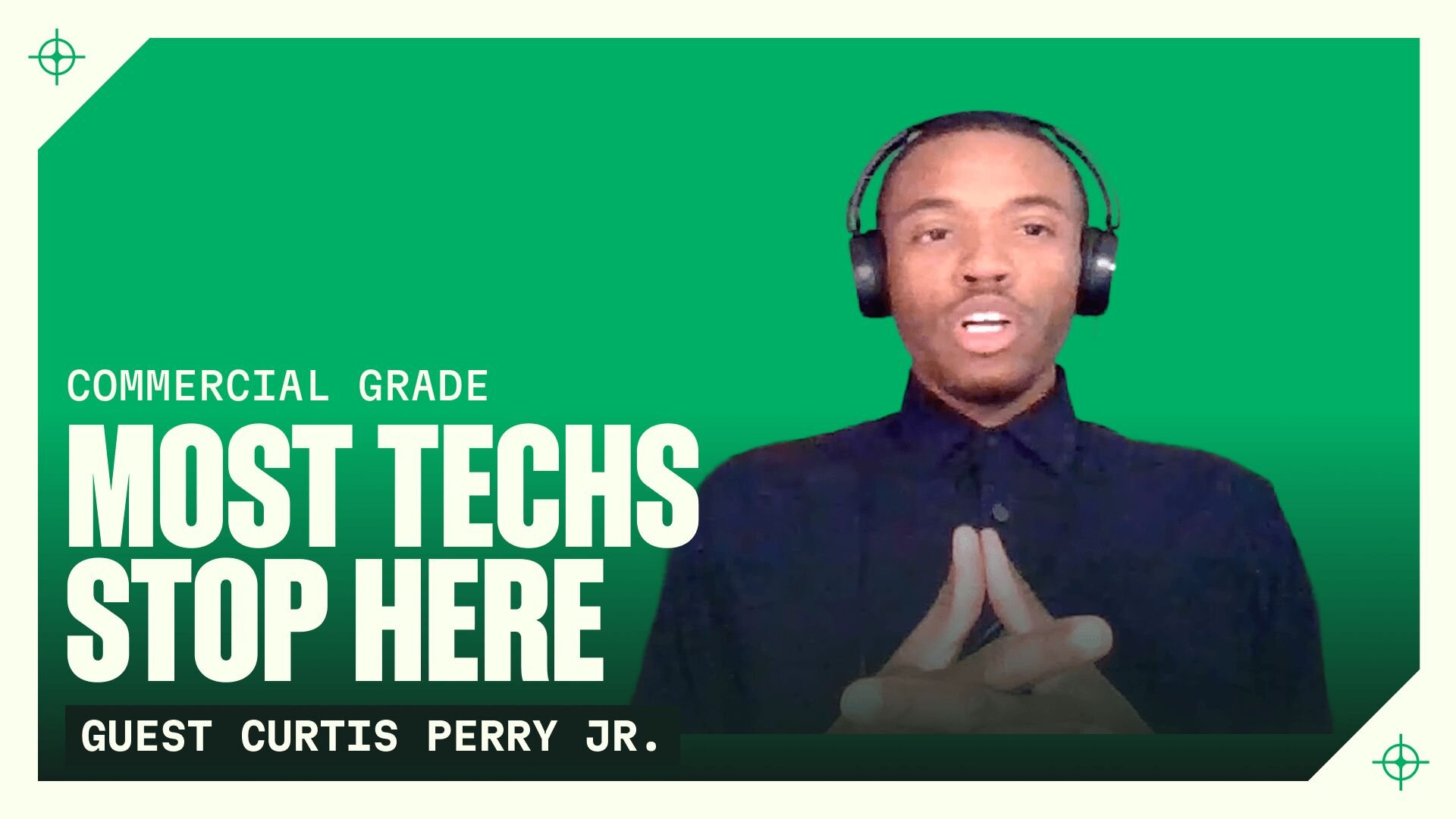
In this episode of Commercial Grade, Curtis Perry Jr. — HVAC service team lead, Above and Beyond Award winner, and trades advocate based in Columbia, South Carolina — breaks down what separates a good technician from a great one. It starts with caring about the work. And it doesn't stop at the ticket.
From Electives to All-In
Curtis didn't set out for a career in HVAC. He picked it up in high school as an elective to finish his credits. A few years later, a message at church — find something you can do with your hands — sent him searching. He thought about appliance repair, but fell in love with HVAC.
"Once I got into HVAC, the appliance repair kind of flew out the window," he says. "It really sparked my interest once I started learning, getting my hands on everything."
What "Above and Beyond" Actually Looks Like
Curtis won his company's Above and Beyond Award, not for flashy work, but for thoroughness. He breaks it down simply: a tech can show up, clear a clogged drain line, check two pressures, and leave. Or they can check every reading — superheat, subcooling, airflow, filters — and catch problems before they turn into compressor failures.
"You could save your customer money down the road by going above and beyond what you're supposed to do," he says.
That mindset applies to newer techs too. His advice: don't treat a PM like a throwaway call. Use the downtime to study the equipment, learn sequences of operation, and sharpen your skills for when the real troubleshooting calls come.
The Gap Between the Book and the Job
Curtis is honest about where on-the-job training falls short. You can study a chiller manual front to back, but if you don't see that chiller again for six months, the knowledge fades.
"You have to be in front of that equipment constantly," he says. "There have been times where I've studied manuals, tried to suck a bunch of knowledge up, and then I might not see the chiller again for six months. And then I forget it."
The pressure of real-world troubleshooting is where experience fills the gap. Over time, you walk into tough calls calmer. But the learning never stops.
Leading by Showing Up
Now a service team lead, Curtis serves as the connection between the office and technicians: helping them grow their skills and their careers. He got there by investing in himself: reading leadership books, listening to podcasts, and paying close attention to the leaders around him.
What made the best ones stand out? "They care for other people," he says. "Answering phone calls in the middle of the night when I need them to help me troubleshoot."
Closing the Storytelling Gap
Curtis believes the trades have a visibility problem. People think HVAC means sweating on a rooftop. They don't see the controls work, the chiller diagnostics, the career paths into management and sales.
His fix: meet young people where they already are, social media, and show them what the work actually looks like. Career fairs help. But a real video of a tech solving a real problem? That can make the difference.
"A lot of people don't know about it," Curtis says. "It is very rewarding. You can have a lot of fun in HVAC and the trades in general."
Want to catch the full episode?
Listen to Commercial Grade on Spotify, YouTube, or Apple Podcasts.