


AI-powered software can help electrical contractors of any size work more efficiently—from scheduling and dispatching to field notes and invoicing. Across the electrical service industry, these tools save time, cut errors, and boost revenue, but only if they fit your workflows.
Below, we’ll explain what to look for in AI software, the key features that matter, and the best tools available today.
- Top AI software features for electrical contractors
- 12 best AI tools for electrical contractors to use
- 7 benefits of using AI tools for electrical contractors
- How to choose the right AI tool for electrical contractors
- 4 important FAQs about AI tools for electrical contractors answered
Next, we’ll cover the key AI features that help you choose tools that match how your crews work in the field.
Top AI software features for electrical contractors
AI tools for electrical contractors do a lot: they help you schedule crews, manage customers, and estimate jobs. Some handle one task really well; others tie your whole operation together so office and field stay in sync.
To make it easier to evaluate what matters, we group the most important AI features into three categories, which we also use to compare the top tools.
AI-powered field service management & operations features

AI-driven operations tools handle the day-to-day side of running an electrical contracting business — getting crews to jobs faster, keeping documentation tight, and closing out work without constant back-and-forth.
- Smart scheduling & dispatch – AI analyzes technician availability, certifications, and location to recommend optimal job assignments in real time. Platforms with scheduling tools and smart dispatch software built around AI reduce idle time and help dispatchers react faster to last-minute changes.
- Technician mobile app – A technician mobile app with AI capabilities lets electricians receive dispatch details, log notes, upload photos, and update job status from the field — without calling the office.
- AI-assisted document creation – AI-powered documentation tools analyze what techs log on-site and translate it into structured reports, invoice summaries, and customer-facing documents. This cuts admin time and improves accuracy across every closeout.
- Automated invoicing – AI pulls labor hours, materials used, and job scope directly from completed work orders to generate invoices without manual re-entry. AI-powered invoicing speeds up billing cycles and reduces errors that delay collections.
- Analytics & reporting – AI-driven reporting identifies trends in technician performance, job profitability, and scheduling efficiency — then surfaces actionable insights your team can use to adjust operations.
- Custom workflows & forms – AI tools that support custom workflows let you standardize procedures, auto-populate checklists based on job type, and ensure every tech submits consistent data before closing out a job.
AI-enhanced CRM & sales features

For electrical contractors managing long-term accounts, service agreements, and a growing pipeline, AI-powered CRM and sales tools keep customer data organized, surface upsell opportunities, and make sure no lead or follow-up falls through the cracks.
- Customer hierarchies & account management – Commercial electrical clients often manage multiple properties with different contacts and service needs. AI-powered field service CRM tools let you see these relationships at a glance — so dispatchers know which property needs service, who to notify, and what work has been done before.
- Service history analysis – AI scans a customer's full service record to identify patterns — recurring issues, seasonal demand spikes, or equipment nearing end-of-life. Platforms with service agreement management tie history directly to contract terms and renewal dates.
- Pipeline & lead intelligence – AI-driven proposal tools help electrical contractors track open bids, prioritize high-value opportunities, and automate follow-ups on outstanding proposals.
- Targeted communication & follow-up – Using interaction history, AI recommends when and how to reach out to specific customers — whether it's a maintenance reminder, an invoice follow-up, or a personalized offer based on past service.
AI-driven estimating, inventory & planning features

Accurate estimates and well-stocked trucks are where profitability starts. AI tools in this category help teams quote faster, forecast material needs, and plan jobs with data — not guesswork.
- AI-powered estimating & quoting – AI auto-populates material lists, calculates labor based on historical job data, and adjusts pricing in real time using your pricebook. Electrical contractors using estimating software with AI capabilities close bids faster and protect margins.
- Inventory forecasting & tracking – AI analyzes usage patterns across jobs, trucks, and warehouses to predict when stock will run low and flag reorder points before shortages cause delays. Inventory management tools with AI-driven forecasting keep crews supplied without over-ordering.
- Fleet coordination & tracking – AI-enhanced fleet tracking gives dispatchers real-time vehicle locations, optimized routes, and the ability to reroute crews when emergencies come in.
- Time tracking & labor forecasting – Having a dedicated time tracking tool captures real labor hours from the field and feeds them directly into job costing and payroll. Over time, this data helps forecast labor needs and make better staffing decisions.
Most AI tools only cover one or two areas, not all three. When evaluating platforms, look for AI that connects across your operation—otherwise you’ll still be stuck filling workflow gaps manually.
Get the Electrical Service Work Toolkit
We cover successful strategies and real-life examples so you can improve workflows.
12 best AI tools for electrical contractors to use
AI tools for electrical contractors streamline scheduling, dispatching, estimating, and reporting—helping teams work faster, cut manual work, and keep field and office in sync.
1. Best for commercial electrical field service teams: BuildOps

BuildOps is the only field service platform built exclusively for commercial electrical contractors—no residential bolt-ons, no generic workarounds. Every workflow, from the office to the field, is tailored to the complexity of commercial electrical service.
With powerful, AI-enhanced search and organization, your team can instantly surface every asset across every property for a given client, along with the right contact at each location. No more digging through disconnected systems or chasing down details.
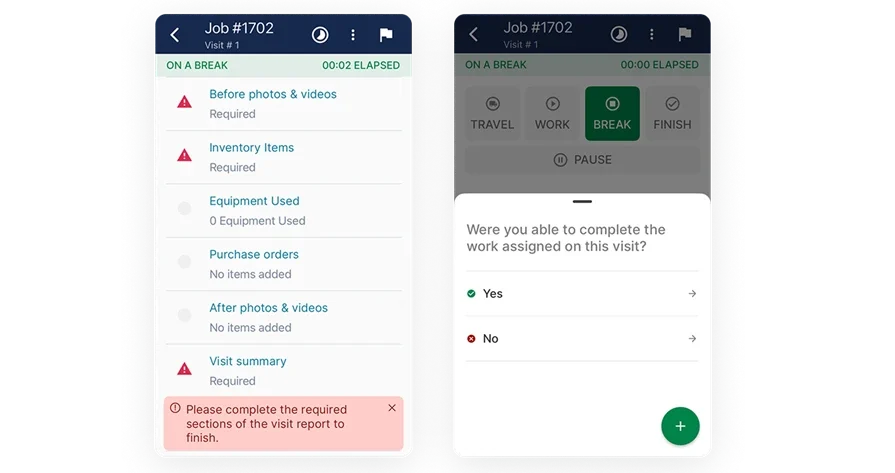
Out in the field, the BuildOps mobile app keeps your electricians moving with real-time dispatch and AI-powered notetaking. Jobs, site details, and updates flow automatically between the office and field, while AI captures and structures notes in the background—so your techs spend less time typing and more time turning wrenches, closing tickets, and serving customers.
Industry Specialization: Commercial
How Pricing Works: BuildOps offers custom pricing based on business size, with weekly live demos and personalized sessions available to help contractors find the best fit for their operations.
What Sets It Apart: Built-in customer hierarchies that organize and display assets split between multiple properties managed by the same customer, knowing what work needs to be done, on which property, and who needs to be notified about it, which is especially useful for commercial-scale electrical projects and multi-property accounts.
Key Features for Commercial Electrical Teams:
- AI-powered, real-time, Smart Dispatching that makes suggestions based on tech skills and availability
- Nameplate scanner lets you snap a photo of an electrical unit, and the app will fill in the serial number and other details for you
- Integrates with Enterprise ERP tools like QuickBooks, Vista, and Sage
Rating: 4.5 on Capterra from 151 user reviews
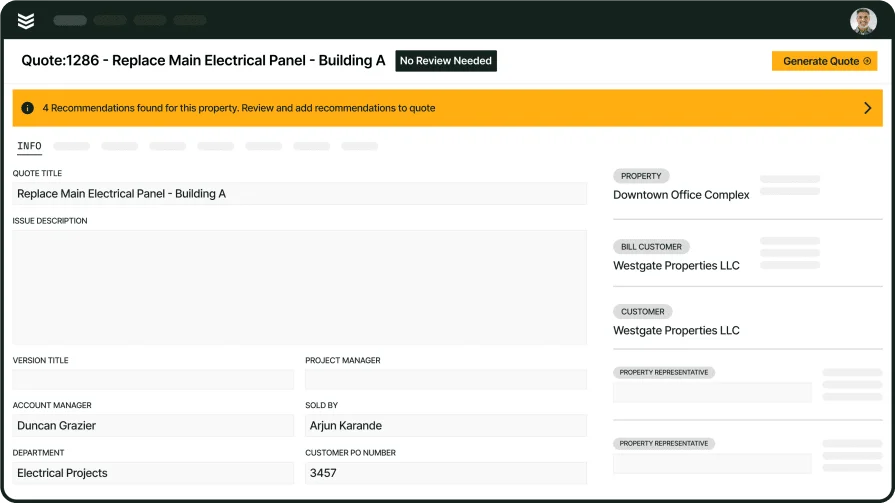
Built for commercial contractor challenges
BuildOps has helped contractors see 30% revenue growth + 75% quote approval rates
2. Best for residential electrical service teams: Jobber

Image Source: Jobber
Jobber is a field service software system for residential contractors, helping them manage their operations while growing their electrical business. You can automatically follow up with customers to get quick responses about appointments and invoices, and easily sync timesheets for payroll, customer management, invoicing, and payment, so everything is working together.
Industry Specialization: Residential
How Pricing Works: Monthly subscription based on the number of users and features
What Sets It Apart: Exclusively geared towards residential contractors and home services
Key Features for Residential Electrical Teams:
- Customers can easily book jobs with you online, with Jobber doing the rest of the scheduling work
- Whether they're for your clients or just your team, build intuitive job forms and checklists to make sure you finish all tasks on time
Rating: 4.6 on Capterra from 1420 user reviews
3. Best for general contractors that offer electrical services: Service Fusion

Image Source: Service Fusion
Service Fusion is an all-in-one FSM software designed for both residential and commercial businesses. It enables you to manage your jobs, as well as your entire fleet with GPS tracking. This gives you added visibility over your vehicles so you can reduce fuel costs and maximize the efficiency of your fleet at all times.
Industry Specialization: Residential and Commercial
How Pricing Works: Monthly subscription based on included features
What Sets It Apart: GPS tracking for advanced fleet management
Key Features for Electrical General Contractors:
- Easily schedule your jobs from a single dashboard, and then dispatch them when it's time to start the project
- Don't just track which job site your vehicles are at with GPS tracking, but actually analyze downtime and fuel efficiency to get the most out of your fleet
Rating: 4.3 on Capterra from 299 user reviews
4. Best for small and medium-sized electrical service businesses: Sera

Image Source: Sera
Sera is a newer field service software platform built to help small and medium-sized contractors streamline operations without being overwhelmed by too many program features. It offers simple yet powerful scheduling, dispatching, fleet management, invoicing, and financial functions. Hands-on customer service gets you started quickly, so you spend less time learning how to use the software and more time learning how to be successful with it.
Industry Specialization: Residential
How Pricing Works: $399/month for a team of up to 4 technicians, additional tech seats can be purchased for $149/month
What Sets It Apart: Fast and easy onboarding with dedicated training, data migration, and business coaching support
Key Features for Electrical Service Teams:
- Batch invoicing, automated customer appointment reminders, and custom templates for contacting clients
- Plenty of available integrations for added functionality while keeping the base software lean
Rating: 4.4 on Capterra from 23 user reviews
5. Best for managing subcontractors: Tradify

Image Source: Tradify
Tradify covers the essentials of electrical field service management: inquiries, quotes, scheduling, job tracking, invoicing, and receiving payments. It also has some handy functions at higher price tiers, such as integrating subcontractor schedules into your master calendar, or instantly digitizing invoices by taking photos of them. Tradify can even help you build a website that can connect to their platform in minutes.
Industry Specialization: Commercial
How Pricing Works: Tier-based monthly per-user subscription, and free trial available
What Sets It Apart: Pro and Plus tiers have dedicated tools for coordinating subcontractors' schedules
Key Features for Electrical Subcontractors:
- Integrates with Google Calendar to make lining up your schedules easy
- Cloud-based software gives anyone on your team access to the information they need, anywhere
Rating: 4.7 on Capterra from 152 user reviews
6. Best for home services: mHelpDesk

Image Source: mHelpDesk
mHelpDesk is an FSM solution designed for a series of residential field services, including electrical, plumbing, home cleaning, landscaping, painting, and even computer repair. Intuitively schedule service for your customers and manage dispatch for those jobs. Stay in contact with customers by communicating with them about their appointments.
Industry Specialization: Residential
How Pricing Works: Contact them for a private quote
What Sets It Apart: Supports a wide range of home-related field services, including landscaping and cleaning
Key Features for Electrical & Home Services Contractors:
- Lead management enables you to close more leads and take on more projects, as well as maximize your outreach efforts
- Job quotes provide more accurate estimates for the projects you're working on, and pre-built templates make them easy to create
Rating: 4.3 on Capterra from 823 user reviews
7. Best for sales management: Buildertrend

Image Source: Buildertrend
Buildertrend is a customer and sales management software for construction professionals, designed to help them capture and close more leads. Craft tailored proposals, targeted email campaigns, and clear owner communication to nurture leads, win approvals faster, and drive better results for your clients.
Industry Specialization: Home builders & Remodelers
How Pricing Works: Monthly subscription model (starting at $499/mo)
What Sets It Apart: Nurture lead funnels with email marketing and targeted proposals
Key Features for Sales Teams:
- CRM hub connects you with everything you need to create, capture, and track leads
- Draft contract proposals and execute outreach using email marketing
- Daily logs allow techs to track construction job progress with a record of the work
Rating: 4.5 on Capterra from 2483 user reviews
8. Best CRM for residential contractors: Housecall Pro

Image Source: Housecall Pro
Housecall Pro is a CRM and sales solution built for residential contractors and home service businesses. It specializes in electrical, plumbing, HVAC, and cleaning services. The platform offers advanced reporting, invoice tracking, and accounting tools that make it easy to manage all aspects of the customer relationship.
Industry Specialization: Residential Contractors
How Pricing Works: Monthly subscription based on the number of seats you'll use
What Sets It Apart: Features that cater towards residential contractors
Key Residential CRM Features:
- Use pipeline management to intake and manage customers more effectively, automating the process from estimate through to invoice
- Creates engaging sales proposals that lead to more closed contracts
- Boosts upsell success to increase job ticket sizes
Rating: 4.7 on Capterra from 2738 user reviews
Make sure to check out our comparison of Housecall Pro vs BuildOps right here to see which one is the better fit for your HVAC team.
9. Best for tender management: Procore

Image Source: Procore
Procore is an FSM platform designed for general contractors and specialty subcontractors. Among its notable features are pre-construction tools that facilitate accurate and professional-looking proposals. Make bidding for jobs – and transitioning from bid management to project management – easier with financial integrations, templates, filters, and AI automations.
Industry Specialization: General and Specialty Contractors
How Pricing Works: Contact them for a custom quote
What Sets It Apart: Financial features and integrations make the shift from estimates to proposals to budgets easy
Key Features for Tender Management:
- Integrates with over 15 accounting integrations (and over 500 apps in total) to get sales & CRM tasks done faster and easier without needing separate platforms
- Use AI and filtering tools to properly count items, view material/labor rates, and format documents so you can move between pre-project phases quickly and seamlessly
Rating: 4.5 on Capterra from 2657 user reviews
10. Best for inventory management: ServiceTrade

Image Source: ServiceTrade
ServiceTrade is an end-to-end FSM solution that helps commercial contractors with office coordination, sales management, and inventory management. Increase visibility into jobs for all team members, from office admin to field service technicians, ensuring everyone is in the loop. ServiceTrade improves operational efficiency and effectively manages your inventory so you always have the parts you need, and your technicians aren't waiting for parts they need to complete jobs.
Industry Specialization: Commercial
How Pricing Works: Subscription pricing based on the number of seats you need
What Sets It Apart: Inventory management solutions that ensure your technicians always have the parts they need
Key Features for Inventory Management:
- Tracks jobs with absolute precision using timecards, helping you limit unnecessary office visits and estimate future jobs with even better accuracy
- Forecasts the parts you'll need so you can keep your inventory fully stocked, without running into overstock issues and limiting available storage
Rating: 4.6 on Capterra from 339 user reviews
11. Best for AI-powered call management & lead capture: Workiz

Image Source: Workiz
Workiz is a field service management platform trusted by over 120,000 service professionals across electrical, HVAC, plumbing, locksmith, and other trades.
What sets it apart from other FSM tools on this list is its AI-powered communication suite — Workiz Genius — which includes AI answering that picks up missed or overflow calls, AI-driven lead capture that turns inbound emails into leads automatically, and AI call insights that help teams analyze customer conversations for patterns and opportunities.
Industry Specialization: Residential and Commercial
How Pricing Works: Flexible monthly subscription plans with different pricing tiers based on features needed
What Sets It Apart: Built-in AI communication tools — including AI call answering, automated lead capture, and call insight analysis — that help electrical contractors capture every inbound opportunity without adding office staff
Key Features for AI-Driven Lead Capture:
- Workiz Genius AI answering handles missed and overflow calls 24/7, books jobs, and dispatches techs automatically
- AI leads processing turns inbound emails into actionable leads instantly, so your team can respond before competitors
- Built-in phone system with call recordings, ad tracking, and automated messaging keeps customer communication organized in one place
Rating: 4.4 on Capterra from 218 user reviews
12. Best for scaling multi-trade electrical operations: ServiceTitan

Image Source: ServiceTitan
ServiceTitan is a comprehensive platform designed for both commercial and residential trades, including electrical, HVAC, plumbing, and more.
It offers a deep feature set that spans dispatching, scheduling, call booking, marketing, field mobile app, payments, customer experience, reporting, accounting, and inventory, making it a strong fit for electrical contractors looking to scale operations across multiple service lines or locations.
Industry Specialization: Commercial and Residential
How Pricing Works: Quote-based pricing with monthly per-user plans, typically bundled with onboarding fees
What Sets It Apart: Enterprise-grade platform with Titan Intelligence and deep reporting that supports multi-trade electrical businesses scaling across service, replacement, and construction workflows
Key Features for Scaling Electrical Operations:
- 70+ pre-built integrations with commercial solutions like ServiceChannel, Viewpoint Spectrum, Sage, and Ferguson keep your tech stack connected
- Real-time costing and predictive insights across every visit and project phase help protect margins as you grow
- Commercial customers on ServiceTitan for two or more years report a 16% increase in annual revenue and 10% improvement in on-time invoice payments
Rating: 4.3 on Capterra from 325 user reviews
See how BuildOps stacks up when it’s compared directly to ServiceTitan.
7 benefits of using AI tools for electrical contractors
A strong AI-powered platform speeds every step of the workflow—from dispatch to payment—directly boosting electrical field service performance.
1. Faster dispatching and response times
When dispatchers see every tech’s location, certification, and status on one board, they can assign jobs in seconds. Real-time dispatch visibility cuts the delay between a customer call and a tech on site, boosting first-call fixes and customer retention.
2. Centralized customer and property data
Pulling up a commercial property's full service history, installed equipment, and open quotes before a tech arrives changes the quality of every interaction. A platform with a built-in CRM for electrical contractors keeps every record in one place, so field teams walk into jobs with full context instead of starting from scratch on every visit.
3. Accurate estimating and quoting in the field
Generating quotes on-site with pre-loaded labor rates, material costs, and service bundles removes the back-and-forth between the truck and the office. Platforms that integrate AI-powered electrical estimating take this further by adjusting pricing based on job history and scope, helping techs present numbers that protect margins without slowing down the sales cycle.
4. Real-time job visibility across the operation
Knowing where every job stands at any given moment, whether a tech is en route, on-site, or wrapping up, gives managers the ability to make decisions without waiting for end-of-day updates. Field service reporting tools built into the platform surface this data automatically, turning live job activity into actionable intelligence for the back office.
Deep Dive
AI is transforming how electricians handle dispatch, diagnostics, and closeout—matching techs to calls by skills and location, spotting repeat equipment issues early, and reducing manual decisions across the service lifecycle.
The top AI use cases in field service break down how electrical teams are converting job data into faster response times, fewer callbacks, and stronger margins.
5. Streamlined documentation and compliance tracking
Electrical work has complex, varying compliance requirements. A service app that captures photos, signatures, inspections, and notes in the field keeps everything tied to the work order and reduces missing documentation during audits or warranty claims later.
6. Stronger job costing and profitability analysis
Understanding which job types, service territories, or individual techs generate the strongest margins requires data that updates as work happens, not a spreadsheet assembled after the fact. Platforms with built-in field service dashboards and field reporting give owners and managers a live view of labor costs, material spend, and revenue per job, making it possible to course-correct before profitability slips.
7. Reduced administrative overhead
Manual handoffs between field and office waste non-billable time. An electrician management app automates everything from job creation to payment, eliminating bottlenecks so office staff can focus on scheduling, customers, and growth. Agentic AI tools take this even further by handling routine decisions — like rescheduling a canceled visit or flagging incomplete work orders — without human input.

How to choose the right AI tool for electrical contractors
The difference between a tool that checks boxes and one that actually runs your operation comes down to how well it fits the way your team already works. Before comparing platforms, these are the questions worth answering first.
- Team size and dispatch structure – How many techs are dispatched daily? Do you run separate crews for service, maintenance, and project work? Are dispatchers coordinating across multiple territories?
- Job complexity and scope – Are your techs handling multi-phase work orders across properties? Do jobs frequently require return visits or escalation to senior electricians? How are change orders tracked once a tech is already on-site?
- Office-to-field communication – How are dispatchers relaying job updates to techs today? Are CSRs and field crews working from the same data in real time? What happens when a job scope changes mid-call?
- Billing and payment workflow – Are invoices generated on-site or batched at the office? How long does it take to move a completed job to a closed invoice? Can techs collect signatures and payments before leaving the property?
- AI and automation capabilities – Does the platform use AI to optimize dispatch routing or tech assignment? Can it flag recurring equipment issues across service history? Are workflows automated from job creation through invoicing without manual handoffs?
- Field service feature depth – Does the app support scheduling, dispatching, asset tracking, and reporting within a single system? Can it scale as your operation adds crews or expands service territories? Are features built to handle the full service lifecycle from first call to final invoice?
The next section covers the specific features that separate a basic scheduling tool from a full AI-powered electrical business management app built for field operations.
4 important FAQs about AI tools for electrical contractors answered
These are the questions electrical contractors ask most when evaluating AI-powered management software for their field operations.
1. What is an AI tool for electrical contractors?
An AI platform for electrical contractors brings dispatching, scheduling, job tracking, invoicing, CRM, and field mobility into one system to run the business end-to-end. It also supports asset tracking, service agreements, reporting, and real-time mobile apps that keep office and field teams in sync.
2. How do AI tools for electrical contractors work?
The platform is your operations command center. Jobs come in, the right tech is dispatched, and everything they need is on their phone — history, site details, and equipment data. In the field, they update the job, capture photos, and send quotes or invoices on the spot.
Behind the scenes, work orders, performance, and financials stay in sync, so office and field run on the same real-time data without manual handoffs.
3. Are AI tools for electrical contractors worth the investment?
An AI-powered electrician management app brings everything into one place, so jobs move faster, invoices go out sooner, and cash comes in quicker.
Dispatch runs smoothly, job costs update in real time, service agreements stay on track, and leadership finally gets clear visibility into what’s working.
4. What are the best practices for getting full value from AI tools for electrical contractors?
Adopting the platform is just the start; building habits that keep teams working in the system is how you get full value, whether you’re a small crew or a multi‑territory operation.
- Standardize workflows from job creation to closeout so every tech and CSR follows the same process.
- Require every field tech to use the mobile app with no exceptions.
- Fully build customer and property records during onboarding, including equipment and service history.
- Review reporting dashboards daily to catch scheduling and margin issues early.
- Update your pricebook regularly as labor and material costs change.
- Link service agreements to scheduling so PM visits auto-schedule and auto-invoice.
- Automate job status notifications to keep dispatch, techs, and customers aligned.
- Use job costing to find your highest-margin services and territories, then staff accordingly.
- Train new hires on the platform during onboarding so they use it from day one.
- Audit workflows quarterly to remove manual workarounds and pull tasks back into the platform.
AI can do more than speed things up for electrical contractors. It can keep your team aligned, reduce manual work, and give you better visibility into the business.
Most tools solve one part of the problem. BuildOps connects scheduling, dispatching, CRM, estimating, invoicing, reporting, and AI-powered field tools in one platform built for commercial electrical contractors. That means less admin for your office and field teams — and more jobs moving from first dispatch to final invoice.
Want to see it in action? A live demo is the fastest way to see what BuildOps can do.
Unify electrical service work with BuildOps
See how BuildOps helps electrical contractors manage day-to-day ops with ease