8 Best Fire Door Inspection Apps to Sync Field & Office
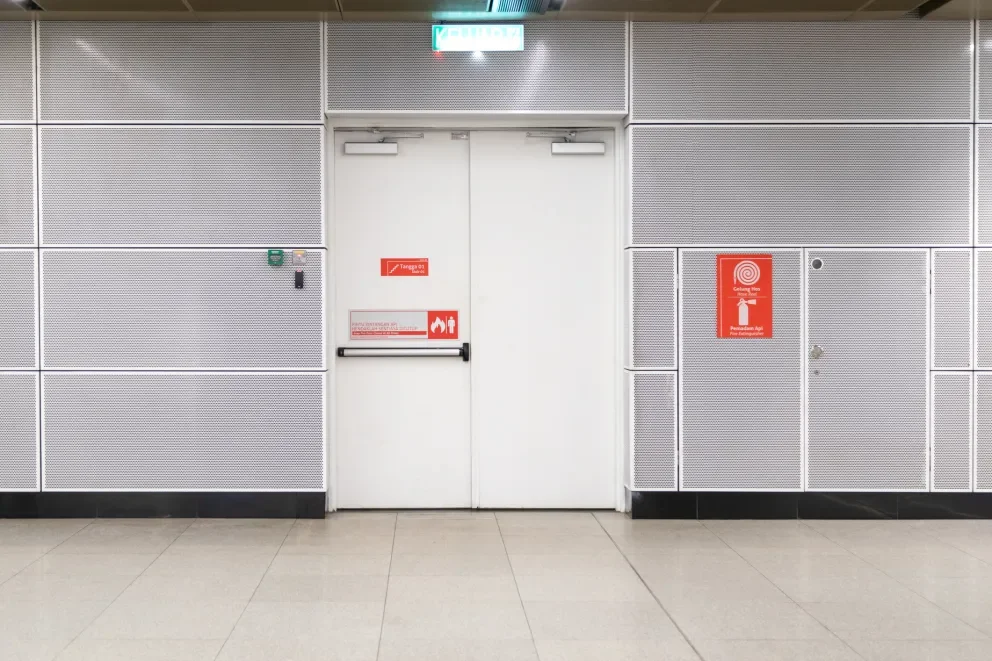
Fire door inspections sit in the middle of every ITM route you run. If you manage crews in the fire safety industry, you already deal with tight windows, picky documentation, and follow-up work that hits scheduling fast. A fire door inspection app keeps each opening tied to the work order, the deficiency, and the closeout trail your office needs.
Here’s what this guide covers.
- 5 key features to look for in a fire door inspection app
- 8 best fire door inspection apps for field management
- 7 benefits of using a fire door inspection app as a contractor
- Choosing the right fire door inspection app for your team
- 5 important FAQs about fire door inspection apps answered
When you’re making sure every fire door and exit is ready for an emergency, your techs spot issues during sprinkler checks, extinguisher service, alarm testing, and annual inspections — and you need clean handoffs from deficiency to repair to report.
5 key features to look for in a fire door inspection app
On a full ITM day, doors shouldn’t get lost in the noise. They surface as deficiencies during sprinkler inspections, as follow-up repairs after failed annuals, and as owner questions when your closeout packet hits their inbox.
The right fire door inspection app lets your team capture opening-level details in the field, link each door to the correct follow-up, and move the next step forward fast—so documentation stays clean, workflows stay connected, and office rework all but disappears.
1. Mobile app
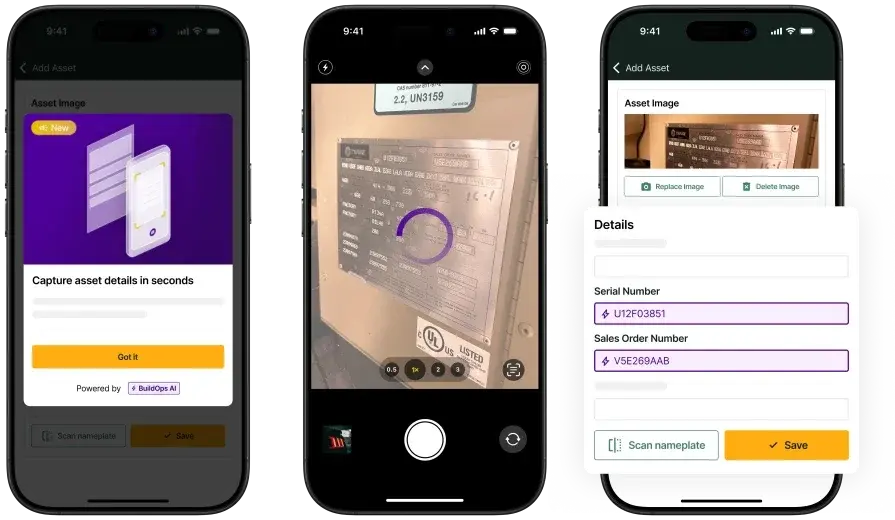
A mobile workflow only works if the tech can capture proof at the opening, under real site conditions, without backtracking later. With a technician mobile app in the middle of the process, your inspector scans the opening, logs the result against the correct door, and attaches the photos that actually matter. That scan-first flow prevents “Door 3A” from turning into a guessing game once they hit the truck.
2. Scheduling & dispatch
If door inspections live inside broader ITM work, your plan has to survive the day, not the whiteboard. When you connect inspection routes to scheduling and keep changes moving through smart dispatch software, you can adjust when access falls apart or a deficiency turns into a parts run. Say your inspector flags failed latches across three floors and the customer wants repairs started that afternoon. Dispatch can slot a repair tech into that same zone while the inspection crew keeps rolling.
3. Service agreements
Recurring door programs live or die on scope control across a portfolio. When your door work ties back to service agreements, you can separate what is included from what needs approval without turning every call into a negotiation. For instance, when a property team questions a closer replacement charge, your coordinator can point to the agreement terms and the documented deficiency in the same thread.
4. Reporting

Reports get forwarded, audited, and challenged, so they need consistency across inspectors and buildings. With strong reporting inside the workflow, your door findings roll up into a package that shows opening-by-opening results, photo proof, and a clear deficiency list tied to the job. This looks like a tech finishing a high-rise annual and the PM needing floor-by-floor deficiencies before a tenant meeting.
5. Service CRM
Doors touch owners, tenants, facility teams, and AHJs, so the contact trail matters. A connected field service CRM keeps sites, contacts, and job history in one place so your team answers questions without scrambling. When a property manager calls asking about a specific stair door, your office can pull the opening history and current status immediately.
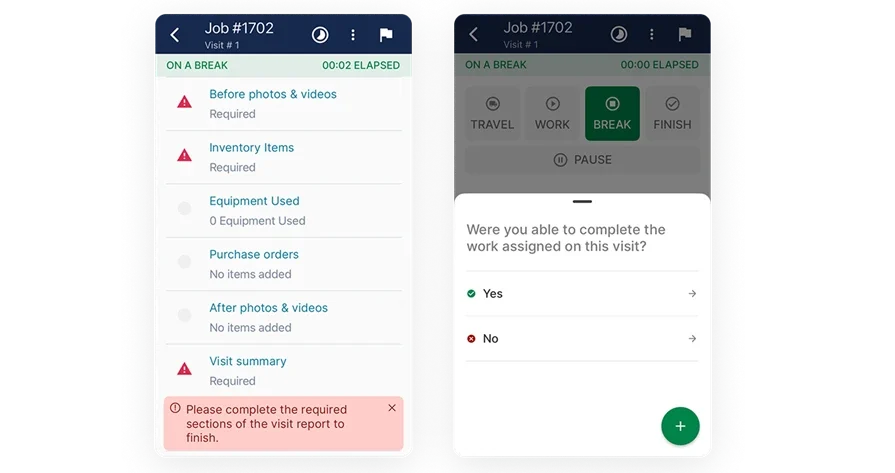
Other notable features contractors should look for in a fire door inspection app
Once the core workflow is locked in, a few supporting features decide whether door deficiencies turn into approved work and clean billing without office churn.
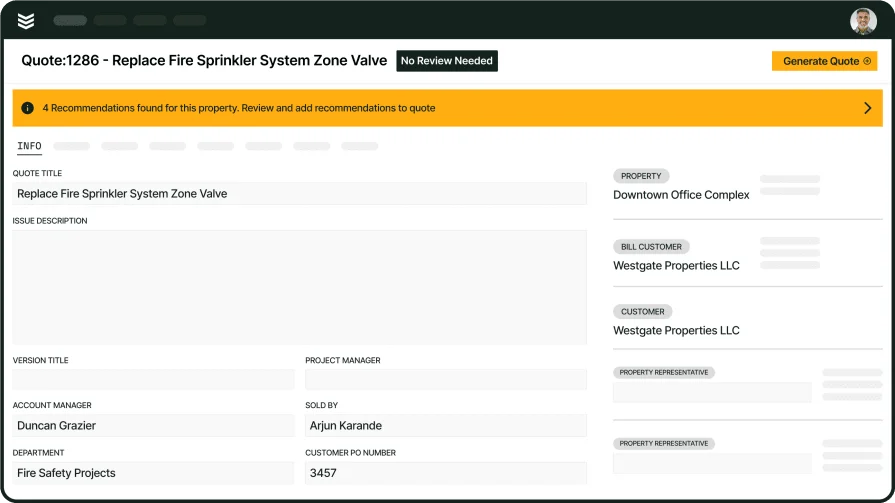
- Quoting tied to deficiencies - Turn failed openings into priced repair scopes fast using service quoting software that carries over photos, notes, and line items from the inspection record
- Time and fleet visibility - Validate labor and travel across multi-site routes with time tracking while keeping trucks, zones, and coverage aligned through fleet management
- Invoice and payment flow - Push approved repair work into invoicing and close out faster with payments that match how your customers pay
With these pieces in place, you can judge tools by how well they keep door inspections connected to the rest of your FLS operation.
8 best fire door inspection apps for field management
Fire door inspections look simple until you stack them against a real service day. Your techs bounce between sites, access windows shift, and deficiencies turn into return trips that can wreck the week if they drift outside the workflow. A fire door inspection app should capture opening-level proof fast, then keep that same record connected to dispatch, repairs, billing, and closeout so your office does not have to piece it together later.
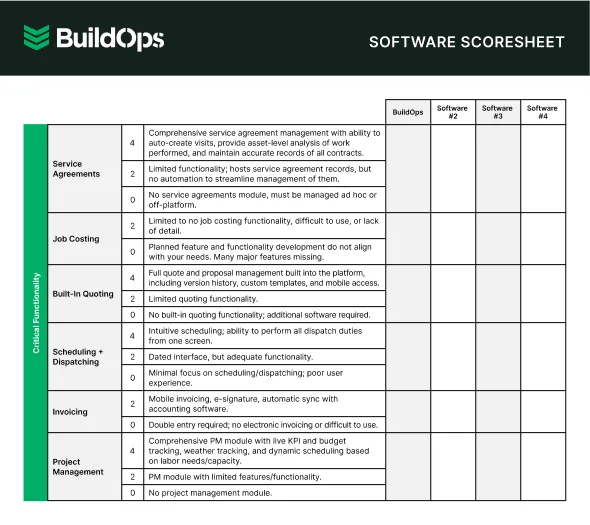
1. Best for commercial: BuildOps

BuildOps fits commercial FLS contractors who manage door inspections alongside the rest of their compliance workload, across properties, sites, and recurring visits. It stands out because it keeps inspection history and deficiency follow-ups tied to the same operational workflow your team already runs every day.
How pricing works: BuildOps uses custom pricing based on team size and the features you need to optimize your business.
Features beyond fire door inspection: You can run the full job cycle in one place, from dispatching the tech to documenting work, tracking deficiencies, and pushing the job through billing and reporting. That matters when a door inspection triggers same-day repair work, return trips, or a bundled closeout package that needs consistent documentation across the account.
What sets it apart for commercial: Commercial door programs live in asset history, customer standards, and repeatable reporting across a portfolio. BuildOps supports that operational reality, so supervisors can track site history, see open deficiencies by property, and keep inspectors, repair techs, and office teams working from the same record instead of chasing updates.

2. Best for residential: ServiceTrade
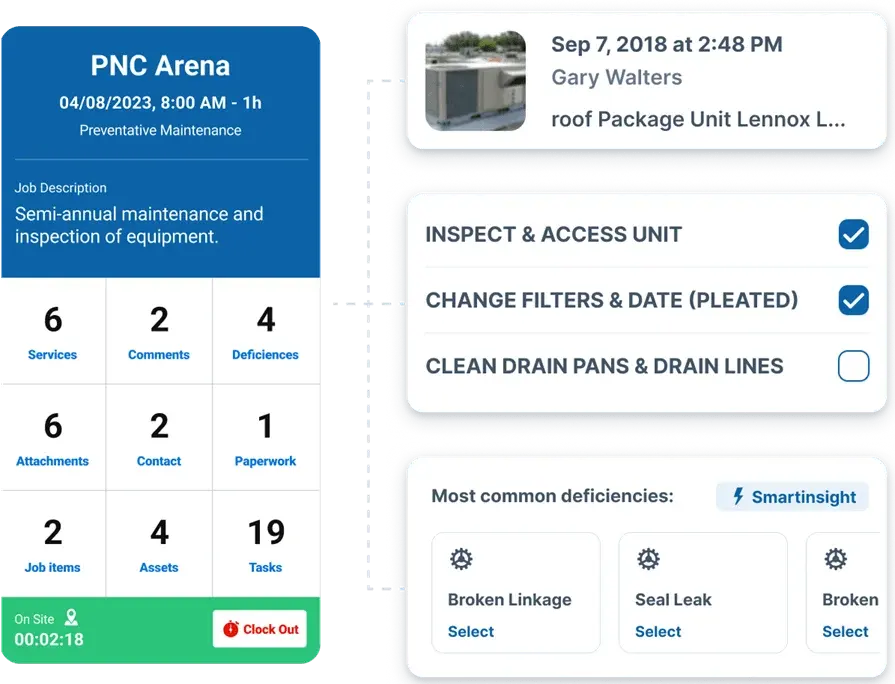
ServiceTrade works well for residential-focused service operations that need consistent scheduling, communication, and recurring visit structure tied to inspections. It stands out for teams that want a clear, centralized place to manage customers, recurring work, and technician activity across a busy service calendar. It may not be the ideal choice if your door program depends on deep commercial asset tracking and complex, portfolio-level closeout requirements.
How pricing works: ServiceTrade typically sells subscription plans, and final pricing depends on package and user count.
Features beyond fire door inspection: Residential service work often turns inspections into rapid follow-up repairs, customer updates, and repeat visits that have to stay organized. ServiceTrade supports that cadence with tools that help coordinate tech activity, track customer history, and keep recurring service work from slipping off the schedule.
What sets it apart for residential: In residential and multifamily environments, access windows, tenant coordination, and fast turnaround drive the day. ServiceTrade supports that style of operation by focusing on the service workflow that keeps techs moving and customers informed, which helps when door inspection findings need quick approvals and follow-through.
3. Best for general contractors: Zenfire

Zenfire focuses on inspection execution and compliance documentation, which makes it a fit for general contractors managing inspection deliverables and deficiency tracking across multiple trades and stakeholders. It stands out for teams that want structured forms, repeatable reports, and a consistent way to package results when different crews touch different parts of the building. It may not be the ideal choice if you need an end-to-end field ops platform that runs dispatch, billing, and the rest of the workflow around the fire door checking app process.
How pricing works: Published listings show Zenfire pricing starting around $60 per month, with plan structure varying by package.
Features beyond fire door inspection: Zenfire puts weight on standardization, so teams can keep inspection inputs consistent and turn field data into finished reports without a lot of manual cleanup. That helps when a GC needs clean documentation for owner review, coordination with subs, or a compliance handoff that depends on consistent formatting across sites.
What sets it apart for general contractors: GCs live in coordination and documentation control. Zenfire supports that by giving teams a structured inspection system they can use to collect evidence, log deficiencies, and keep reporting consistent across projects where several parties need the same version of the truth.
4. Best for small service teams: InspectNTrack

InspectnTrack works well for smaller crews that need tight control over asset-based inspections and repeatable field capture. It separates itself with barcode-driven workflows that keep inspection history tied to the specific asset, which helps when door tags, locations, and past deficiencies need to show up fast for a customer review. It may not be the ideal choice if your door program needs dispatch, billing, and closeout to run inside the same system as your inspection data.
How pricing works: InspectNTrack offers package options and enterprise subscriptions depending on asset counts and rollout size.
Features beyond fire door inspection: InspectNTrack leans into broader fire and life safety asset tracking, so your team can manage different inspection categories with the same scan-and-log approach. That helps when door checks sit next to other compliance items that still need consistent documentation and a clean audit trail.
What sets it apart for small service teams: If you run lean and rely on repeatable routes, barcode capture cuts down on field guesswork and office cleanup. Techs can move opening to opening, log results with consistent inputs, and keep history attached to the asset record instead of scattered across photos and notes.
5. Best for solo contractors: SafetyCulture
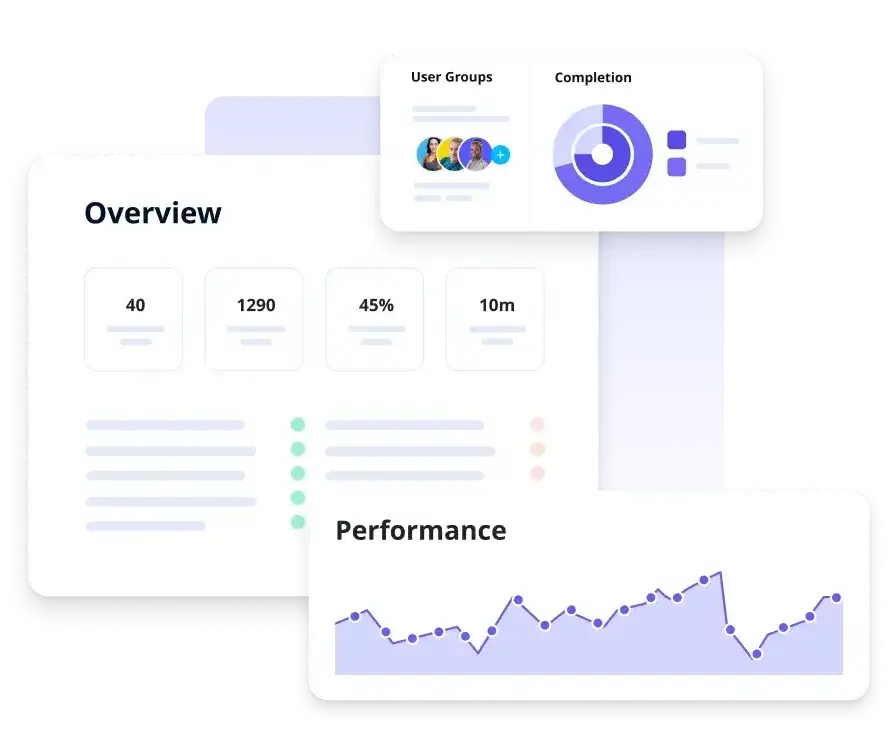
SafetyCulture fits solo operators who want fast digital checklists, photo capture, and shareable reports without a heavy setup. It stands apart through flexible templates and quick report generation, which helps when you need to document door conditions and send a clean summary to a customer the same day. It may not be the ideal choice if you need opening-level history, deficiency-to-repair tracking, and service ops controls tied directly to that inspection record.
How pricing works: SafetyCulture offers a free plan, plus paid tiers with per-seat pricing, and published pricing for annual Premium seats at $24 per user per month billed annually.
Features beyond fire door inspection: SafetyCulture supports follow-up actions and operational reporting around the inspection data you collect, which helps when a failed door needs a tracked corrective task and internal visibility. It also supports broad inspection programs that extend past doors when you want one tool for multiple field checklists.
What sets it apart for solo contractors: Speed matters when you run calls alone and still have to deliver documentation. SafetyCulture lets you standardize your checklist, capture proof on-site, and send a finished report without waiting to get back to a laptop.
6. Best for installation contractors: Onsite Software

Onsite Software centers on life safety inspection needs with a contractor-focused background, which can fit teams balancing installs, acceptance documentation, and ongoing inspection records. It separates itself through deep roots in fire protection workflows and inspection software development, which aligns with contractors who want inspection documentation that matches how life safety work actually gets delivered. It may not be the ideal choice if you want a general field platform that also runs dispatching, invoicing, and customer management across non-life-safety service lines.
How pricing works: Onsite Software typically prices by quote based on scope, users, and deployment needs.
Features beyond fire door inspection: Onsite Software positions its inspection tools inside a broader life safety context, which can help when door work ties into larger compliance deliverables that need consistent documentation and reporting practices. That matters for install contractors who need inspection records to support closeout and ongoing service expectations.
What sets it apart for commercial: Installation teams live in documentation, handoff, and proof of completion across jobsites. Onsite Software’s life safety focus can support that style of work by keeping inspection reporting and recordkeeping aligned with commercial compliance expectations.
7. Best for ITM contractors: firepro365

firepro365 runs on Microsoft Dynamics 365 and aims at fire protection contractors who want inspection work, service work, and customer data tied together inside one system. It stands out when your ITM program needs clean handoffs between the office and the field, with inspection reporting that stays connected to the account, the site, and the service history. It may not be the ideal choice if you need a lighter, checklist-first workflow for door-only crews who want a simple fire door inspection app without the weight of a CRM implementation.
How pricing works: firepro365 typically uses quote-based pricing based on users, modules, and implementation scope, since it sits on the Dynamics ecosystem.
Features beyond fire door inspection: firepro365 leans into broader inspection reporting and operational tracking across common ITM work, which helps when door deficiencies trigger follow-up work orders, customer approvals, and compliance documentation that the office needs in one place.
What sets it apart for commercial: If you manage multi-site customers and want consistent reporting across a full compliance portfolio, a Dynamics-backed platform can keep accounts, site contacts, and inspection outputs organized at scale. That structure helps when door inspections sit inside bigger service contracts and the customer expects standardized documentation across properties.
8. Best for FLS auditors: Array
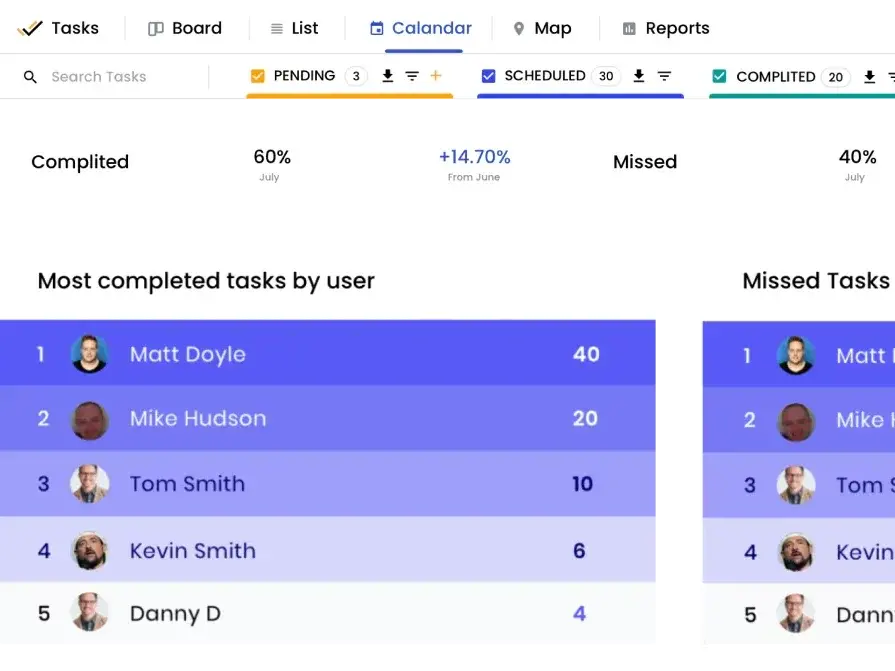
Array fits auditing teams who live in forms, evidence capture, and defensible reporting across high-volume inspections. It stands out with inspection-focused workflows that generate final PDF reports from structured forms, which helps when you need consistent documentation across openings and you want a fire door app that keeps the record tight for review. It may not be the ideal choice if your operation needs dispatch, quoting, invoicing, and service follow-ups to run inside the same platform as the inspection workflow.
How pricing works: Array promotes usage-based pricing and positions plans around the products and features you select.
Features beyond fire door inspection: Array supports workflow automation, enterprise security, and reporting around inspection data, which helps when your audit team tracks corrective actions and needs rollups across sites, customers, and inspection types.
What sets it apart for commercial: Auditors who cover large portfolios need repeatable forms, consistent evidence capture, and reports that hold up when a customer or AHJ asks for proof. Array’s inspection-first approach fits that reality, especially when you standardize how every opening gets documented across multiple properties.
7 benefits of using a fire door inspection app as a contractor
Door work can derail an ITM day fast. One locked door, a missed label photo, or an undocumented clearance issue, and suddenly techs are back on site, the office is chasing paperwork, and reviews get tense instead of clean.
A dedicated fire door inspection app keeps every opening tied to a single, clean record in the field—and keeps follow-up work on the same job trail instead of scattered across notes, photos, and emails. When that data flows directly into your scheduling and dispatching system, your team gets a tighter handle on both the work and the proof behind it.
1. Cut return trips from missed details
Equip your techs to capture photos, notes, and pass/fail results at the opening—while they’re standing in front of the door. No mental checklists, no “we’ll document it later.” That level of structure cuts down on callbacks like “we forgot to document the label” or “we missed the clearance issue on floor four,” and keeps your schedule focused on new work instead of rework.
2. Stay on track when the day changes
Access delays are part of fire life safety work—tenants lock suites, hospital wings shut down, security windows shift. With inspections tied to solid scheduling and dispatching practices, your office can reroute techs in real time without breaking the inspection trail.
Dispatch sees exactly which openings were completed, which are deferred, and which need follow-up, all tied to the right work order and site. That means fewer lost tasks, tighter documentation, and an ITM schedule that bends without breaking.
3. Cleaner closeout packages that owners accept on the first send.
A fire door app helps you standardize how you document openings across inspectors, buildings, and customers. If you already manage structured reporting in other scopes, the mindset carries over from tools like fire alarm inspection report software, where consistent formats and clear deficiency rollups reduce back-and-forth after delivery.
4. Faster deficiency approvals that turn into billable work.
A tight door workflow turns a failed item into a clear scope with proof attached, which helps customers approve repairs without extra site walks. Your team spends less time rewriting the same deficiency across email, PDF, and spreadsheet, and more time closing repairs.
5. Better continuity across a portfolio and every stakeholder.
Doors touch property managers, facility leads, tenants, and AHJs, so the contact trail matters. When you keep site history and communication organized through a system like fire CRM, your office answers “what happened with that stair door” in one call instead of digging through inbox threads.
6. Consistent asset ID habits across all inspection work.
The same tagging discipline that makes extinguisher routes clean also helps doors, especially on campuses with mixed labeling standards. If you already lean on fire extinguisher barcode inspection software, you can carry that scan-first approach into a fire door checking app workflow so opening history stays tied to the correct location.
7. Stronger defensibility when an incident triggers scrutiny.
After an event, customers want timelines, corrective actions, and proof that your team acted on documented deficiencies. A clean digital record supports that same standard of defensibility you see in workflows like fire investigation software, where teams need fast access to history, evidence, and the full chain of actions.
{{related-content-block="/resources/fire-protection-in-buildings"}}
How to choose the right fire door inspection app for your team
You’re already running ITM work where every door finding turns into deficiencies, return trips, and closeout packages. With the right fire door inspection app, every opening lives in one place with its history, photos, and next action—so your tech captures it once in the field, and the office goes straight to clean reports, proposals, and closeout packages without rebuilding the story later.
- Traceability by opening - Can you assign a unique opening ID that stays consistent across floors, suites, and campuses? Can a tech scan and pull prior inspection results, photos, and repairs while standing at the door? Can you produce a full opening history on demand during an owner dispute or AHJ review?
- Deficiency to follow-up workflow - Can a failed item convert into a deficiency line with parts, labor notes, and priority in the same screen? Can dispatch create the return visit without breaking the link back to the original inspection record? Can you track deficiency status from found to repaired to verified without side spreadsheets?
- Reporting your customers will sign off on - Can you batch deliverables by building, floor, tenant, or asset group without manual cleanup? Can you standardize language and layouts across inspectors so reports look consistent across the portfolio? Can you export PDFs that keep photos, annotations, and signatures in the same place every time?
- Accountability and change control - Does the system log who entered each finding and when it happened? Does it track edits after submission with a clear change trail? Can you lock reports after approval while still allowing corrections through a controlled process?
- Field conditions and data integrity - Can techs work offline in stairwells, basements, and dead zones and sync later without losing attachments? Do timestamps and photo metadata stay intact after syncing? Does the app keep inspections tied to the correct work order when techs bounce between sites on the same day?
- App features - Does it support scan-to-open, photo markup, and configurable pass/fail checks that match your SOP? Can it generate deficiency lists and repair tickets automatically from failed items? Can supervisors review, approve, and send reports from the field without waiting for the office?
5 important FAQs about fire door inspection apps answered
You already know what an inspection looks like on paper. These FAQs focus on what matters in the field and in closeout, where a fire door inspection app either keeps the record tight or creates cleanup work.
1. What is a fire door inspection app?
A fire door inspection app is a mobile tool that records opening-by-opening results, photos, and deficiencies; captures timestamps and signatures; links everything to the job and site; and generates audit‑ready reports so field and office teams share one clean compliance record on every visit.
A good one also keeps a clear opening ID for every inspection, stores the full photo trail with each finding, and tracks deficiencies through repair and verification without breaking the job history.
2. How do fire door inspection apps work?
A fire door app typically follows the same flow your crews already run, just without the paper and re-entry. The tech pulls up the work order, selects the site, and opens each door record using a door number, QR code, or barcode. The app guides the checklist, captures photos and notes, and logs pass or fail against that specific opening.
After the walk, the app compiles the results into a report, flags deficiencies for follow-up, and keeps everything tied to the customer and job record so the office can review and deliver the closeout package without rebuilding it.
3. What are the different types of fire door inspection apps?
Not every fire door inspection app solves the same problem. Some tools focus on fast capture at the opening, others focus on portfolio-level reporting, and a few focus mainly on office-driven documentation.
- Mobile-first inspection capture app: These apps live on a phone or tablet and prioritize scan-to-open (QR or barcode scan to pull up the opening), offline use, and fast photo evidence. They work well when inspectors spend the whole day in stairwells, basements, and tenant spaces where signal drops. This keeps inspectors moving instead of fighting slow apps or bad signal.
- Cloud-based inspection platform: These tools run on a web portal with mobile support, so the office can review findings, standardize reports, and track deficiencies across a campus in real time. They fit teams that need consistent output across multiple inspectors, buildings, and customers. This helps leadership see campus-wide risk and status in one place.
- Desktop-first inspection software: This category typically expects office entry or laptop-driven workflows, with heavy report assembly and manual photo handling. It can work for teams that centralize documentation, but it often slows field capture when conditions change on site. It’s a good fit for teams that accept slower field capture in exchange for tightly controlled documentation.
- Field service management platform: This type connects inspections to scheduling, dispatch, customers, and follow-up work orders, so deficiencies move from found to fixed without breaking the record chain. It is the cleanest option when door work runs alongside suppression, alarm, and recurring ITM service under the same account structure. This is best when you want inspection findings to turn into scheduled door work and invoices automatically.
Once you know which type actually matches how your operation runs, you can narrow the list fast and choose a fire door app that fits your workflow instead of forcing tech workarounds in the field or the office.
4. Is the cost of a fire door inspection app worth it for contractors?
It pencils out when it removes admin hours and prevents repeat trips. If your team spends afternoons chasing missing photos, rewriting notes, or reconciling which door “Level 3 East” actually meant, the app turns that time into inspection volume and repair work that closes cleanly.
It also protects you during disputes. Clean timestamps, consistent records, and a documented deficiency trail reduce callbacks and cut down on arguments during owner reviews and AHJ questions.
{{related-content-block="/resources/certified-fire-250-percent-higher-profits"}}
5. Are there best practices to follow when implementing a fire door inspection app?
Rollout succeeds when you treat it like an operating standard, not a tech project. Lock down how your team identifies openings, captures evidence, flags deficiencies, and hands work to repairs so every site visit produces the same caliber of documentation.
- Standardize opening IDs across every site and crew, and map them to customer naming conventions before the first inspection day.
- Require scan-to-open or a confirmed door number entry on every record to prevent “Door 3A” mix-ups across floors and wings.
- Set a photo protocol that covers label, hardware, gaps, and any deficiency proof, and keep the same shot order on every opening.
- Define deficiency categories that match how you sell repairs, so the office can quote and schedule without rewriting tech notes.
- Make tech notes structured, with required fields for location detail, symptom, and recommended correction when a door fails.
- Build a supervisor review step for exceptions, high-risk occupancies, and repeat deficiencies before the report leaves your shop.
- Tie every deficiency to a follow-up action, with an owner for the next step, so nothing dies in a report.
- Train on offline workflow, sync timing, and attachment checks so the report package never ships with missing photos.
- Audit a small sample weekly for ID accuracy, photo completeness, and deficiency clarity, then coach the same day.
- Lock report templates, terminology, and pass-fail logic to your SOP so the fire door checking app output stays consistent across inspectors.
Fire door inspections live or die on the details. When every opening has a consistent ID, clear photos, and a documented deficiency history, your techs move faster and your office stops chasing loose ends. That’s the difference between software that just “checks the box” and a platform that actually keeps your ITM program under control across sites, crews, and customers.
And if you’re running doors alongside sprinklers, alarms, extinguishers, and repair work, the real win is having one connected workflow from inspection to follow-up work to reporting—backed by the same data the whole way through.
That’s where an all‑in‑one commercial field service platform like BuildOps fits in. Inspections stay tied to scheduling, dispatch, customer records, and closeout in a single system, so nothing gets lost between the field and the office.
If you want to see what this could look like on your routes, you can grab a free demo and walk through a real fire door program—from the first scan to the final report, no pressure to switch.