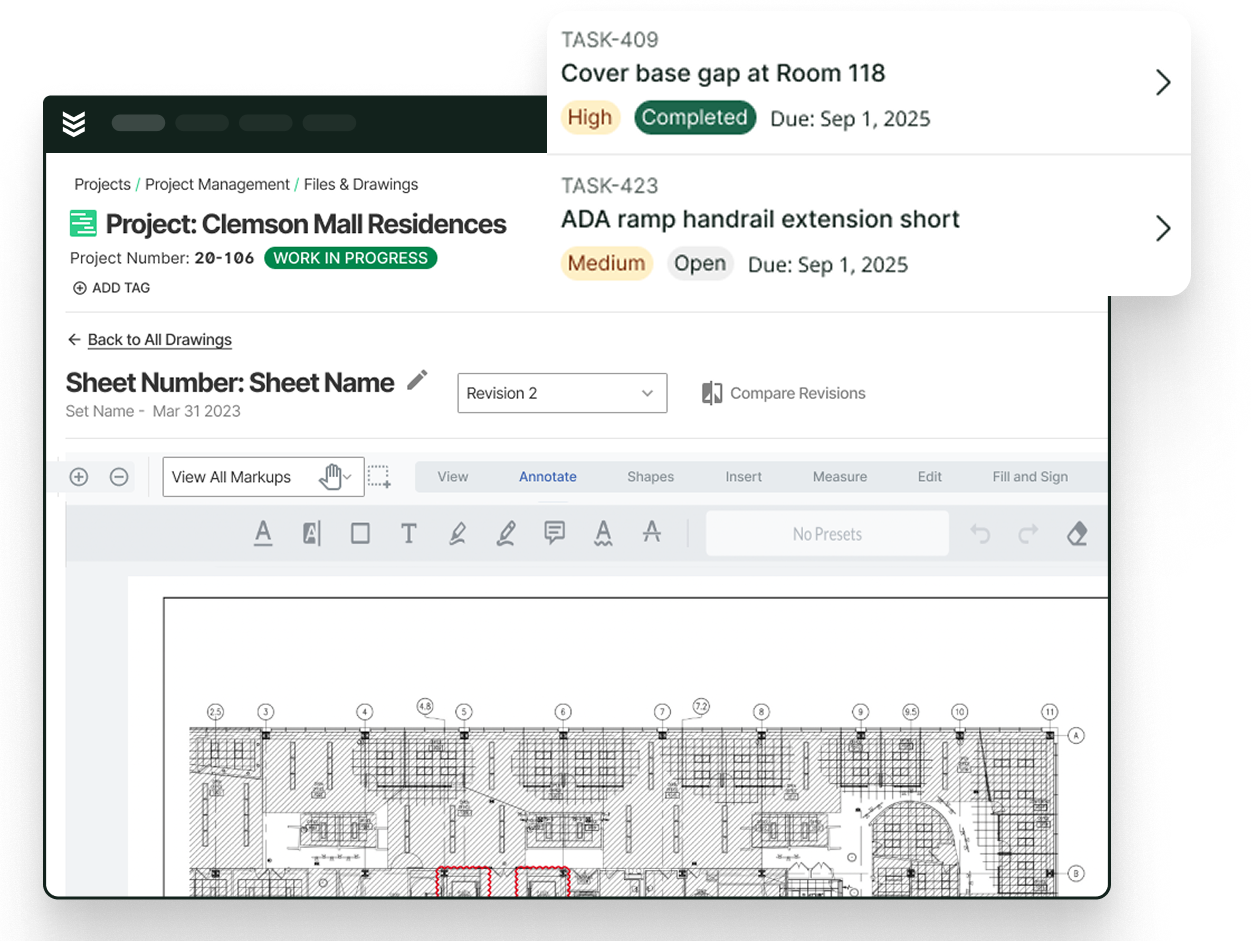
For commercial contractors, project risk rarely shows up in one dramatic moment.
It starts quietly.
An RFI sits unanswered. A submittal gets buried in someone else’s portal. Labor hours hit late. A field note never makes it back to the office. A scope change gets discussed, but not documented. By the time the problem shows up in a WIP meeting or budget review, the margin is already gone.
That’s the real challenge with project work. As more contractors step into bigger, longer, more complex jobs, the stakes go up fast. What used to be one tech, one truck, and one work order becomes a months-long job with multiple crews, moving costs, shifting scope, and dozens of decisions that all affect profitability.
The Hardest Part?
Most teams don’t lose money because they lack experience. They lose money because their systems can’t keep up.
When project data lives in too many places, risk gets harder to spot. Documentation gets disconnected from field activity. Financials lag behind reality. Project managers become the system, manually retyping, reconciling, and chasing down answers instead of actually running the job.
That’s where margin starts to leak.

How Can You Stop Margin Leak?
The contractors who protect profit on larger jobs usually do three things well:
- They own the project record, instead of relying on scattered emails, shared drives, or GC portals
- They see cost and margin risk early, not at month-end
- They connect field execution, documentation, and financials, so the system does more of the work
If those pieces aren’t connected, even strong teams end up reacting too late.
Take the Assessment
That’s why we created The Project Risk Playbook — a practical guide for commercial contractors who want to find the gaps before they turn into lost margin. At the center of it is a simple self-assessment built to help you pressure-test how your team handles project visibility, financial control, and field execution.
It takes about 15 minutes. And by the end, you’ll have a clearer picture of where your biggest risks are hiding — and what to do next.
Find the gaps that quietly drain margin — before it's too late.
Download the project risk playbook.