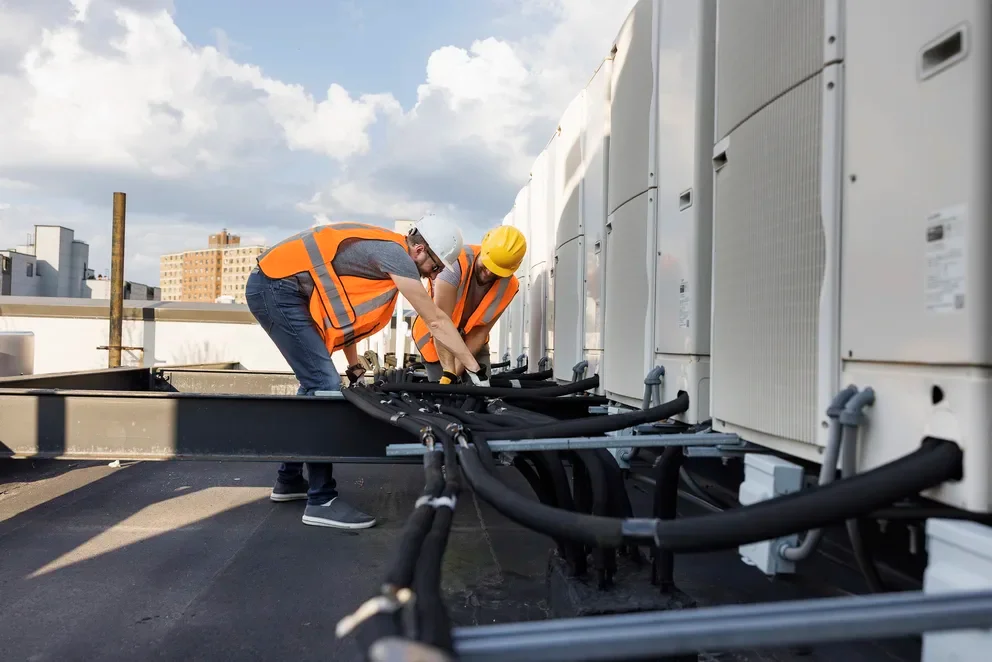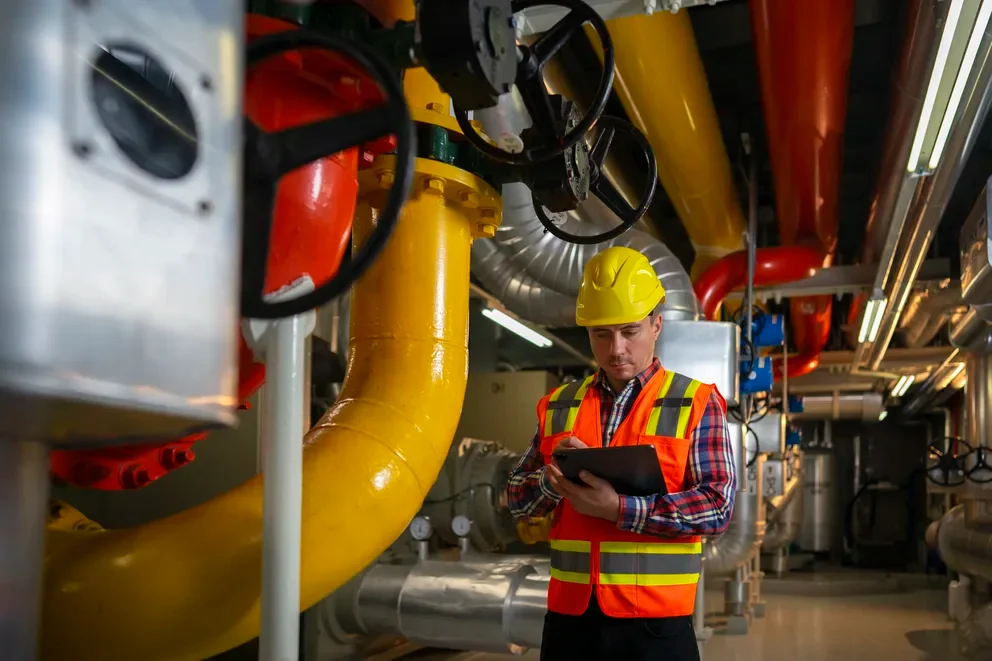
“If it ain’t broke, don’t fix it” might be your favorite uncle’s maintenance philosophy, but when it comes to running a smooth and reliable business, preventive maintenance measures are your best friend. Preventive maintenance is a proactive approach, using scheduled inspections, servicing, and routine care to keep equipment safe, reliable, and efficient. Ain’t-broke maintenance—or reactive maintenance—repairs equipment only after it fails, often resulting in emergency work, unplanned downtime, and higher long-term costs.
Businesses that prioritize long-term reliability and profitability focus on understanding their preemptive maintenance costs and implementing structured maintenance strategies that reduce breakdowns before they happen. A proactive approach begins with a clear preventive maintenance cost calculation, which helps to determine the true cost of preventive maintenance and compare it to emergency, or reactive, repairs. So, how much does a preventive maintenance plan cost? The answer can be found doing a preventive maintenance cost analysis, which factors in labor, materials, equipment needs, and scheduling.
When we react to problems instead of anticipating them, we lose time, resources, and revenue. The best way to keep your business up and running is to avoid reactive maintenance and institute a preventive maintenance plan.
In this article, we’re going to cover:
- Reactive maintenance costs vs preventive maintenance costs
- How to do a preventive maintenance cost calculation
- How to build out a cost-effective preventive maintenance program
With the right preventive maintenance approach, you and your team will always deliver expert service right on time.
Reactive maintenance costs vs preventive maintenance costs
Reactive maintenance costs refer to the expenses a company incurs after equipment has already started failing or has already failed. Instead of preventing issues through regular inspections or servicing, reactive maintenance means waiting until something goes wrong, then paying to fix it. In maintenance management, it's important to distinguish between direct costs—such as labor and materials directly associated with repairs—and indirect costs, like lost productivity or increased energy consumption, both of which can significantly impact the overall budget.
Reactive maintenance costs, because they happen without warning, often lead to higher long-term costs, disrupted workflows, and reduced customer trust. Emergency maintenance often incurs significantly higher direct costs due to urgent labor, rush shipping, and lost production time.
When an old blower-motor stops airflow or a burned-out transformer cuts the power, the service team has to get the alert, get to the jobsite, and get to work. Labor premiums can arise from emergency repairs requiring after-hours work or overtime, which significantly increases hourly labor rates.
Preventive maintenance costs refer to the planned expenses associated with maintaining equipment before problems occur. Instead of waiting for a failure, invest in routine inspections, servicing, and minor repairs to keep equipment operating efficiently and avoid major breakdowns later. Investing in preventive maintenance helps control equipment costs and equipment expenses by extending equipment life and reducing the frequency of replacements.
A preventive maintenance schedule—a proactive, predictable, and scheduled approach to maintenance—results in durable long-term performance and safety. Relying solely on reactive maintenance can shorten equipment life expectancy, leading to more frequent replacements and higher long-term costs.
Pre-planned service visits mean cleaning the unit, checking load levels, and ensuring proper connection. Delays are avoided, and business runs as usual. Reactive maintenance is often referred to as "firefighting" due to its unpredictable and stressful nature, and it involves fixing equipment only after it breaks down.
When comparing preventive and reactive maintenance, it's important to note that reactive maintenance costs are unexpected and can disrupt budgets. While reactive maintenance may seem cost-effective initially, it can become the default strategy over time, leading to inefficiencies and higher overall costs. Additionally, issues arise unexpectedly, often requiring emergency maintenance and leading to higher costs and safety risks.
Costs commonly associated with reactive maintenance
The cost of reactive maintenance includes more than just the repair itself. Reactive maintenance costs represent the total impact of unexpected equipment issues on operations, such as:
- Emergency repairs - A serious safety issue that requires immediate response
- Labor costs - For technicians or emergency service teams
- Safety risks and incident costs - If the failure creates hazardous conditions
- Unexpected downtime costs - When equipment stops working and production or services are delayed
- Repair or replacement costs - For broken parts or machines, including the identification and replacement of faulty parts, which can significantly drive up expenses
- Canceling or not delivering on job due dates or requirements - Operational disruptions where urgent repairs are prioritized over planned work
- Reputational or customer-service costs - When delays affect deliveries, services, and satisfaction
Running equipment to failure often results in unplanned maintenance, which is typically more expensive and disruptive than scheduled upkeep.
Consistent neglect and reliance on reactive maintenance reduces the overall lifespan of equipment, potentially forcing premature capital expenditures.
Costs commonly associated with preventive maintenance
Common preventive maintenance tasks include inspections, cleaning, lubrication, and adjustments. These routine, repeatable tasks play a crucial role in managing indirect costs and ensuring equipment reliability.
Preventive maintenance costs are the investment made to prevent equipment failure and keep systems reliably running. The most common proactive maintenance costs are:
- Routine inspections and testing - Regularly checking equipment and systems to identify potential issues early
- Cleaning and servicing - Tasks like system tune-ups and cleaning components to maintain efficiency
- Replacing worn parts - Proactively changing items like filters, belts, or other components before they fail
- Scheduled maintenance tasks - Planned work such as oil changes, system adjustments, and calibration, with an emphasis on completing planned tasks on schedule and tracking schedule compliance to ensure maintenance performance
- Labor and planning costs - Technicians’ time and resources required to carry out maintenance programs
Regular upkeep and preventive work, including scheduled labor and planned inventory management for routine replacements, are essential features of proactive maintenance.
Key differences between reactive and proactive maintenance costs:
- Preventive maintenance has more recurring costs—Proactive maintenance costs like inspections, cleaning, and replacements, require time and manpower to plan and execute. Recurring costs can be monthly or annual expected upfront costs that result in planned pauses in workflow to ensure long-term benefits. However, adopting a strategic approach and developing a well-structured maintenance plan can improve maintenance efficiency and help manage the maintenance budget, ensuring resources are allocated effectively for both critical assets and high value assets.
- Reactive maintenance costs are unexpected and impossible to plan for—Reactive maintenance is also called run-to-failure for a reason. When we avoid routine service and repairs, there is no record to show breakdown over time. Systems fail without record or anticipated repair. By skirting those upfront service costs, the only time to act on failure is when it’s already happened. While reactive maintenance can be cost-effective for non-critical equipment, it is generally unsustainable for high value assets, critical assets, or essential machinery.
- Preventive maintenance increases equipment lifespan—Regular inspections, servicing, and parts replacements help reduce wear and tear. Components are checked and replaced before they fail, preventing damage from spreading to other parts of the system, and allowing equipment to last longer and perform consistently. A preventive maintenance plan delivers immediate benefits such as improved safety, reduced production delays, and optimized production hours.
- Reactive maintenance can be dangerous—Equipment that is not regularly inspected may develop problems such as leaks, overheating, pressure buildup, or electrical faults. When these issues finally cause a breakdown, maintenance workers must repair equipment while it is already in a hazardous state, increasing the chance of burns, shocks, or chemical exposure. Neglecting maintenance on critical assets and high value assets poses a significant safety risk to personnel and operations.
- Preventive maintenance means more reliable performance—When equipment is cared for, there are fewer interruptions. Consistent product quality or service delivery boosts customer trust and loyalty. A maintenance team, guided by a preventative maintenance strategy and reliability centered maintenance principles, can maximize the monetary value of maintenance investments.
eBook: From Reactive to Proactive
Review the data behind why commercial contractors can't afford to find problems late.
How to do a preventive maintenance cost calculation
In order to figure out which approach is best for your business, saving more in the short- or long-term, you need to do a cost-benefit analysis. Understanding equipment costs, equipment expenses, and direct costs is essential for accurate preventive maintenance cost calculations and effective budgeting. Here’s how to do a preventive maintenance cost calculation:
Key components of a preventive maintenance cost calculation:
- Labor—Preventative maintenance tasks require technicians to inspect, service, repair, or replace equipment components. This includes staff wages, time to complete the task, and any overtime costs.
- Materials—Preventive maintenance often requires parts and supplies. Regular replacement prevents minor issues becoming major failures.
- Contractor Costs—Specialized maintenance work by external providers may be necessary if internal does not have the proper skills or certifications to complete the task.
- Equipment, Vehicle, or other Asset Downtime—Often, equipment must be taken offline during maintenance, temporarily reducing productivity.
- Maintenance Tracking Systems—Software used to organize schedules, track tasks, and monitor equipment conditions.
To review these components in more detail, check out our Key Components of a Well-Planned Preventive Maintenance Schedule.
How to calculate preventive maintenance costs:
To calculate how much it costs to maintain equipment, the most common approach is to add up all maintenance-related expenses over a certain period (usually monthly or annually). This gives the total maintenance cost for the equipment.
Maintenance costs typically include labor, materials, spare parts, contractor services, and any downtime expenses associated with maintenance activities.
Formula:
Total Preventive Maintenance Cost = Labor + Materials + Parts + Contractor Costs + Downtime Costs
Example:
- Labor: $3,000
- Materials and parts: $1,200
- Contractor services: $800
- Downtime costs: $500
3,000 + 1,200 + 800 + 500 = 5,500
The total preventive maintenance cost is $5,500 for that time period.
Calculating preventive maintenance costs in this way helps organizations allocate their maintenance budget more effectively and assign a clear monetary value to maintenance activities, supporting better financial analysis and planning.
This method is commonly used because it shows the actual cost required to keep equipment operating properly without comparing it to the replacement value—we’ll get to that in a second.
How to calculate reactive maintenance costs:
To calculate reactive maintenance costs, you add together all expenses that occur after equipment fails and must be repaired. These costs are usually higher than preventive maintenance because they often include emergency labor, urgent parts replacement, and longer downtime. Reactive work includes all activities performed in response to equipment failures, including emergency maintenance, which requires quick response procedures to minimize downtime and safety risks.
Formula:
Total Reactive Maintenance Cost = Repair Labor + Replacement Parts + Contractor/Emergency Service Costs + Downtime Costs
Example:
- Repair labor: $2,500
- Replacement parts: $1,800
- Emergency contractor service: $900
- Downtime cost: $1,200
2,500 + 1,800 + 900 + 1,200 = 6,400
The total reactive maintenance cost is $6,400 for that repair incident.
This calculation helps organizations understand the true cost of equipment failures, which is why many companies try to reduce reactive maintenance by using preventive maintenance programs.
How to calculate preventive maintenance cost savings & ROI compared to reactive maintenance:
To calculate preventive maintenance (PM) cost savings and ROI compared to reactive maintenance (RM), you compare the costs of both strategies over the same time period and measure the financial benefit of preventing failures. Conducting a cost-benefit analysis is essential for evaluating the effectiveness of a preventive maintenance strategy or preventative maintenance strategy, as it helps determine the overall value and impact on operational costs.
1. Formula for Cost Savings
Cost Savings = Reactive Maintenance Costs – Preventive Maintenance Costs
This shows how much money you save by using preventive maintenance instead of relying on reactive repairs.
Example:
- RM Costs = $50,000
- PM Costs = $30,000
50,000 – 30,000 = 20,000
Cost savings = $20,000
2. Preventive Maintenance ROI
ROI = 66.7%
For every $1 spent on preventive maintenance, you gain $0.67 in savings.
Another common way to calculate preventive maintenance costs vs reactive maintenance costs is by using Maintenance Cost as a percentage of Replacement Asset Value (RAV) (Tractian). This method compares the total amount spent on maintenance with the cost to replace the equipment or assets. It helps organizations estimate how much they should spend on preventive maintenance relative to the value of their equipment.
For example:
If a facility spends $120,000 per year on preventive maintenance and the equipment would cost $4,000,000 to replace:
(120,000 ÷ 4,000,000) × 100 = 3%
This means the organization is spending 3% of the asset’s value on maintenance, which falls within the typical industry range (UpKeep).
A higher maintenance cost percentage may indicate that the asset is becoming expensive to maintain relative to its replacement value. This can signal the need to evaluate whether continued maintenance or replacement would be more cost-effective.
A well-designed maintenance plan supports ongoing cost savings and ROI by structuring proactive and predictive maintenance strategies, optimizing scheduling, and improving reliability and safety.
How to build out a cost-effective preventative maintenance program
A cost-effective preventive maintenance program requires planning, scheduling, tracking, communication, and documentation to ensure tasks are completed consistently and efficiently.
1. Identify and inventory all equipment

Make sure while cataloging everything, you:
- Determine each asset’s condition, usage, and importance
- Review manufacturer recommendations and maintenance manuals
- Identify which equipment is most critical to operations
2. Determine maintenance tasks and procedures

Figure out what kind of maintenance is required for each asset, such as:
- Inspections
- Cleaning
- Lubrication
- Testing
- Parts replacement
- Calibration
3. Establish maintenance frequency

Decide how often each maintenance task should be completed. This may depend on:
- Time (daily, weekly, monthly, annually)
- Equipment usage (operating hours)
- Manufacturer guidelines
- Environmental conditions
- Equipment criticality
4. Create a preventative maintenance schedule
Develop a preventive maintenance schedule that outlines:
- What tasks will be completed
- When they will be completed
- Who is responsible for task completion
- What tools or parts are needed
5. Use a Computerized Maintenance Management Software (CMMS)
Implementing a Computerized Maintenance Management System (CMMS) automates scheduling, tracks work orders, and manages maintenance records. CMMS tools help:
- Schedule preventive maintenance automatically
- Track labor costs
- Reduce downtime
- Improve asset performance visibility
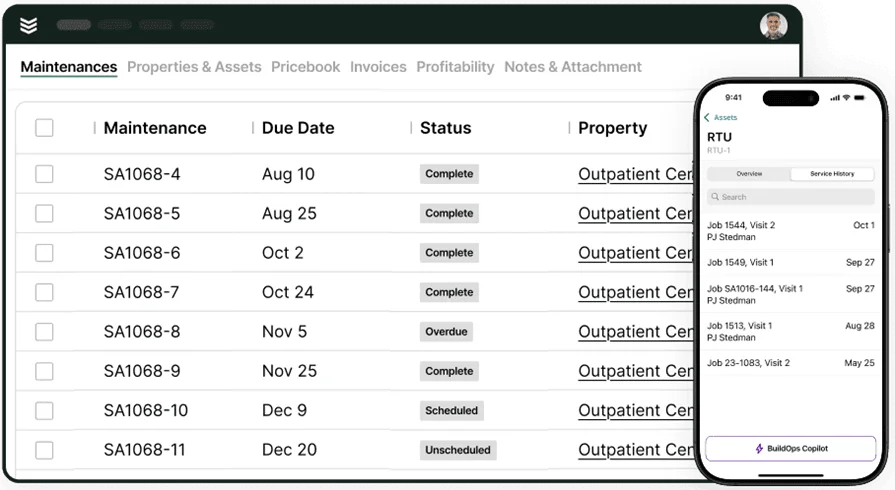
Automate recurring revenue with BuildOps
Our Service Agreements features are built to handle commercial-scale recurring projects.
6. Document and monitor performance

Keep detailed records of:
- Completed maintenance tasks
- Costs
- Equipment performance
- Repair history
This way, you can analyse trends, identify recurring issues, and improve future maintenance planning.
7. Review and improve the program regularly

A cost-effective preventive maintenance schedule should be continuously evaluated. Adjust schedules based on:
- Equipment performance
- Usage charges
- Feedback from technicians
- Operational needs
Regular review ensures the program remains efficient and aligned with business goals. Taking a strategic approach to reviewing your maintenance plan and maintenance budget helps ensure ongoing program effectiveness, allowing you to optimize resource allocation and maximize ROI.
If you want to protect uptime, control costs, and scale your operations with confidence, a proactive preventive maintenance program is essential. By understanding the true difference between reactive vs. preventive maintenance costs, calculating total maintenance expenses, and measuring ROI, you gain clear visibility into where your money is going—and how much you’re saving by preventing failures before they happen.
When you implement structured scheduling, standardized procedures, cost tracking, and a CMMS-powered maintenance strategy, your team can reduce downtime, extend asset lifespan, improve safety, and increase operational reliability. Instead of reacting to emergencies, you’re planning for performance.
With the right tools and strategy—like the solutions provided by BuildOps—you can transform maintenance from a cost center into a strategic advantage. A well-built preventive maintenance program doesn’t just lower repair bills; it drives predictable service, stronger customer trust, and long-term business growth.
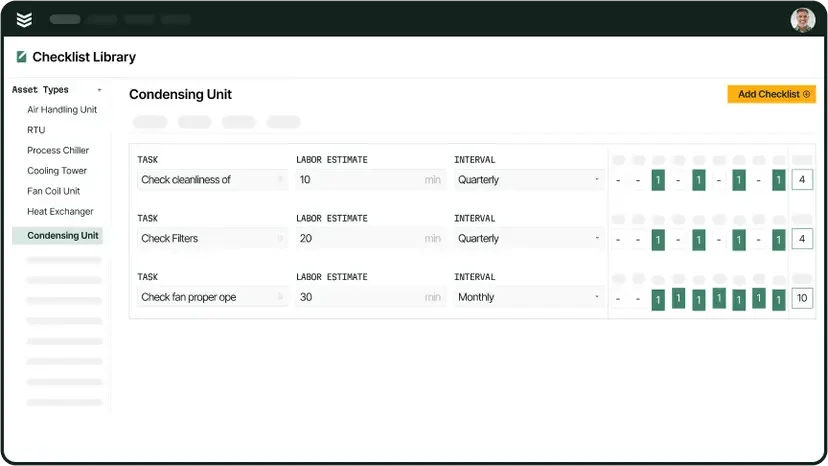
Automate preventive maintenance contracts with BuildOps
Let our AI-powered platform unlock new sources of recurring revenue for you.