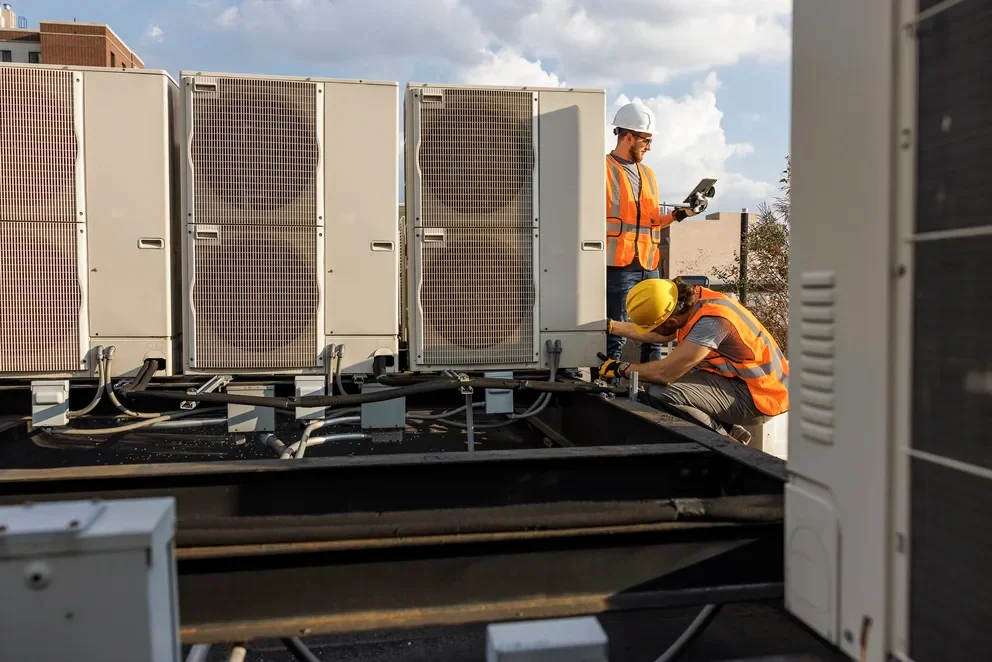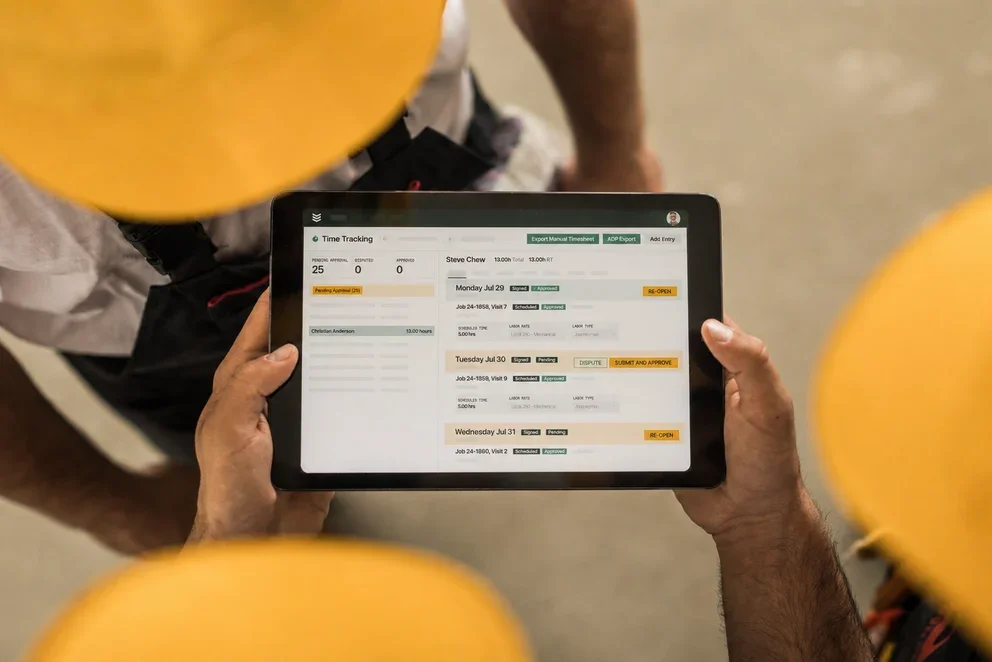
For field service contractors, time is profit. Traditional scheduling methods leave money on the table, resulting in wasted drive time, missed appointments, and strained margins. The solution is AI-powered service time optimization—a system designed to turn real-time data into maximum profitability.
In the field service industry, AI-capable scheduling tools are the new standard for maximizing crew efficiency and increasing your daily billable hours.
Here’s what we’ll cover:
- What is AI-powered time optimization software for field service?
- 5 key features of an AI that recommend the best service times for field contractors
- 6 top AI scheduling & service time tools
- 7 benefits of using AI for field service tech scheduling
- Questions to ask when choosing AI-capable service time software for contractors
- 4 FAQs about AI that recommend the best service times to contractors
This guide will unpack how modern field service management leverages AI to recommend the optimal service times, boost efficiency, and keep your crews ahead. Let's start with a clear definition of this powerful technology.
What is AI-powered time optimization software for field service?
AI-powered time optimization helps you schedule smarter using real-time info like tech availability, skill set, location, traffic, and job history. That means you can send the right tech to the right job at the right time, cut delays, improve utilization, hit more on-time appointments, and keep the service side more profitable.

5 key features of an AI that recommend the best service times for field contractors
AI-powered service time optimization turns scheduling from reactive to predictive. It uses real-time data like skill, location, history, and traffic to maximize profitability, increase billable time, and adapt on the fly.
1. Intelligent scheduling that optimizes assignments

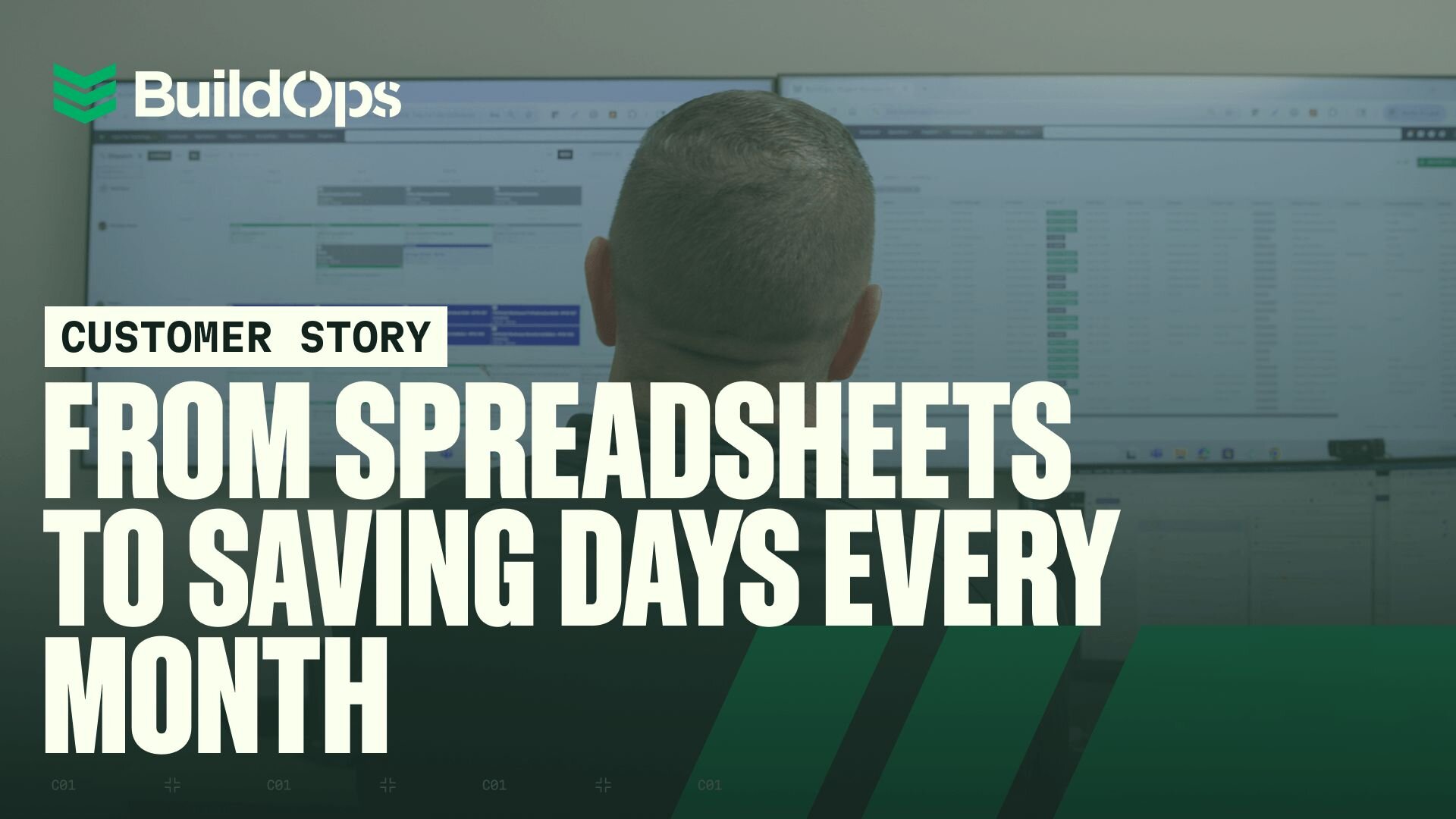
The best schedules are built by algorithms, not guesswork. AI-powered scheduling and smart dispatch software use real-time intelligence to match the right technician to the right job at the right time—factoring in certifications, location, job scope, and SLA urgency. When priorities shift or urgent calls come in, the system instantly re-optimizes the board to keep schedules tight, crews aligned, and jobs running on time.
2. Dynamic routing that minimizes drive time

Travel is a major cost center, and static routes waste fuel and billable time. AI-driven platforms use real-time GPS and fleet management data to reduce travel time. The system continuously analyzes live traffic, road closures, and job sequence to identify the most efficient route between stops. This dynamic routing ensures accurate estimated arrival times (ETAs), saving fuel costs and maximizing the number of productive service calls a technician can complete each day.
3. Predictive efficiency and performance insight

AI optimization works best as a continuous feedback loop. With instant visibility through job costing and reporting, real-time field data flows back into the system, helping the AI learn from service history and technician performance. The result is sharper estimates, real-time labor burn tracking against each phase, and scheduling that gets smarter with every job.
4. Automated work order handoffs for faster billing

An optimized schedule should result in a streamlined back-office process. When the AI system connects scheduling to comprehensive work order management, essential job details, time logs, and rates flow straight into service invoicing without manual transcription. For a no-cool call, the job details, diagnostic time, and repair time are instantly tagged by work order and rate, allowing the office to review and send a clean, billing-ready invoice the same day.
5. Optimized customer experience and payment closeout

Customer satisfaction is the clearest proof that time optimization is working. When technicians arrive on time and service runs efficiently, the job can be closed out without delay. With integrated workflows like integrated payments, completed work becomes an immediate balance due that customers can pay on the spot. That fast, seamless finish is what AI-optimized field operations make possible.
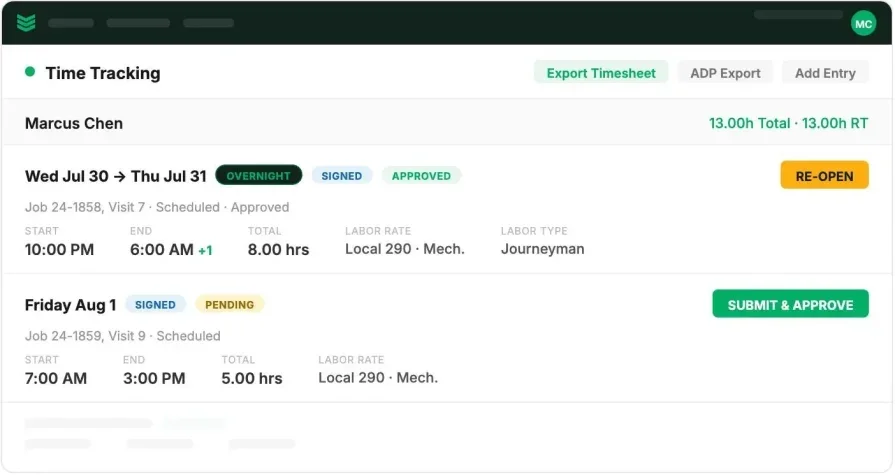
From tap to paycheck
Field clock-ins flow to payroll and billing, fast.
Other notable features contractors should look for
AI-powered service time optimization works best when it connects to the systems that keep the rest of the operation moving.
- Service agreements — Profitability stays in check when tracked hours tie back to contract coverage and scheduled visits through service agreements.
- CRM — When contacts, locations, and job notes live in one place, every billable hour is easier to capture with CRM software.
- Quoting and pipeline — Connecting awarded work to labor planning with quoting software helps teams stay ahead of demand instead of reacting to it.
Next, we’ll break down the different types of apps you’ll come across and where each one fits across service, project work, or hybrid teams.
6 top AI scheduling & service time tools
These platforms do more than just schedule jobs. They use machine learning to make smarter technician assignments, optimize routes in real time, and help contractors drive more profitable work while maximizing every billable hour across the business.
1. Best for commercial field service teams: BuildOps

BuildOps helps commercial field service contractors maximize billable hours with AI-powered scheduling built for the realities of the field. By factoring in technician skill sets, job priority, location, and live route conditions, teams can dispatch smarter, cut downtime, and keep more of the day productive.
When urgent calls come in, dispatchers can adjust quickly without throwing off the entire schedule. The result is a more efficient operation, better technician utilization, and stronger margins across the business.
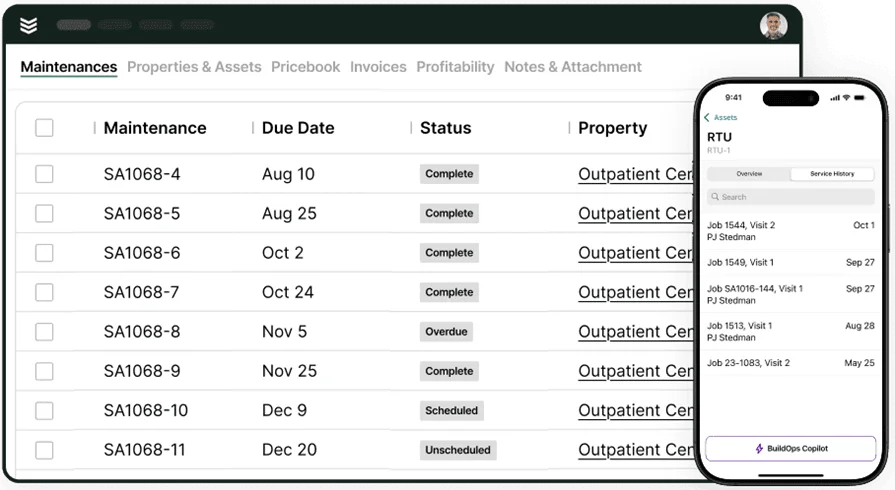
Take a closer look at BuildOps
Keep jobs on track—whether you’re managing installs, retrofits, or maintenance calls.
2. Best for residential: Housecall Pro

Image Source: Housecall Pro
Housecall Pro provides a comprehensive solution optimized for residential service teams, helping them manage high-volume daily calls efficiently. Its scheduling features focus on automating appointment reminders and offering quick dispatch for simple jobs.
Specialized residential contractors may find its AI tools less effective for long-term projects, technician certification tracking, and complex costing on high-value jobs.
Compare Housecall Pro & BuildOps features directly here.
3. Best for general contractors: FieldEdge

Image Source: FieldEdge
FieldEdge is a strong field service solution often favored by HVAC, plumbing, and electrical contractors for its robust scheduling and invoicing capabilities. The platform helps digitize workflows for general trade work, improving communication between the office and the field.
While it offers solid job management tools, it may lack the advanced AI-powered scheduling and resource optimization complex commercial contractors need.
4. Best for small to mid-sized service businesses: Workiz

Image Source: Workiz
Workiz delivers a user-friendly field service management experience designed for small to mid-sized service businesses, focusing on rapid lead management and simplified dispatch. It provides core scheduling and communication tools that help smaller crews stay organized.
Workiz may fall short for large or fast-growing commercial and industrial contractors that need to manage complex service agreements and use deep reporting to optimize AI-driven service times at scale.
5. Best for residential and light commercial: ServiceTitan

Image Source: ServiceTitan
ServiceTitan is a powerful platform known for its comprehensive feature set, particularly excelling in residential and light commercial services through strong marketing and sales enablement tools. Its scheduling helps technicians optimize their sales process during service calls.
However, for commercial, industrial, and complex project contractors, the platform’s residential focus may make its AI less suited for large-scale assets, equipment-heavy operations, and specialized multi-trade teams.
Compare ServiceTitan and BuildOps directly to dig in deeper to their tracking features.
6. Best for large service teams: Simpro

Image Source: Simpro
Simpro is a robust and scalable solution built for large service and project-based teams, providing comprehensive features across the entire workflow from estimating to invoicing. It helps large operations manage extensive equipment and project timelines.
Scalable, but for specialized commercial service contractors, the AI and optimization may feel too complex, take too long to set up, and lack the out-of-the-box focus needed to maximize billable hours in high-value service agreements.
Check out our breakdown where we stack Simpro and BuildOps features up against each other to see which one is the better fit for your team.
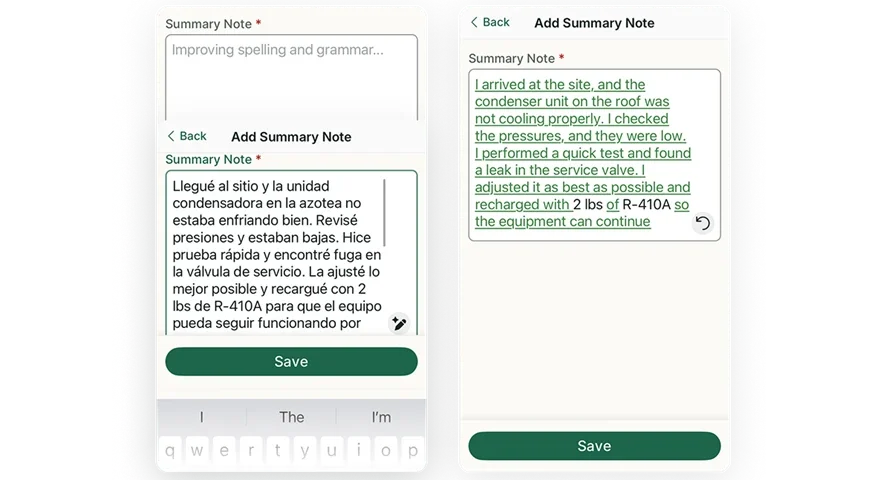
BuildOps AI for Field Service
See how OpsAI auto-optimizes your work across the whole field service ops.
7 benefits of using AI for field service tech scheduling
With AI and real-time data, tech scheduling becomes smarter, faster, and more profitable.
- Boost first-time fix rates: AI-powered matching ensures the technician with the exact skill set, experience, and necessary parts is assigned to the job.
- Maximize technician productivity: Dynamic routing and optimized assignments increase technician utilization, allowing crews to complete significantly more billable jobs daily.
- Reduce travel time and costs: Real-time route optimization minimizes drive time and fuel expenditure, directly cutting a major operational cost center.
- Ensure on-time service delivery: AI calculates the most accurate Estimated Time of Arrival (ETA) by factoring in live traffic and job sequence, ensuring greater customer punctuality.
- Simplify schedule management: Automated logic handles scheduling consistency and dynamically adjusts the board for urgent calls, reducing the dispatcher's manual workload.
- Lower overtime and burnout: Better workload balancing and efficient scheduling reduce unexpected overtime for technicians and lessen pressure on dispatch teams.
- Accelerate cash flow: Seamless work order completion and automated time logs ensure that billing is initiated faster, shortening the sales-to-cash cycle.
Understanding these core benefits makes it clear why AI is essential for modern field service. But before you adopt a platform, you need to know the right questions to ask.
Questions to ask when choosing AI-capable service time software for contractors
Choosing an AI service time optimization platform impacts every part of your operation, from how accurately you estimate jobs to how efficiently your crews move between sites. Here are the key factors to evaluate before you commit.
- Optimization speed and AI automation — Does the platform automatically identify the best service windows based on technician skills, location, and real-time traffic, or is it still manual? Does the AI refine its time recommendations as it learns your team’s performance patterns?
- Fit with existing optimization workflows — Will the platform support your current field routines, or will it require a complete process overhaul? Can it adapt to how your field teams and office staff communicate about live schedule adjustments?
- Scalability as demand fluctuates — As you add more crews or territories, will the optimization engine keep pace without rework? Can it handle seasonal spikes and emergency calls without creating bottlenecks in your labor planning?
- Training and onboarding for field and office — How quickly can your team become confident using AI-driven tools? Does the vendor provide hands-on implementation and playbooks to guide you through rollout and early performance gains?
- Connectivity across your service operations — Does the platform link optimization with dispatch, fleet management, and invoicing? Can technician updates and job data move seamlessly across your systems to eliminate duplicate entry?
Clear answers to these questions will lead you to an optimization platform that strengthens your entire operation instead of just filling a gap in your tech stack.
4 FAQs about AI that recommend the best service times to contractors
This section addresses the most common questions contractors have when considering AI-powered service time optimization, from its practical benefits to its integration with existing systems.
1. How does AI time optimization software predict and prevent delays?
AI continuously analyzes live traffic, technician skills, job complexity, past job durations, and inventory needs to predict the most accurate ETA and best job order. When delays happen, it instantly re-optimizes the schedule and alerts dispatch, helping teams update customers quickly and prevent one issue from disrupting the entire day.
2. Can smaller contractor companies benefit from AI time optimization tools?
For smaller contractors, AI can move the needle fast. With fewer techs, every hour matters, and wasted drive time or bad job assignments hit profit harder.
AI helps make sure each technician is on the right high-value job they’re qualified to do. The result: better utilization, more revenue, and a small team that can operate like a much bigger one.
3. Is AI time optimization software worth the price for contractors?
Yes. AI optimization software can deliver strong ROI for contractors when used well. The investment often pays for itself through lower overtime, reduced fuel and drive time, and more billable hours per tech.
It also drives value beyond cost savings. Better scheduling and service accuracy improve the customer experience, which can lead to more repeat business and referrals. And when work orders get processed faster and more accurately, cash flow improves too.
4. How does AI-powered time optimization integrate with your tech stack?
Effective service time optimization relies on connected systems and uninterrupted data flow across the business.
- AI time optimization integrates with your core systems.
- The platform connects your business systems into one workflow.
- Information moves from field to office without manual entry.
- Schedule updates are sent directly to technician mobile devices.
- Customer info and job history are instantly available to staff and techs.
- Work orders, time logs, and rates flow automatically into invoicing.
- Parts are linked to jobs to schedule the right technician.
- Service agreements are tracked to keep maintenance visits on time.
- Job and travel performance data is captured and fed back into the system.
- This data helps AI improve scheduling accuracy over time.
AI is changing how field service contractors manage time in the field. BuildOps is the AI-native platform built for commercial service, helping teams optimize service time across scheduling, dispatch, work orders, maintenance, and reporting with OpsAI.
With OpsAI, contractors can reduce wasted time, route smarter, help technicians diagnose issues faster, and complete jobs more efficiently. That means more productive days, faster closeouts, and stronger margins without adding manual work.
Ready to explore? Set up a demo with BuildOps to see how OpsAI helps contractors optimize service time and run a more efficient commercial service business.
Unify your FSM with BuildOps
See how we tie scheduling, dispatch, mobile, assets, and billing into a single workflow.