Purchasing, Connected: New Workflows for Commitments, Documents, and Financial Control
Subcontracts, retainage, change orders, and vendor docs all in one system.
Procurement shouldn’t feel like a high-stakes game of telephone.
Commercial contractors today are facing problems that weren't even on the radar thirty years ago. You don't need tools that are stuck in the past. You need a platform that can keep up with the pace of modern work.
That's what BuildOps’ latest purchasing update was built to solve. Subcontract POs, Commitment Change Orders, AP retainage, customizable vendor-ready PDFs, and fine-grained permissions now live in one connected workflow — keeping committed costs current, documents tied to live project data, and every change more structured, auditable, and ready for OpsAI.
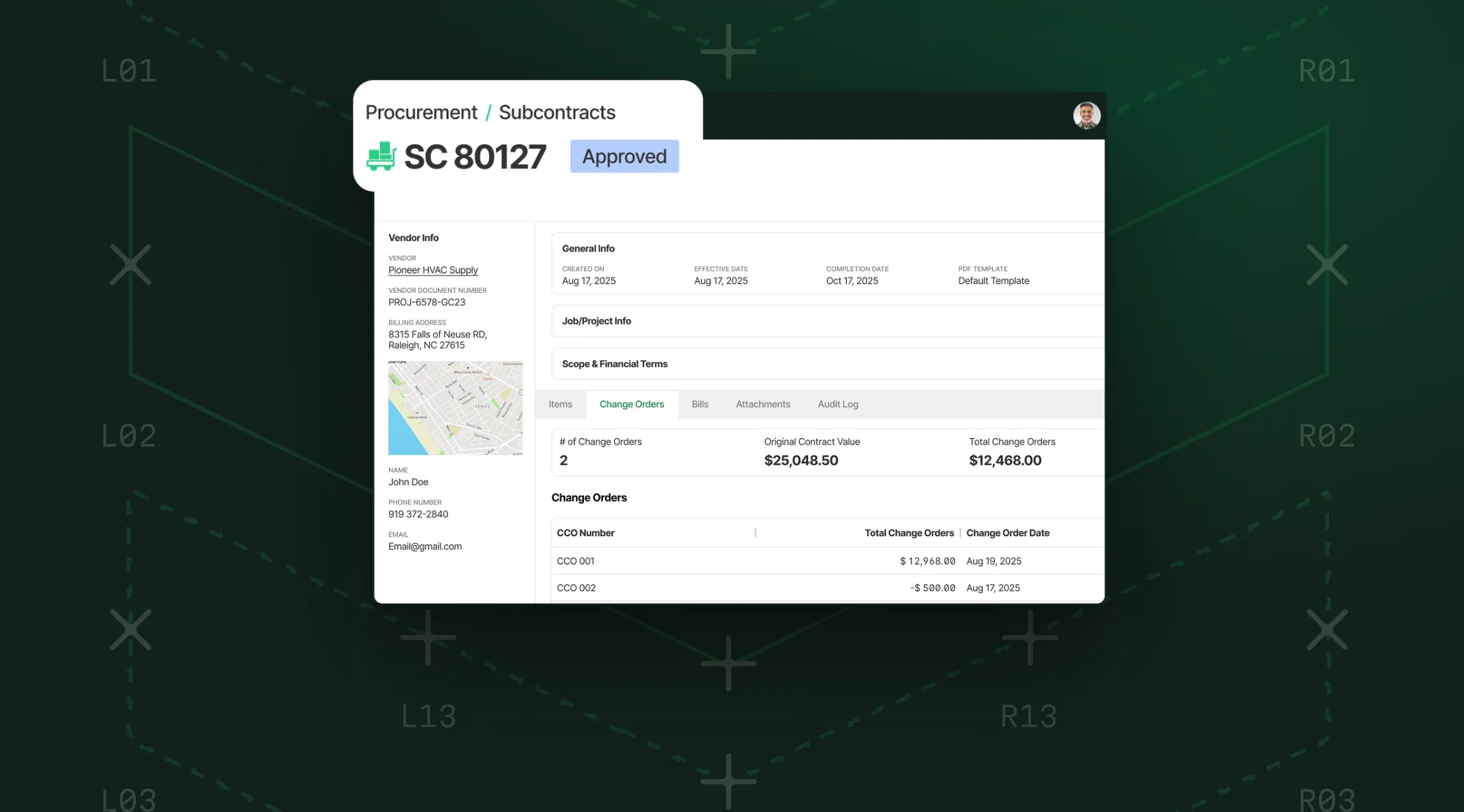
Subcontracts that act like subcontracts
A subcontract is not just a material PO with better manners. BuildOps gives subcontract commitments their own workflow, so teams can stop forcing subcontract details into patched-together PO processes.
That means structure where it actually matters: schedule of values, retainage, milestone billing, change control, and signed subcontract records tied back to the project. Instead of splitting that information across a PO, a spreadsheet, and a side document, teams can manage it in one place and keep committed costs current as billing moves.
Commitment changes with a real trail
When scope changes, committed costs should change with it. Commitment Change Orders replace ad hoc edits with a formal change workflow for purchase orders and subcontracts.
Teams can track the original commitment, approved changes, and updated committed amount in one place, with line-level edits, new line items, reasons for change, and supporting documentation all tied to the record. That gives project and finance teams a cleaner audit trail and a much better shot at catching margin drift before month-end.
Retainage without the spreadsheet
BuildOps now manages AP retainage inside the billing workflow. Instead of calculating holdback by hand and tracking release timing in a separate file, teams can withhold, track, and release retainage directly on subcontractor bills.
Held amounts, release events, and balances stay tied to the subcontract, the bill, and the project, with Intacct support built into the workflow. Less spreadsheet cleanup, less reconciliation risk, and better visibility into what is still owed.
Documents that don’t turn into side work
Teams can generate branded PO and subcontract PDFs directly in BuildOps with smart fields, custom layouts, logos, and multiple templates for different document types.
Admins can set defaults, users can preview and make minor edits before sending, and PDFs stay tied to live project data instead of drifting into disconnected files. The result is less manual formatting, fewer document errors, and vendor-facing paperwork that actually looks like it came from a serious operation.
Permissions that keep control tight
BuildOps also adds fine-grained permissions across purchase orders, subcontracts, and Commitment Change Orders. Admins can control who can view, create, edit, approve, void, export, email, and manage attachments.
That means teams can move faster without giving up control over sensitive procurement actions.
Why it matters
Every commitment, change order, retainage release, document event, and permissioned action now stays structured, auditable, and connected inside the platform. That keeps the workflow cleaner today and gives OpsAI better context to surface what matters tomorrow — from billing gaps to document context to cost changes that should not get buried until month-end.
And that matters because the way contractors buy, bill, and manage risk today is a lot more complex than it was 30 years ago. Modern projects move faster, involve more stakeholders, and leave less room for lag between the field, office, and accounting. Contractors need purchasing tools built for that pace — not generic workflows built for somebody else.