BuildOps for Sales
Turn your pipeline into a power tool
Stop tracking deals on spreadsheets and sticky notes. BuildOps gives sales leaders one system to manage every opportunity, quote faster, and hand off to ops, so nothing falls through.


People over paperwork
You can't close what you can't see

Know the job before you quote it
Your reps get full customer history, property details, and past service records before they pick up the phone. No more guessing.

No quote left behind
Keep your pipeline visible so nothing goes cold. BuildOps puts every opportunity, stage, and next step in one view, so your team can follow up while the need is fresh.

One board, every deal
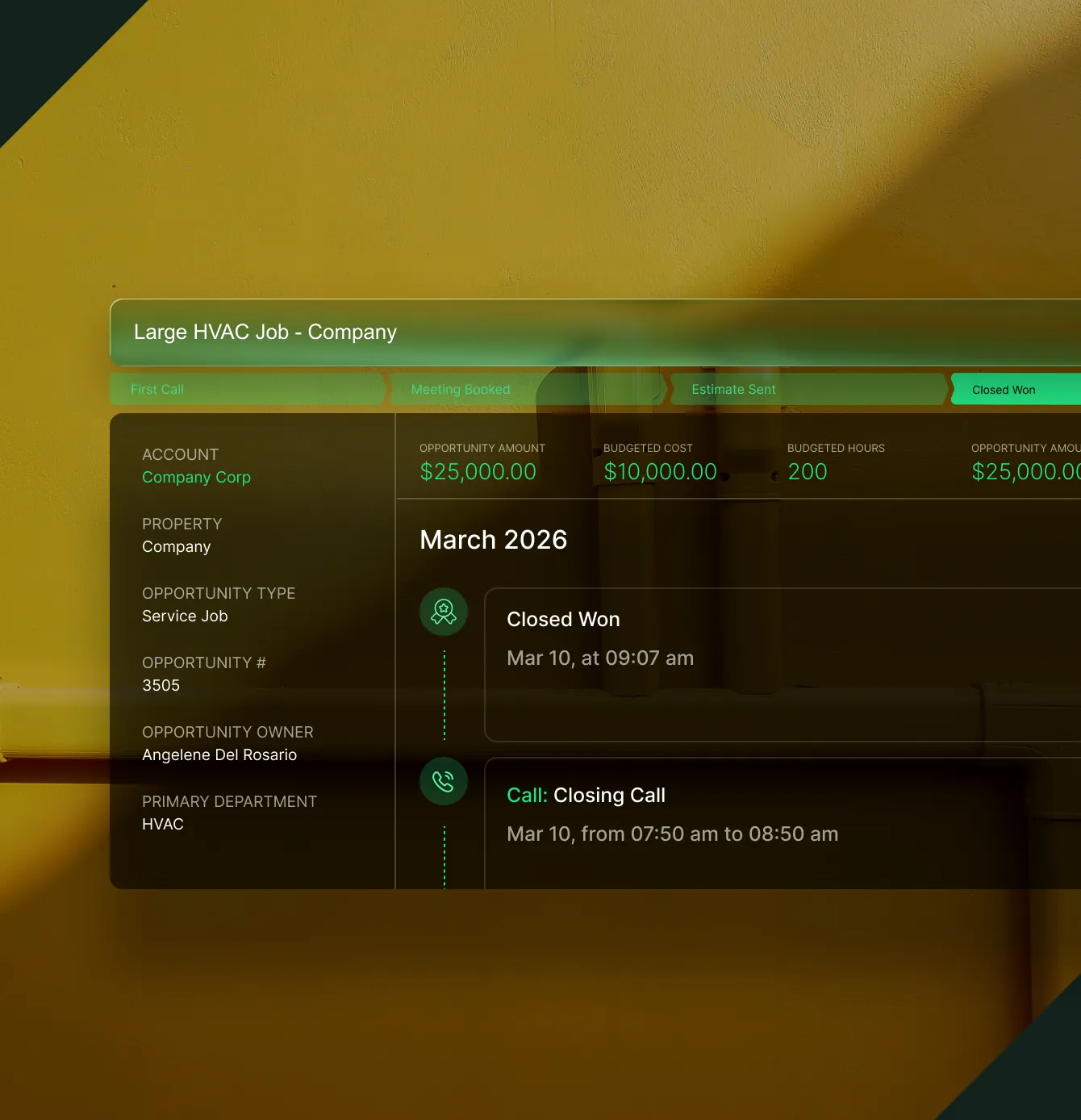
Every opportunity, every stage, every next step, all in one view. No chasing reps for updates. No surprises in the pipeline review.

Built for commercial complexity
Commercial contractors sell across properties with dozens of assets, customers with multiple locations, and agreements that span service lines. CRM+ was designed for that complexity, not stretched from residential software or a generic CRM.

Sales closes it, ops runs it
When the deal closes, every detail — margin, scope, contacts — flows straight to ops. No re-entry. No "who sold this?" conversations.

OpsAI turns field data into pipeline
AI-powered Recommendations identifies pull-through revenue your techs already found in the field — like aging equipment or recurring repairs — so your sales team sees them before the customer calls someone else.
ALL IN ONE PLACE
One system. The whole job
Projects, in real time
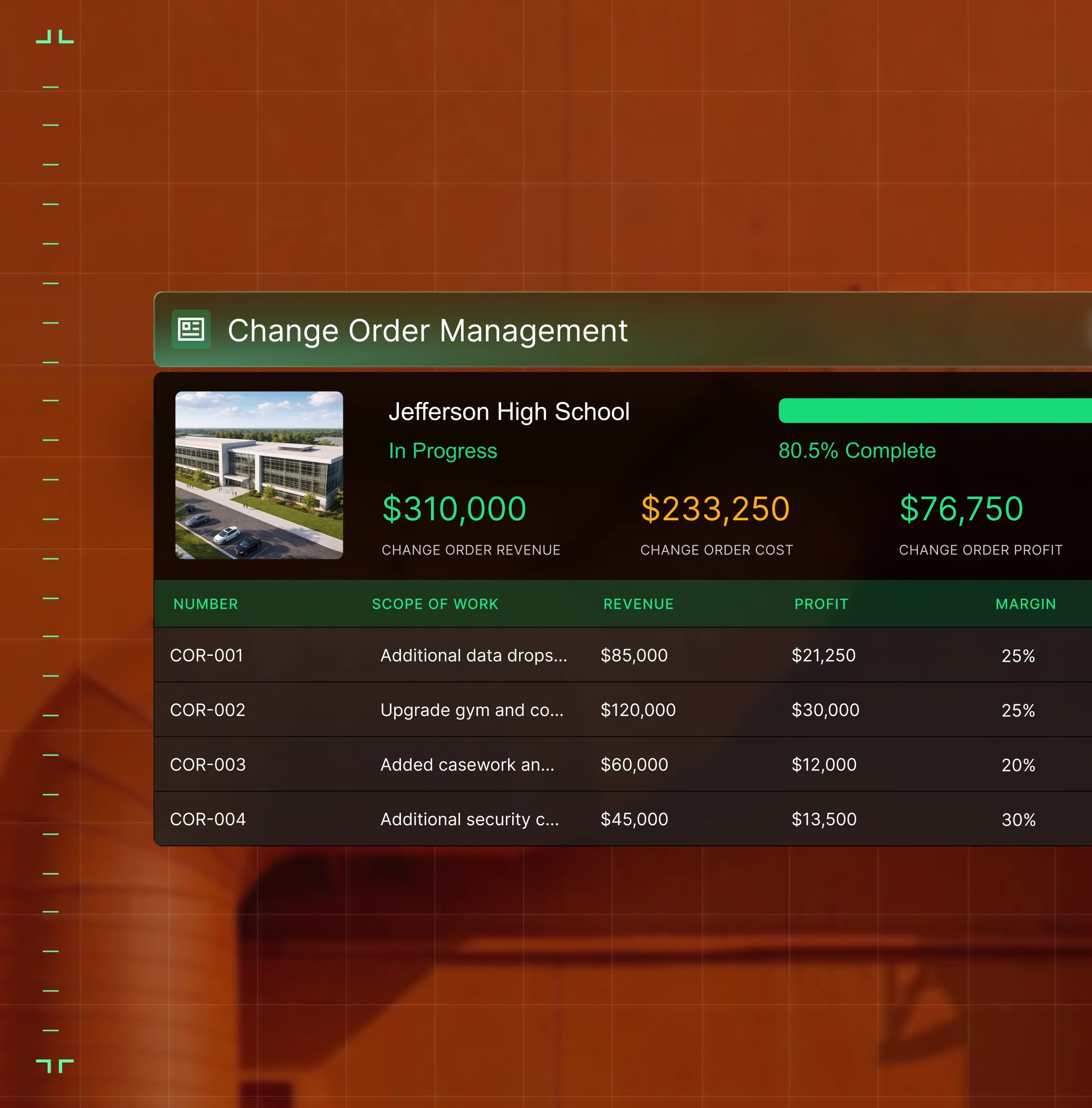
From contract to closeout, the BuildOps gives you the financial and field visibility that multi-phase commercial construction demands.


Service that scales
Every service job on track from first dispatch to final invoice. Match the right tech to the right call, track SLAs, manage assets, and close out work orders without the fire drill.


Field to invoice
Labor hours, materials, and POs flow from the field to the books as work completes. Invoices go out the day the job closes, not three weeks later. Stop chasing paper and let the money follow the work.


Quote to close
Quote faster. Follow up before the customer calls someone else. Close the work and hand it to ops with full context so nothing gets dropped.


AI that's built in, not bolted on
OpsAI is built into your workflows. It summarizes field activity — from service visits to daily reports — so your team gets the story without reading every entry. Less time on admin, more time on the work.


Sales Performance
Close faster. Grow revenue

Faster quote-to-close
Same-day quotes. Full customer context. Clean handoff to ops. When speed is the differentiator, BuildOps gives your team the edge.

Cleaner sales-to-ops flow
Capture information once and share it across teams to eliminate handoff gaps and protect margins.

Full-funnel visibility
Track every deal from first call to closed-won. Know what's stalled, what's hot, and where to focus, without waiting for pipeline reviews.

Pull-through intelligence
Every service visit and asset record becomes a lead. BuildOps turns field data into pipeline, so revenue grows without cold prospecting alone.

"I can't out-size the larger shops. But I can out-inform them with clearer quotes, better communication, and answers before they even ask the question. That's how we become the partner they rely on when it's time to make the call."
What makes BuildOps different
Built from the ground up for contractors who run projects, service, and everything in between. Not adapted. Made for the work.
Commercial work isn't an add‑on
Most platforms started in residential and stretched to fit. BuildOps starts with the complexity of commercial work.
Run the work in one connected system
Field, office, finance, and sales — all in one place. No duct-taped tools, no double entry, no dropped balls.
OpsAI is built in, not bolted on
OpsAI is already in your workflows. It recaps the day, calls out risks, and gives every role a clear next step.
CONNECTED ACROSS YOUR BUSINESS
Every team on one system
Service Operations
Service techs see the full asset history and parts they'll need. Crews show up informed, so work gets completed right the first time.
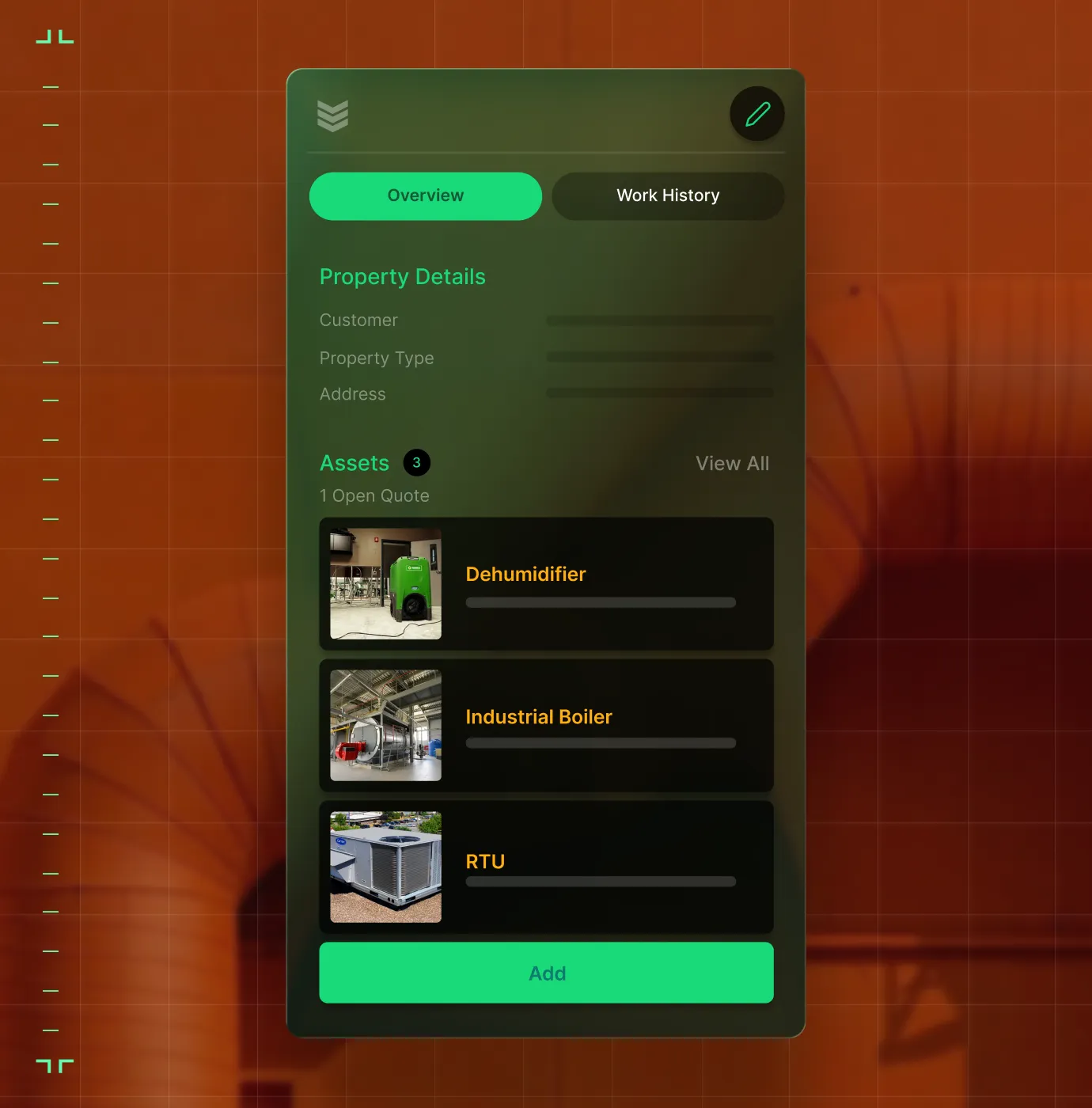
Field Technicians
Full job history, asset data, and parts info on mobile, so techs fix it right the first time.
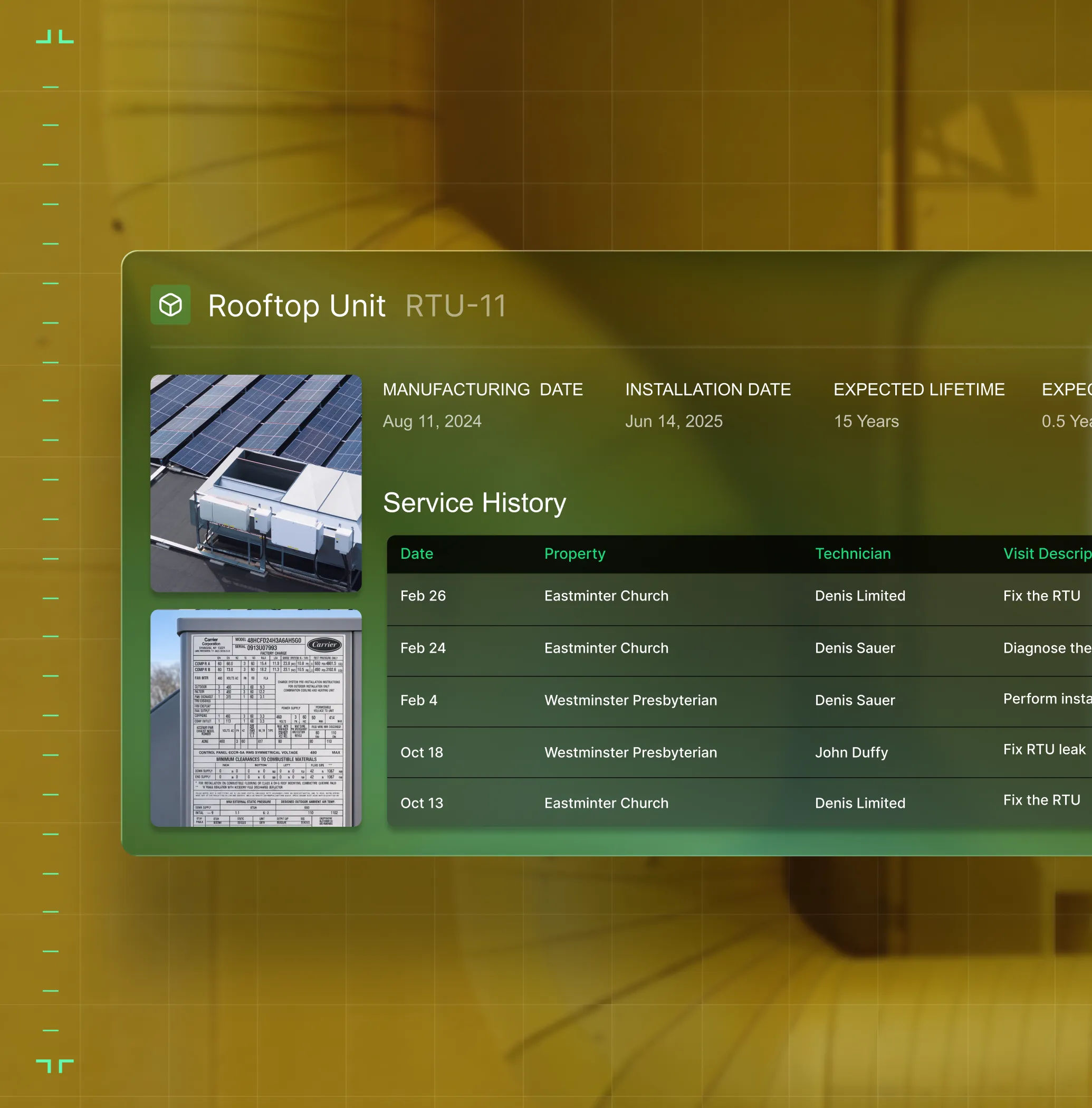
Construction Operations
Track costs, schedules, subs, and field progress across every phase of a commercial build.
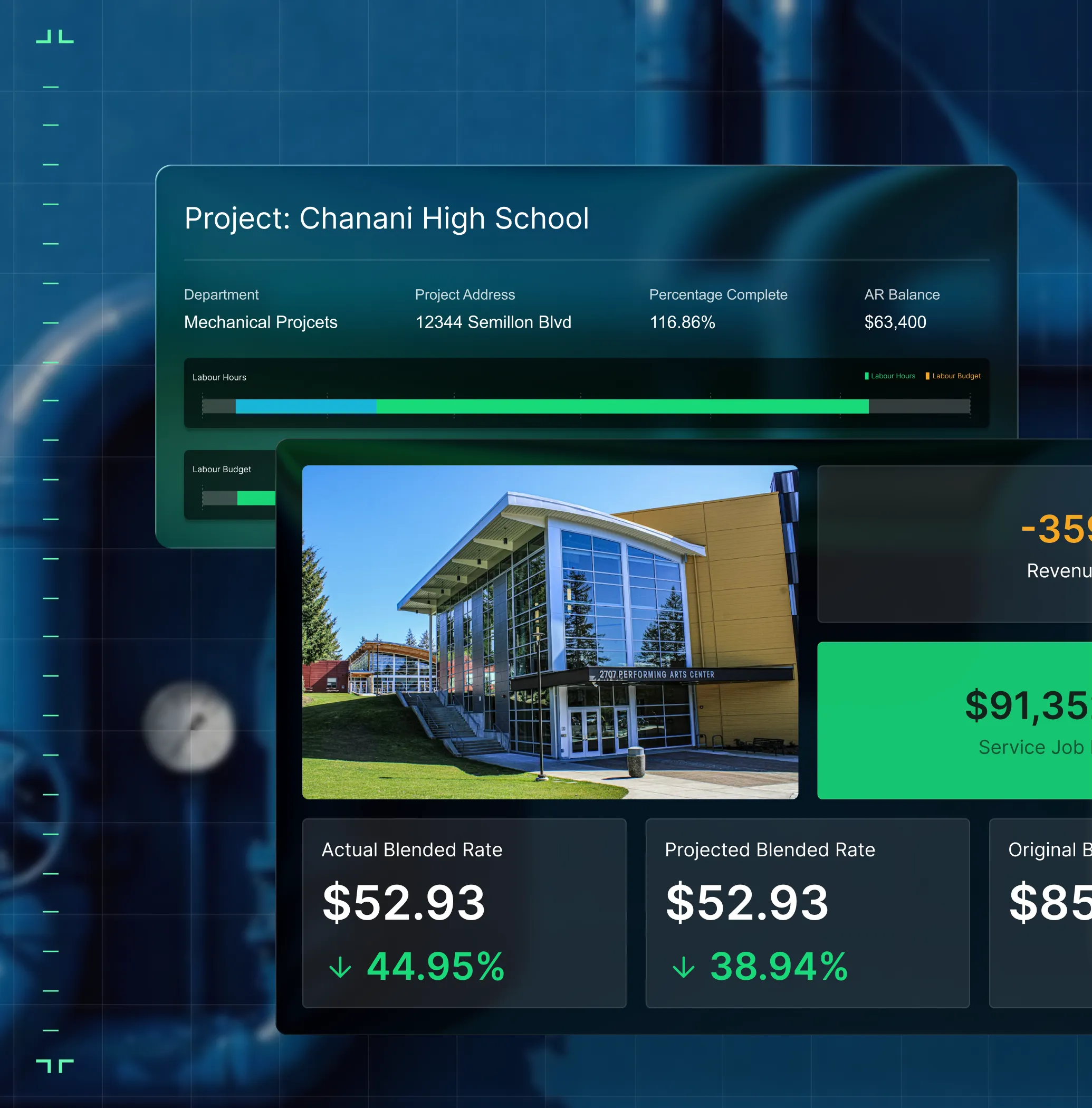
Finance
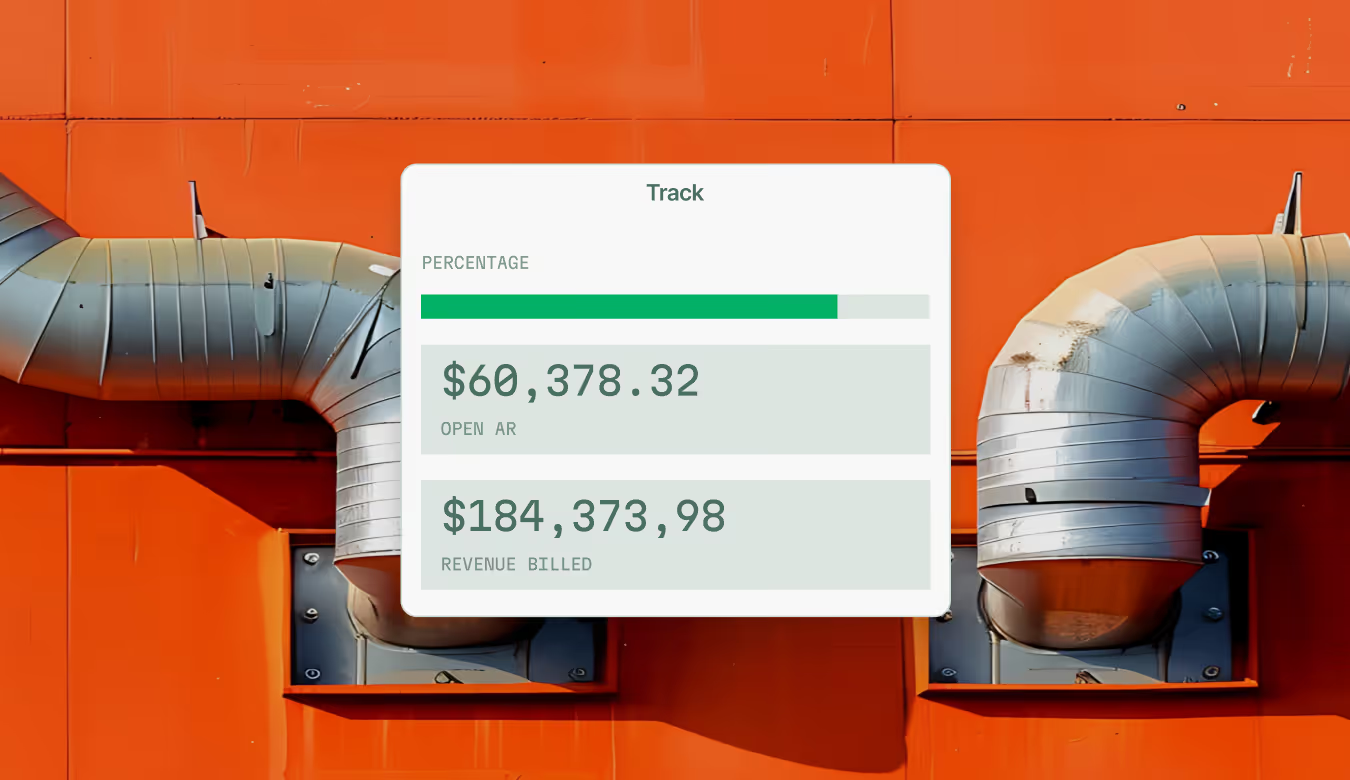
Field data flows to your books as work is logged. Invoices, pay apps, job costing, and payroll-ready exports with no re-keying.

Owners
Revenue, margins, and crew performance across service and projects in one view.

Common Questions
Your questions on Sales
& CRM, answered
What features in commercial construction software are most essential to the sales department?
If you’re in the sales department, a commercial construction software should have core features that can handle the complexity of that specific type of work done by your business. Here are the key things that are especially useful for sales departments to focus on:
- Capabilities to Attach Photos & Videos to Quotes—Customers are more likely to approve Quotes when they can see proof of the work that needs to be done.
- Unified Source of Information—Full jobsite and asset history is up-to-date for all team members, so techs in the field arrive at the jobsite with all the information already collected by sales. No more calling the office for customer and jobsite information or arriving unprepared.
- Faster Recommendations to Quote Pull Through Work—When a tech on the job identifies a system deficiency or recommended work, get notified right away so sales can take action and send a Quote to the customer before they go looking elsewhere.
- Custom Dashboards for Sales Teams—Commercial work requires the ability to look at the smallest data point all the way to the big picture. In BuildOps for example, you can build your own reports using every single data input in the platform. You don’t have to piece together out of the box reports that come with software that weren’t built for field service sales teams. Build the reports you need, your way.
Is BuildOps the best field service sales software for commercial teams?
For commercial service teams, BuildOps is a field service sales and operations software that’s purpose-built for multi-trade service and construction teams. It was designed from day one to handle the complexities of commercial field service work, and we believe it comes out on top when it comes to the needs of commercial field service operations and sales teams. This is primarily due to its sales to operations handoff features that unify every aspect of the customer lifecycle in a single system.
We recommend doing your own research to find the field service sales software that’s the best fit for your team. CRMs and field sales software are not all the same, and aren’t built for the same use cases. If you're a residential-only team, tools designed for simpler quoting for smaller jobs might be a better fit.
What are the primary benefits of using a field service sales CRM?
Field service CRMs really cut down on data double entry and the stalling of jobs. Typically, you should see benefits specific to the sales department like these when you implement a field service CRM:
- Faster and more accurate Quotes sent to customers
- Faster Quote approvals from customers
- Quotes leverage real service history data, photos, videos, and field notes from past work
- When pull-through work is identified by techs, recommendations sync to sales right away so sales can get a Quote out the same day, or even sometimes before the tech leaves the jobsite
- Customer information including contacts, addresses, site security info are updated in a single location and accessible to all team members from sales to field, instantly
- Customer information hierarchy that links customer project information together so different roles have the info they need
- Sales hands off to ops instantly because all information collected by sales is in the system, ready for ops use
- Finance teams leverage data initially collected by sales for billing, automating invoicing and reducing AR periods
How does BuildOps CRM+ differ from generic CRM platforms like Salesforce or HubSpot?
CRM+ is built into BuildOps. Your sales team shares the same customer, property, and asset data as ops with no integrations and no duplicate records. It's a CRM made for how commercial construction contractors actually sell, not a generic sales platform that can’t understand contractor workflows or construction estimating.
How do you get salespeople to actually use the CRM in BuildOps consistently?
We built CRM+ to feel natural inside BuildOps. Reps don't need a separate login, and because our CRM links to quotes and jobsite work, there’s far less extra data entry. Customer data, property details, and asset history are already there, so adoption sticks.
How does BuildOps handle the sales-to-ops handoff?
When a rep closes a deal, every detail including margin, scope, contacts, and timeline flow directly into BuildOps. Ops hits the ground running without asking "who sold this?" or re-entering any data. Additionally, when pull-through work is identified out in the field, it’s linked to all this pre-existing data so sales can build Quotes much faster leveraging all their pre-existing information about the customer.
How does BuildOps CRM+ keep prospect and customer data separate?
New accounts created in CRM+ automatically default to "Prospect" status. Once a deal is won, the account converts to "Active." This keeps sales data clean and prevents prospect info from cluttering your ops environment.
Can my sales team see full service history for existing customers in BuildOps CRM+?
Yes. CRM+ and BuildOps share the same database. Your reps can see every past job, service agreement, property note, and asset record for existing accounts, so they sell with full context, not a blank screen.
How does BuildOps CRM+ handle multi-property accounts?
Each account in CRM+ links to multiple properties. Each property links to its assets, service history, and contacts. Your team can drill from account to property to asset in seconds without digging through spreadsheets.
Can BuildOps support both service-focused sales and project-based sales?
Yes, and it’s what we’re built for. BuildOps CRM+ supports multiple sales processes, each with its own stages, required fields, and workflows. Today, closed-won opportunities convert directly into service agreements, quoted jobs, or projects inside BuildOps. For service work and special projects like tenant improvements or retrofits, CRM+ handles the full pipeline-to-handoff workflow. For larger new construction bids with dedicated estimating needs, CRM+ manages the pipeline while estimation is handled through your preconstruction tools.
Do you have any proof of how BuildOps has helped sales & marketing teams?
We have tons of examples. Here are some of the biggest benefits sales teams have seen using BuildOps:
- Layer One fixed their job costing process, saving 1 week of manual work every month
- Certified Fire saw service employee billable time increase from 75% to over 95%, monthly service billing rose 54%, and an incredible 250% increase in profit margins
- Jackson Mechanical saw a 50% reduction in time taken to create a job and get it scheduled, and a 30% growth in revenue
- Classic Electric unified their whole operation in a single platform, achieving 300% growth
There’s a clear reason that sales departments love BuildOps.
How do I ensure high adoption rates of BuildOps across the entire team? Sales can’t be the only ones using it.
When your field techs and other team members see how much BuildOps is going to cut down the manual time on tasks they do every day, they’ll jump at the chance to use it. When field techs see how the nameplate scanner fills in asset details automatically they’ll get on board. When finance sees how field tech voice notes leverage directly into customer-facing invoice summaries they’ll want BuildOps implemented right away. When business owners see how they can set up perfectly and uniquely customized dashboards that show exactly where the company is making and losing money, they’ll be wondering how they ever got by without BuildOps before.
The BuildOps platform was built so even the least tech-savvy field tech can use it effectively, and most team members become comfortable with BuildOps with only 1-2 training sessions. During implementation, we help you build the custom workflows your business actually uses, so when your techs are getting started with the platform, they’re learning how to use it to complete the exact type of work they are going to do out in the field, so you can ensure compliance team-wide, without constant reminders from sales to use it.
How does BuildOps integrate with QuickBooks, Sage, or my other systems?
BuildOps integrates with many of the tools frequently used by commercial field service businesses including QuickBooks and Sage, and has a bidirectional sync with these tools, so data can flow from the field directly into your accounting system, job costing, payroll, and other tools, cutting out the need for manual double or triple entry.
BuildOps also integrates with tools commonly used in different trades and industries, and features an integration with Bluon for HVAC teams, and an integration with Inspect Point for fire and life safety service teams.
We see BuildOps as the operational backbone you can build your sales department and field operations on top of, no matter what other tools you need in your tech stack.
What does the timeline for a BuildOps integration look like for commercial service sales teams?
Most businesses are up and running on BuildOps within 8-12 weeks. We map your legacy data, configure custom workflows that match your specific field operations and the work you do, and we train your crew—sales and field techs alike. Our integration specialists will be with you every step of the way to help you build out your new operational architecture.
BuildOps was created specifically for commercial companies, and continues to be guided by input from sales departments, business owners, managers, dispatchers, and field techs.
What are some ways sales departments can automate operations with OpsAI? Is OpsAI ready now?
OpsAI is live and in production today. Teams are using it now across dispatch, field documentation, asset capture, invoicing, and payment matching. It ships as part of BuildOps, not as a separate add-on.
Our customers have seen results like 80% less data entry using our PO scanning tools, have saved hours every month using our invoice automation, and love the ability to turn tech voice notes into structured field notes that convert to invoice notes in seconds—all powered with OpsAI.
OpsAI learns from your jobs and project data to flag issues, identify recommended work, suggest next actions, and cut busywork, getting sharper with every visit. It turns your legacy system of record (showing you the history of what was done) into a modern system of action, guiding every team member from field to office on what steps to take next.
More specifically, here are the top ways sales departments enhance operations using OpsAI to automate sales tasks:
- Identifies pull-through revenue and work recommendations from completed visit notes to make faster recommendations to customers for additional work
- Reads what your techs write up including aging equipment, recurring failures, missed agreements and surfaces a ranked list of opportunities your sales team can act on the same day
- Surfaces jobs trends and risks that can lead to changes in quoting or updated change orders for customers
- When OpsAI flags a replacement opportunity, the signal connects to field execution, service agreements, and financial forecasting so a quote becomes a job and then an invoice and then a new quote for pull-through work, all in the same system
How does role-based access work in BuildOps? What does sales see vs field techs? How is the data secured?
Role-based permissions ensure your team only sees what they need to, and you are in full control of that. You can set permissions for contractors, for dispatchers, for the sales department, for leadership, for business owners—whatever you need. BuildOps is a platform where all the data is accessible to anyone, whether they’re using a desktop or using their phone, but you are in total control of who sees what.
Maybe you want to build a custom report for each field tech to see their individual job performance stats, but you want a different dashboard for sales to compare pull-through work success rates. BuildOps lets you do that.
BuildOps is also SOC 2 compliant with enterprise-grade encryption for data in transit and at rest, so you can be assured: your data is secure, and your data stays yours.
