Materials & Subcontracts
Control material and subcontract costs before they hit your budget
Track every PO and subcontract against the right phase, budget, and cost code so your team sees committed costs early and avoids surprises later.
Trusted by 1,500+ commercial contractors across North America















Built for Construction Procurement
From vendor commitment to project budget before the work begins

POs tied to the project
Create purchase orders linked to the project, phase, cost code, and department. No separate tracker needed.

Subcontracts in one directory
Manage subcontractors alongside suppliers with compliance docs, retainage, and contacts in one view.

Changes, not surprises
Track commitment change orders with full history: original amount, every revision, and who approved it.
From the field to the budget
Turn commitments into budget visibility
POs and subcontracts scattered across email, Word docs, and spreadsheets leave your budget blind. BuildOps gives PMs and buyers one place to create, track, and manage every vendor commitment tied to the project.
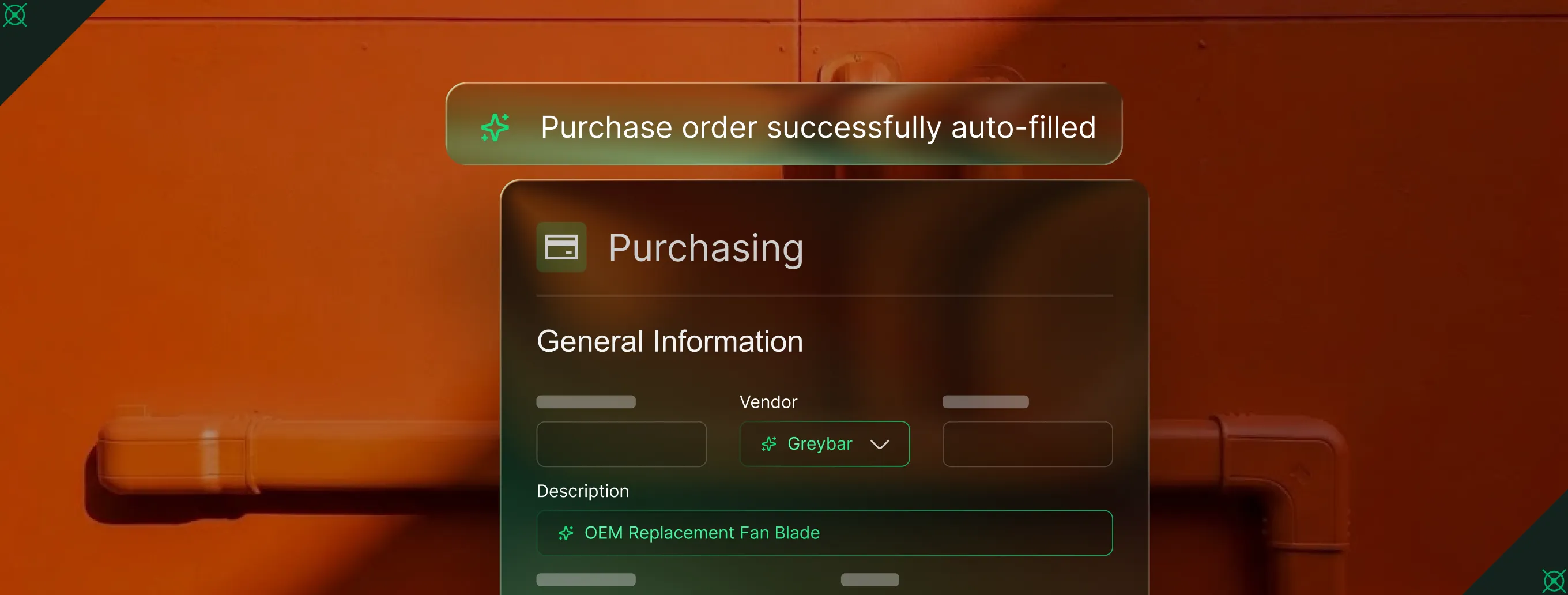
OpsAI PO Scanning on Mobile
Snap a photo of a receipt or PO in the field. OpsAI reads the vendor, date, and line items then fills in the purchase order. Review, adjust, and save in seconds.

Bill of Materials
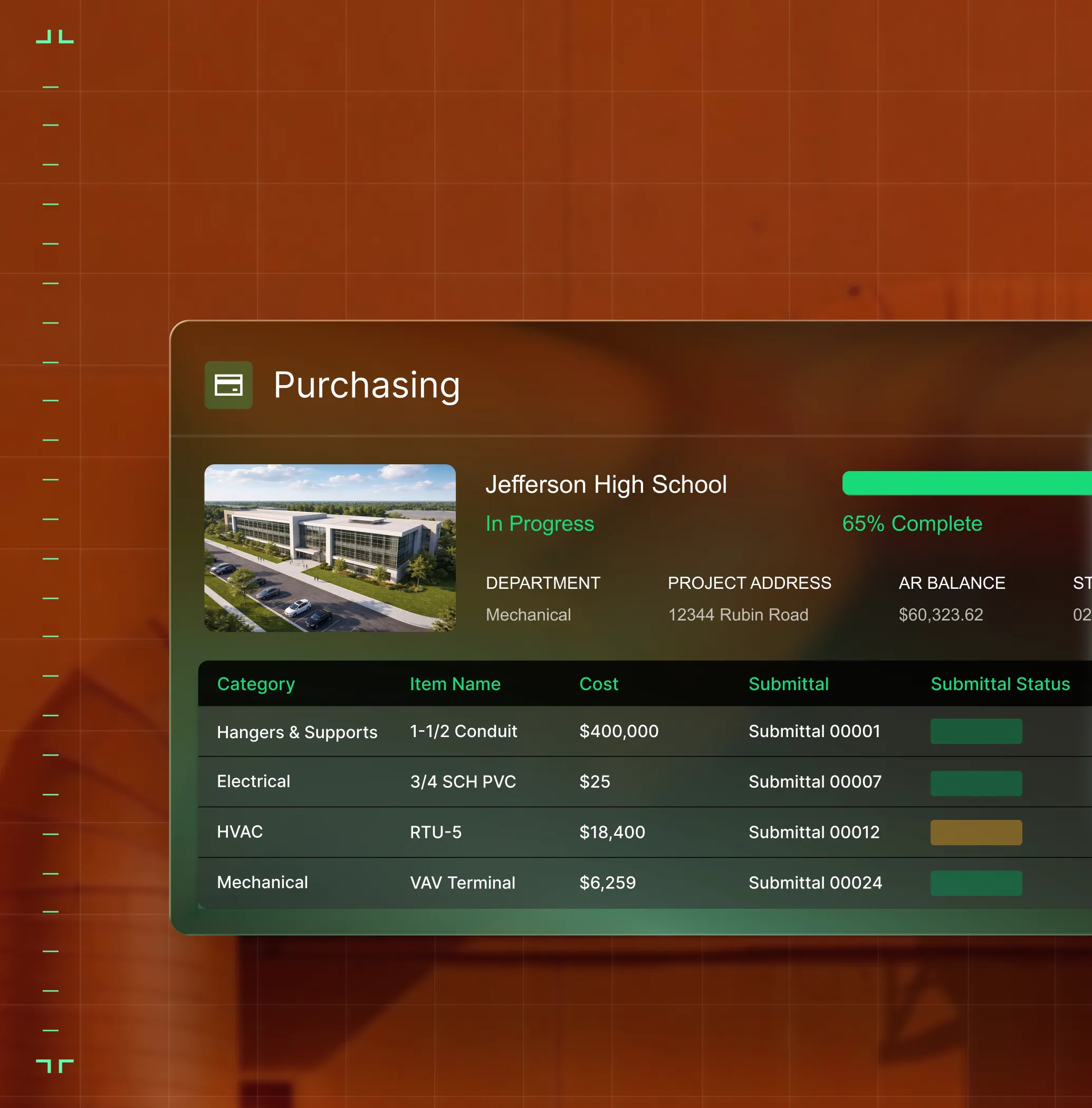
Build your material buyout list. See what's been ordered, what's outstanding, and which items are linked to POs.
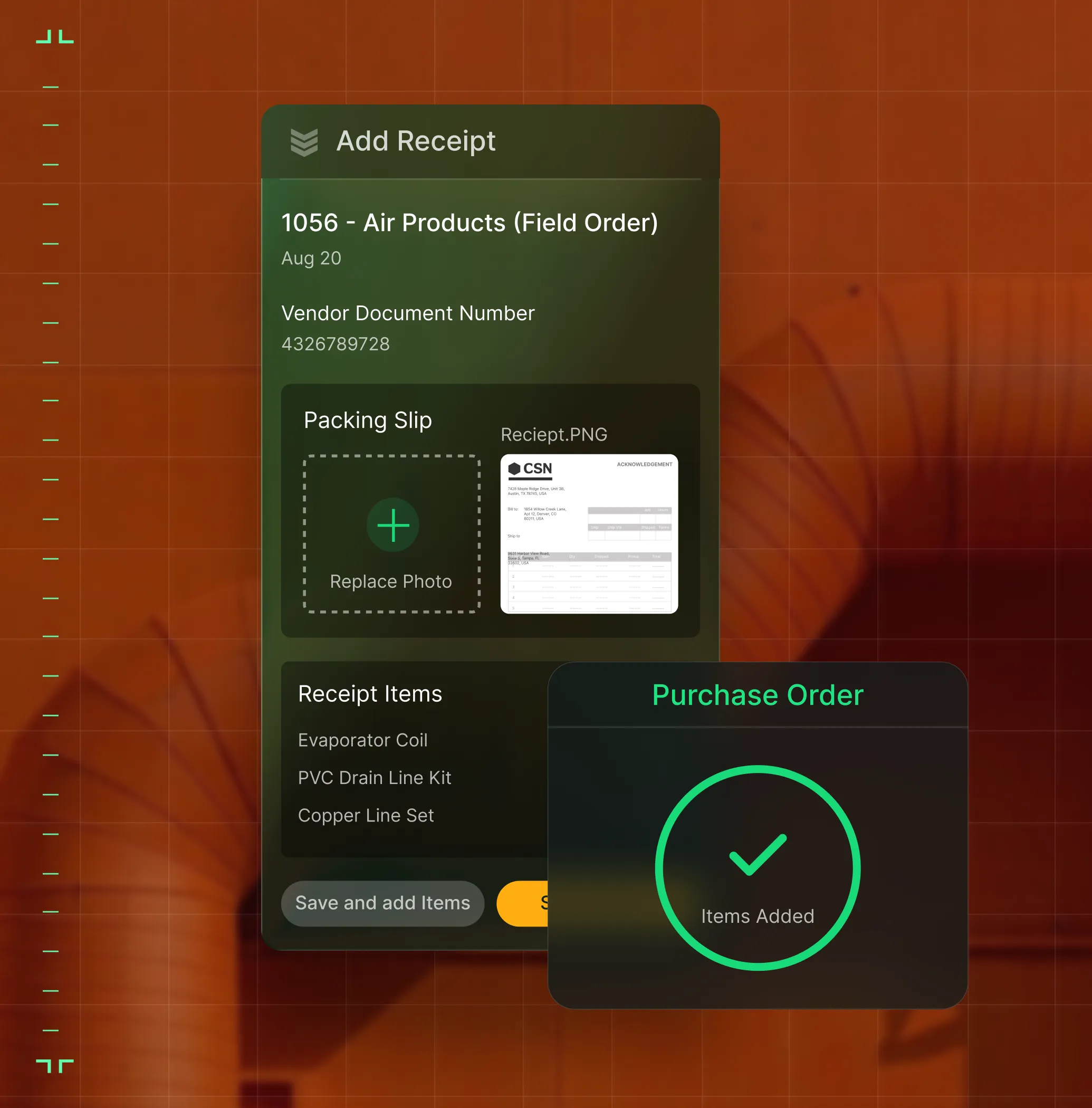
Field Orders
A streamlined PO for the field. Foremen log purchases on mobile and attach them to the project, phase, and cost code directly.
Field, Office, and Finance
One system for POs, subcontracts, and costs

"Our margin dollars improved quite a bit just being able to keep a closer eye on everything."
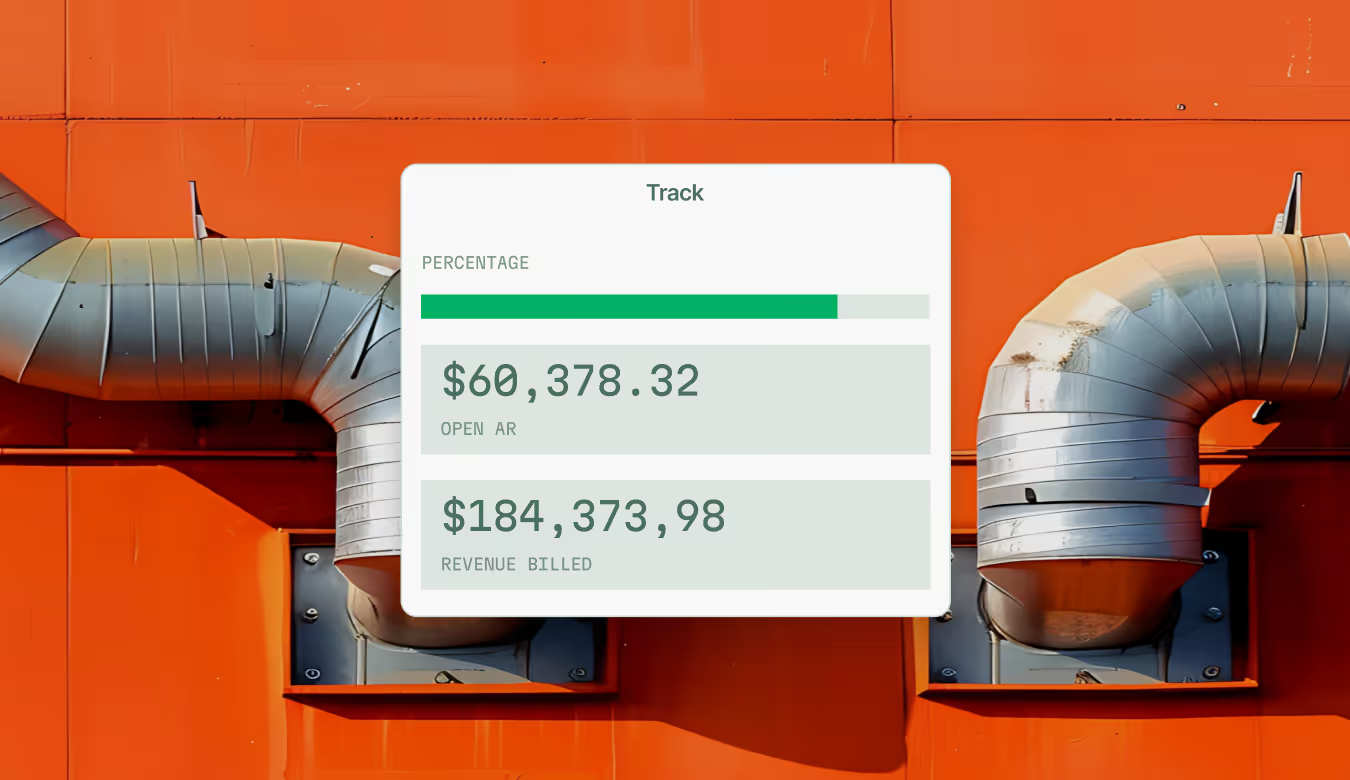
See every PO and subcontract against the project budget by phase and cost code.

"We can even initiate change order requests at the field level — allowing our project managers to remain aware of those changes, and negotiate accordingly."
Capture scope changes as they happen so nothing slips between the field and the budget.
"The commitment is already there. When the bill comes in, they know where to apply it — because they are all mostly committed costs."
PO to receipt to bill which pushes into job costing and your ERP. No re-keying.

Proven Results
Real-world impact for commercial leaders


"We've seen an increase in day-to-day operations efficiencies that's going to add up to significant savings in time and energy over the course of a year."

"If we didn't have BuildOps and the additional cyber security they give our company, we would be dead in the water."

"The ability to produce reports either on an individual job basis, a quarterly basis, or a project basis is something we'd never seen before in other software that we've used."

"We've cut down in our receivables from about 120 days to 30 days on average."


"Before we knew it, we were seeing quicker turnaround times on job closeout and a huge improvement in the time it took for quotes to be accepted by our customers."


"With BuildOps, we feel like we can go after anything. The sky is the limit as far as the size of the project."
.webp)

"BuildOps gave us an all‑in‑one system for both service and projects. Once we saw that, it was a no‑brainer."
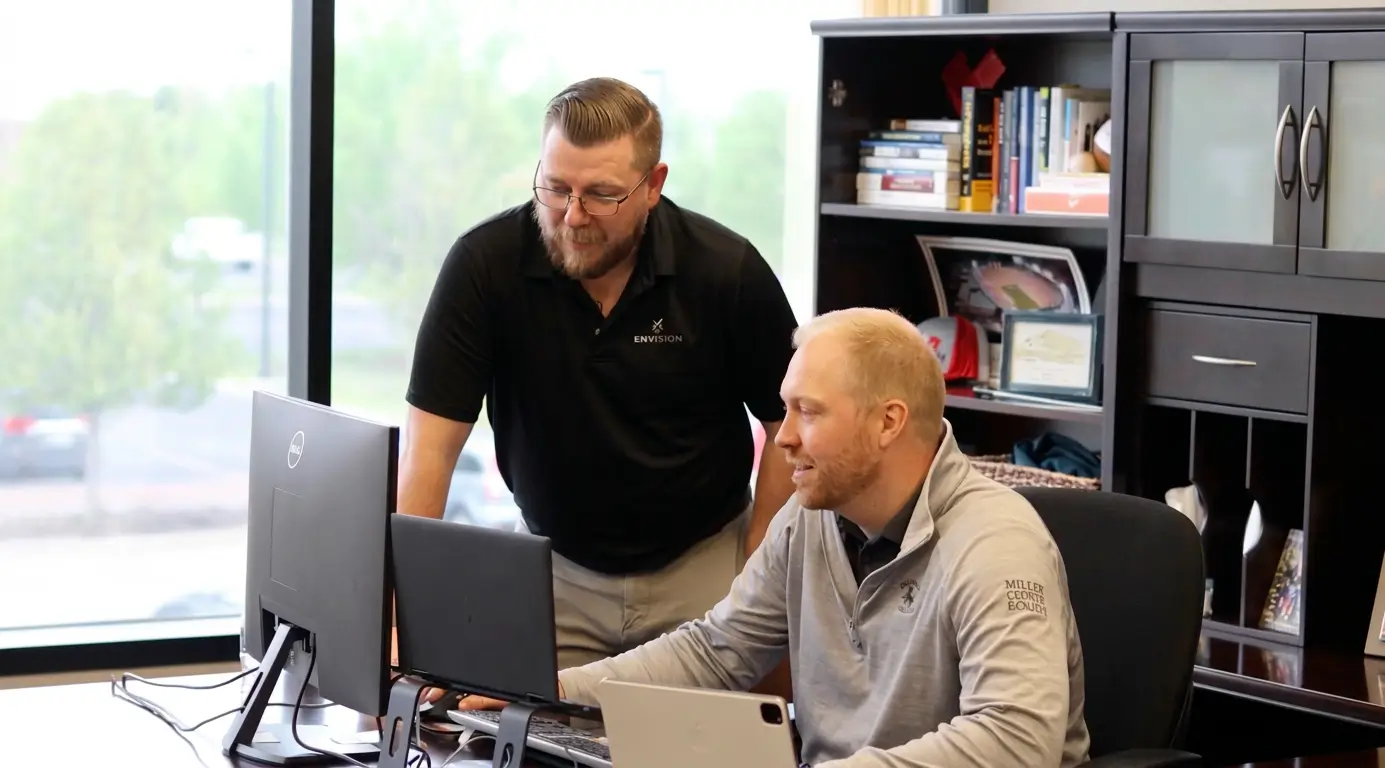

"With the integration of BuildOps and Sage Intacct, our accounting system, we've been able to speed up the time it takes for us to bill customers."


"Our consulting division increased 300% because we were able to free up more time from the office to help other customers."
![Service First Logo]](https://cdn.prod.website-files.com/69cad9cd3a5ef3196ea9bb65/69fa0ca0adc28a56d26717c9_Service%201st%20white.webp)
"Sometimes systems promise you the moon, then you use them and see the weaknesses. It's been the exact opposite with BuildOps. Everything we wanted it to do, it could do."
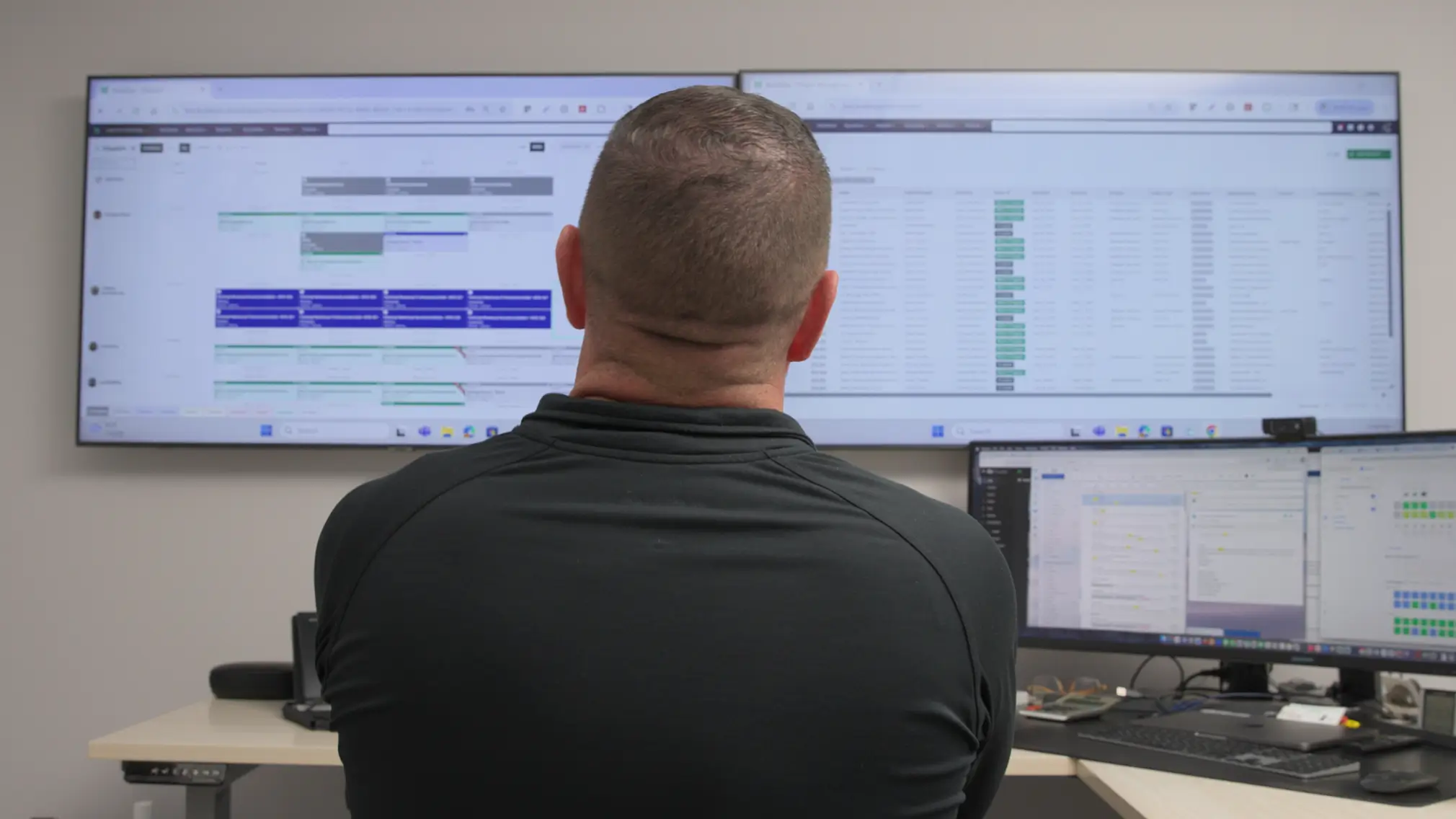

"We used to be two weeks behind on job costing. Now we're up to date daily."
What makes BuildOps different
Built from the ground up for contractors who run projects, service, and everything in between. Not adapted. Made for the work.
Commercial work isn't an add‑on
Most platforms started in residential and stretched to fit. BuildOps starts with the complexity of commercial work.
Run the work in one connected system
Field, office, finance, and sales — all in one place. No duct-taped tools, no double entry, no dropped balls.
OpsAI is built in, not bolted on
OpsAI is already in your workflows. It recaps the day, calls out risks, and gives every role a clear next step.

Connected across every workflow
Purchasing is just the beginning
Vendor commitments made during procurement flow into project budgets, reporting and your ERP as work progresses. Explore the modules that connect the procurement phase to project execution and financial close.
Project Management features






Common Questions
Your questions on materials and subcontracts, answered
What is commercial construction materials and subcontract purchasing software?
Commercial construction materials and subcontract purchasing software unifies all the necessary purchasing aspects of managing construction projects with the other aspects of the operation, primarily to keep project budgets on track. The software will track all purchase orders, materials, labor, change orders as they are going through, and then summarize the information to track against budget, project scope, and profit margins.
How does construction purchasing software help protect project margins?
When POs are tied to a project, phase, and cost code, you can see committed costs against the budget before the invoices hit AP. That early visibility helps PMs and finance catch overruns while there's still time to act, rather than waiting until the end of the month for a team meeting, or even worse the end of the project when it’s already too late to do anything.
What are the most important features to look for in a construction materials and subcontract purchasing software?
If you work in commercial construction, large-scale projects require much more complex budget tracking due to change orders and submittals. To enable this kind of large-scale commercial construction project, you need a materials and subcontract purchasing software with these kinds of features:
- Submittal & Change Order Tracking—Track submittal and change order statuses and approvals to prevent work stalling.
- Audit-ready Documentation—When everything is tracked in the platform with dates and proof, it’s ready to present to subcontractors or customers in an instant.
- PO Matching—Snap a PO or vendor bill and have the platform extract information like vendor or date and auto-fill the records for you.
- Mobile App—All team members can access all documents like work scope or budget that they have access to in the field and instantly.
- Real-time Built-in Version Control—Any role has the most up-to-date information, without the need to ever double or triple enter documents in the platform.
- Time Tracking—Get a full view of the labor already put into the project from all subcontractors.
- Customizable Reporting—Build the reports you need using any inputs you want. This is key for large-scale commercial construction projects that can’t use ‘out of the box’ reports that come with generic project management software.
- Role-Based Permissions—You can set access based on role and who needs to see what.
How does OpsAI help teams automate materials and subcontract purchasing? Is OpsAI ready now?
OpsAI is live and in production today. Teams are using it now across dispatch, field documentation, asset capture, invoicing, and payment matching. It ships as part of BuildOps, not as a separate add-on.
Finance teams primarily use OpsAI to pull information from PO photos, extracting vendor, date, and line items to fill in records, and to match bulk payment to open invoices across multiple lines.
Finance teams have seen results like 80% less data entry using our PO scanning tools, have saved hours every month using our invoice automation, and love the ability to turn tech voice notes into structured field notes that convert to invoice notes in seconds.
How does BuildOps handle subcontract POs?
Subcontracts are a dedicated PO type in BuildOps. Track retainage, compliance documents, billing, and scope of work from a unified vendor directory, separate from your material PO workflows.
How does BuildOps track changes to vendor commitments?
Commitment change orders let you formally adjust a PO or subcontract without losing the original record. Every change is tracked with amount, date, and approval, giving you an audit-ready history.
Does BuildOps integrate with my existing ERP or other tools I use for construction projects?
BuildOps integrates with the ERPs frequently used by commercial construction teams including Sage, Viewpoint, and Quickbooks. BuildOps syncs field data (time tracking, POs, invoicing, etc.) directly with your ERP's job costing and payroll modules. Data flows both ways, keeping financials accurate without manual re-entry.
BuildOps is an operational backbone for commercial construction teams to build on top of, no matter what other tools are in your tech stack.
What's the difference between a purchase order and a field order in BuildOps?
A purchase order is the full formal document for materials or subcontractor work. A field order is a streamlined version for techs on site: fewer required fields, mobile-first, and attached to the job directly.