How Omnia Mechanical Group Reduced Its Accounts Receivable Period by 75% with BuildOps
Learn how Omnia Mechanical Group used BuildOps to replace paper, improve visibility, and help technicians work faster.
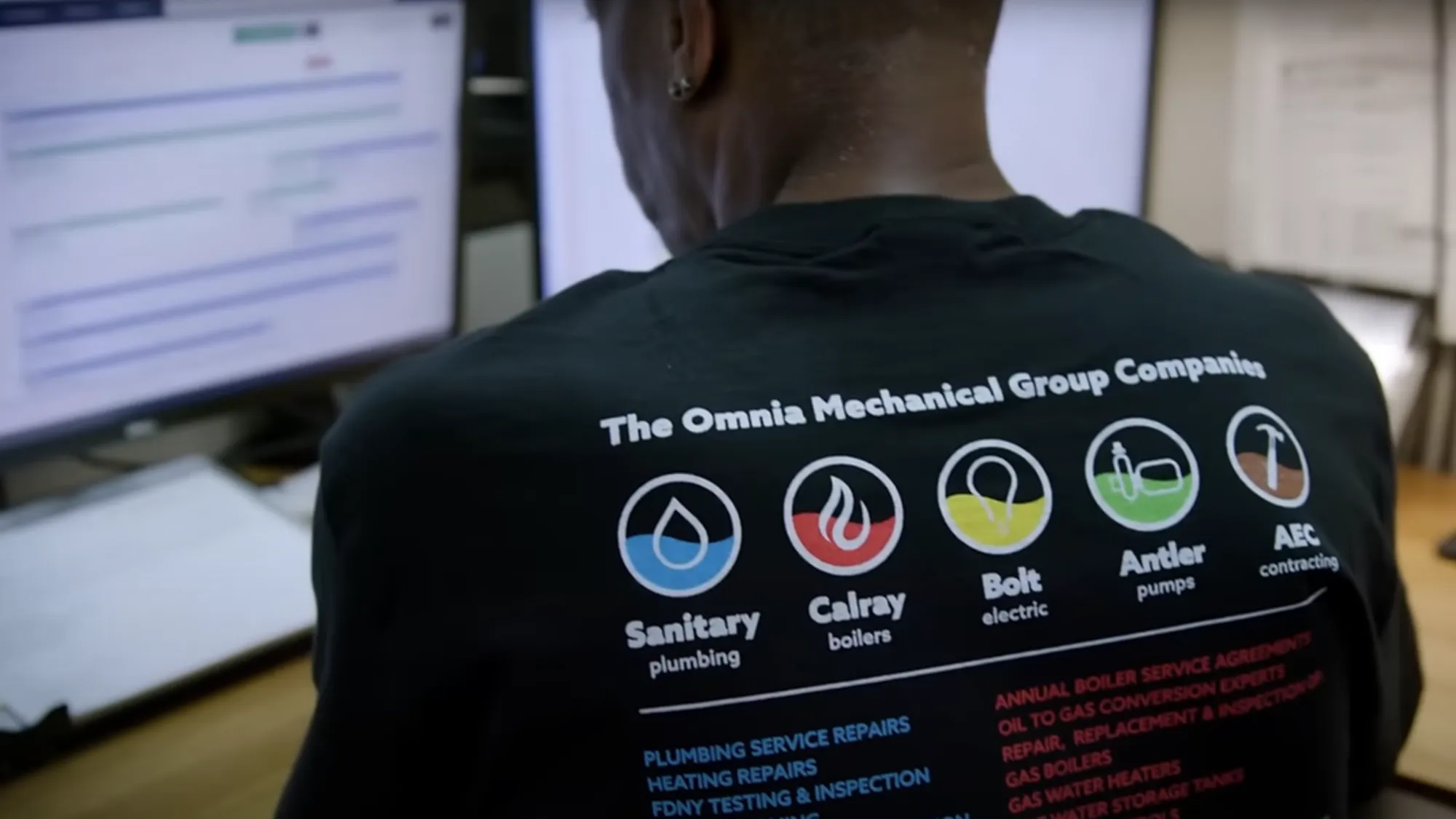
Before BuildOps, the team at Omnia Mechanical Group wasted valuable hours mired in paper-based chaos.
“We used to spend a lot of time looking — looking for jobs, looking for tickets, looking for invoices, looking for paperwork,” says Jonathan Clark, Owner of Omnia Mechanical Group.
This chaos led directly to lost tickets and revenue.
Omnia Mechanical Group is an NYC-based commercial contractor serving multifamily building owners and managers. The company provides plumbing, electrical, boiler, and pump services for properties ranging from single units to 400-unit complexes.
The challenge: paper-based work made every job harder to track
Before BuildOps, Omnia relied on paper tickets and manual processes across the field and back office. Finding the right job, ticket, invoice, or piece of paperwork took time—and made it easier for information and revenue opportunities to slip through the cracks.
“One of our biggest problems was as soon as a tech walked onto a job, they'd be calling the office asking: Who was here last? What did they do? What parts were replaced?” says Clark.
That lack of visibility created friction at every step: technicians had to call the office for context, back-office teams had to interpret handwritten information, and leadership had less visibility into what was happening across the business.
The solution: one connected workflow for field and office teams
Omnia chose BuildOps to bring its operational information into one place and create a more consistent way for teams to work.
That foundation now supports the workflows Omnia relies on every day:
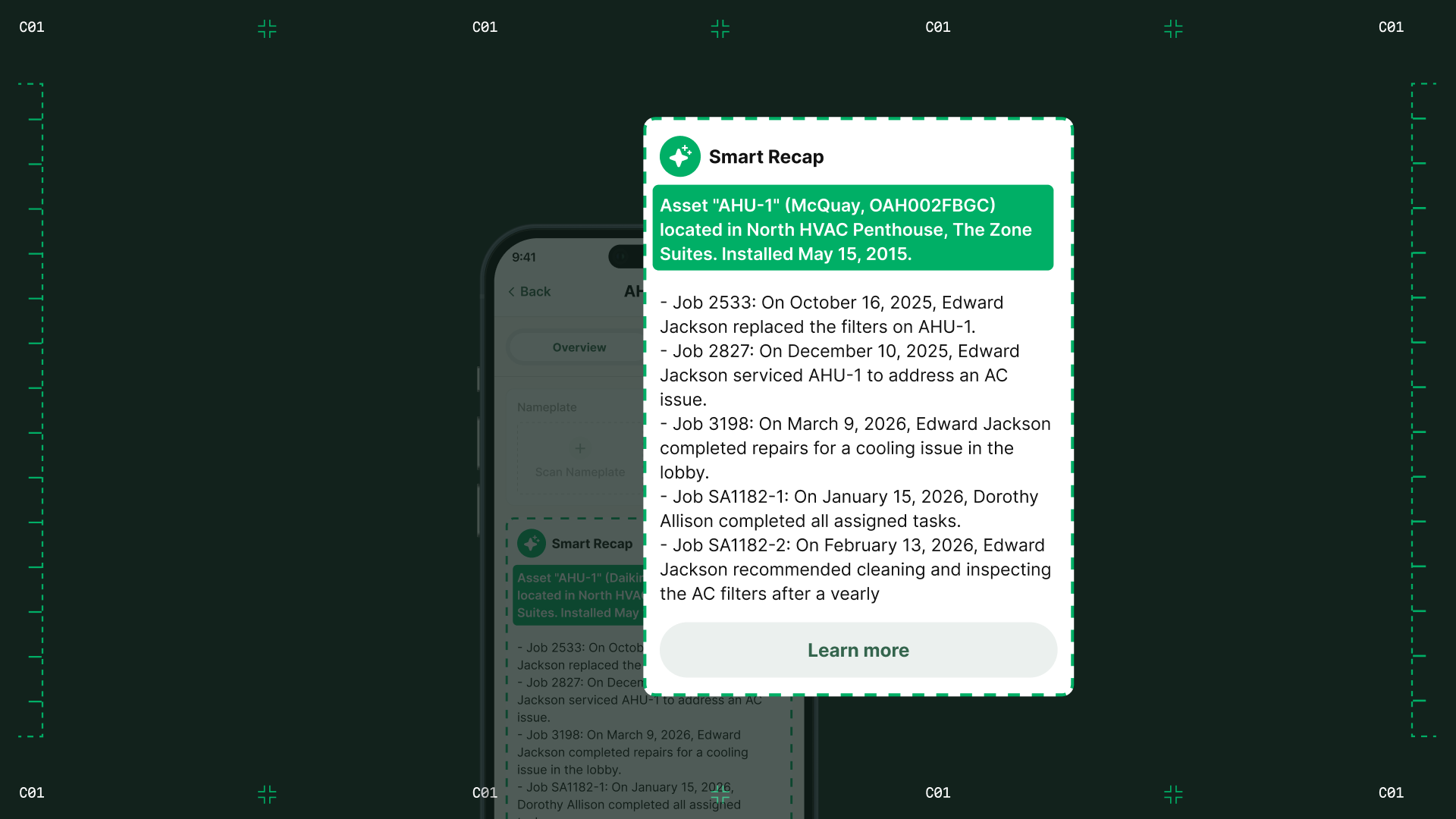
- Technicians can see the story of a job before they begin work.
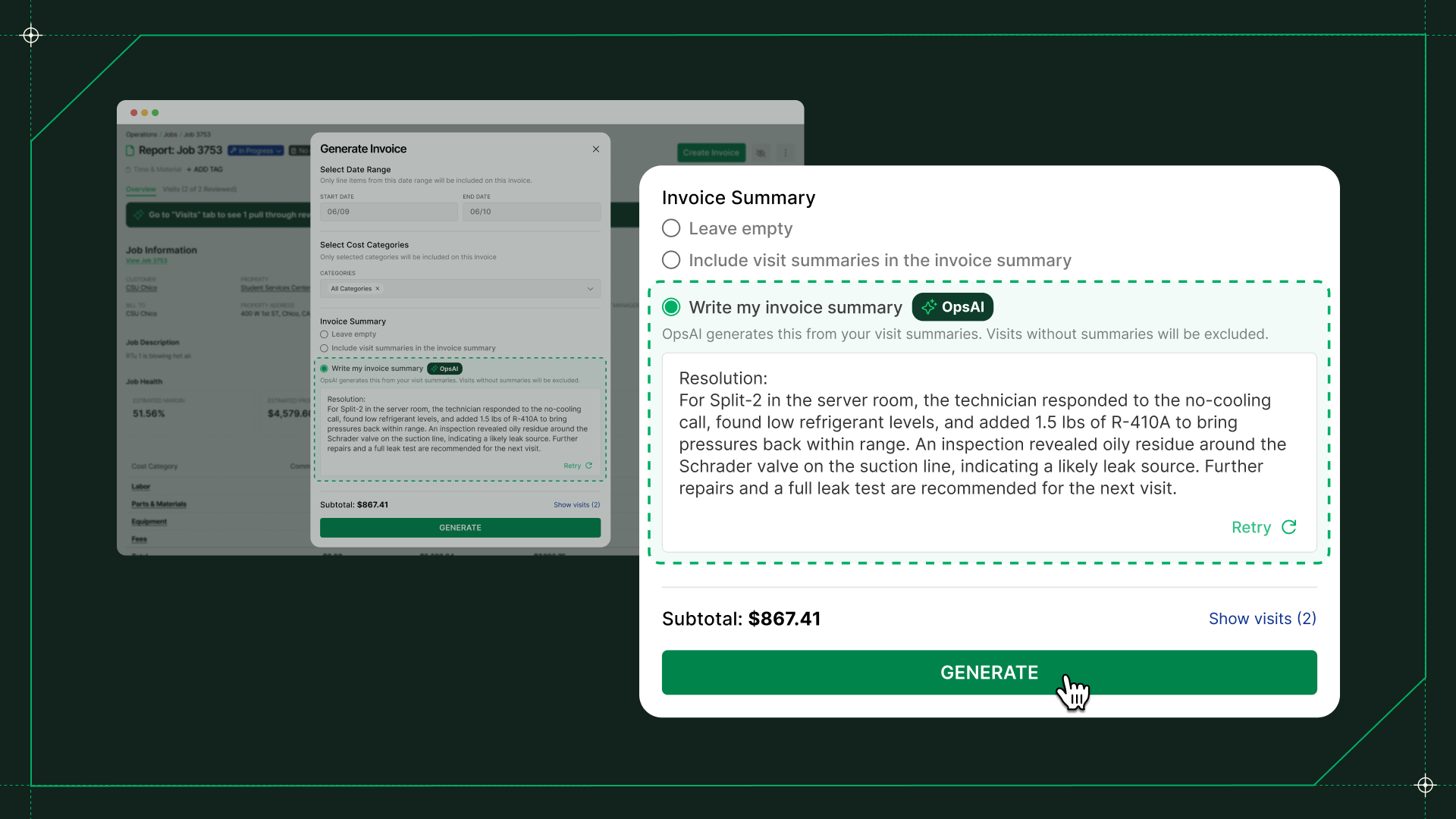
- OpsAI helps the team identify pull-through opportunities that might otherwise be missed.
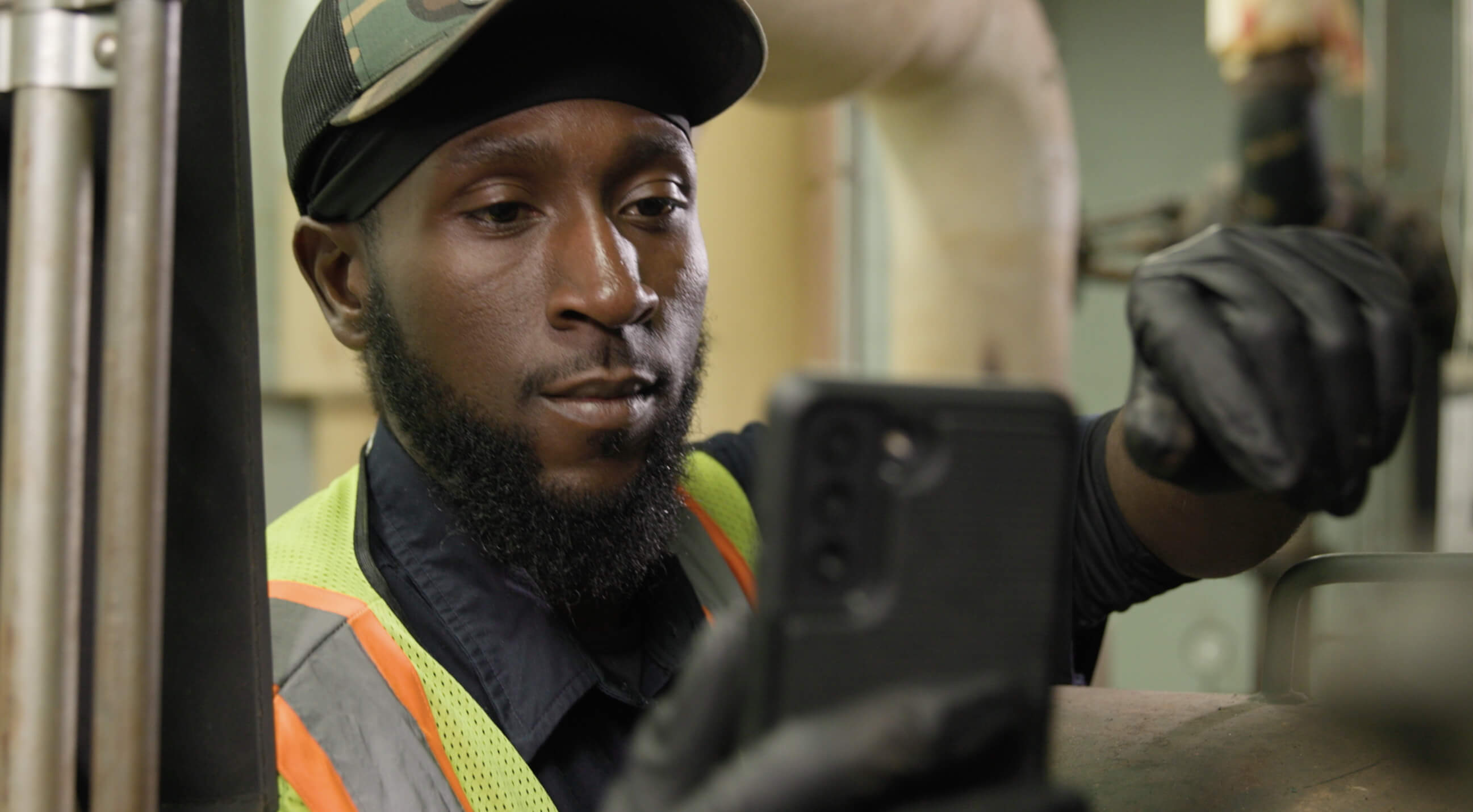
- Technicians capture job details without spending as much time typing on a phone and the information flows directly to the back office.
- Invoice information moves to the back office in a more usable format, reducing the need to reread and retype handwritten notes.
- Standardized processes make it easier to onboard new employees and keep field and office teams aligned.
AI has helped the Omnia team increase their productivity. Jonathan described it this way:
“OpsAI is an extra person looking over the shoulder of everybody, really helping us be more efficient. And it's been phenomenal.”
The same emphasis on consistency extends to training and onboarding:
“The software has helped with our growth and in consistency and easy training. Now we have an actual process for how someone gets onboarded, trained on the software, and how they work in the field or the back office.”
The results: faster billing, better visibility, and more capacity to grow
75% shorter accounts-receivable period
BuildOps helped Omnia reduce its accounts-receivable period from 120 days to 30 days—a 75% reduction. Faster, more precise invoicing helps the team move closer to getting paid while reducing the time spent untangling job information.
Clark also described the difference in the invoice workflow:
“When we go to write an invoice, it's 80% done, instead of someone sitting there trying to read and interpret notes and then retype it.”
Technicians no longer go into jobs blind
With job history and visit information available in one place, technicians can arrive with more context about what happened before them:
“Now when a tech shows up on a job site, if they're not the first guy there, they see the whole story. They're not going in blind.”
That visibility helps connect the field and office, giving technicians the information they need and giving leaders a clearer view of work in progress.
Easier adoption across the team
New technology only creates value when people use it. Omnia’s experience with OpsAI points to a low-friction rollout:
“I'd say zero learning curve. When it rolled out, I didn't even tell anyone about it, and that day four or five different guys called me to say how great it was.”
Clark also shared that technicians who had spent years writing paper tickets can now complete them from their phones in minutes:
“I have guys in their 70's that pull out their phone and knock out a job ticket in a couple minutes.”
From running on paperwork to running the business
Omnia’s story is not just about replacing paper with software. It is about building a more repeatable operating model—one that gives technicians better context, helps the back office prepare invoices faster, and gives leadership more visibility into the business.
By bringing its field and office workflows together, Omnia has created more room to focus on growth instead of searching for paperwork, chasing missing details, or retyping information that already exists.
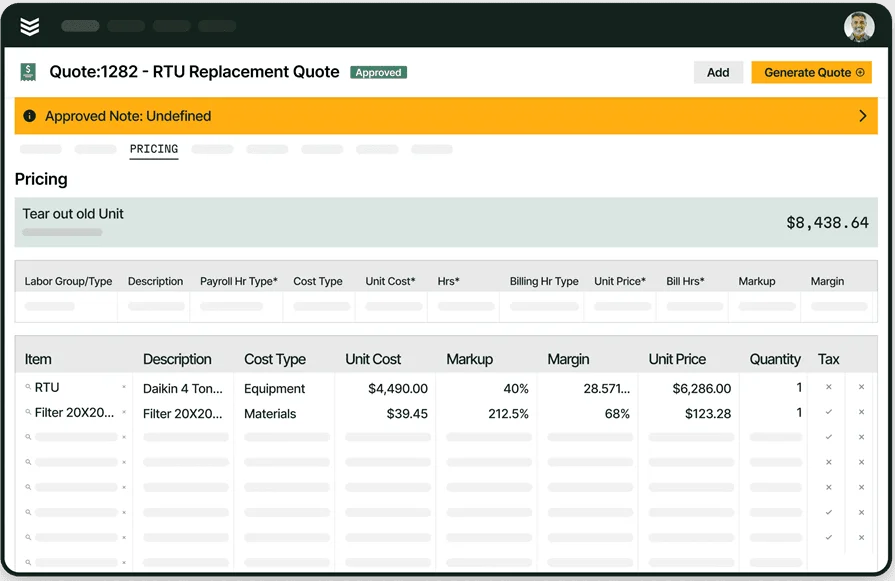
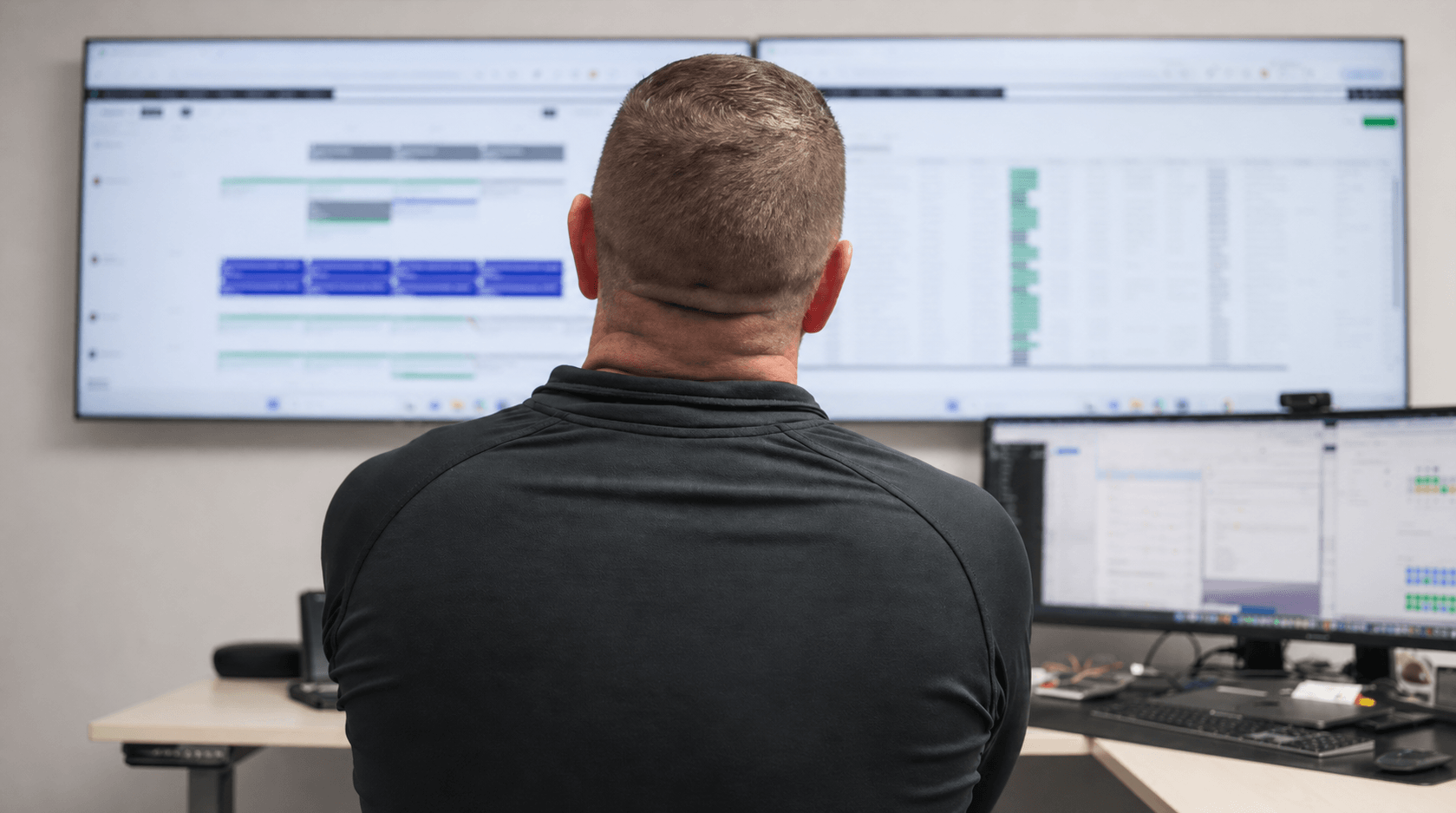
BuildOps shed light on the inner workings of Omnia's business. Clark now has access to a wealth of metrics and insights he couldn't see before. All job details, current job statuses, and technician visit histories are now readily available in one place, accessible from anywhere.
"We're able to see the big picture all in one place no matter where we are," Clark says. "It's allowed us to feel a lot more comfortable stepping away if we need to for any given reason."

.png)
