OpsAI: What AI Looks Like When It Lives Inside the Work
The trades are putting AI to work on real jobs.
AI in commercial contracting has had a usage problem, not a hype problem.
Most AI shows up as one more thing to open: one more app for the field, one more screen for dispatch, one more tool for the office. And when people have to choose between doing the work and feeding the software, the work wins.
Why OpsAI matters
OpsAI lives inside the workflows contractors already run. It shows up on the screens field and office teams are already using, at the moment the work is happening.
In BuildOps, monthly active AI users saw an incredible 17x increase, as technicians and office teams adopt OpsAI across daily workflows.
Last year our Pivot Point survey of 606 commercial contractors found 78% already using or testing AI on the jobsite, and now across every core function of the business, the OpsAI numbers show AI moving from novelty to standard equipment:
- Dispatch is getting smarter. Automated technician matching routes the right tech to the right job, cutting technician driving time and helping teams optimize their schedules daily.
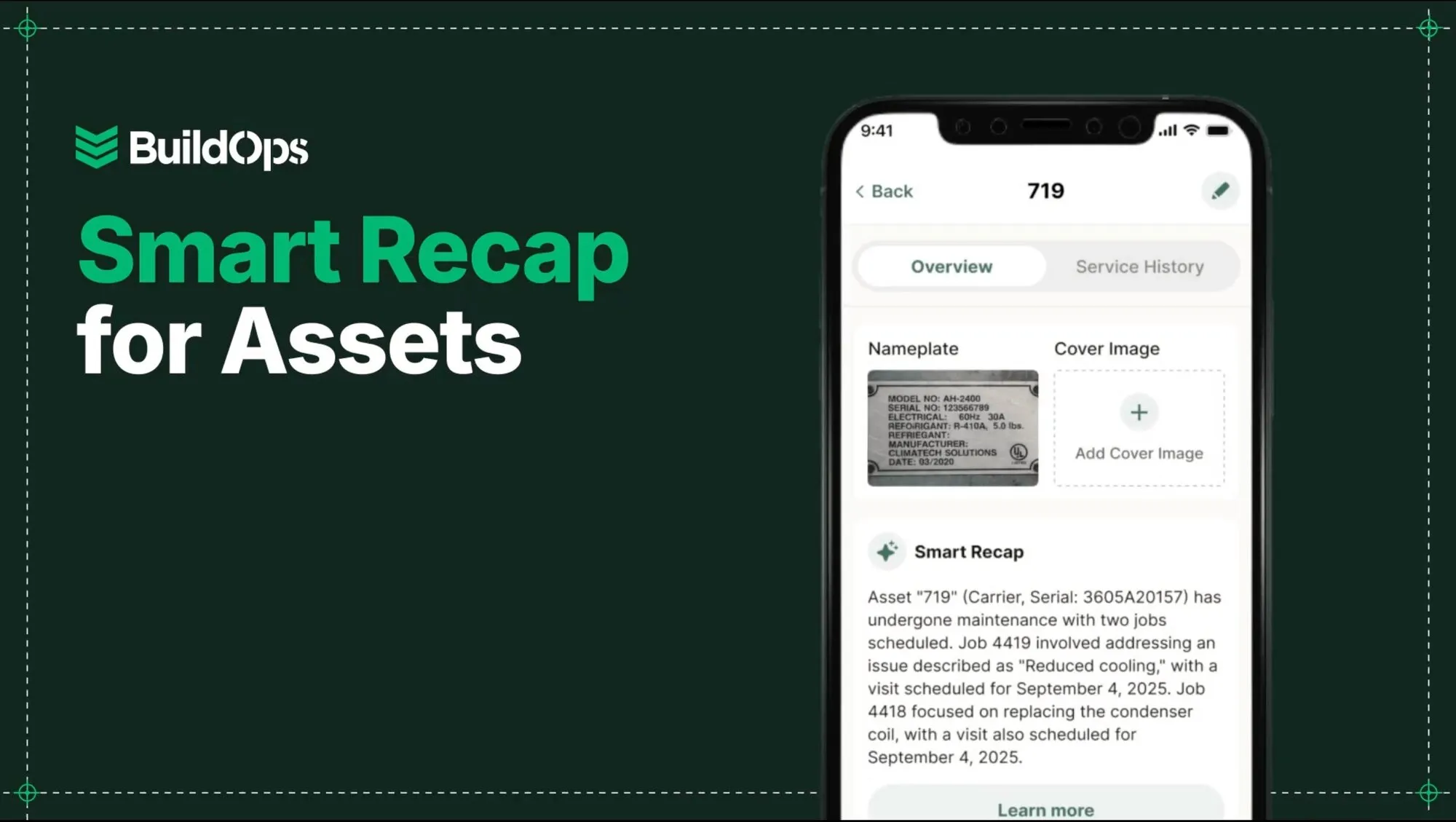
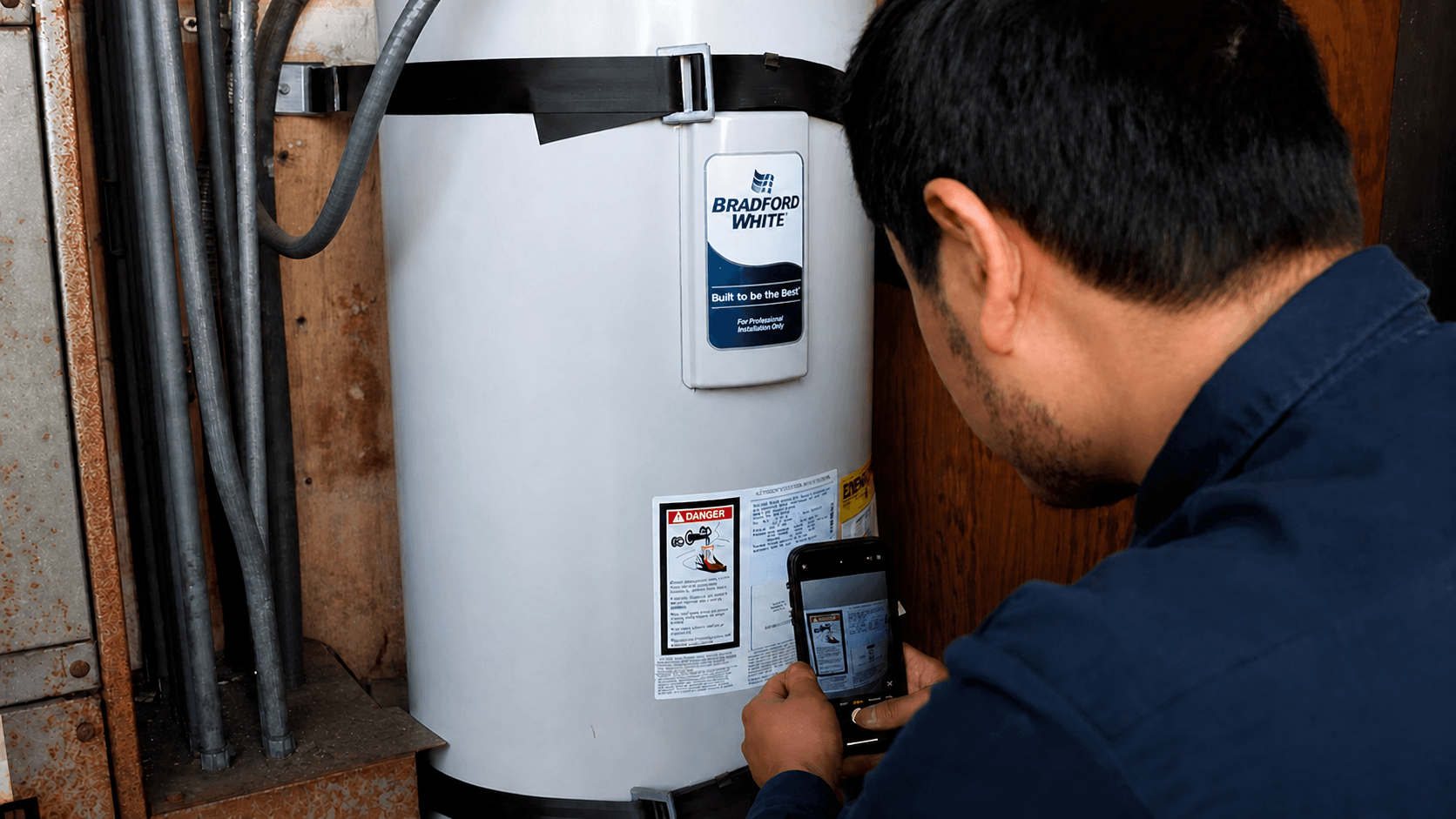
- The field has adopted AI on its own. Technicians ran more than 100,000 nameplate scans in May alone (close to 600 every hour), simply by photographing equipment instead of manually typing serial numbers.
- Office teams are getting faster and more efficient. Document scanning, which extracts line items from supplier invoices and purchase orders, grew nearly 9x over the past year. At the same time, invoices now draft themselves and go out the door 73% faster. OpsAI reduces the manual data entry behind purchasing and billing by roughly 80%.
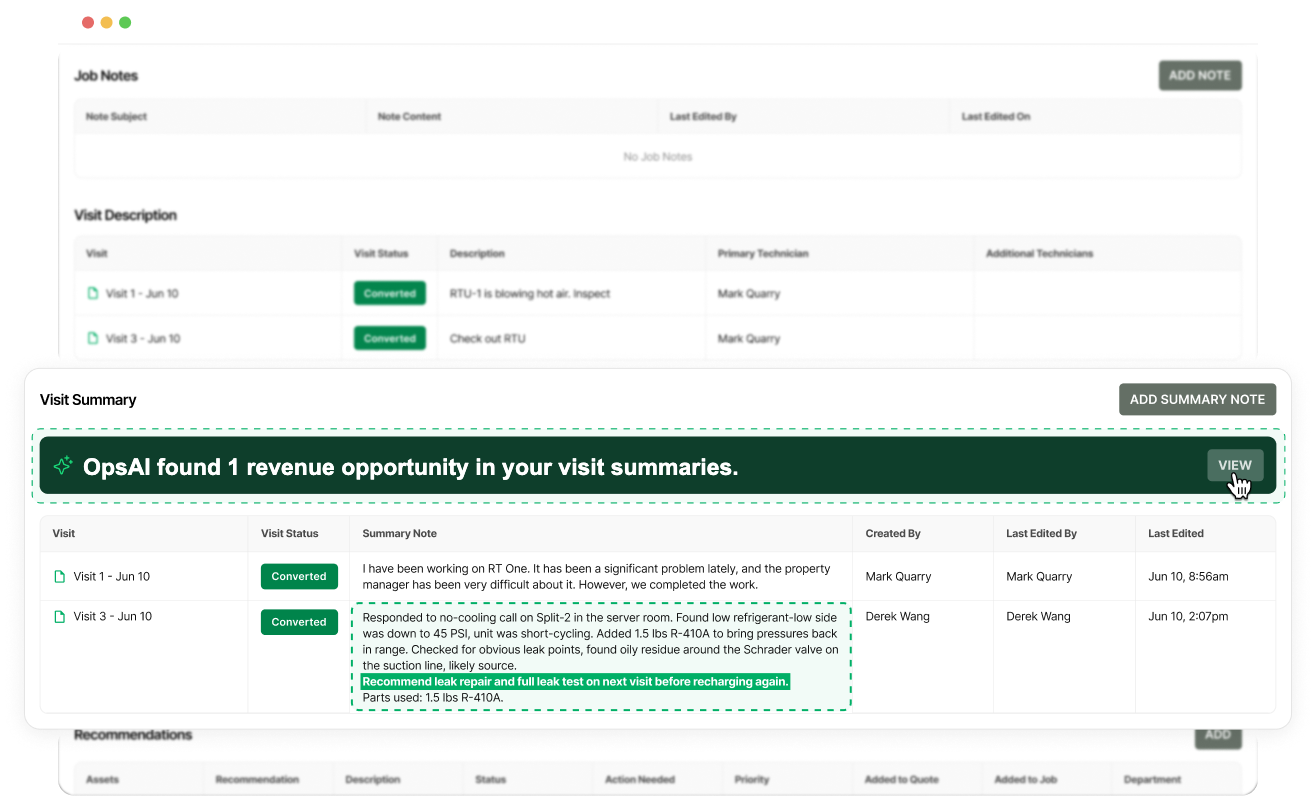
- The work is surfacing new revenue. AI revenue recommendations are viewed 12x more often than a year ago, turning technician notes from completed visits into thousands of new sales opportunities without anyone having to go searching for them each quarter.
"A technician isn't going to stop at 4:45 on a Friday to open a separate AI app, and they shouldn't have to," says Will Lehrmann, Chief Product Officer at BuildOps. "We put OpsAI inside the dispatch board, the invoice, the visit recap, so using it isn't a decision anyone makes. That's why the usage keeps climbing without us pushing it.”
Why some AI sticks while most stalls
MIT's "The GenAI Divide: State of AI in Business 2025" found that AI from specialized vendors succeeds roughly twice as often as in-house builds.
At BuildOps, we see that gap as linked to domain fit. OpsAI is trained on the operational data of more than 1,500 contractors, including dispatch logic, billing rules, compliance, and OEM equipment knowledge across the mechanical, electrical, and plumbing trades. It requires no model training period and no change to how crews are already working.
What embedded AI looks like when it actually works
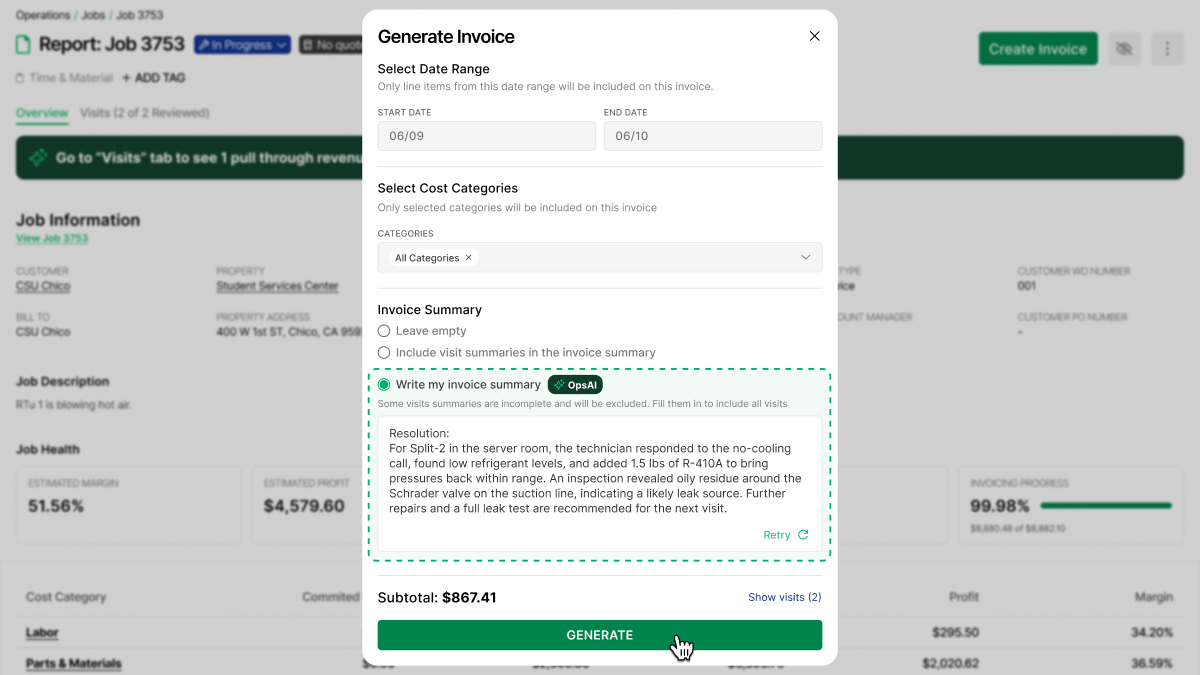
OpsAI isn’t just another tool that your team won’t use.
Instead it’s a native part of your workflow that results in less typing, faster decisions, cleaner handoffs, and more work moving through the business.
"Most AI in this industry is a chatbot wearing a tool belt. It sounds like it knows the trade until a tech asks it something real on a live job. We built OpsAI on how contractors actually dispatch, bill, and service equipment, so it knows what to recommend and where a tradesman's judgment still has to lead," says Mohit Sinha, VP of Product Strategy at BuildOps.
The true marker of success won’t be a platform with the loudest AI claim. It will be the one that removes the most friction from real work.
That is what OpsAI is proving now, not that AI can exist in commercial contracting, but that it can finally disappear into the work.