The Pull-Through Gap: Why Best-in-Class Service Agreements Generate 25% More Pull-Through Revenue
That difference between average and best-in-class contractors comes down to how well they capture, quote, follow up on, and measure the work their service visits uncover.
Do you know how much your service agreements are really worth?
We looked at data from more than 1,500 commercial contractors using BuildOps for the Torque 2026 Benchmark Report and found that best-in-class contractors generate 25% more pull-through revenue from their existing contract base than the average contractor.
Let’s put that in real dollars.
5,000 maintenance contracts valued at $2,000 each represent $10 million in service-agreement value. At the average pull-through rate, that generates $2.7 million in additional revenue. At the best-in-class rate, it generates $3.4 million.
That’s a $700,000 difference from the same contracts.
This is the pull-through gap. It’s the measurable difference between what top-performing contractors earn in pull-through revenue and what the average contractor earns.
To close this gap, you need to understand where pull-through opportunities get lost and what top-performing contractors do to capture more of the revenue already sitting in their customer base.
.png)
Where the pull-through gap happens
Your existing service-agreement base gives you plenty of opportunities to generate more revenue from customers you already have. The problem is that the pull-through work doesn’t consistently turn into approved jobs.
Common reasons those opportunities are lost:
- Technicians have to recreate details from memory after leaving the job, so important recommendations get missed or documented incorrectly.
- Recommendations get buried in long, free-form visit notes, so the office overlooks potential repair or replacement work.
- Office teams have to piece together field findings before they can turn a recommendation into a quote, slowing down the process.
- Delayed quotes reach customers after the urgency and engagement from the service visit have faded, making the work easier to decline or put off.
- Your team can’t easily see which quotes are still open or who owns the follow up, so customers don’t get the reminders they need to move forward.
What best-in-class contractors do dfifferently
That difference between average and best-in-class comes down to how well they capture, quote, follow up on, and measure the work their service visits uncover.
Turn every maintenance visit into a documented opportunity
Best-in-class contractors make it easy for their teams to document pull-through opportunities in the BuildOps mobile app.
If a tech notices a compressor showing signs of failure, they can speak or type details about the issue and how they recommend resolving it while they’re right in front of the equipment.
They can also snap photos to show the condition or capture details like model and serial number from a nameplate photo instead of entering them manually. BuildOps’ OCR pulls equipment details from the photo, while notes, photos, and repair history stay tied to the job and asset.
This makes it easier to capture accurate service details and pull-through opportunities without relying on memory or adding extra paperwork to every visit.
Move recommendations from the field to a quote faster
Top-performing contractors close 62.8% of the quotes they send, compared with 48.9% for the average contractor. Part of the difference comes from how quickly they get quotes in front of customers.
They use BuildOps to keep the quoting process moving from the field to the office. Customer, property, and job details carry into the quote, so the office doesn’t have to re-enter information or track down missing details.
One-click section duplication speeds up estimate creation, while field teams can build and present quotes directly from the job site. Quotes stay in one place with real-time status updates, and approved quotes convert directly into scheduled jobs.
That lets the customer see and respond to the quote while interest in the work is still high, instead of waiting several days for the office to finish the process.
Use AI to surface opportunities that get missed
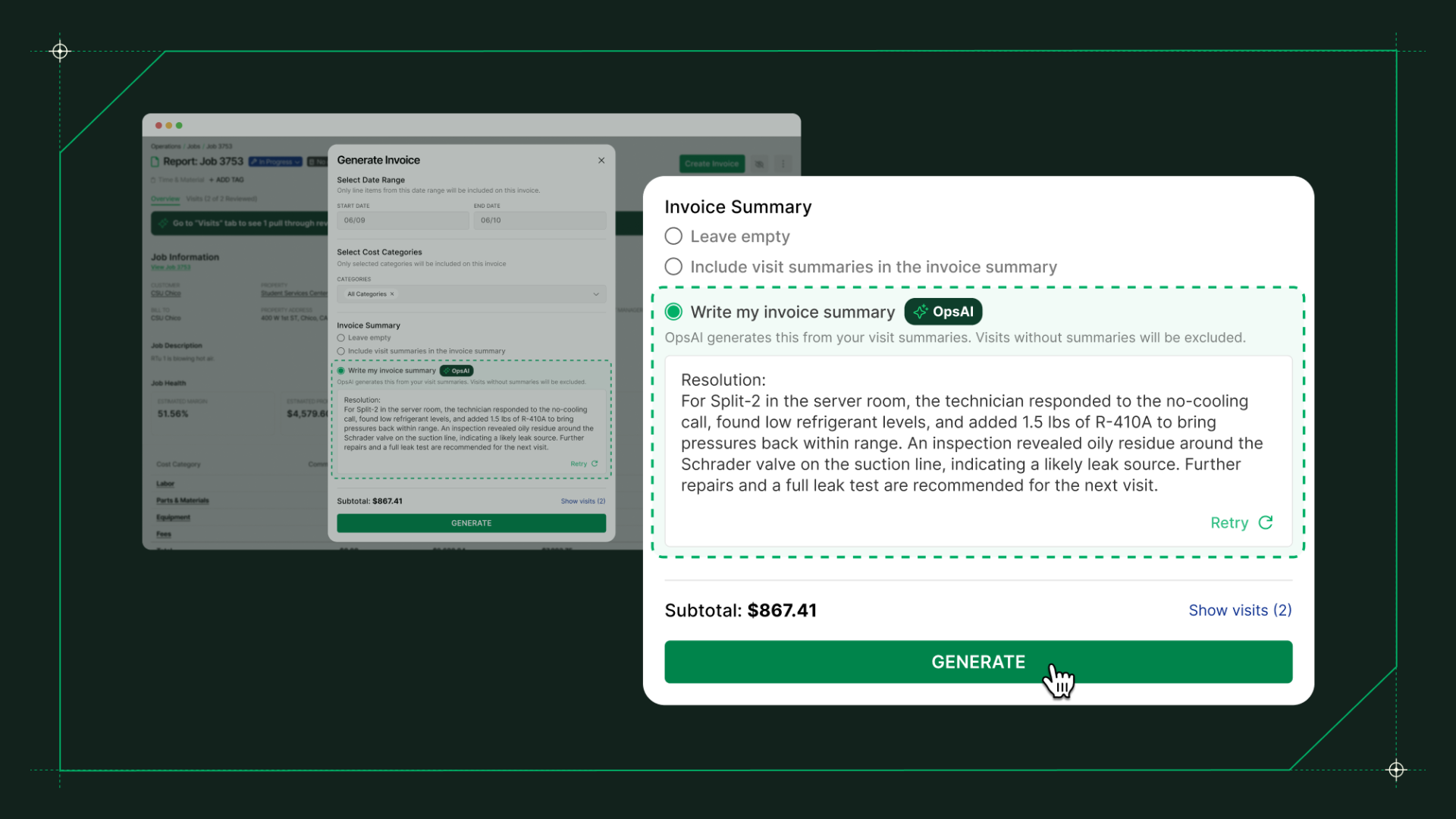
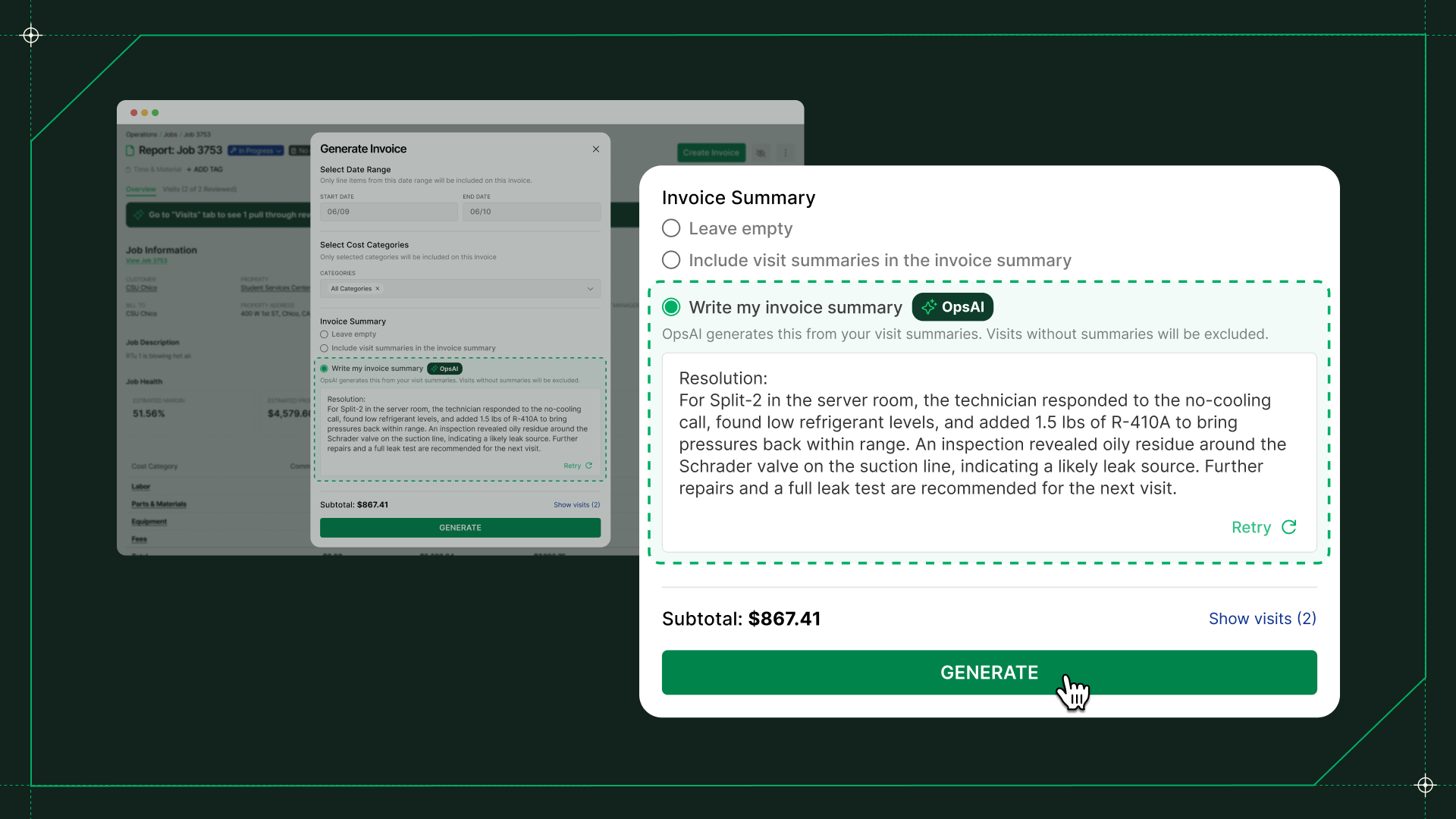
Completed service visits contain a wealth of information about potential repairs, replacements, and other work. Top-performing contractors use OpsAI to scan those records for opportunities that might otherwise stay buried in visit summaries.
It pulls those recommendations out of completed visits and gives the office a clear next step, including the option to turn a recommendation into a quote with one click. Instead of digging through completed visit summaries to figure out what the technician found, the office gets the recommendation surfaced and ready for follow-up.
BuildOps’ OpsAI has already turned those kinds of missed opportunities into measurable results:
- 4,500 surfaced recommendations converted into real quotes in the first 90 days
- Around 2,000 AI recommendations converted into tasks in a single month
- Approximately 60% reduction in quote time for surfaced recommendations
Find the leaks before you chase more customers
Your service agreements already give you access to customers who need ongoing repair, replacement, and upgrade work. Before you focus on winning more accounts, look at how much additional work your current agreement base is generating.
Start with your pull-through ratio and compare it with the 0.34x best-in-class benchmark. BuildOps’ reporting separates maintenance billings from pull-through billings, giving you a clear view of how much revenue your agreements generate beyond scheduled maintenance.
If your pull-through ratio is below the benchmark, work backward through the process.
- Are technicians capturing recommendations on every visit?
- Are quotes reaching customers quickly?
- Are open quotes getting consistent follow-up?
The answers point you toward the part of the process that needs attention.
By keeping an eye on the numbers and tightening the process where it breaks down, you can capture more of the repair, replacement, and upgrade work already sitting within your existing customer base.