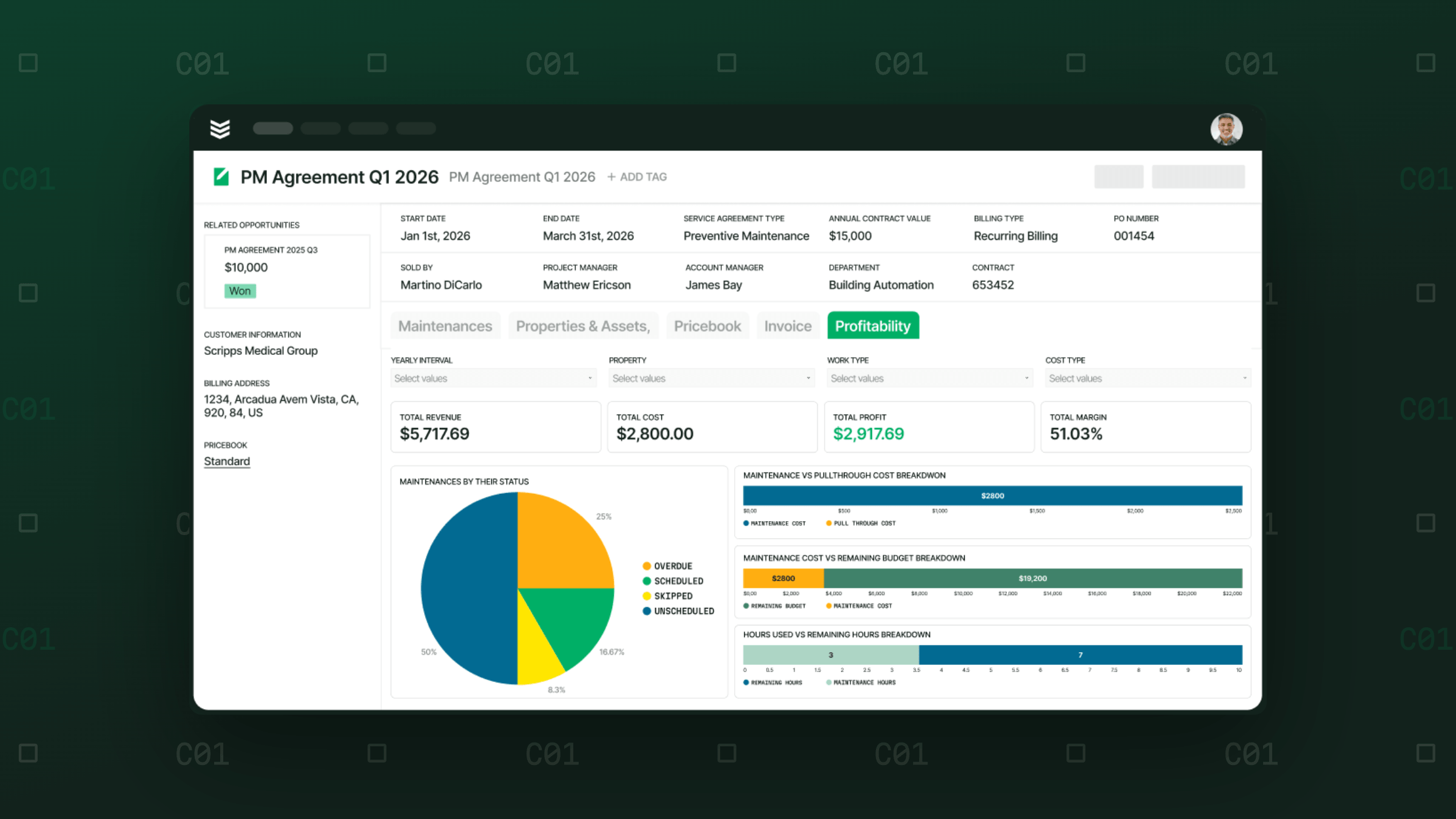
Finance Hub: Financial Control Built for Commercial Contractors
The work your crews do is worth standing behind, your numbers should be too.
Work moves fast in the field, and it doesn’t let up. Labor hours, materials, POs, receipts, invoices, payments, change orders, they’re not stopping.
When that information moves too slow, attaches to the wrong job, or never makes the trip at all, you end up running on two versions of the truth.
We’ve seen this up close. We’ve spoken with controllers who were rebuilding the same spreadsheet every month, heard from office managers chasing down receipts holding up a $400,000 close, and met with owners who knew the numbers were wrong but couldn't prove where.
The financial side of contracting has always been hard. What shouldn't be hard is seeing what's real.
That’s why we built Finance Hub.
The financial control layer built for commercial contractors
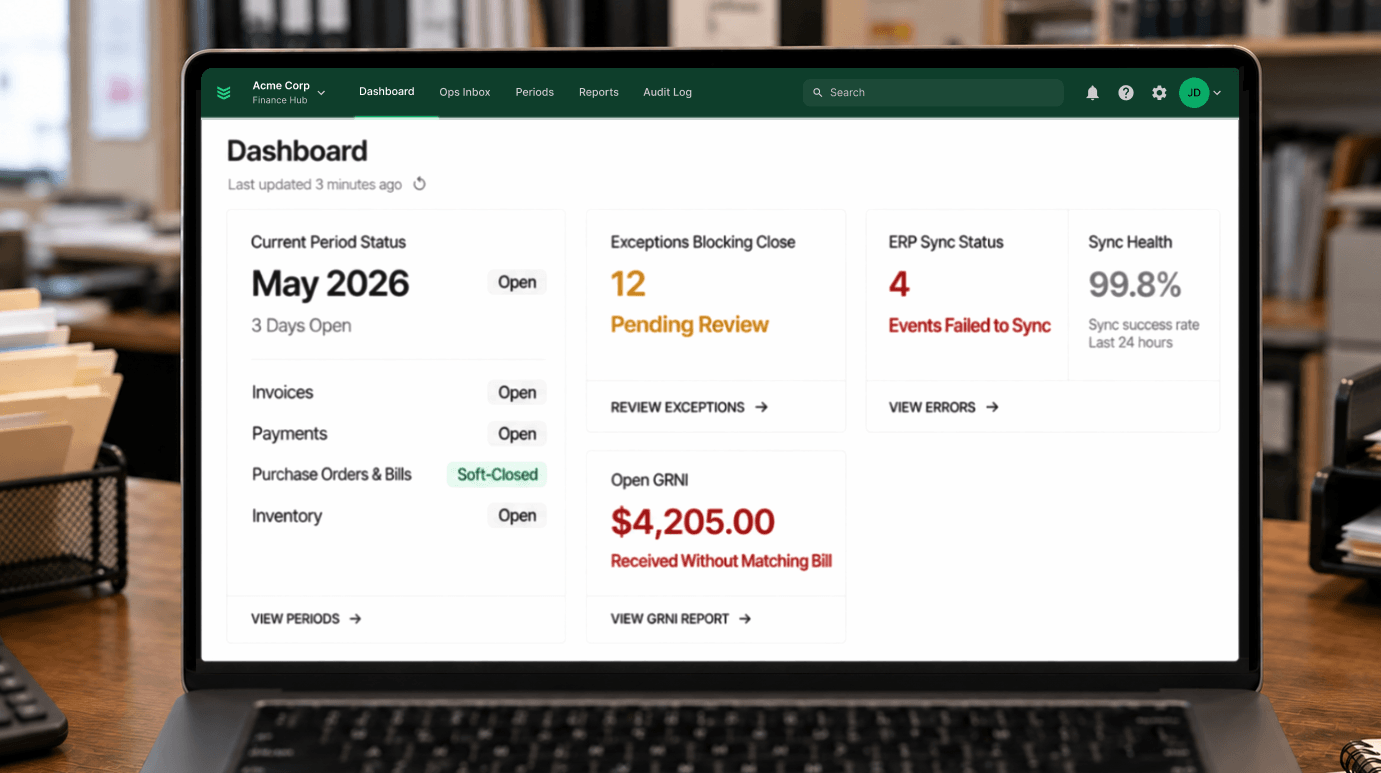
Finance Hub connects field activity, job cost, work in progress, exceptions, close, audit, and the handoff to the ERP all in one view.
It sits between the field and the accounting system commercial contractors are already running.
Every transaction gets routed to the right job and account before it posts. Controllers set the rules, assign approvals, see what's blocking close, and trace any figure back to its source.
When something goes sideways, it shows up while there's still time to fix it, not weeks later during reconciliation.
The result is one number the field and finance both trust, with the cost detail to back it up.
Close with confidence
For too long, when your software couldn’t deliver, you’ve had to pick up the slack.
"Contractors have been asked to run their work in one system, keep their books in another, and reconcile the difference by hand every single month," says Will Lehrmann, Chief Product Officer at BuildOps. "That is not a paperwork problem. It is contractors making real decisions on a number they already know is wrong. BuildOps is built to unify service, construction and financials in one system and Finance Hub is the piece that makes financials trustworthy.”
Month-end shouldn't mean asking for heroics from your finance team or a scramble through spreadsheets, reports, and manual reconciliation.
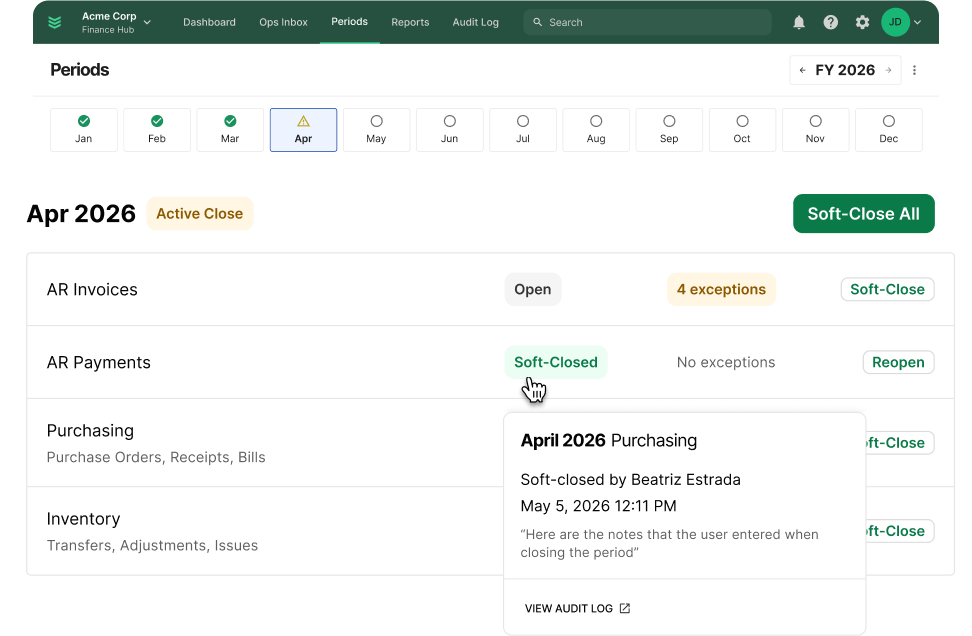
Finance Hub gives you one place to see what stands between today and a clean close. Transactions are checked, coded, approved, and tracked before they reach the accounting system. Closed periods stay closed. Every financially significant action is recorded in an audit trail.
"The hardest part of a contractor's month is not producing the numbers. It is deciding whether to believe them," said Anas Mohammed, Senior Product Manager at BuildOps. “We built Finance Hub as a governed ledger, with controls built into the workflow rather than layered on afterward. Transactions are checked, coded, and approved before they reach the ERP, so the controller and project manager are working from the same underlying record.”
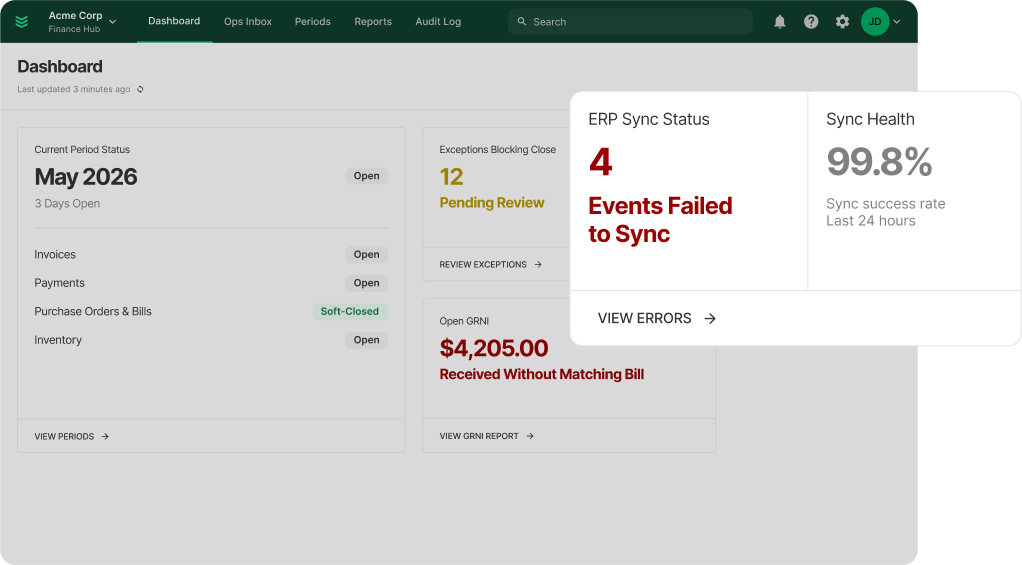
That means less time spent deciding whether or not to believe a number and more time acting on what it says for the business. A controller can see the next exception to clear, understand why a sync failed, and answer an audit question from a record that shows who did what and when.
Protect your margin
A job can look healthy until important costs arrive, and suddenly that healthy job is in crisis.
Project and service leaders need to see job profitability while work is still in motion. With Finance Hub, job cost and work in progress pull from the same governed ledger, so the field and finance are working from the same source.
When a job starts to slip, you see the signs while there's still a chance to fix it. You can look at the numbers, understand what’s changed, and make a call before the time you had to act has vanished.
Protecting margin starts with seeing the risk early enough to do something about it.
Know your true cost
But it doesn't matter how quickly you can see a number if that number is wrong.
Finance Hub brings the costs that shape real job performance into one view: labor and actual payroll, materials, purchase orders, receipts, card spend, and non-PO accounts payable. Each cost is routed to the right job and account before it posts, giving you a more complete picture of what the work actually costs.
Estimated labor is not the same as actual payroll. The margin on a report should reflect the cost the business will carry, not a guess that changes after close.
With Finance Hub, the PM and the controller are finally looking at the same number.
Built to work with what you already run
It doesn’t matter how much data you have if you can’t use it when it counts.
Finance Hub is not a rip-and-replace.
Contractors no longer have to choose between keeping the systems that support their business and getting financial information they can trust. Finance Hub connects the operational work happening in BuildOps with the financial controls, approvals, reporting, and accounting handoff teams need.
"Before, all the data was there,” says Patrick McFarlen, CFO at Haynes Mechanical, “but it was really hard to reconcile it, really hard to put it into a manner where you could get the information into your accounting system and really trust it. With Finance Hub, you see it right away."
That's what commercial contractors should expect from their financial systems. A clear line between the work happening in the field and the numbers the business stands behind.
The work your crews do is worth standing behind, your numbers should be too. Take a closer look at Finance Hub here.