Why Electrical Contractors Have the Biggest Untapped Service Agreement Opportunity
The Torque 2026 Benchmark Report shows electrical contractors average 9.5% service-agreement penetration, while best-in-class contractors reach 15.7%—the largest relative improvement of any trade in the report.
Service agreements are standard in HVAC. In electrical, they're still less common — and that's exactly where the growth opportunity is.
The Torque 2026 Benchmark Report, built on data from more than 1500 contractors, shows electrical contractors average 9.5% of total revenue from service agreements. The top performers hit 15.7%. That's a 66% relative improvement and the largest lift among the four trade categories in the report.
The distance between those two numbers is where opportunity lies. The best-in-class contractors don’t have some secret recipe for success. They're just doubling down on a part of the business others overlook: service agreements.
Why electrical sits lower, and why that matters
Service-agreement penetration is the share of total revenue generated by service agreements.
Electrical contractors typically run lower penetration than HVAC contractors because agreements are less structurally common in the trade. That difference in trade structure explains the starting point, but it doesn't eliminate the opportunity.
The best electrical contractors are showing that agreements can become a larger, managed part of the business, and that the path to growth is operational, not just promotional.
Agreements create recurring revenue. They also create scheduled customer touchpoints, which means more chances to identify repair, replacement, and upgrade work. Across the report, agreement customers generate 0.5x to 1.5x their agreement value in pull-through work.
How to close the gap
1. Give the agreement motion a clear owner
Service-agreement growth stalls when it depends on occasional technician conversations or a spreadsheet no one owns. Best-in-class contractors assign a dedicated owner to the agreement motion and manage the pipeline deliberately.
That means knowing which customers have agreements, which contracts are approaching renewal, and where follow-up is needed before an account lapses.
2. Protect the delivery that earns the renewal
Selling an agreement is only the first step. Scheduled maintenance has to happen on time. Torque identifies missed PM visits as a major threat to renewals because they quietly erode the value customers expect from the agreement.
Track PM completion as closely as sales. The agreement is more likely to renew when you consistently deliver what was promised.
3. Start with the next 90 days
Next, count the agreements up for renewal in the next 90 days and confirm that each customer's PM visits are on schedule.
That gives your team an immediate view of its most important retention work. From there, renewal reminders, agreement tracking, and automatic PM scheduling can turn a reactive workflow into a managed one.
The real revenue sits past the contract
Electrical contractors also have room to improve what happens after the agreement is sold. Torque 2026 shows average electrical pull-through at 0.15x agreement revenue, compared with 0.24x for best-in-class — a 55% improvement.
The agreement is part of a relationship that creates more opportunities to serve the customer.
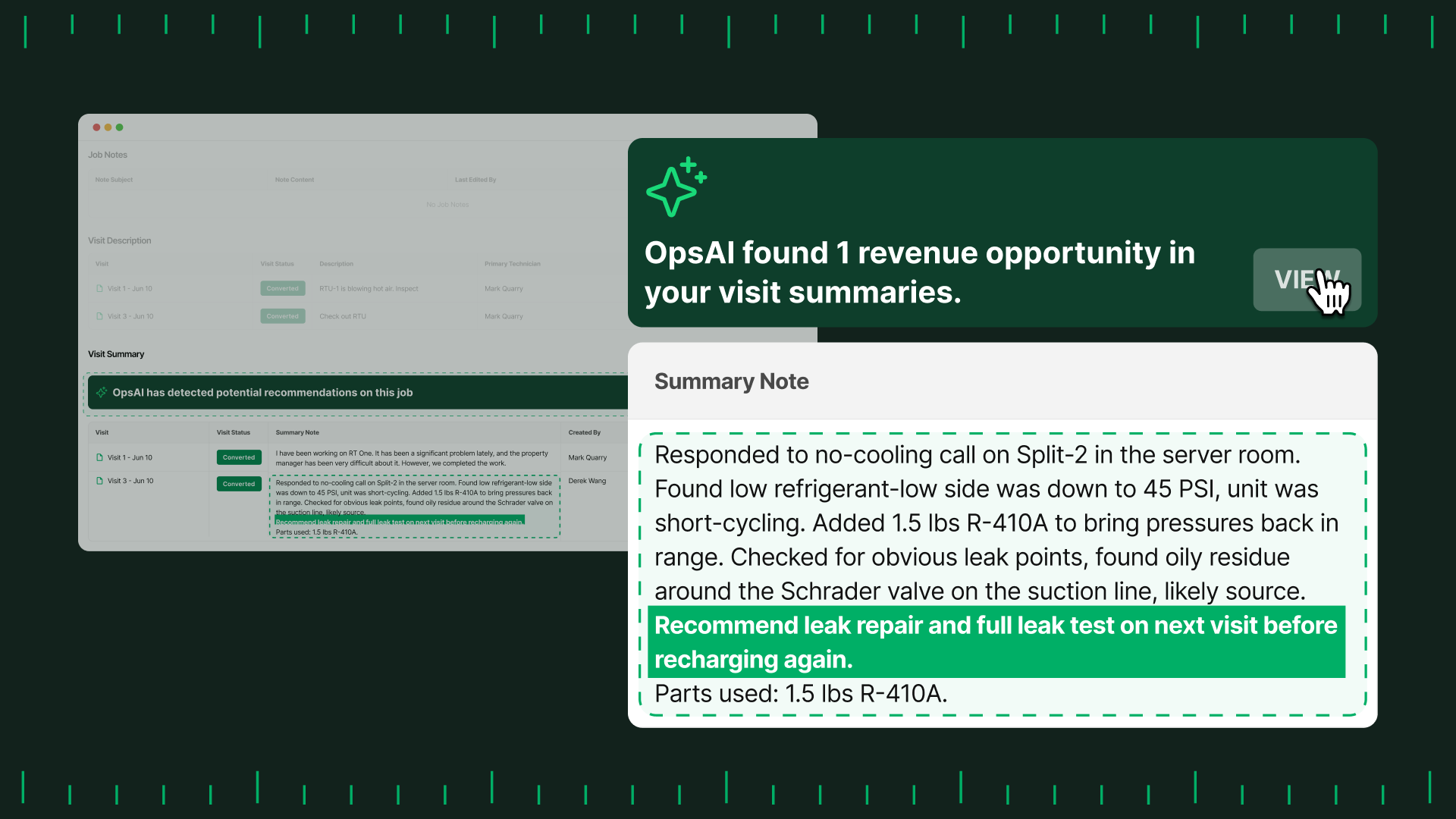
A PM visit can surface an aging system, a repair need, or an upgrade opportunity. The contractors who capture that information, turn it into a recommendation, and follow it through to a quote are the ones seeing the full value of their agreement base.
"BuildOps turned service agreements from a headache into a predictable revenue stream we can actually see and track." — Collin Drovdahl, Operations Manager, Jolma Electric
That's the operating change behind the benchmark. Agreements become more valuable when you can see the full base, manage renewals, and track the revenue they generate — instead of leaving contracts buried in a spreadsheet or a disconnected system.
The takeaway
Electrical contractors are starting from a lower service-agreement base, but Torque 2026 shows the largest relative improvement opportunity among the trades measured. 9.5% average penetration versus 15.7% at the top.
The next step isn't to sell more agreements. It's to assign ownership, deliver the promised maintenance, review upcoming renewals, and track the work agreement customers generate over time.
That's how electrical contractors turn service agreements from an underused offering into a predictable source of revenue.