Accurate, Real-Time WIP: See Cost and Margin While the Work Is Happening
"When people rely on that data, it has to reconcile from both the operational and financial standpoint."
A project or service manager can watch a job at one margin during the work, then see finance book a different margin once payroll, materials, and other outside costs finally land.
That gap is the two-margin problem: the number you use to manage the job doesn’t match the number finance ultimately records.
Operating margin reflects the costs your operating team can see at that moment, while booked margin reflects the costs that eventually reach the financial records. When those views fall out of sync, you risk committing more labor and materials based on a margin that’s already overstated.
The disconnect often comes from costs arriving late, posting to the wrong job, or labor estimates built on blended rates. By the time the full picture shows up, the best opportunities to protect the job’s margin are already gone.
The underlying problem is how cost data moves from the field through operations and finance into the accounting system. When that process breaks down, the numbers used to run the job can differ from what finance records in the books.
That drift usually starts in a few predictable places.
Why field margin and booked margin drift apart
One common source of the gap is labor.
If you’re costing hours against a blended rate, that estimate can leave out wrench tax, employer taxes, burden, prevailing wage, fringe, or per diem.
“We used to be two weeks behind on job costing. Now we're up to date daily," says Jason Thompson, Founder, Layer One
Materials, purchase orders, receipts, card spend, and non-PO AP create the same problem when leadership doesn’t see those costs until after they’ve made operating decisions.
Coding creates another failure point.
Missing job, project, department, or GL coding can send costs to the wrong place or leave them for someone to sort out later. When WIP is assembled across spreadsheets and disconnected systems, those issues can sit unnoticed until month-end reconciliation.
Why late WIP is too late to protect margin
If your first clear WIP view arrives at month-end, you’ve already paid for the labor, bought the materials, and likely moved the crew to the next job. By then, you may also have less room to revisit scope or cost with the customer.
Timing changes what WIP is worth. When you see the issue early, you can drill into the cost behind the margin and investigate while the work is still active.
Once the work is done, WIP mainly explains the result. While the job is still moving, it gives you a chance to influence it.
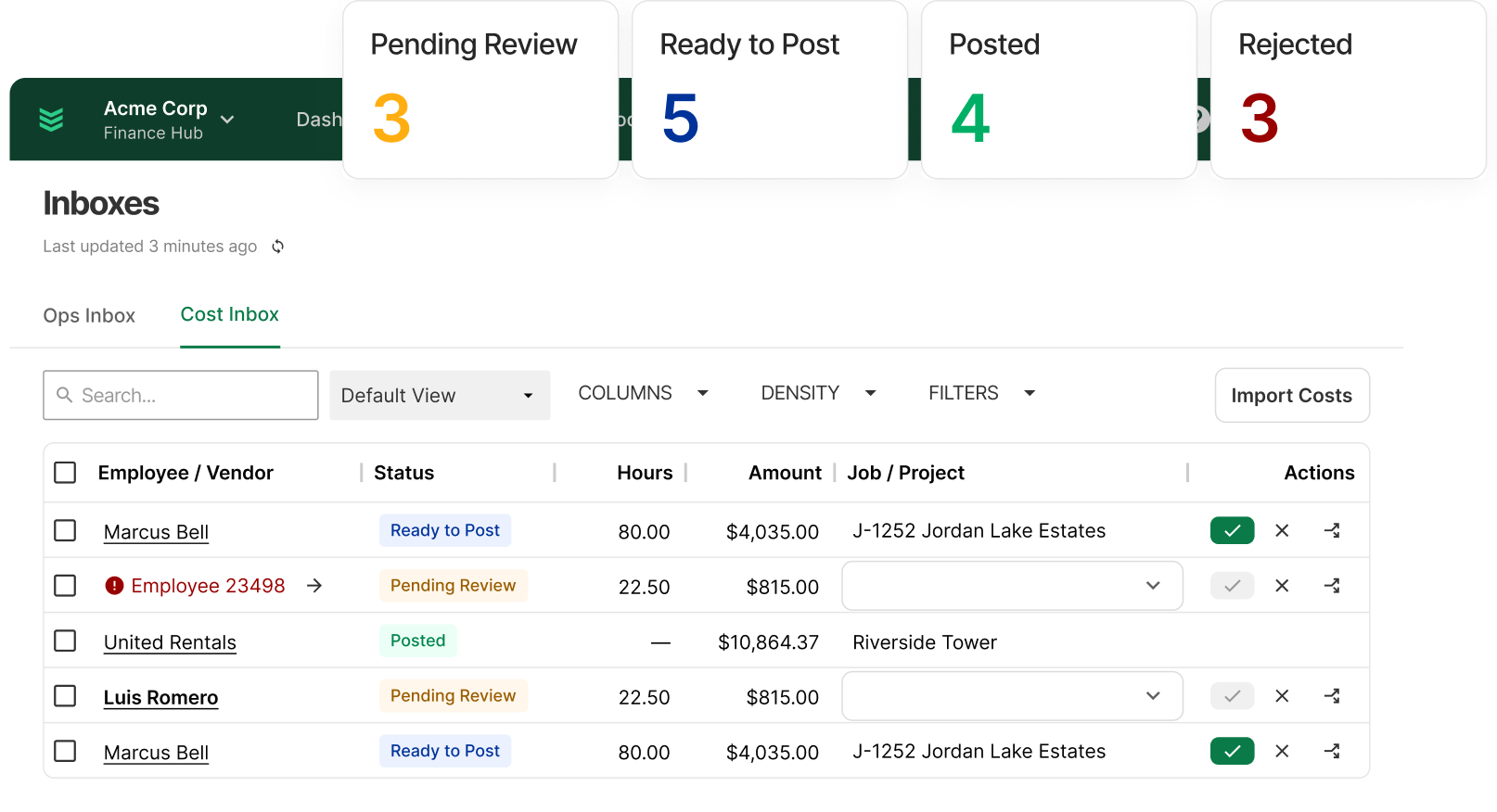
Current job cost visibility gives managers time to act
Current cost and margin data helps you spot a change before the work is complete. Once you see margin moving, you need to know what’s driving it.
“If a supervisor sees a contract at 42%, then I print financials and the agreement is at 38%, they don’t know who to trust. When people rely on that data, it has to reconcile from both the operational and financial standpoint," says Patrick McFarlen, CFO, Haynes Mechanical
Tracing a WIP or margin shift back to the source event shows whether the issue comes from labor, materials, miscoding, or another cost. If fully burdened labor is running high, you can adjust crew mix or rein in overtime. If material costs jump, you can investigate before the next purchase.
That same visibility helps finance and operations move faster together.
“Before, all the data was there, but it was really hard to reconcile and trust. With Finance Hub you see it right away. Instead of spending that time hunting for errors, you’re clearing them out,” adds McFarlen.
When both teams are looking at the same job view and underlying cost detail, they can agree on what changed and respond without losing time reconciling different versions of the numbers.
Connect field activity to finance and the accounting system
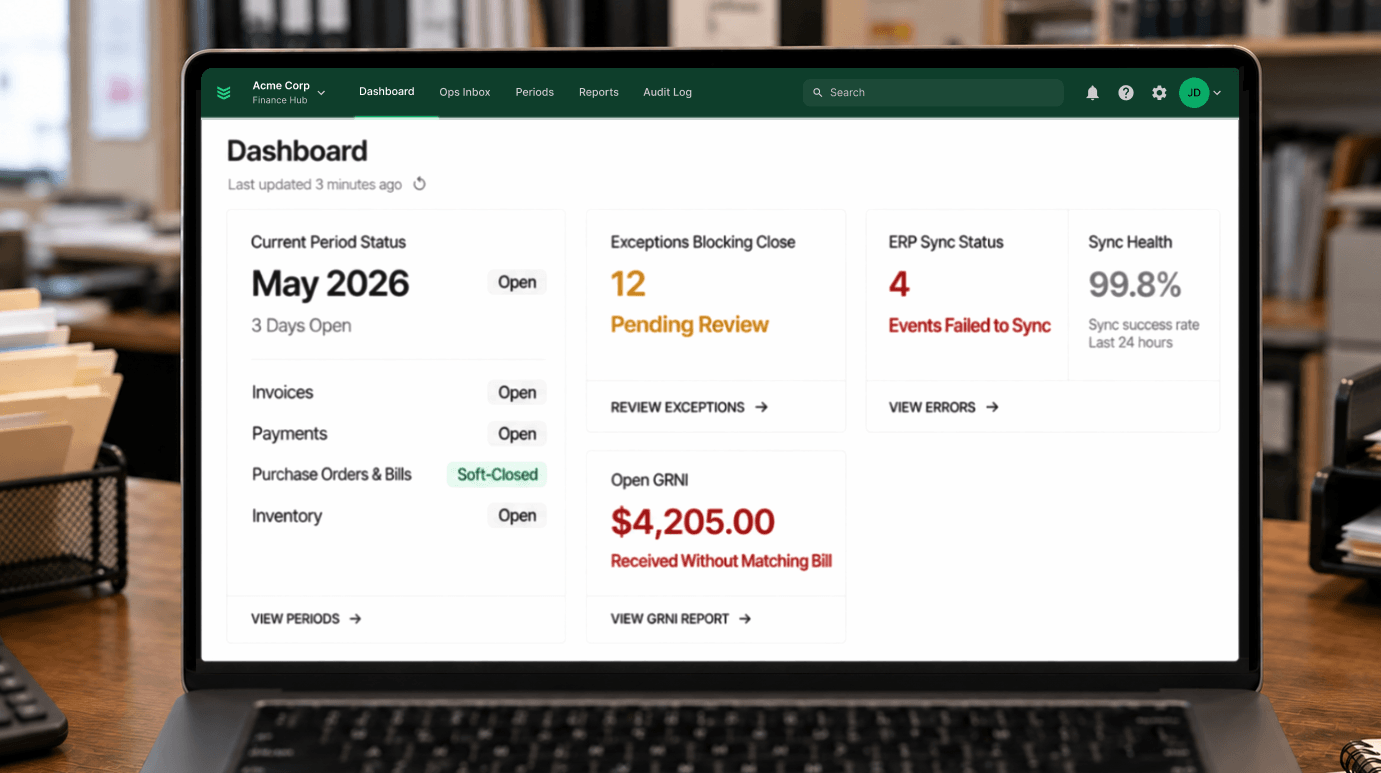
The job cost your managers use to make decisions has to stay aligned with what finance sees in your accounting system. When those numbers drift apart, your team spends time figuring out which one is right instead of managing the job.
That usually means tracing transactions, fixing coding, and reconciling differences before anyone trusts the margin. The longer that takes, the longer leadership is making staffing, purchasing, and project decisions from numbers that could already be out of date.
Finance Hub is the bridge between operations and your accounting system to keep those records connected. It routes labor, materials, and other transactions to the right job and GL code before they post, and BuildOps moves data both ways between the platform and your accounting system.
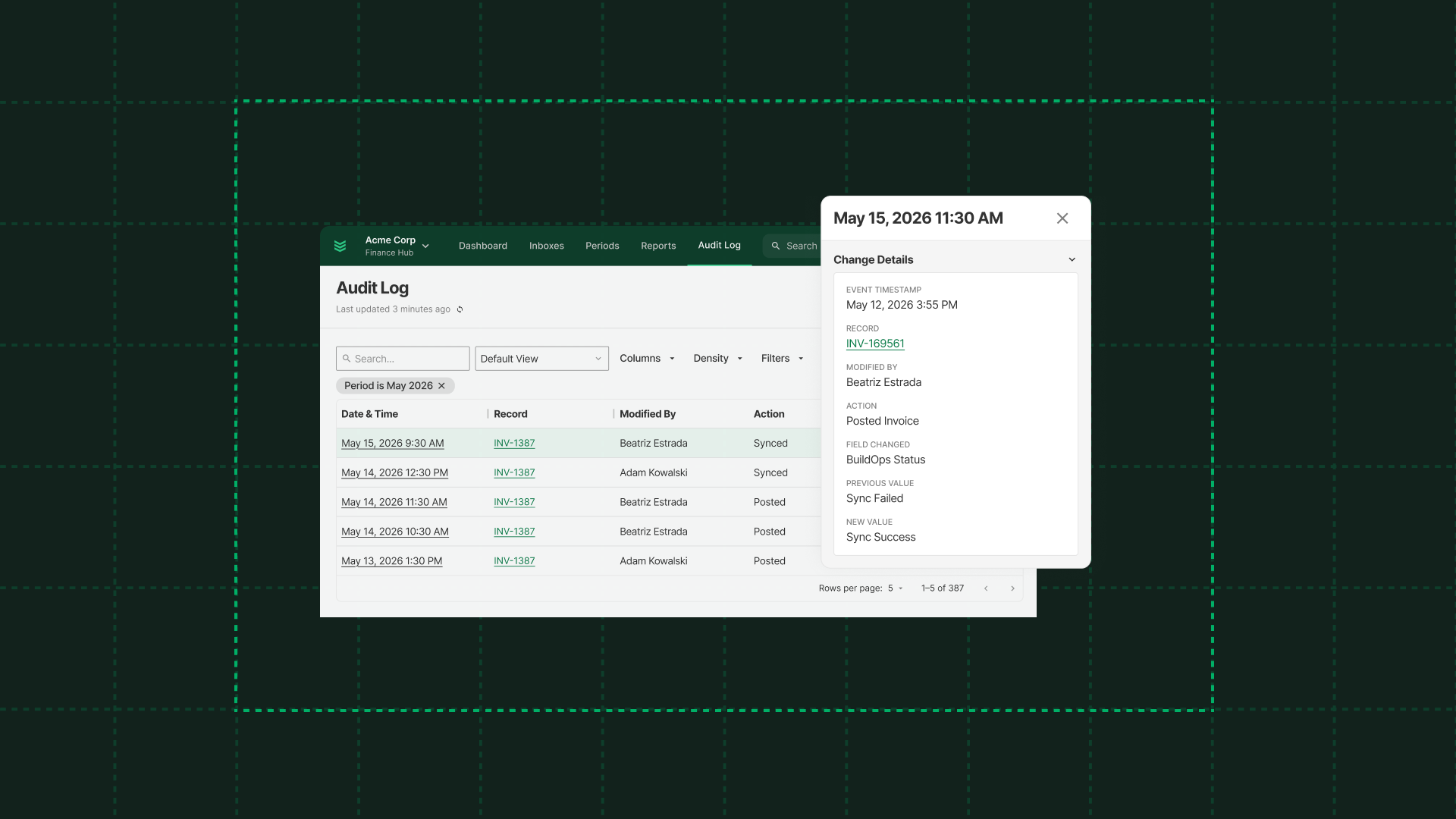
Operations and Finance teams see where each transaction landed and whether it synced successfully. That cuts down on reconciliation work and helps you close the books with fewer surprises.
One job, one cost story, one trusted number
Finance Hub turns connected cost data into WIP your team can use throughout the job. Project WIP, Service WIP, and T&M reports refresh in about two to three minutes, so changes in job cost show up quickly in the WIP view.
Labor catches up quickly, too. Actual payroll cost returns to the job within 24 hours of a pay run, replacing estimated labor cost with what payroll actually recorded.
Material commitments also show up before the final invoice. Purchase orders stay tied to budgets and cost codes, giving you visibility into committed material costs before vendor bills arrive.
WIP becomes a working view of the job, updated with actual costs and commitments as they come in. Instead of finding out at close where the margin ended up, you have a clearer view of profitability while there’s still time to manage it.
Protect margin before the books close
What you see at the job level also shapes the decisions you make across the business.
The impact gets bigger across a portfolio of jobs. If in-progress margins are overstated, you could staff too aggressively, keep purchasing at the wrong pace, or plan backlog and capacity around profit that isn’t really there.
A few points of margin lost on one job hurts. The same miss repeated across projects and service work starts to cut into operating profit and makes forecasting less reliable.
Finance Hub helps keep job cost and margin connected from field activity through finance and into your accounting system, so you’re planning from a number that better reflects what the business is actually earning.
Learn more about how Finance Hub connects operations, job cost, and accounting.

.png)
