Meet BuildOps’ New VP of Customer Success, Dylan Bowman
We sat down with Dylan Bowman to talk about what happens after the contract is signed and why that’s where the real work begins.
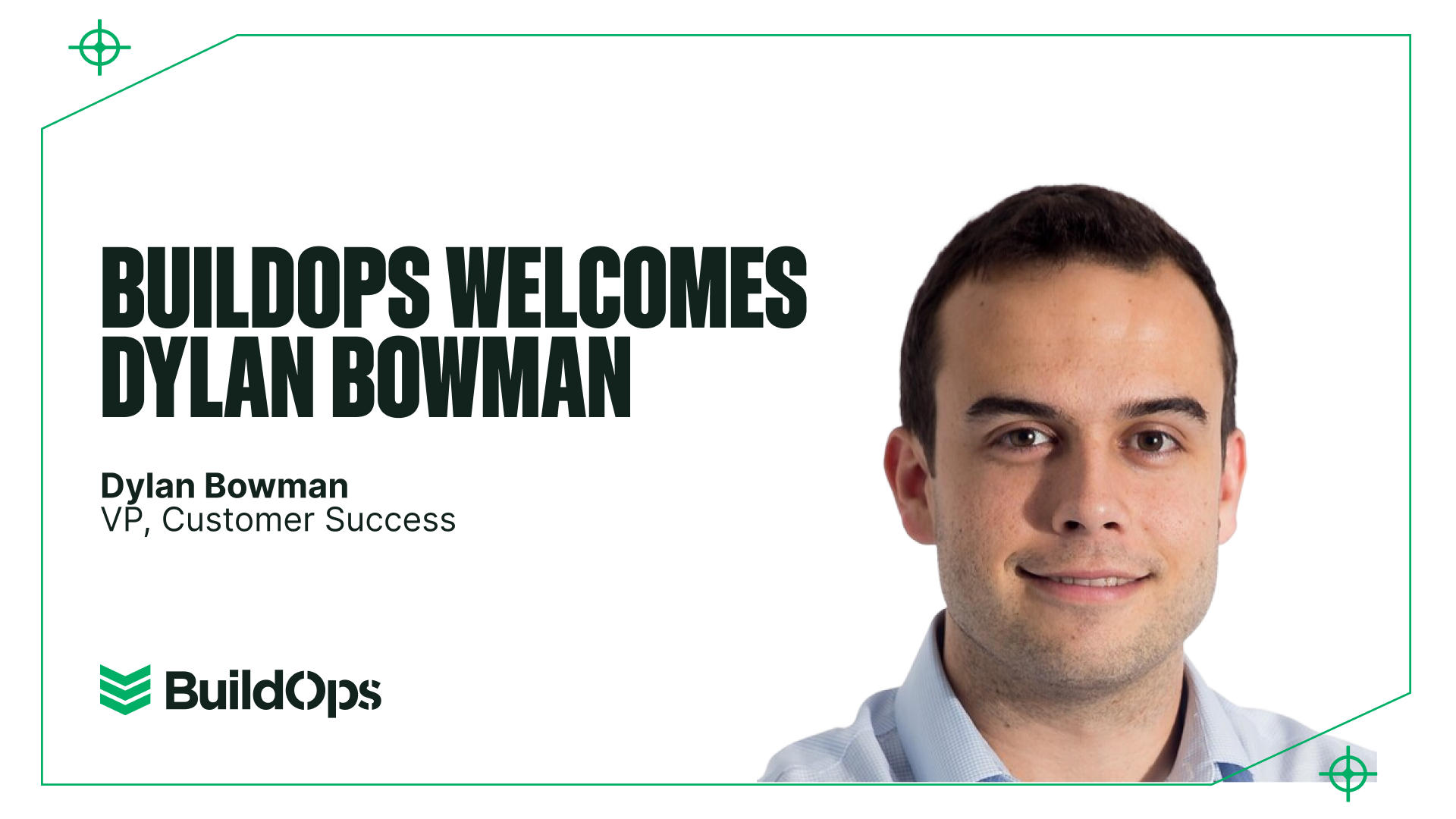
We sat down with Dylan Bowman to talk about what happens after the contract is signed — and why the real work starts when software has to prove itself in the messiness of day-to-day operations.
The real test of a software partner doesn’t happen during the demo. It happens when a dispatcher is staring at a full board at 6:30 a.m. and a tech is locked out of the app. When a controller is trying to close the month and can’t get clean data out of the system.
That’s where Dylan Bowman comes in.
Bowman recently joined BuildOps as VP of Customer Success & Support, leading the post-sale organization across customer success, support, and the experience that turns software into durable business value for commercial contractors.
Before BuildOps, Bowman led customer success at Ada, held solutions consulting and presales leadership roles across Ada and UiPath, and earlier in his career worked in technical and development roles — giving him a mix of customer empathy, operational thinking, and technical depth that fits the complexity of commercial contracting.
We caught up with him to discuss what contractors should expect from an AI-first customer experience, how he thinks about value beyond go-live, and why the best post-sale teams have to be as practical and accountable as the contractors they serve.
{{related-content-block="/resources/welcome-will-lehrmann"}}
First things first: what drew you to BuildOps and to commercial contractors?
“I’ve always been drawn to teams operating in high-stakes environments.
At Ada and UiPath, I spent a lot of time helping customers navigate complex change — not just buying software, but actually making it work inside real businesses with real pressure, real expectations, and very little patience for friction.
What pulled me to BuildOps was pretty simple: commercial contractors are the backbone of the economy, and they’ve been underserved by software for a long time. The work they do is essential. The environments they operate in are fast-moving and unforgiving. When systems break down, jobs stall, teams lose time, and customers feel it.
That’s what makes this space interesting to me. BuildOps already sits in the middle of critical workflows across dispatch, field, billing, and service. The opportunity now is to make sure the experience around that platform is just as strong — so customers feel like they have a true partner, not just a vendor.”
Your background spans customer success, solutions consulting, presales, and technical roles. How does that translate to the trades?
“A lot more directly than people might think.
No matter the industry, the fundamentals are the same: customers want clarity, speed, confidence, and results. They want to know the platform fits how their business actually works. They want answers fast when something goes wrong. And they want to feel like the people supporting them understand the stakes.
What my background gave me is a pretty full view of that journey. Presales teaches you how to understand complexity and earn trust early. Customer success teaches you how to drive adoption and long-term value. Technical experience teaches you to respect the details — because a lot of ‘relationship issues’ are really workflow issues, data issues, or process issues in disguise.
That carries over well to the trades. Contractors don’t need hand-waving. They need systems that work, teams that respond, and partners who can connect strategy to execution.”
Your role covers both Customer Success and Support. How do you think about those teams working together for contractors?
“From the customer’s perspective, there is no line between them.
Nobody wakes up thinking, ‘Today I need customer success, and tomorrow I need support.’ They’re thinking, ‘Can my team get the work done? Can we invoice correctly? Can we trust what the system is telling us? Can we move faster without losing control?’
That means success and support have to operate like one connected experience.
For me, that comes down to three things:
- Time to value — how quickly can we get a customer from implementation to real confidence in their day-to-day workflows?
- Friction removal — when customers hit a problem, are we just resolving the moment, or are we making the system and process better so it doesn’t keep happening?
- Context sharing — when a customer moves between teams, do they have to start over, or do we already know the history, the business model, and what’s actually at stake?
The best post-sale organizations don’t treat support like a separate lane from success. They treat both as part of the same job: helping the customer run a stronger business.”
BuildOps talks about an AI-first customer interaction and experience. What does that actually mean for a dispatcher or controller using the system?
“It should mean one thing first: better service.
There’s a lot of noise around AI, but I think the real issue is not whether customers are ‘for’ or ‘against’ it. People are not anti-AI. They’re anti-bad experiences. If AI makes things slower, more confusing, or harder to trust, then it’s failed.
For a dispatcher, AI-first should mean faster answers, better recommendations, and less digging. Why is this work order stuck? Which technician is the right fit? What’s going to blow up later if I don’t fix it now?
For a controller or operations leader, it should mean clearer visibility into risk. Which invoices need attention? Where are margins slipping? What patterns are showing up across jobs that deserve a closer look?
And when a human does need to step in, AI should make that handoff smarter — with context, history, and enough signal that our team can get to the root issue quickly instead of making the customer repeat themselves.”
When you look at the end-to-end customer journey, where do contractors most often feel let down by software vendors?
“Usually in the stretch after go-live — and then again when the business evolves.
A lot of vendors are great during the sales process and highly attentive during implementation. Then the customer goes live, everyone calls it a win, and the hard part begins: making the platform fit the reality of the business every day after that.
That’s where gaps show up. New hires come in. A process changes. A company expands. A team starts leaning harder into service agreements or projects. The original setup that worked six months ago no longer quite fits.
That’s the moment customers find out whether they bought software or found a real partner.
To me, post-sale teams should be strongest in those moments. Not just answering questions, but helping customers adapt, rethink workflows, and stay ahead of the next stage of growth.”
What are your early priorities for the Customer Success & Support organization at BuildOps?
“First, listen hard.
As I get up to speed, the most valuable thing we can do is hear directly from customers and from our own teams about what’s working, what isn’t, and where we can raise the bar.
From there, a few priorities become clear.
- Shortening time to value for new customers
- Improving predictability around ownership, response, and follow-through
- Getting more proactive about customer health instead of waiting for issues to escalate
- Building tighter feedback loops between support, success, implementation, product, and engineering
- Turning what we learn across the customer base into practical playbooks customers can actually use
The goal is simple: if you run your business on BuildOps, you should feel like the team behind the product understands your world and acts with urgency when it matters.”
Fun one: if the BuildOps post-sale team were a role on a jobsite, what would it be — and why?
“I’d say the service manager.
They know the history. They know the people. They know what’s urgent, what’s recurring, what’s been promised, and what can’t get dropped. When something goes sideways, they’re not there to admire the problem. They get the right people involved, create order quickly, and keep the customer informed.
That’s a useful model for post-sale. Customers want expertise, yes — but they also want ownership. They want to feel that somebody is tracking the full picture and making sure things don’t fall through the cracks.”
Looking ahead, what does success look like for BuildOps customers under your watch?
“Success is when the software feels less like software and more like an advantage.
It’s when dispatch moves faster. When support feels easier. When leaders trust the data in front of them. When teams have fewer fire drills and more confidence in the day ahead.
It’s also when our customers feel the difference in how we show up — not just when there’s a problem, but in how we help them grow, adapt, and get more out of the platform over time.
If we do this well, customers should feel like BuildOps understands both sides of the equation: the pressure of the work itself and the importance of delivering a great experience around it.
That’s the kind of trust that compounds. And that’s what we’re here to build.”
Bowman joins BuildOps after leading customer success at Ada and earlier leadership roles across solutions consulting, presales, and technical teams — a background that mirrors the kind of cross-functional thinking strong post-sale organizations need.
Looking ahead, his focus is clear: make the experience after the contract is signed as dependable, intelligent, and contractor-aware as the platform itself — so when the stakes are high, BuildOps customers don’t just have software they can rely on. They have a team behind it that knows how to help them win.
{{related-content-block="/resources/forbes-best-startup-employers-2026"}}

.png)