Bringing Back the Trades: Steve Turner and Kennidy Asche on Building a Movement
Steve Turner and Kennidy Asche explain why growing interest in the skilled trades has created a new problem: not enough experienced workers to train the people showing up
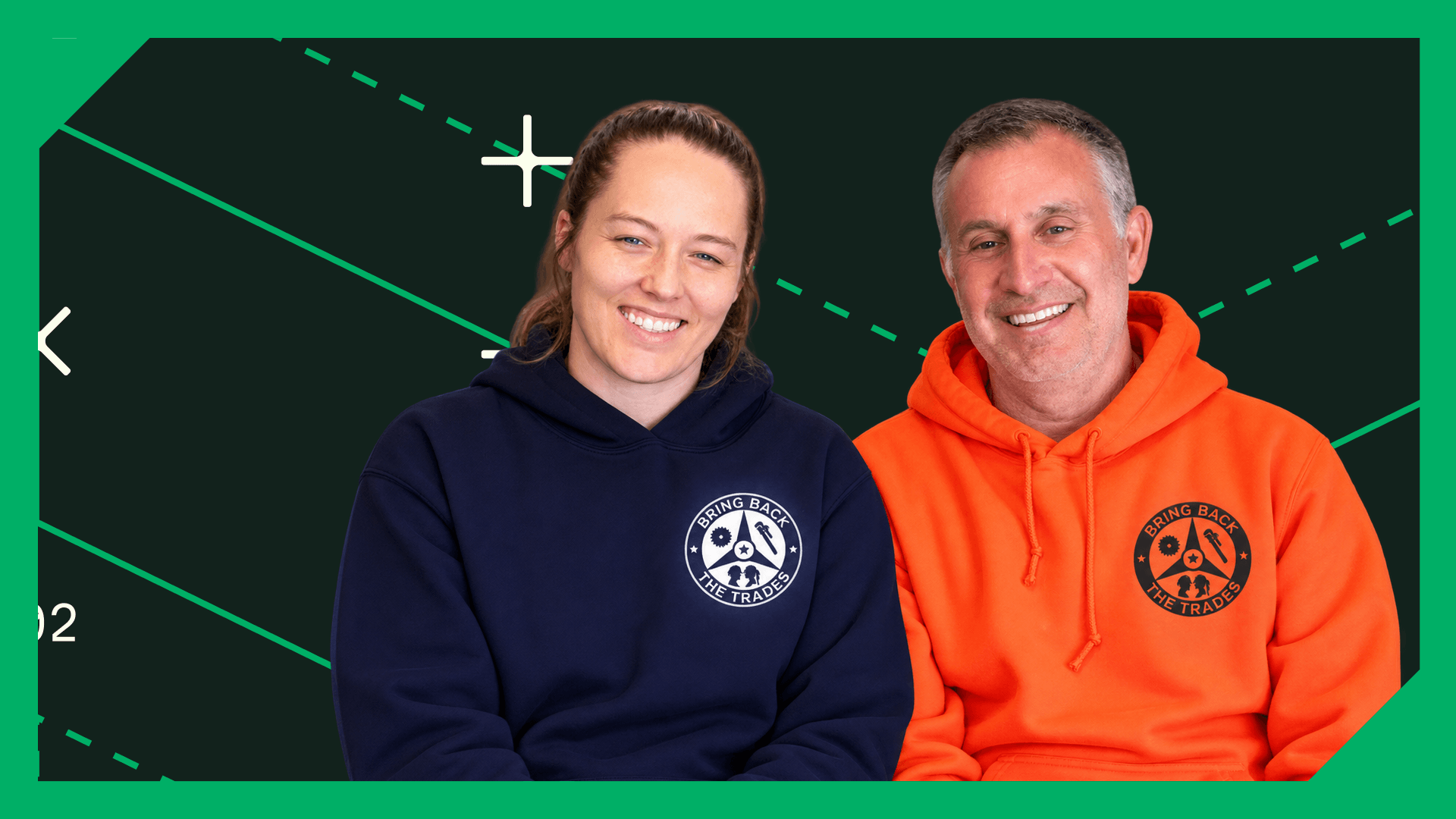
Growing interest in the skilled trades has created a new problem: not enough experienced workers to train the people showing up.
The conversation about the trades has changed. More young people are interestedE, enrollment in vocational programs is up, and public perception is shifting.
On Commercial Grade, Steve Turner, founder and CEO of Bring Back the Trades, and Kennidy Asche, the organization's marketing and events manager, made the case that interest alone will not close the gap. The bigger challenge now is making sure there are enough experienced workers to train the people who want in.
"The enrollments are up for trades individuals. You're getting all these kids that come out with apprenticeships, but we don't have enough certified journeymen to be able to take them." — Steve Turner
Pride came before the pipeline
Turner started his auto body business at 19 years old after discovering vocational classes in a back hallway of his high school. He worked alone for 17 years. When he finally tried to hire, nobody responded. Not for weeks. Not for months. For over a decade.
His friends in the trades were saying the same thing. So one morning in August 2017, he woke up with four words in his head: Bring Back the Trades. He had a friend embroider a hat. Then a contractor on a job site wanted 12 more. Then a plumber. Then a welder. Hats became a Facebook page, then a website, then a scholarship program, then a nonprofit.
It worked because it gave tradespeople something they had been missing: visibility.
"I made something that people could wear with pride. It showed them a symbol of who they were," says Turner.
It is not college versus trades
Asche, who came to the organization from a background in K-12 education, pushed back on the idea that promoting the trades means discouraging college. Turner argues that without college-educated workers in HR, accounting, logistics, and management, trade businesses cannot operate.
"Without the college people, we can't survive. You take the welder that's welding the beam, but how do they get paid for it? It's the HR department, the bookkeeper, the truck driver. All these people keep that business going," says Turner.
The point is not to funnel everyone into the trades. It is to make sure the trades are presented as an equal option, not a fallback for people who could not make it somewhere else.
"The biggest misconception is that the trades are only for people who can't make it in college," adds Asche.
The new bottleneck is not interest. It is experience.
Turner said the movement has been successful at drawing attention back to the trades. For every five workers exiting, only two are entering, but the organization has helped shift that number.
In many states, a journeyman can only supervise one or two apprentices at a time. That means even when young workers are trained and ready, there are not always enough qualified people to take them on. Enrollment is up, but the pipeline is still narrow in the middle.
For larger companies, the answer may be internal training facilities that develop journeymen faster. But for smaller contractors, taking on an apprentice means slowing down a productive worker, which means less output, longer timelines, and frustrated customers.
"That journeyman is now training them, is slowing down. They're making less money. And money doesn't solve the problem, because now you can't get the job done fast enough," says Turner.
He called this the next challenge he is focused on: helping businesses build journeymen internally so they can take on more apprentices without losing momentum.
Skills expos make the opportunity real
One of the organization's most effective tools is its skills expos — hands-on events where students, families, and career changers can try different trades in person.
Asche described the events as the opposite of a career fair. Exhibitors do not set up tables with pamphlets. They bring equipment. Kids as young as ten have operated excavators. Families have watched live welding demos, been lifted in bucket trucks, and tried bricklaying.
"I don't want you to send HR. I want you to send a service tech. Show why you're good at it and why I should bother with it," says Asche.
The events are open to the full community, not just students. Anyone exploring a career change is welcome. And while the expos are not hiring events, some attendees have been hired after connecting with the right person on the floor.
Turner said the events work because they let people see and touch the work. For parents especially, watching a child light up around a piece of equipment changes the conversation about what a career in the trades could look like.
The next generation is already here
The workforce pipeline in the trades has a shape Turner and Asche compare to a bone: a large group of experienced workers nearing retirement on one end, a growing group of new entrants on the other, and a thin middle layer of journeymen carrying most of the weight.
Fixing that middle will take more than enthusiasm. It will take employers who invest in developing their own talent, training programs built for people who learn by doing, and a willingness to meet younger workers where they already are.
"I see parents coming up to me saying, thank you for giving my kid an opportunity to have a career and change his life. That's what gets me fired up," says Turner
The interest is there. The pride is back. What comes next depends on whether the industry can build the training infrastructure to match it.
Get the full episode
Listen to the full conversation with Steve Turner and Kennidy Asche on Commercial Grade, BuildOps' podcast about the people, ideas, and operational challenges shaping the commercial trades.