Field Adoption Starts With a Simpler First Day
Field adoption is not won by asking people to change for the sake of new software. It is earned when the system is easy to use, the process makes sense, and the benefits show up in the work.
New software is only useful when the people doing the work actually use it. For commercial contractors, that means field adoption can’t be treated as a final step after implementation. It has to be part of the rollout from the beginning.
The strongest adoption stories have a few things in common: technicians can use the system quickly, the process is consistent across teams, and the value becomes immediately clear in the workday.
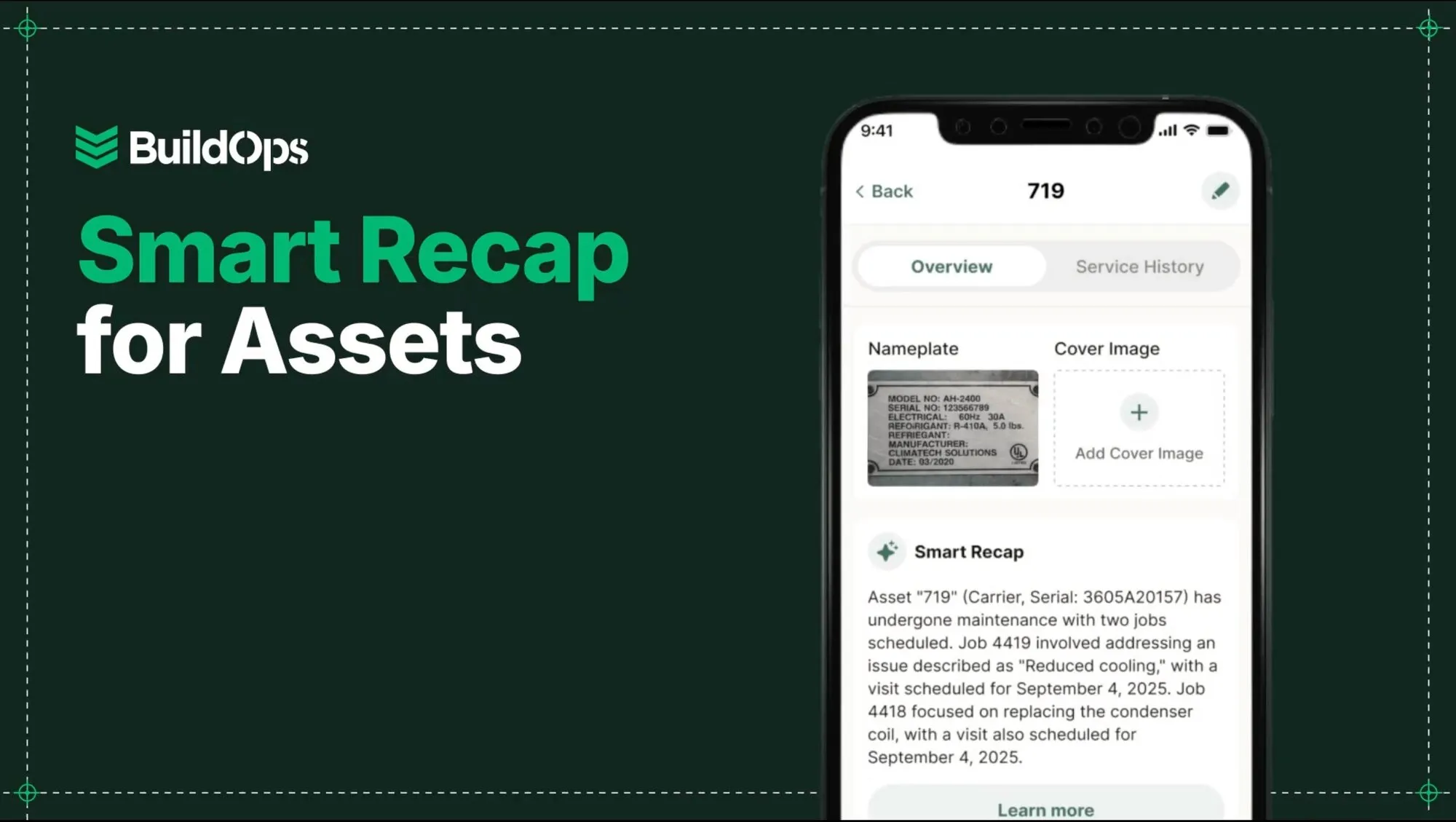
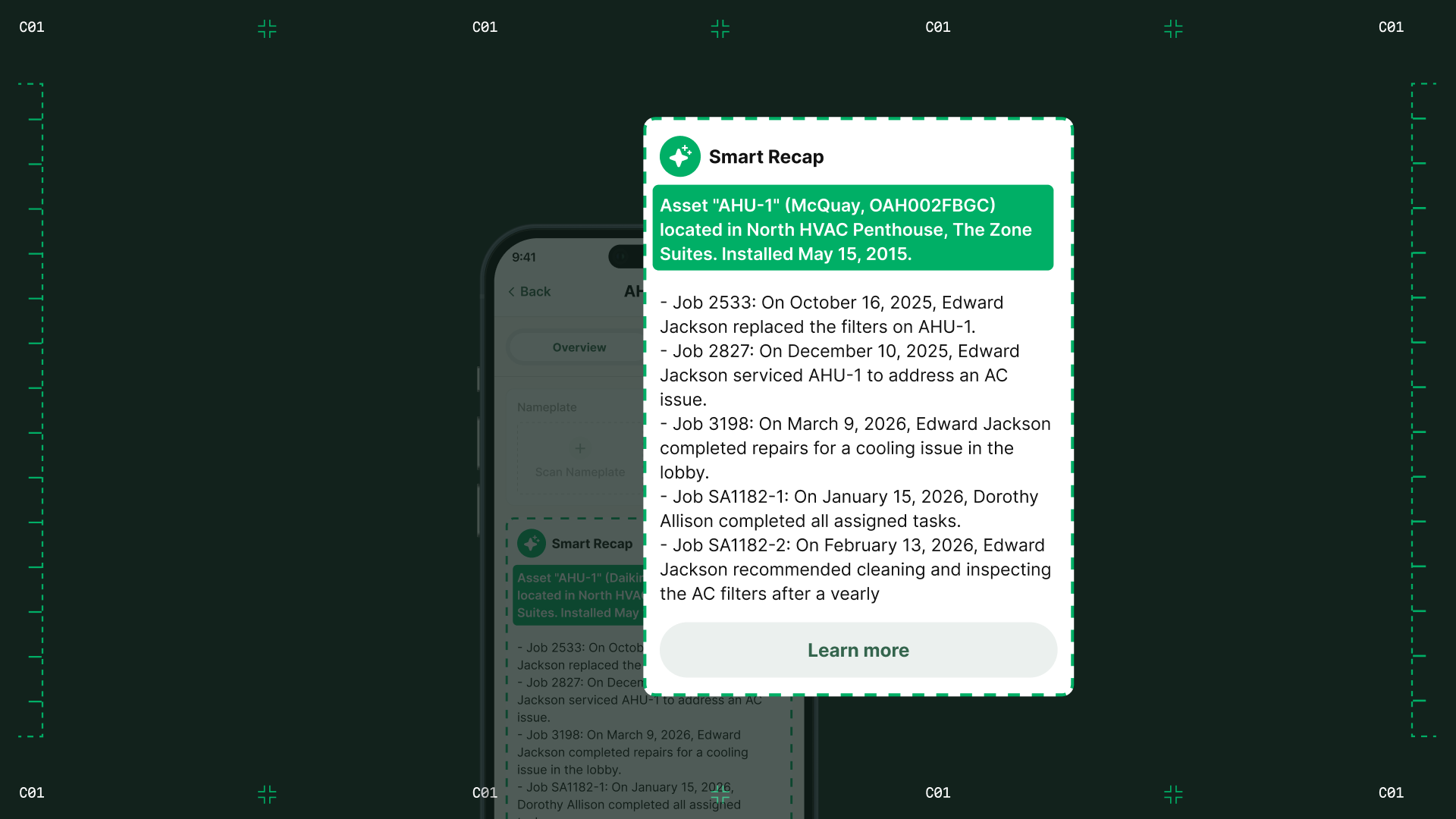
The most effective rollouts also give technicians an immediate reason to use the system: useful context before a visit and less manual work during it. OpsAI features such as asset-history context and Nameplate Scanner show how adoption can begin with the work already in front of the field.
Make the first day usable
Training is important, but training alone does not create adoption. Field teams need to leave training with enough confidence to put the system to work right away.
Nicol Reeves of Qmerit described the experience this way:
“We had tremendous success with the field. All of the guys walked out of training and were able to use the system right from the get go.”
A useful rollout should connect training to the tasks technicians already understand: starting the day, finding the right job information, documenting work, and communicating what happened in the field.
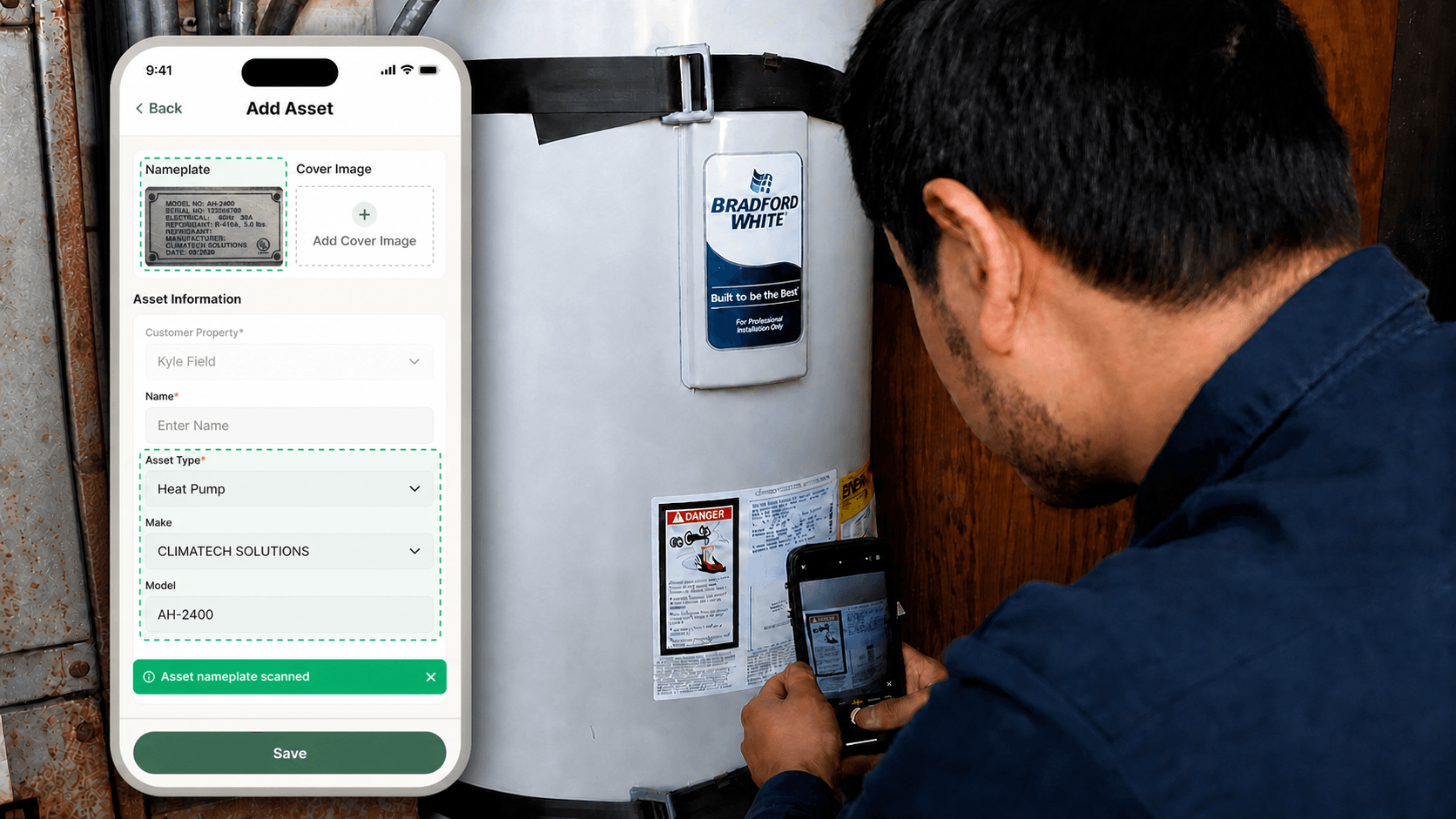
OpsAI can make that first day more practical by putting useful tools inside the technician’s existing workflow. With the Nameplate Scanner in the BuildOps mobile app, a technician can photograph an equipment nameplate and have OpsAI populate key asset details such as make, model, and serial number.
BuildOps surfaces relevant asset history and prior visit notes when a technician opens a job. Instead of searching through old records or calling the office for context, the technician can start with more of the job story already in front of them. These are small, visible wins that help the field understand the value of the system immediately.
Show technicians what gets easier
Field teams are more likely to adopt a mobile app when the benefit is visible in their own work.
“Our past experience for most mobile apps has been somewhat difficult adoption in many cases, but we were pleasantly surprised with BuildOps. Not only did techs pick it up quickly, but they realized that it was actually making their jobs so much easier.” Nicol Reeves, Qmerit
That value should show up before the technician begins work. With asset history and prior visit notes when the job opens, the technician has more context without hunting through old records or calling the office.
That is a useful test for any field technology rollout: can technicians quickly see how the system helps them get information, complete a task, or move to the next job? If the answer is yes, adoption becomes less about enforcing a new process and more about giving people a better way to work.
Give every location the same playbook
Adoption gets harder when every branch or team uses the system differently. A consistent process reduces the number of decisions people have to make and gives teams a shared standard to follow.
For Upchurch, standardization was a central part of the value:
“BuildOps helped with the standardization of processes from location to location. There's one way to use it, and it makes it easier when everybody's doing it the same way.” Lee Thomas, Upchurch
A common workflow also makes training easier. Instead of creating separate instructions for every location, leaders can establish a clear operating model and reinforce it across the business. That consistency helps new employees get up to speed and makes it easier for managers to understand what is happening across teams.
Standardization does not mean ignoring how each team works. It means identifying the parts of the process that should be shared, then making those expectations simple enough to follow in the field.
Let visibility reinforce the change
Field adoption isn't just about getting people to use a new system, it means helping techs understand why the change matters. Better data visibility can make the impact of new habits easier to see.
Each asset record created in the field becomes part of the company’s data foundation. Nameplate Scanner reduces manual entry and helps build a more complete asset database over time, while asset history gives future visits more context. That makes the benefit of accurate field data visible beyond the individual job.
Enrique Garmendia of DAC described that shift:
“Once we turned the corner on data visibility, people really appreciated the effort that was put into changing and they're seeing the benefits."
When teams can see more complete and consistent information, the work behind the rollout becomes easier to connect to business results. Leaders can use that visibility to show what is improving, where teams still need support, and how field activity connects to the broader operation.
A practical approach to field adoption
Field adoption is not won by asking people to change for the sake of new software. It is earned when the system is easy to use, the process makes sense, and the benefits show up in the work itself.
For contractors, that is the difference between implementing a platform and building a system the field can rely on.