3 Ways to Support More Technicians Without Growing the Back Office
What if the number limiting your growth isn’t the number of technicians you can hire, but the number of back-office employees required to support them?
What if the number limiting your growth isn’t the number of technicians you can hire, but the number of back-office employees required to support them?
For commercial contractors, growth is supposed to mean more technicians in the field, more work completed, and more revenue generated. But too often, every stage of field growth brings a new wave of administrative work: another dispatcher, another coordinator, another billing employee. Schedules become harder to manage, invoices go out later, and leadership spends more time chasing information than making decisions.
That expansion of overhead is what we call Back Office Creep, and it can place a ceiling on growth long before demand does.
1. Measure your operating leverage
One metric offers a clear view of how efficiently your business can scale: the technician-to-back-office ratio.
When the ratio is low, back-office headcount tends to rise alongside field headcount. When the ratio is high, the business can add technicians without adding overhead at the same rate.
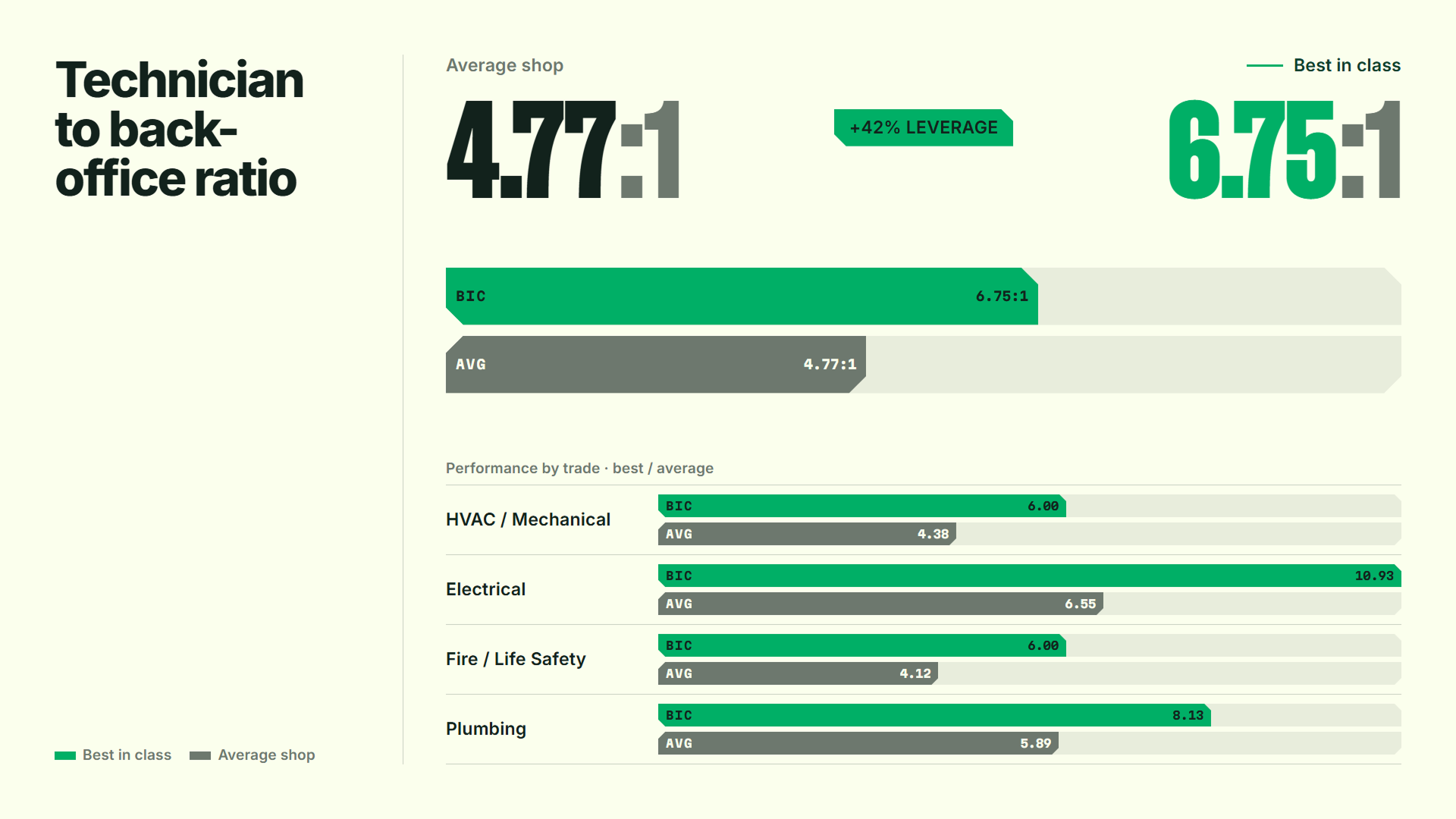
The gap between average and best-in-class performance is significant. The Torque 2026 Benchmark Report shows an average ratio of 4.77:1 on the BuildOps platform—one back-office resource supporting fewer than five technicians. At that ratio, administrative overhead rises as field headcount grows.
Best-in-class operators reach 6.75:1, with one back-office employee supporting nearly seven technicians. The benchmark identifies that difference as a +42% leverage improvement: the gap between a business that simply gets bigger and one that truly scales.
For owners and presidents, this is more than an operational statistic. It is a margin issue, a scalability issue, and a buyer signal.
2. Reduce the repetitive work driving Back Office Creep
Every avoidable back-office hire affects margin directly. The benchmark cites a $60,000–$80,000 burdened cost for each avoidable back-office hire.
The first step toward reducing that work is to see exactly where it happens. Map how back-office hours are spent, then identify the top three tasks that require manual re-entry between systems. Those handoffs, copying job details, chasing missing information, reconciling records, or rekeying data for billing, are where administrative overhead quietly compounds.
From there, redesign each handoff around a single system of record. Require the information needed to close a job in the field, then let structured field data flow directly into billing, dispatch, and reporting. Automatic invoice triggers and self-serve dashboards can remove the follow-up work that otherwise lands on coordinators and billing teams.
A practical test is simple: when a job closes, can the office invoice it without tracking down missing notes, photos, or approvals? Can the information move into accounting without someone typing it again? Can leadership see the status without waiting for a manual report? Any “no” points to a repetitive task the system should absorb.
3. Connect field execution to billing and reporting
Back Office Creep exists when people are performing work the system should be doing. The path to better leverage is not asking the team to work faster or absorb even more administrative tasks. It is removing repetitive work from the process altogether.
That is where automation can change the math.
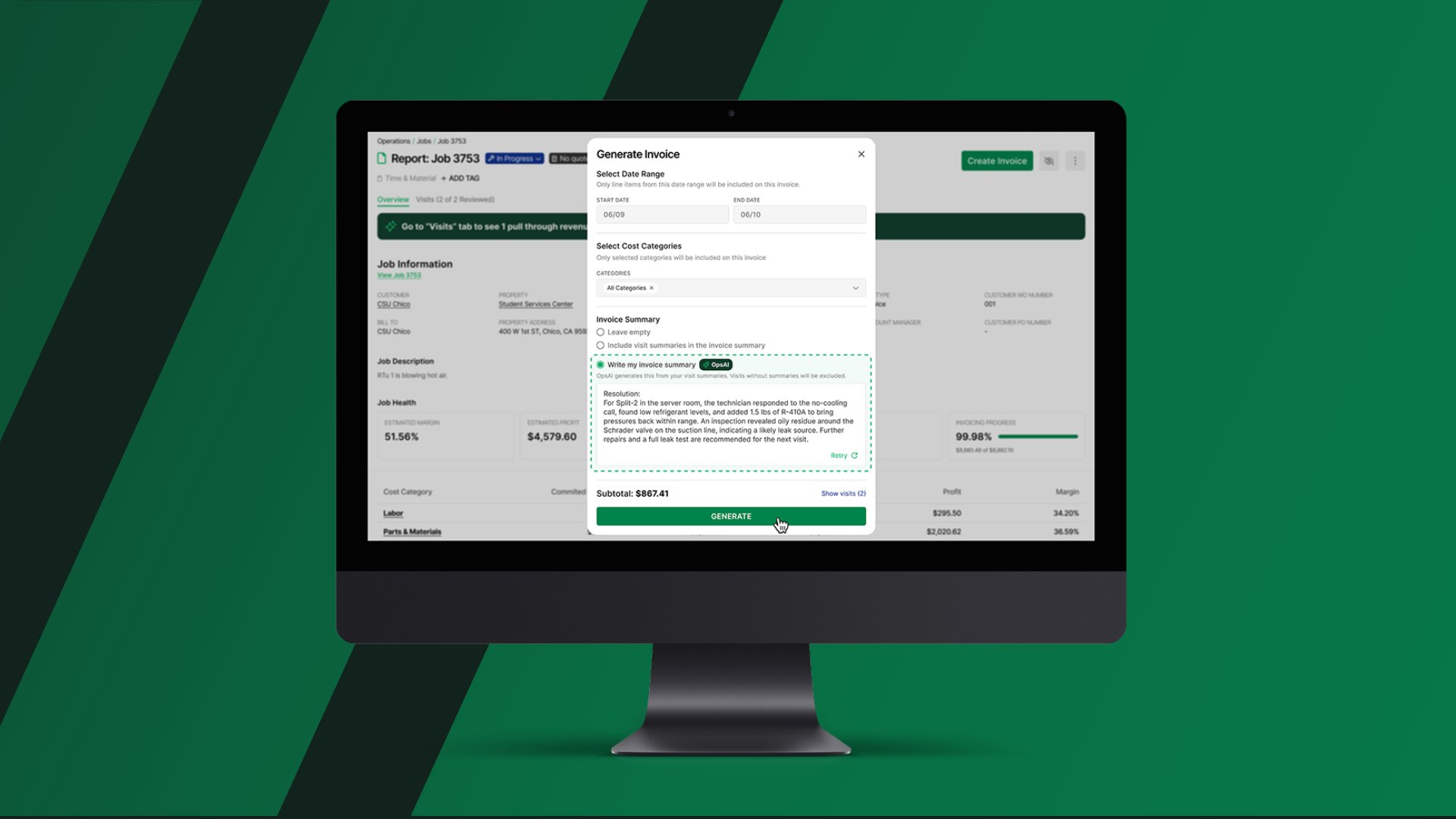
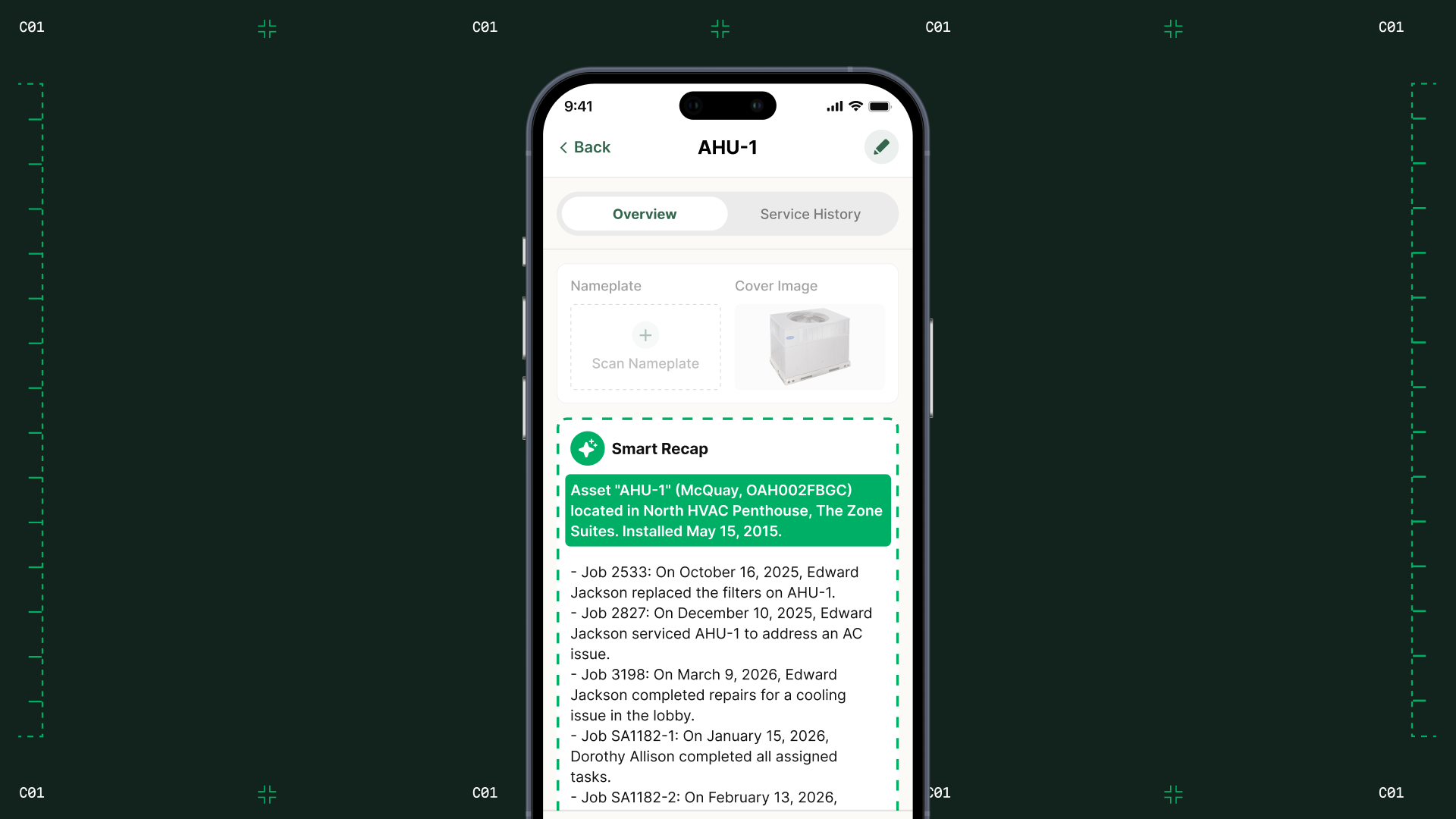
With OpsAI on BuildOps, technicians can capture structured notes and photos in the mobile app, while the system turns that information into clean, billable job summaries. The goal is to eliminate the second pass in the office and reduce the manual work required to prepare a job for billing.
When a job closes with the required fields complete, automatic invoicing and enterprise resource planning (ERP) sync can trigger the invoice and move it into accounting without re-entry. Instead of relying on someone to transfer information between systems, the workflow carries it forward.
Integrated dispatch, billing, and reporting also give leaders a clearer view of the business. One platform coordinates schedules, field execution, and billing, while dashboards keep metrics such as days sales outstanding (DSO), revenue per technician, and the technician-to-back-office ratio visible in real time.
The result is a different role for the back office. Teams can spend less time on data entry and reconciliation and more time managing exceptions, solving problems, and making decisions.
The goal: support more technicians without more overhead
The strongest contractors are not defined only by how many technicians they can add. They are defined by how effectively their operating model supports those technicians as the business grows.
As Sloan Mechanical put it, "If we were still on the legacy system we used at my old company, we'd already need another person. BuildOps gives us leverage. Full stop.”
That is the practical meaning of operating leverage: supporting more field capacity without automatically adding more administrative burden.
For commercial contractor leaders, the technician-to-back-office ratio is a useful place to start. Measure it. Understand what is driving it. Then identify which repetitive processes can be carried by the system instead of by another hire.
The goal is not simply to get bigger. It is to support more technicians, protect margin, and build a business that can scale without growing overhead at the same pace.