From Scattered Systems to One Clear View: How Electrical Contractors Run Better With BuildOps
The solution wasn’t just to digitize work and call it a day. They needed to see the business more clearly, coordinate across teams faster, and run with more control from the field to the back office.
.png)
What keeps the job from getting done isn’t information.
It’s whether the office can see what the field saw, whether project managers know what manpower is actually available, and whether billing can move before job details get left behind in a stack of paperwork.
At Layer One, teams were trying to manage job costing, procurement, submittals, and RFIs across multiple platforms, and “nothing talked.”
At Holmes Electric, project managers needed real-time visibility into manpower and service timing while they were out with customers.
At Jolma Electric, the challenge was bigger than one workflow. They needed a system that could bring service and projects together without forcing the business to keep operating in fragments.
The solution wasn’t just to digitize work and call it a day. They needed to see the business more clearly, coordinate across teams faster, and run with more control from the field to the back office.

When the issue is not effort, but visibility
Electrical contractors are not short on effort. They are short on shared visibility when work moves fast and information gets handed off between crews, dispatch, project managers, and billing.
“None of our information was on the last app except maybe where you were going. It was a struggle to find out what exactly the customer wanted or needed,” said a tech at Layer One.
Jolma described a similar challenge from another angle: they were skeptical one platform could really cover both service and projects until they saw BuildOps do exactly that.
Electrical businesses don’t operate in neat departmental boxes. Service affects projects. Projects affect labor planning. Field updates affect billing. When each function runs on a different system, the business slows down at every handoff.
One clearer view across service, projects, and the field
BuildOps doesn’t just centralize information; it gives different teams a usable, live view of the same job story.
“BuildOps gave us an all‑in‑one system for both service and projects. Once we saw that, it was a no‑brainer,” said Paige Rosenlund of Jolma Electric.
JL Minter reinforced the same point from a workflow perspective, saying that BuildOps “covers every aspect of both project management and service jobs” and helped organize day-to-day work.
At Holmes Electric, that visibility shows up in motion. “The BuildOps platform gives us flexibility for our project managers,” Ric Fegurgur said. “When they’re out talking to our customers, they can access real-time information and know what manpower is available or even when the service electrician’s due to arrive on site.”
Instead of chasing updates across departments, teams focus on moving the work forward.
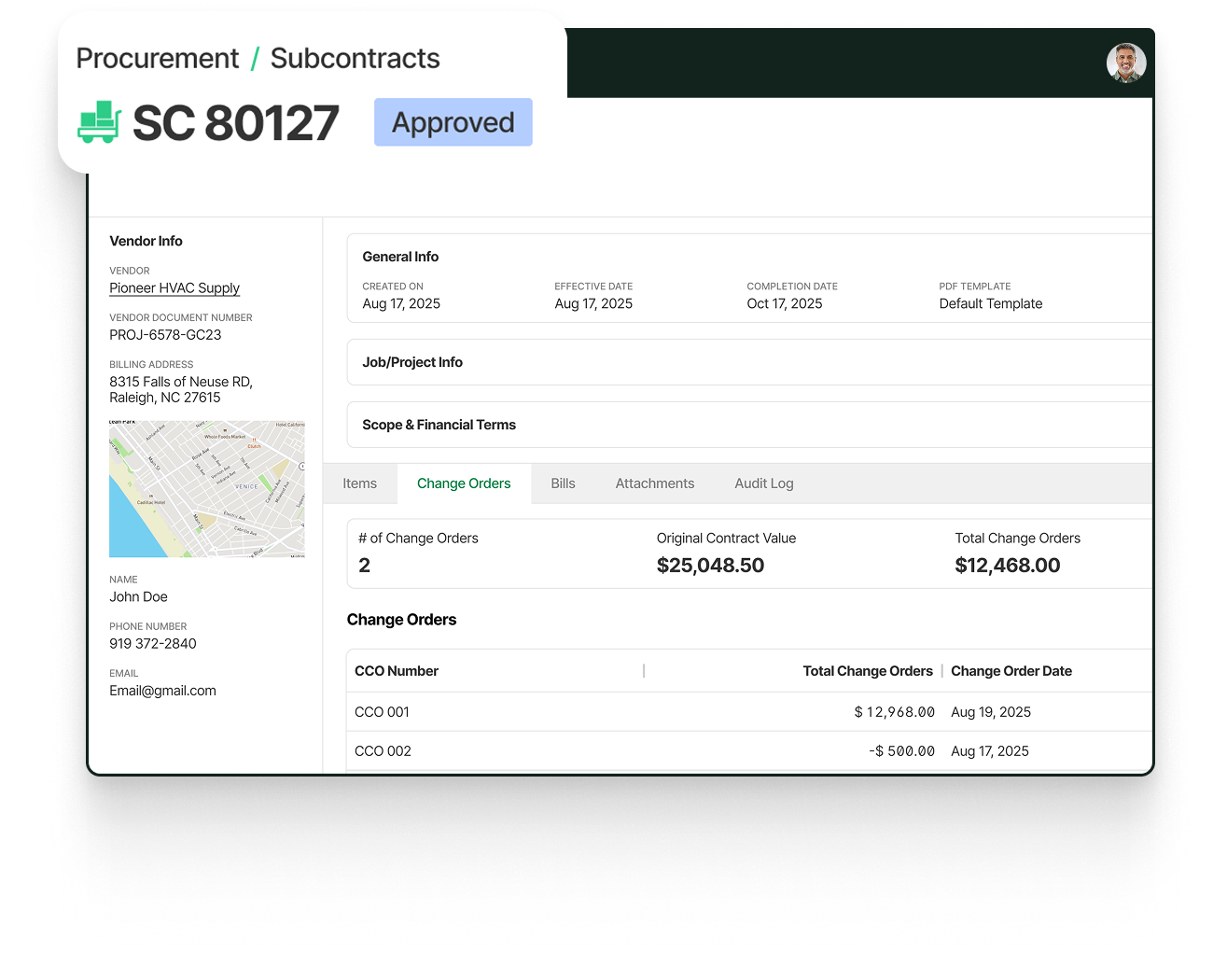
Visibility that actually helps teams act
The value of visibility shows up most clearly in how customers use the platform day to day.
At Layer One, Michael Powell said, “I’m in BuildOps everyday. From the time I sit down I’m checking everything from the schedule for where the guys are at today, to quotes for customers or change orders for jobs, job costing, checking hours...” Jason Thompson added, “We used to be two weeks behind on job costing. Now we’re up to date daily.”
RBT Electrical highlighted the reporting side of that same gain: “The ability to produce reports either on an individual job basis, a quarterly basis, or a project basis was something we’d never seen before in any other software that we’ve used.”
Dane Electric pointed to filters and personalized views for quick references to jobs needing auditing or overdue invoices, alongside a 30%+ reduction in invoicing time.
That is what clearer operational visibility looks like in practice: faster answers, cleaner reporting, and fewer work stoppages just to figure out what is going on.
Better coordination shows up in the numbers
But as any business owner knows, visibility doesn’t matter if it doesn’t show up in margin.
Jolma cut administrative work by 50%, and Collin Drovdahl said, “We cut admin work by 50% with BuildOps. That’s time we get back for customers and managing the business, not chasing paper.” Jolma also saw customer satisfaction increase by 30–40%, which they tied to more repeat work.
Classic Electric said its consulting division increased 300% because the office had more time to help customers.
JL Minter cut billing time 73%, from 30 days to 8 days. Dane Electric reduced invoicing time by 30%+.
That is the bigger point: better visibility and coordination do not just clean up workflows. They change how much work a business can handle, how fast it can bill, and how much overhead it needs to carry.
A stronger operating model for electrical contractors
Electrical contractors are not just looking for a better database. They are looking for a better operating model—one where service, projects, field data, reporting, and billing are not fighting each other for context.
For electrical contractors, that’s the difference between operating through workarounds and operating with confidence. When the office, field, and project teams can work from the same live picture of the business, teams move faster, handoffs get cleaner, and growth does not have to come with more chaos.


.png)