How to Use AI HVAC Estimating Software to Build Quotes

We surveyed 606 commercial contractors in our Pivot Point: AI and the Future of Commercial Contracting report, and the data paints a clear picture for anyone working in the trades: 30% say outdated tech is limiting their growth, and 80% believe AI will be essential to stay competitive within three years.
If you lead an HVAC estimating team, listen up. Bidding, takeoffs, and proposals are tough enough. Stop waiting to figure out AI. Use AI HVAC estimating software now to accelerate your bids, protect your margins, and grow without torching your team.
If you are a commercial contractor, see how AI is changing the landscape of HVAC field service management businesses.
So how do you actually get started? This guide walks you through it, breaking down:
- Using AI HVAC estimating software by role, and why it's critical for accurate bidding
- 4 types of AI tools used in HVAC estimating
- How to maximize profitability with AI HVAC estimating software
Start by showing how your pre-construction team can use AI tools to optimize their work and win more profitable jobs.
Using AI HVAC estimating software by role, and why it's critical for accurate bidding
Rewiring HVAC mechanical contracting, artificial intelligence links pre-construction, procurement, and project management to a single accurate cost thread—so every estimate drives orders, budgets, risk alerts, and customer updates with fewer errors and stronger margins.
Here's who benefits, and how each role feeds into a cohesive HVAC estimating operation powered by AI.
Estimators and pre-construction teams
AI tools give estimators an instant edge. With a few clicks, they can pull full service and project histories, spot where labor and material costs are likely to creep, and lock in the right pricing and takeoff details based on past HVAC jobs. Even newer estimators can step into complex mechanical bids with the confidence of a seasoned lead.
They also strip out the grind. Instead of manually counting items off HVAC plans, estimators upload the drawings once. AI builds a complete takeoff—quantities, cost codes, and recommended parts—and pushes it to procurement in real time.

AI taps thousands of past bids and job records to surface real costs, flag margin risks, cut estimating errors, and uncover scope gaps—so you grow capacity without adding headcount.
The top AI use cases in field service breaks down exactly how leading contractors are turning field data into faster, smarter job management.
Office and procurement teams
AI turns HVAC bid management into a live, price-aware command center. It continuously checks subcontractor and supplier quotes against your estimate and historical data, surfacing outliers and missing line items so your team can lock in stronger pricing, faster.
Behind the scenes, AI pulls material quotes, vendor lead times, and labor costs into a single, always-current view. When copper, refrigerant, or ductwork prices jump, it instantly flags every affected estimate and risk—so your team can spend time negotiating and securing materials, not chasing down price sheets.
HVAC business owners
AI gives HVAC contractors the one thing spreadsheets never could: live, honest feedback on every bid. It surfaces where you’re underestimating labor, underpricing materials, or chasing work that’s headed for a loss—before it ever hits your P&L.
By tapping into real-time data from estimating, procurement, and past jobs, AI compares each new quote to your targets and spots cost creep early. That lets you reset pricing, tighten scope, and protect margin across every active proposal.
Field supervisors and project managers
From the moment a job is sold, AI gives project leaders a live, crystal-clear view of the budget. It compares estimates against real labor and material usage, flags overruns early, and shows how a small miss today can cut into margins and disrupt downstream trades tomorrow.
HVAC project managers rely on this accurate estimate data to sequence work and control labor costs—without constantly re-running the math. Safety leaders tap into the same source to see how crews are deployed, spotting trends and confirming that safety measures are properly built into every budget.
Customers and facility managers
Property owners and facility managers want to see exactly what they’re paying for. AI makes that easy, presenting clear, line‑by‑line breakdowns that spell out what’s included, what’s not, and the historical data behind every number—no status calls required.
In the background, the same AI turns past project and maintenance data into reliable cost forecasts, helping facility teams plan capital projects and recurring service with far more confidence.
Vendors and trade suppliers
AI helps distributors stay one step ahead of HVAC contractors by turning project pipelines, takeoff lists, and past usage into clear demand signals. It flags what to release early, cuts down rush orders and costly freight, and aligns inventory with real project schedules—so parts and equipment show up exactly when crews are ready to install.
{{related-content-block="/resources/ai-for-hvac-companies"}}
4 types of AI tools used in HVAC estimating
AI tools are transforming how HVAC contractors and field technicians manage bids, providing the speed and accuracy needed to win profitable mechanical jobs, from routine service replacements to large-scale system installs.
1. Agentic AI for proposal generation
Agentic AI is your always-on digital estimator, quietly handling the entire bid process for HVAC contractors. It reads blueprints, runs digital takeoffs for duct and pipe, pulls live pricing from vendor databases, and turns it all into a proposal that’s ready to send—whether you’re bidding a simple change-out or a multi-unit AC install. Built on your historical pricing and bid rules, Agentic AI in field service even flags long-lead gear (like custom air handlers) and sets reminders so you never miss a deadline.
2. Predictive AI for cost forecasting & risk
HVAC contractors use Predictive AI to protect profit on every job. Trained on thousands of past estimates and actuals, it flags margin risks early—like sudden jumps in copper or refrigerant pricing—before a proposal ever leaves your hands. It also surfaces risky labor assumptions and likely change-order traps, so leaders can tighten pricing, defend margins, and set the tone for how every bid is built.
3. Generative AI for scope writing
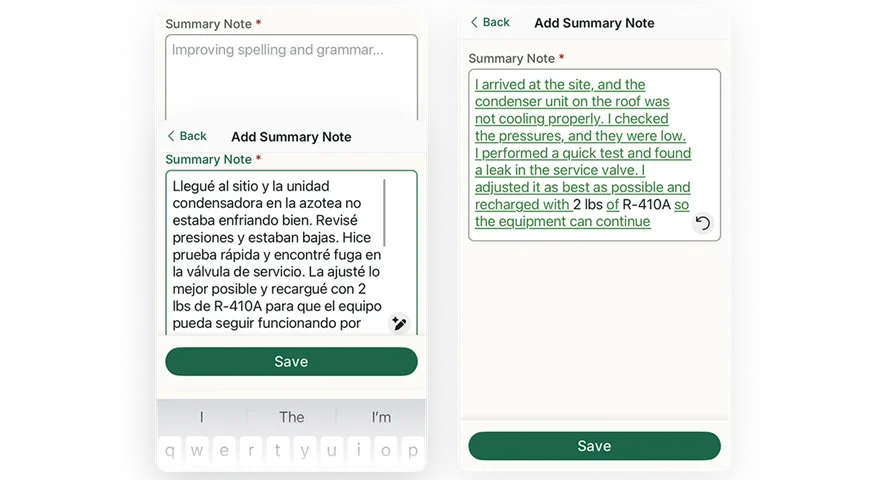
Once your HVAC tech or estimator builds the labor and material breakdown (for a VAV retrofit, for example), Generative AI turns it into a clean, client-ready scope in seconds. Rough notes become clear, professional language—spelling out inclusions, exclusions, and assumptions—so your team presents a unified, credible voice on every proposal.
4. Computer vision AI for takeoffs
With Computer Vision AI, HVAC takeoffs move from manual to strategic. Upload plans or models, and the system automatically identifies and counts key components—diffusers, pipe runs, fan coils, duct sizes, and more. The result: a precise materials list that gives leaders confidence the full mechanical scope is captured before any number goes into the estimate.
How to maximize profitability with AI estimating & automation
AI plumbing estimating speeds up bids, prevents costly errors, and protects your margins—without adding overhead.
1. Automated digital takeoffs
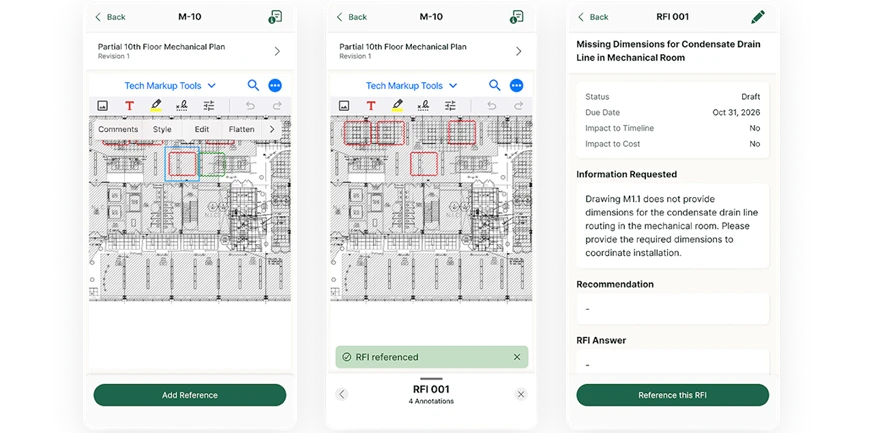
Manual counting leads to costly mistakes and makes it nearly impossible to understand how long HVAC jobs really take—or why one bid makes money while another bleeds margin. AI-powered takeoff tools change that by transforming your HVAC plans, PDFs, or BIM files into instant, itemized material lists. Instead of squinting at drawings and chasing numbers in spreadsheets, estimators can trust a consistent, repeatable process that captures every ductwork, mechanical components, and HVAC units the same way, every time.
With OpsAI embedded in your BuildOps workflow, those takeoffs are created where your team already works. Upload HVAC drawings into OpsAI, highlight key areas, and it auto-generates a complete HVAC takeoff tied to your cost codes and catalog data—ductwork, mechanical components, and HVAC units—so you move from raw plans to a pricing-ready baseline in minutes.
2. Historical job costing analysis
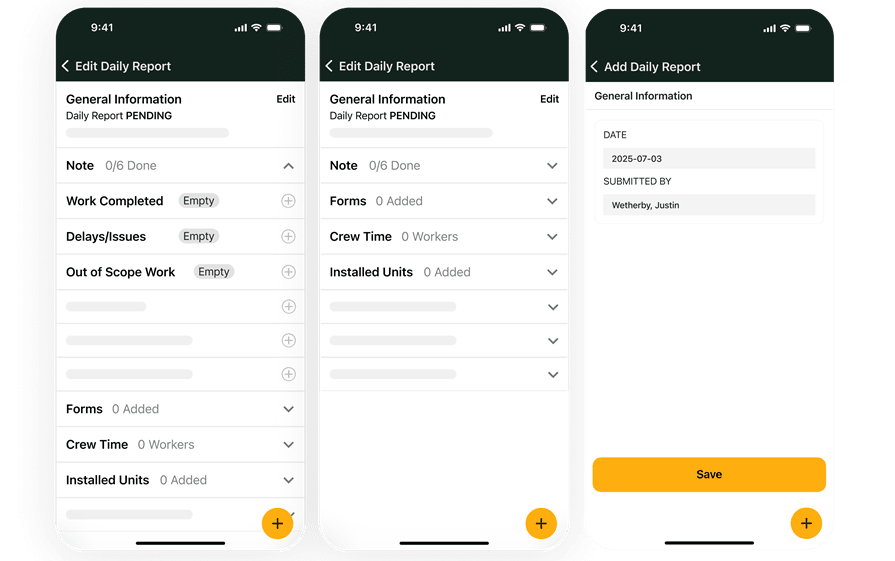
Every successful HVAC service bid, change order, and final invoice in tools, including labor, assets, and parts used, becomes a reportable metric through reporting automation. AI leverages this data, comparing your new HVAC estimate against actual costs from similar past projects to identify high-risk areas, ensure your pricing is both competitive and profitable, and eliminate guesswork.
Inside BuildOps, OpsAI pulls every successful HVAC service bid, change order, and final invoice into an AI-ready dataset—labor hours, assets used, parts consumed, and margins achieved—then scores new estimates against that history so your team can spot risky scopes, tighten pricing, and protect profit before the job ever hits the field.
3. Seamless bid-to-budget handover
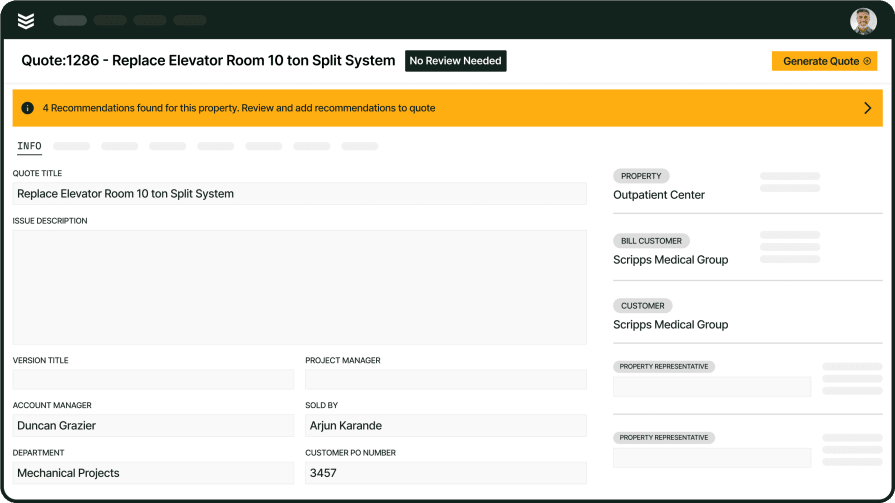
Winning a HVAC job is only half the battle. The real risk comes when that carefully built estimate is retyped—or reinterpreted—into a project budget, schedule, and purchasing plan. AI eliminates this gap by reading the winning estimate and instantly translating it into a structured work breakdown, labor plan, and material roadmap, so operations can start fast without scrambling through files and emails.
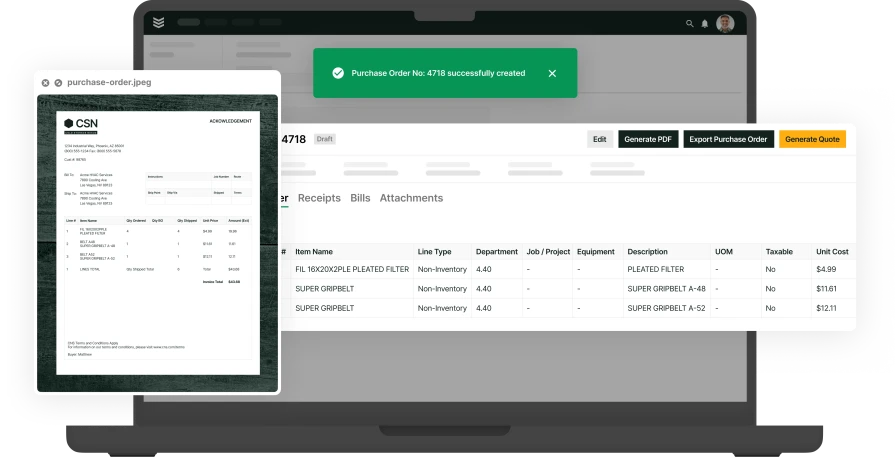
OpsAI closes this handoff for BuildOps users by converting a “won” estimate directly into a project budget, WBS, and initial procurement list that feeds your estimating and project management tools. The estimate becomes a single source of truth that drives POs, cost codes, and the budget baseline, cutting out manual rekeying and keeping field execution tightly aligned with what was sold.
4. Subcontractor quote comparison
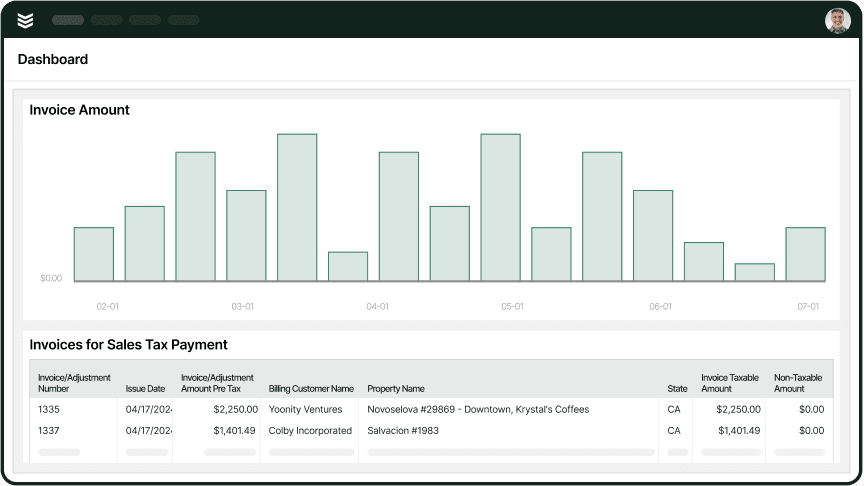
Managing multiple quotes from suppliers and subcontractors creates a paperwork bottleneck that slows bid submission. AI automatically reads, extracts, and categorizes key details from scanned quotes and vendor invoices, including vendor names, line items, quantities, and amounts, then standardizes them for a direct, apples-to-apples comparison against the initial HVAC estimate.
Some tools, like BuildOps invoicing connected to a payment processing tool, can even automatically match vendor quotes to the correct project budgets, getting the job set up faster and cutting days off your pre-construction cycle.
5. Proposal generation and version control
Customer-facing proposals are where all your effort either wins the job—or confuses the client. AI can take the raw estimate and automatically build a polished proposal that clearly outlines scope, materials, labor, and value, while capturing the exclusions, assumptions, and terms your team needs to protect margin. Just as importantly, AI can track every revision so you always know which version the client has and how the scope has evolved.
OpsAI turns your HVAC estimates into proposal-ready content by scanning the final estimate, pulling in scope, materials, labor, and commercial terms, then generating a branded proposal and tracking every revision so your team always works from the latest version while quietly building a library of winning proposal patterns over time.
{{related-content-block="/resources/how-service-1st-got-rid-of-the-work-arounds"}}
AI is reshaping commercial HVAC, giving contractors a faster, smarter way to go from plan upload to proposal. Built specifically for HVAC contractors, BuildOps’ AI-native CRM platform blends your team’s real-world expertise with intelligent automation across takeoffs, estimating, procurement, sales, and job costing.
The payoff: quicker, more accurate HVAC bids, tighter margins, fewer scope misses, and a more predictable, profitable business.
Download our Pivot Point: AI and the Future of Commercial Contracting report below to see how top HVAC contractors are using AI to transform their entire operation—not just individual service calls. Ready to see it in action? Set up a demo with BuildOps to see how OpsAI can streamline every step of your HVAC estimating and project workflow.