Where & How Construction Submittals Slow Jobs Down


Key Takeaways
- Construction submittals start slowing jobs down when status, ownership, and revisions are hard to track across email, spreadsheets, portals, and folders.
- Submittal issues affect more than document control because overdue responses and weak purchasing follow-through can delay field work and job decisions.
- Commercial contractors should evaluate submittal workflows based on visibility, revision history, field access, and how well approvals connect to the rest of the project.
Construction submittals usually become a problem before anyone calls them one. A vendor package comes in incomplete. A PM is checking email, a spreadsheet, and a GC portal to figure out what is still pending. The field is asking whether the latest cut sheet or shop drawing is actually approved before install. That is the point where a routine document process starts slowing the job down.
For commercial contractors, submittals are not just paperwork. They affect material timing, field readiness, revision control, and whether the office can prove what was approved later. Inside construction operations departments, the goal is not just to send submittals out, but to keep the job moving with a record your team can trust.
The first step is understanding which parts of the submittal process create the most friction for commercial teams.
Where construction submittals start slowing commercial jobs down
In conversations with commercial contractors about submittals, the same questions keep surfacing. Teams are trying to figure out who owns the next move, whether approvals are actually moving, and whether the record is strong enough to trust once purchasing and field work pick up.
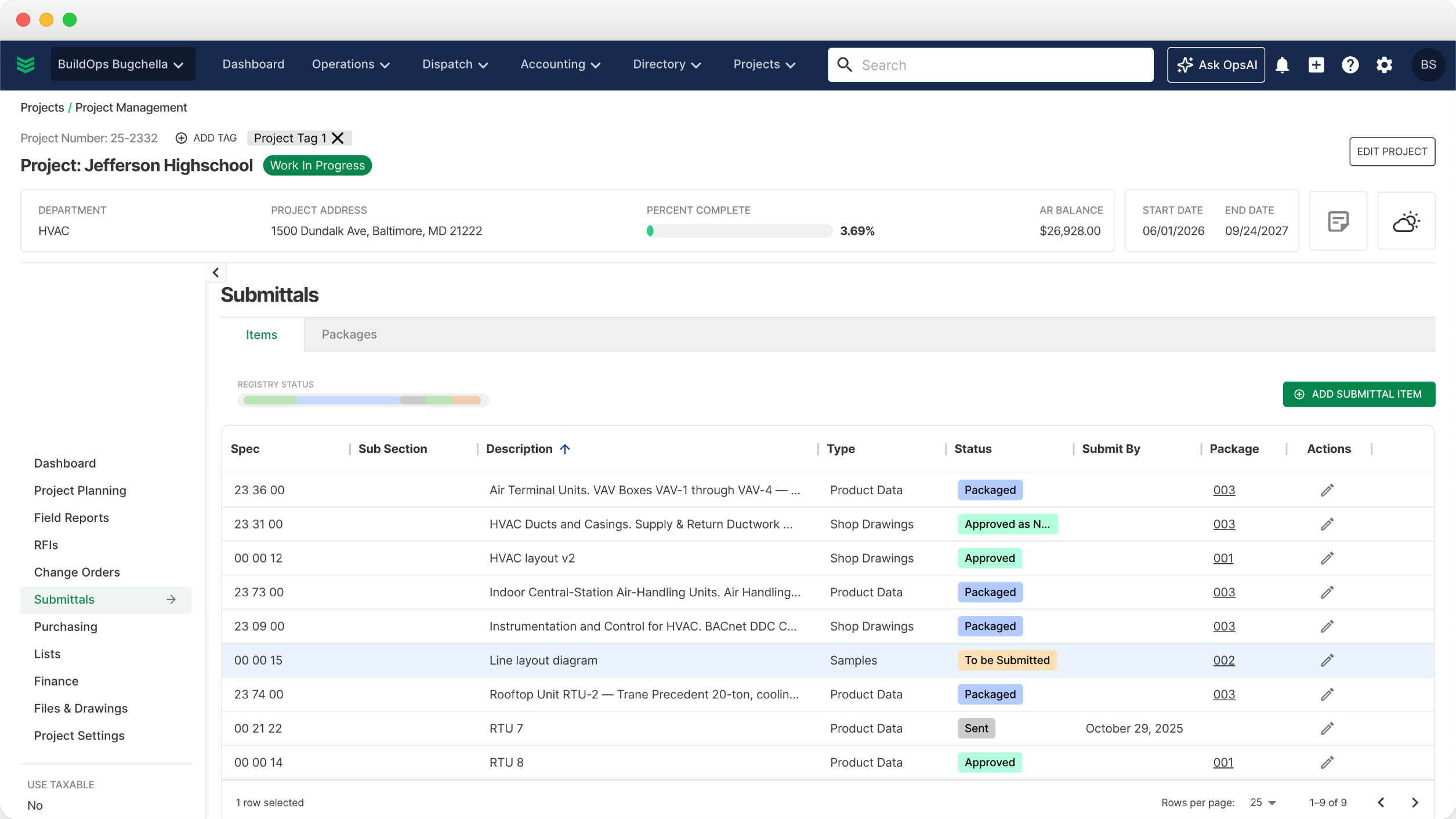
In our conversations with commercial contractors about submittals, the same questions keep surfacing. Teams are trying to figure out who owns the next move, whether approvals are actually moving, and whether the record is strong enough to trust once purchasing and field work pick up. These are the main themes we see:
1. Who owns the next step?
Nobody seems fully sure who is supposed to act next. One person is waiting on a vendor package, another thinks the PM already sent it, and the field is assuming approval is already in motion. Contractors need a workflow that makes ownership visible so the next move does not live in memory or side conversations.
2. Was the submittal actually sent, reviewed, returned, or approved?
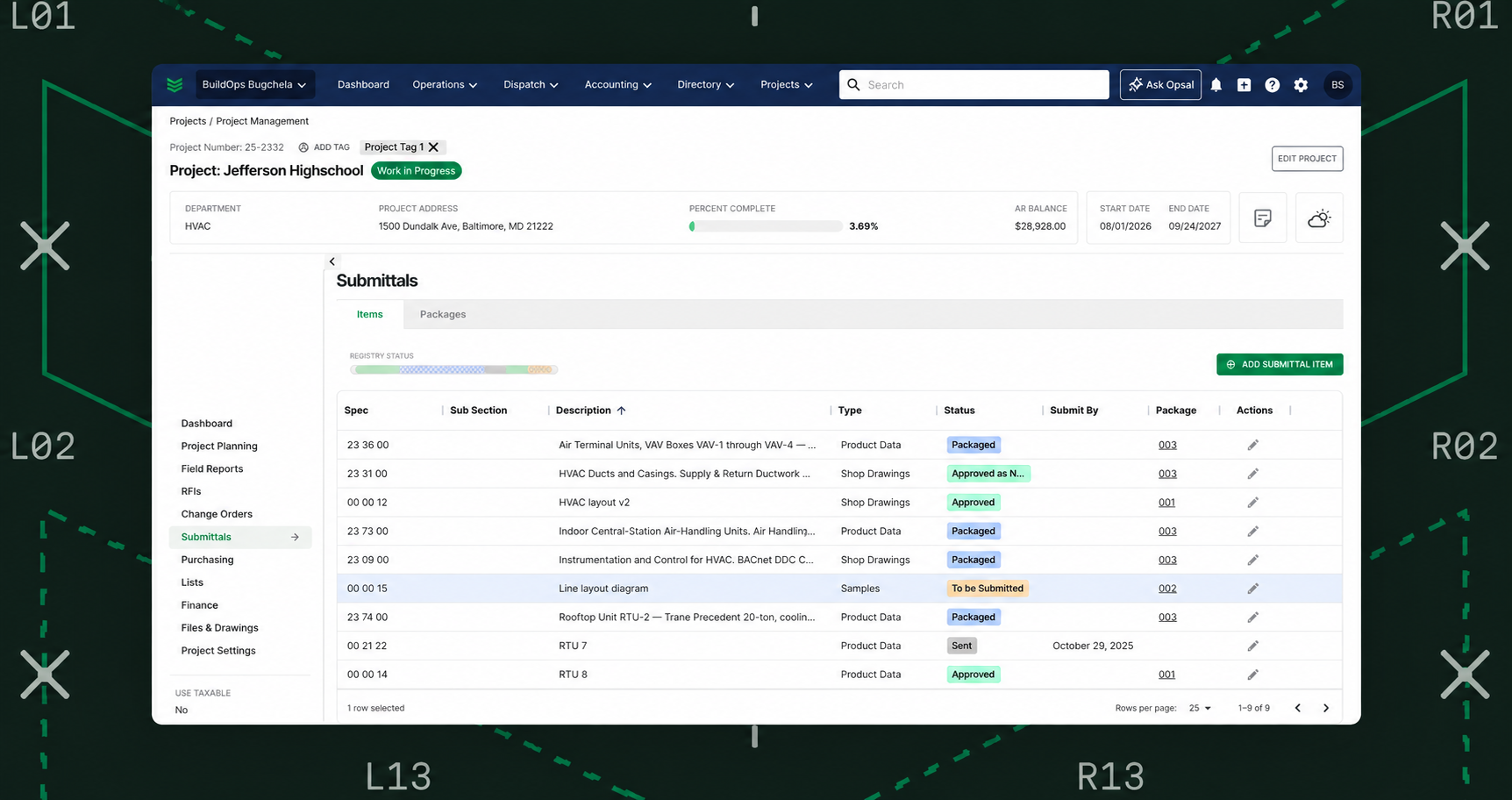
A lot of the pressure comes from simple status confusion. Teams want a fast read on whether a submittal is still in draft, already sent out, sitting in review, returned with comments, or approved and ready to move forward. This is where strong document control matters, because submittals should sit in the same current record as the rest of the project documentation instead of getting buried across email, spreadsheets, and GC portals.
3. What changed in the revision, and what notes came back with it?
Risks arise when the team cannot quickly tell which revision is current or what the approving party actually said about it. Contractors need revision history and approval notes tied directly to the package so PMs, project engineers, and field leaders are all working from the same version instead of piecing the story together later. Field teams also need quick access to the latest package on-site, which is why mobile visibility into submittal status and attachments matters.
4. Are responses overdue, and is that delay about to affect the job?
Submittal delays rarely stay inside the submittal log. Once a response sits too long, it starts affecting material timing, coordination, and schedule confidence. Contractors need clear status, due dates, and overdue visibility so they can catch delays before they turn into field problems.
5. Were the approved materials actually ordered?
Approval is not the finish line if purchasing still happens somewhere else. One of the biggest follow-up concerns is whether an approved submittal actually turned into an ordered material, with the commitment tied back to the same job. A stronger process connects submittals to materials & subcontracts so PMs can keep approvals, purchasing activity, and downstream job impact closer together instead of managing them in separate trackers.
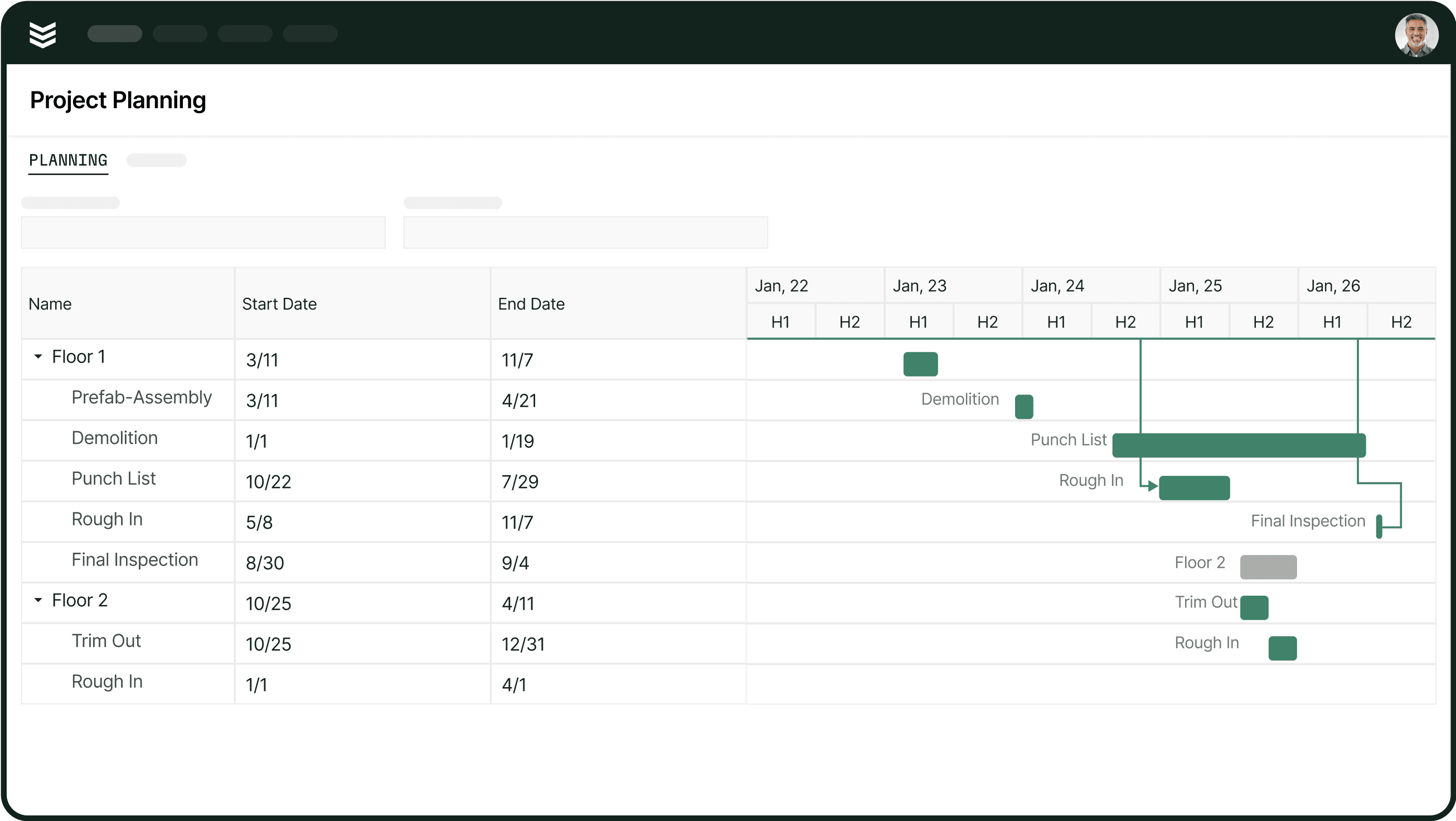
Submittals are part of the bigger construction project management workflow. They affect document control, material coordination, field readiness, and closeout, so PMs need them connected to the rest of the job record.
How to evaluate construction submittal capabilities
Choosing construction submittal capabilities comes down to one question: does the workflow help your team move the job forward, or does it just store documents? Those are the questions worth pressing on in a demo. A demo should show whether the system can handle status visibility, revision control, field access, overdue tracking, and purchasing follow-through while the job is still active.
- Can the team see one clear status and one clear owner for every submittal? Look for a workflow that makes the next action obvious instead of leaving the team to piece it together.
- Can the team track revisions and approval notes without rebuilding the history? Ask to see how the system preserves the record when a package comes back with comments or needs to be resubmitted.
- Can the field check the latest approved information without calling the office? The demo should show how quickly field teams can reach the current package and confirm what they can act on.
- Can PMs spot overdue responses before they affect schedule or materials? Ask how the system surfaces due dates, overdue items, and the people responsible for the next step.
- Can approved submittals connect cleanly to purchasing and commitments? Have the team show how approval information carries into purchasing decisions and job commitments.
A strong construction submittal workflow should make the next decision easier, not create another place to check. As commercial contractors adopt AI across project management and field workflows, the goal should stay the same: surface status faster, flag delays earlier, and reduce the manual follow-up that slows submittals down. If the team still has to chase status, rebuild revision history, or confirm approved materials in a separate tracker, the workflow is not giving commercial contractors enough control.
{{related-content-block="/resources/adopting-field-service-ai"}}
Construction submittals work better when they stay connected to the rest of the job. For commercial contractors, that means managing status, revision history, and next-step decisions in one workflow inside BuildOps, instead of patching updates together across separate systems.
AI should strengthen that workflow, not create another tool to monitor. Structured submittal records can help surface overdue items and missing attachments before they hold up the job through OpsAI.
If your team wants to see how submittals, project workflows, and AI fit together in one system, you can book a demo to see the workflow in action.