Where a System of Record Fails Commercial Field Teams

“We’ve got the data, but we still can’t move fast.” – It’s one of the most common frustrations contractors bring up. A traditional system of record may store customer details, work orders, invoices, and equipment history, but that doesn’t mean it helps the business run better day to day.
For commercial and industrial contractors in the field service industry, the disconnect is growing: field teams need real-time visibility, dispatch is constantly adjusting, and office staff are stuck chasing answers across disconnected systems. Instead of keeping operations aligned, the system often becomes another bottleneck.
In this guide, we break down:
- What is a system of record?
- 8 downfalls of systems of record for field service businesses
Before we get into where these systems fall short, it’s worth grounding the basics: what a system of record is, how it differs from a source of truth or a system of action, and why more field service companies are rethinking whether it’s enough to run the business.
What is a system of record?
A system of record is the single source of truth for your service business, holding the data that keeps operations accountable: customer info, work orders, invoices, asset history, and compliance records.
It usually lives in your CRM, ERP, or legacy FSM platform, where teams document what happened. But while it’s built to store and retrieve information, it’s not built to drive real-time action.
System of Record (SOR) vs Source of Truth (SOT)
A system of record and a source of truth both aim to centralize data, but they serve different purposes.
- System of Record: The core operational system where data is entered, stored, and managed. In field service, that’s the platform where work orders are created, jobs are scheduled, and invoices are processed.
- Source of Truth: The single most current and trusted version of that data across the business. It’s the place your team looks to understand what’s actually happening right now.
In practice, a system of record can be a source of truth, but only if the data stays complete and up to date. The moment information gets copied into spreadsheets, shared over email, updated by text, or tracked in disconnected tools, which happens all the time in field service, the two start to drift apart. That gap is where delays, duplicate entry, billing issues, and operational misalignment show up.
{{related-content-block="/resources/ai-for-contractors/"}}
System of Record (SOR) vs System of Action (SOA)
A system of record tells you what happened. A system of action makes something happen.
Instead of just storing job history, customer details, and service data, a system of action turns that information into real-time execution: dispatching techs, optimizing schedules, sending invoices, and notifying customers automatically.
That’s the difference between software that tracks work and software that moves it. In field service, that gap matters. When calls, crews, and contracts are all moving at once, the best systems don’t just capture operations—they run them.
Why these systems are often inadequate
Traditional systems were built for functions, not for field service. CRMs, ERPs, and scheduling tools each solve a piece of the problem, but they don’t operate as one system in real time.
That fragmentation slows decisions, creates operational gaps, and drives unnecessary cost. The core issue is structural: data is captured, not activated. Until operations and data are unified, field service businesses will continue to outgrow their technology.

A Kickstand report based on a survey of 606 contractors across the U.S. and Canada found that 78% are using AI tools on the jobsite, while 47% say one in five positions remain unfilled.
That combination explains why AI-backed workflows matter in field ops: they reduce admin load and help teams keep output steady with the headcount they have
8 downfalls of systems of record for field service businesses
A traditional system of record keeps data tidy, but it doesn’t keep the field running. For contractors juggling service, projects, and maintenance across trades and locations, the limits show up quickly. Here are eight ways an SOR falls short in the real world.
1. Lack of real-time visibility and insights
Most systems of record lag behind reality. By the time leadership sees the data, dispatch has already made calls on outdated info, managers are reacting late, and techs are walking in without the full story.
Field service moves in real time. A system of action keeps teams current with live visibility into jobs, tech locations, margins, and equipment status. And with contractor software built around AI features, those insights show up inside the workflow so teams can respond in the moment, not after the fact.
2. Cumbersome user experience
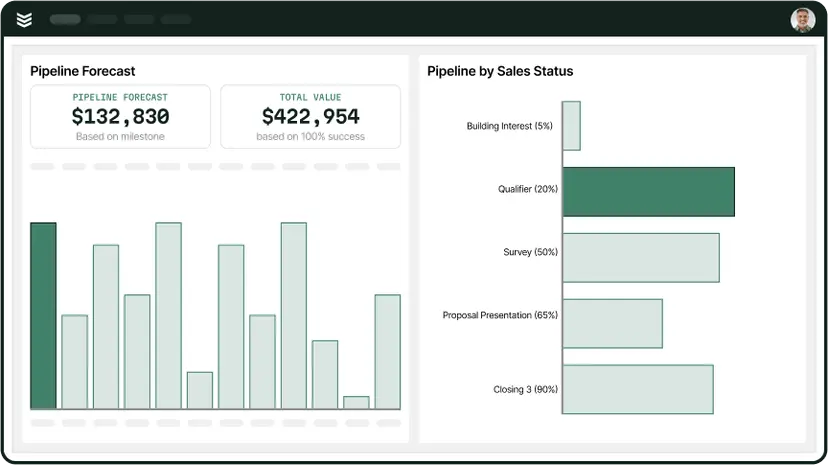
Legacy systems were built for data entry, not the people doing the work. They slow teams down and push them to work outside the system. A system of action fixes that. AI-powered contractor workflow tools help field teams capture data on-site, while AI turns it into clean records the office can actually use.
3. Reduced productivity and customer experience
When techs spend less time on admin and more time on the job, productivity goes up. AI removes the busywork by capturing notes, updating records, and generating summaries automatically—so the field stays billable, the office stays efficient, and customers get faster answers.
For contractors evaluating how to make that transition without disrupting current operations, a structured approach to adopting field service AI makes the difference between a smooth rollout and a stalled one.
4. Static, reactive scheduling
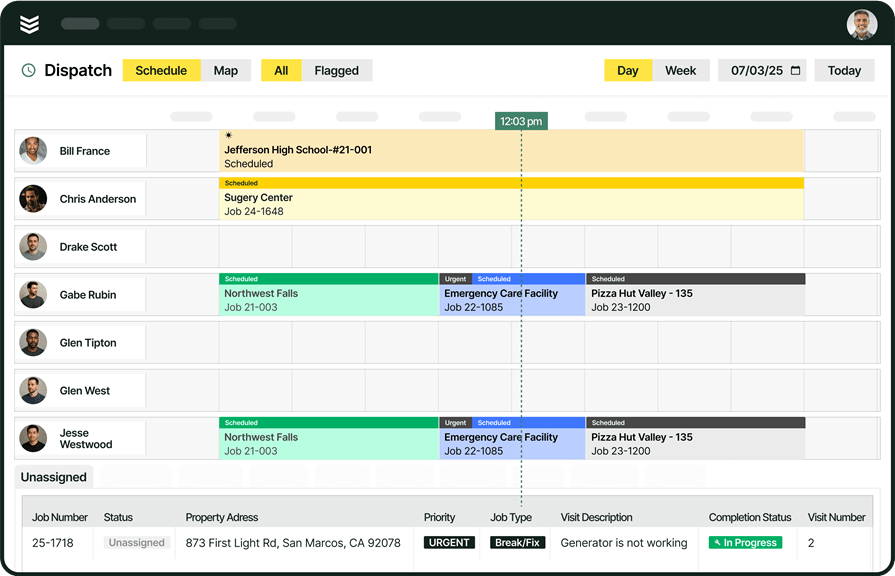
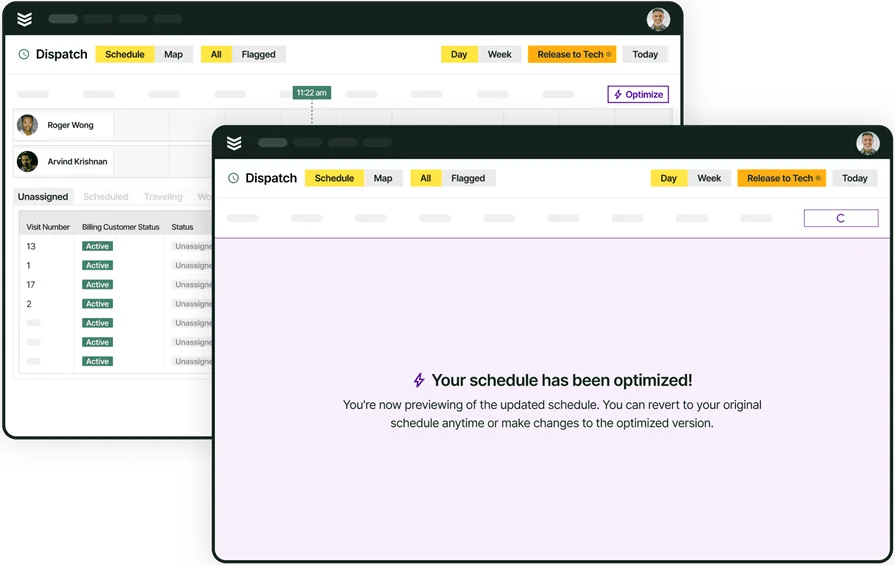
A system of record tracks what was planned. It doesn’t react when the day changes. AI-powered scheduling does. It adjusts assignments in real time based on skill, availability, workload, and location—so dispatch isn’t stuck reshuffling the board by hand. Contractors using AI to optimize workforce scheduling consistently see fewer missed appointments, less idle time, and higher tech utilization without adding dispatchers.
5. Siloed data & communication
In a typical SOR setup, customer, job, invoice, and field communication data all live in separate systems, creating disconnects between teams. A system of action connects everything, so when a tech closes a job, records, history, customer info, and billing update together. Platforms built around a unified field service ticketing system give every team — field, dispatch, billing, and management — the same live view of every job, eliminating the handoff gaps where errors and miscommunication live.
6. Poor inventory and asset tracking
Your system of record shows what should be there. A system of action shows what’s actually happening in the field. Techs scan the unit, AI fills in the asset data, and everything updates in real time—so inventory, purchasing, and maintenance stay aligned.
7. Slow billing cycles
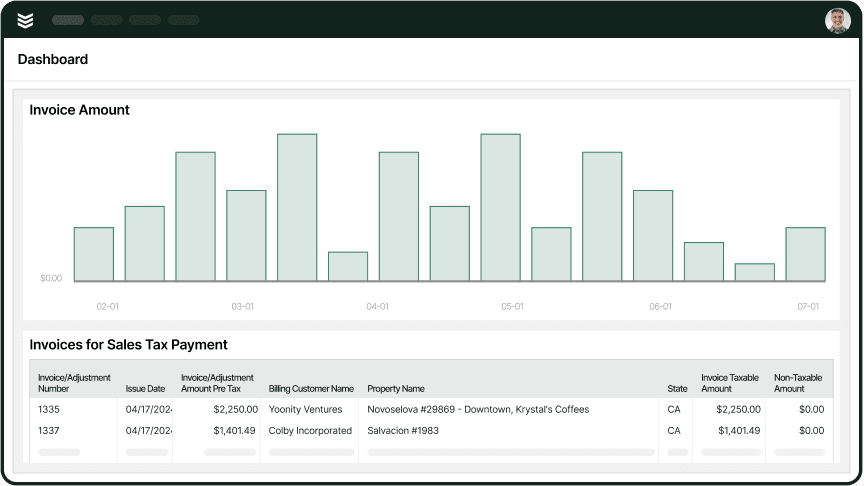
A system of record stores the information needed to invoice. But it doesn’t move the work forward. Someone still has to piece everything together, send the invoice later, and wait even longer to get paid.
A system of action closes that gap. AI builds the invoice from completed work, sends it out the same day, and can even help collect payment on-site. What used to take weeks now happens in hours.
8. Inability to scale and adapt
Systems of record don’t scale cleanly. What works for 10 techs starts to break at 30, adding more admin, more training, and more manual upkeep. A system of action scales with you, using AI to handle scheduling, reporting, and field documentation as complexity grows.
For contractors looking at how agentic AI in field service is reshaping operations, the core advantage is clear: the system acts on pre-set rules and real-time data without waiting for someone to push things along, and that's what lets a growing operation keep pace without drowning in admin.
{{related-content-block="/resources/top-use-cases-ai-field-service/"}}
Most software helps you store information. But commercial service businesses need more than a system of record — they need a system of action.
When scheduling, invoicing, asset data, reporting, and field communication live in separate tools, teams slow down, revenue slips, and customers feel the disconnect.
BuildOps brings it all together in one platform. With OpsAI embedded across the workflow, contractors can dispatch smarter, capture cleaner field data, update asset records instantly, invoice faster, and see the business in real time.
No double entry. No disconnected workflows. Just one system built to help commercial contractors move faster, operate smarter, and get paid sooner.