How 4 Commercial Contractors Are Clearing Back-Office Bottlenecks
Four commercial contractors show how connected workflows can accelerate billing, reduce manual work, improve cash flow, and support growth without adding office headcount.
Growth should be exciting. But if every new technician means the back office has to grow too, expansion can start to feel like treading water.
Every new technician brings more scheduling, paperwork, billing, job costing, and service-agreement administration. When those processes depend on paper forms, disconnected systems, or manual follow-up, the back office grows alongside the field team—leaving you working harder just to keep pace.
But that pattern is not inevitable. BuildOps’ Torque 2026 Benchmark Report data from more than 1,500 commercial contractors shows that the average back-office employee supports 4.77 technicians. Among the top 20% of shops on the platform, that same employee supports 6.75 technicians—a 42% difference with the same headcount.
So, what are best-in-class contractors doing differently? Keep reading to find out.
1. Turn field data into same-day invoices
Northwest Mechanical Group provides HVAC and plumbing service and project work for commercial and industrial facilities. Before changing its workflow, job details could sit on paper or in separate systems for days before billing saw them.
That delay affected cash flow. Billing staff had to piece together timesheets, work orders, and materials logs by hand, while completed work waited to become an invoice.
They addressed the bottleneck with the BuildOps mobile app. Service details, time, and billable items could be logged when the work happened, allowing completed jobs to appear in the billing queue immediately instead of after a paperwork chase. The ability to work offline and sync later was a key need, and helped technicians keep work moving across difficult jobsites.
The result was a shorter path from completed job to payment:
- Invoicing moved from weeks to the same day in many cases.
- Completed work turned into an invoice more quickly, helping cash come in faster.
- Fewer billing errors occurred because information was entered once, in the field.
Billing speed starts before the invoice. When the field captures the full job information in the field, the office spends less time chasing down what happened and more time moving work through billing process.
2. Replace manual reconciliation with one connected workflow
Advanced Cable Systems is an electrical and low-voltage contractor focused on structured cabling, communications, and related building systems for commercial clients.
The company had outgrown its old time-tracking tool. Because the system could not keep pace with the business or connect with QuickBooks, materials and job data had to be reconciled by hand across systems. Each manual handoff slowed billing and created another opportunity for an error to reach an invoice or job cost.
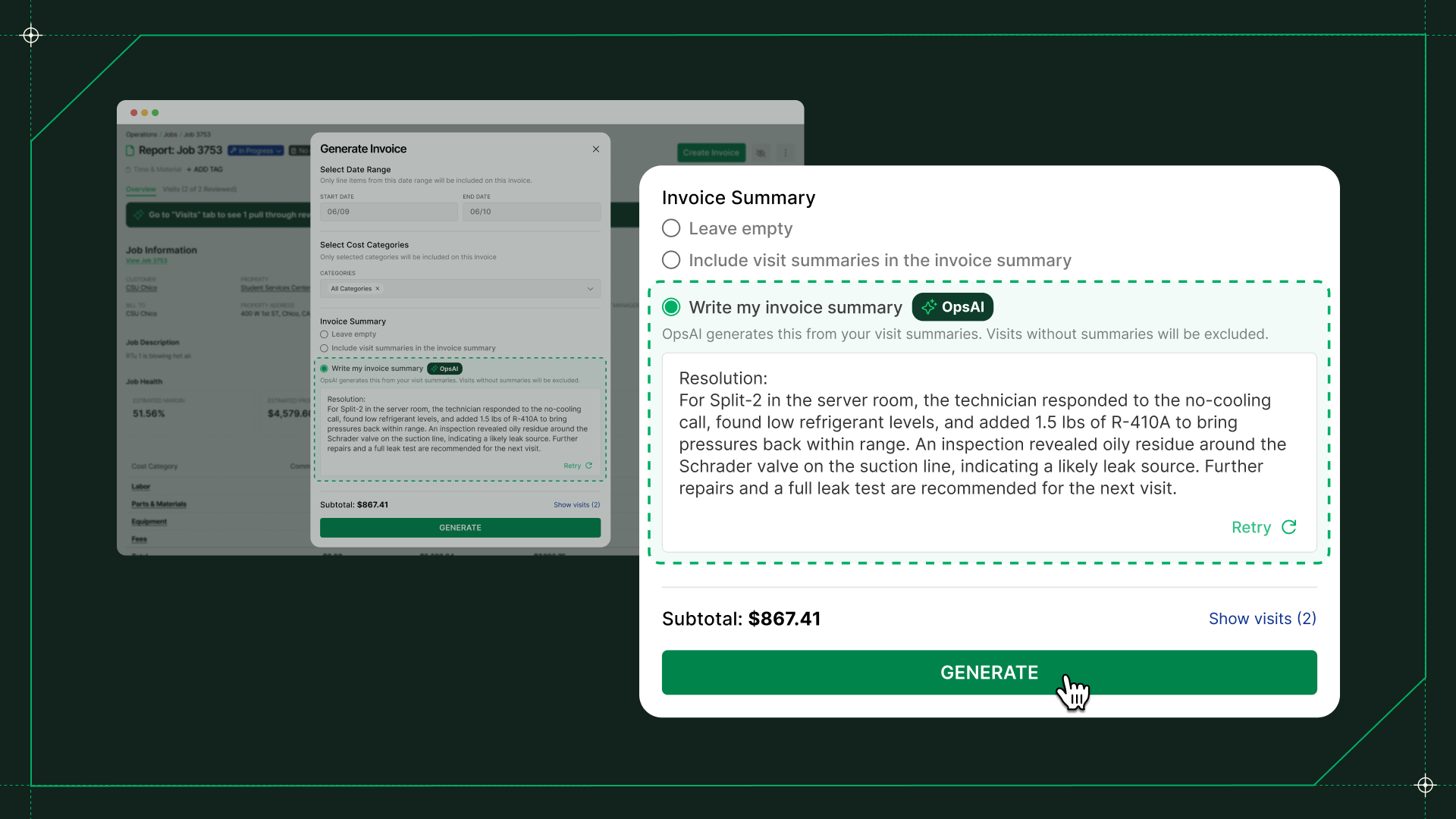
They replaced their patchwork of old systems with one workflow. Technicians entered materials and time directly on the job, and the information flowed into QuickBooks without exporting or re-entering data.
The transition included mapping existing jobs and items into BuildOps, training technicians to log materials and time as they worked, and establishing a standard billing and job-costing flow for the office.
That produced three operational improvements:
- Labor and materials connected directly to the job.
- Invoicing became faster and more accurate.
- Manual exports and reconciliation work were removed from the back office.
“After we review the field technician report we can check what materials were used and quickly populate everything into an invoice without need for manual entry in the office.”
— Doug Woodruff, Chief Financial Officer, Advanced Cable Systems
Integration is not just an information-technology benefit, it changes who has to do the work. When systems share data across the field, office, and accounting workflow, employees no longer need to act as the connection between them.
3. Shorten the payment cycle with standardized billing
Omnia Mechanical Group is a commercial mechanical and HVAC contractor serving building owners and operators. For years, the company had to front labor and material costs while waiting 90 to 120 days to get paid.
Manual invoicing made the delay harder to manage. Missing details or mistakes could add more time to collection, increasing financial pressure on the business.
Omnia standardized billing on BuildOps by capturing job information, labor, and billable items as work happened. The back office gained a cleaner, more accurate picture of what needed to be billed, while structured billing reduced human error. Leadership also gained better visibility into what remained outstanding.
The change had a measurable effect:
- The payment cycle fell from 90–120 days to about 30 days.
- The accounts-receivable period decreased by 75%.
- Fewer invoice errors supported more predictable collections.
“When we go to write an invoice, it’s seventy five percent done, eighty percent done, instead of someone in the office sitting there trying to read it, interpret it, and then retype it.”
— Jonathan Clark, Principal, Omnia Mechanical Group
Omnia’s story shows why back-office efficiency is ultimately a cash-flow issue. Every missing detail, delayed handoff, and billing correction can extend the time between completing work and receiving payment. Standardizing the process helps contractors protect cash without simply asking the office team to work faster.
4. Grow service agreements without growing the office
BP Mechanical manages maintenance and service agreements for commercial HVAC and mechanical systems. As its service department grew, its administrative workload grew with it.
Tracking visits, renewals, and entitlements across an expanding set of agreements became a full-time challenge. Without a more connected system, adding office staff appeared to be the only way to keep up—and every new agreement increased the risk of a missed visit or billing mistake.
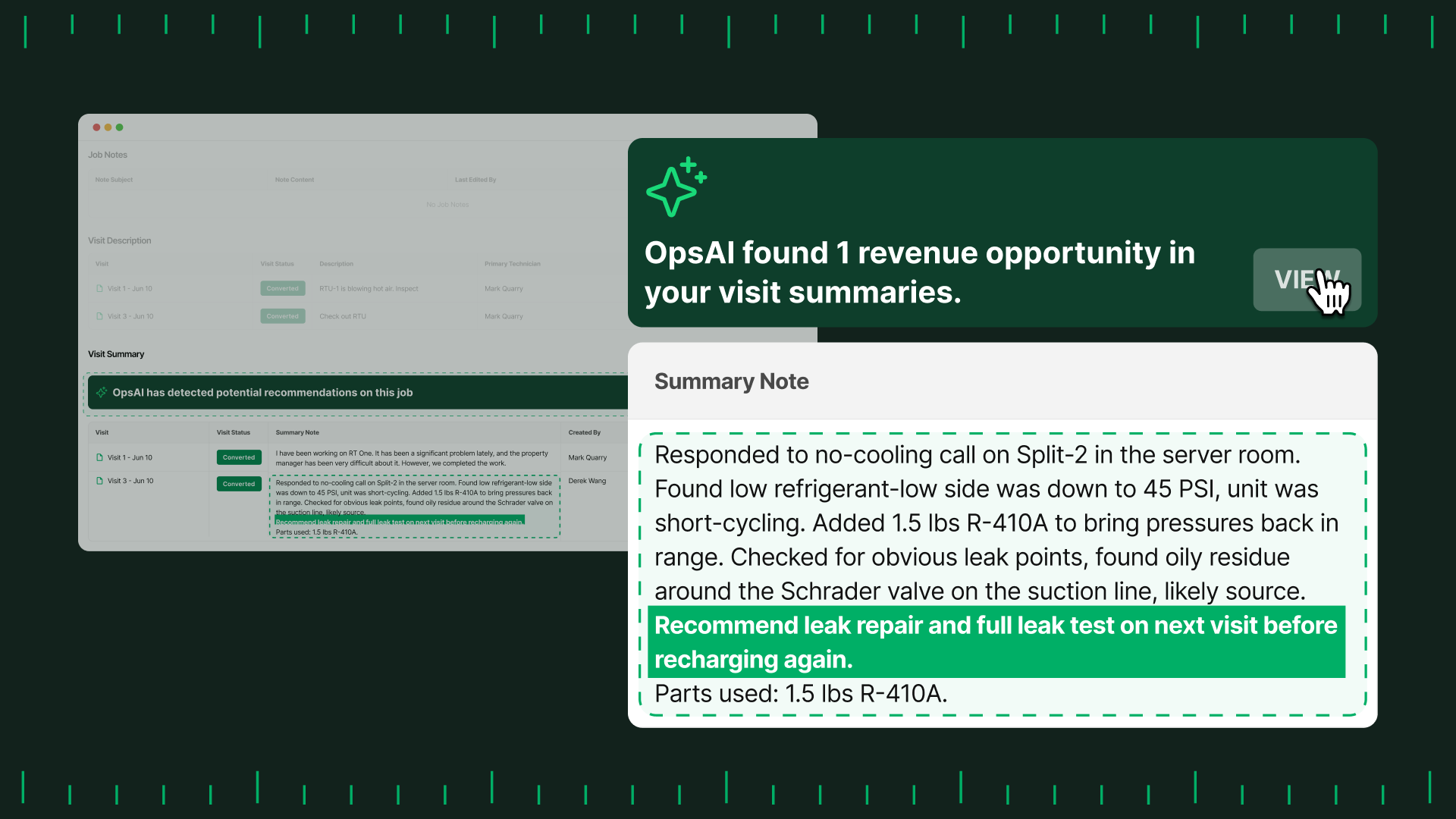
BP Mechanical centralized agreements, visits, and invoices inside BuildOps. The system handled recurring-maintenance scheduling, tracked service history, and generated invoices based on what had actually been delivered.
The result was a more scalable service-agreement workflow:
- Agreements, visits, and invoices were managed in one place.
- Manual errors decreased as the agreement book grew.
- BP Mechanical generated more service revenue without adding a back-office hire.
“Before BuildOps, we weren’t able to gather any real-time input on each job. Now, we have real-time hours worked on a daily basis—not a week and a half later when time cards are finally submitted and processed.”
— Brent Larson, member-owner and CFO of BP Mechanical LLC
For service contractors, this is the difference between managing growth through additional administration and managing it through repeatable processes. A larger agreement book should create more customer value and revenue—not an ever-growing list of to-dos.
What these four contractors have in common
The four stories involve different operational problems, but the pattern is consistent. Each contractor removed a handoff that forced the back office to search for information, re-enter data, or manually track work that a connected system could organize.
Northwest Mechanical Group brought billing closer to the moment of service. Advanced Cable Systems connected field data to QuickBooks. Omnia Mechanical Group standardized billing to improve collections. BP Mechanical centralized recurring service-agreement work.
Together, the examples show four practical ways to improve back-office leverage:
- Capture complete information in the field.
- Connect operational data to accounting.
- Standardize billing and job-costing workflows.
- Automate recurring service-agreement administration.
At the average shop, one back-office employee supports 4.77 technicians. At best-in-class shops, that figure rises to 6.75. For a typical $10 million contractor running 30 technicians, closing that gap is worth about $130,000 per year based on an avoided back-office hire.
The goal is not to stretch a team thin. It is to remove the work that should not require another person in the first place.
Build a back office that scales with the field
Growth should add trucks, technicians, and revenue, not a matching pile of paperwork.
The contractors in these examples did not solve their bottlenecks by asking employees to log longer hours. They created clearer paths from field work to billing, from job data to accounting, from completed work to payment, and from service agreements to scheduled visits and invoices.
That is the operating advantage of a connected back office: more work can move through the business without every step becoming another manual task.