Your Dispatch Board Is Leaving Money on the Table
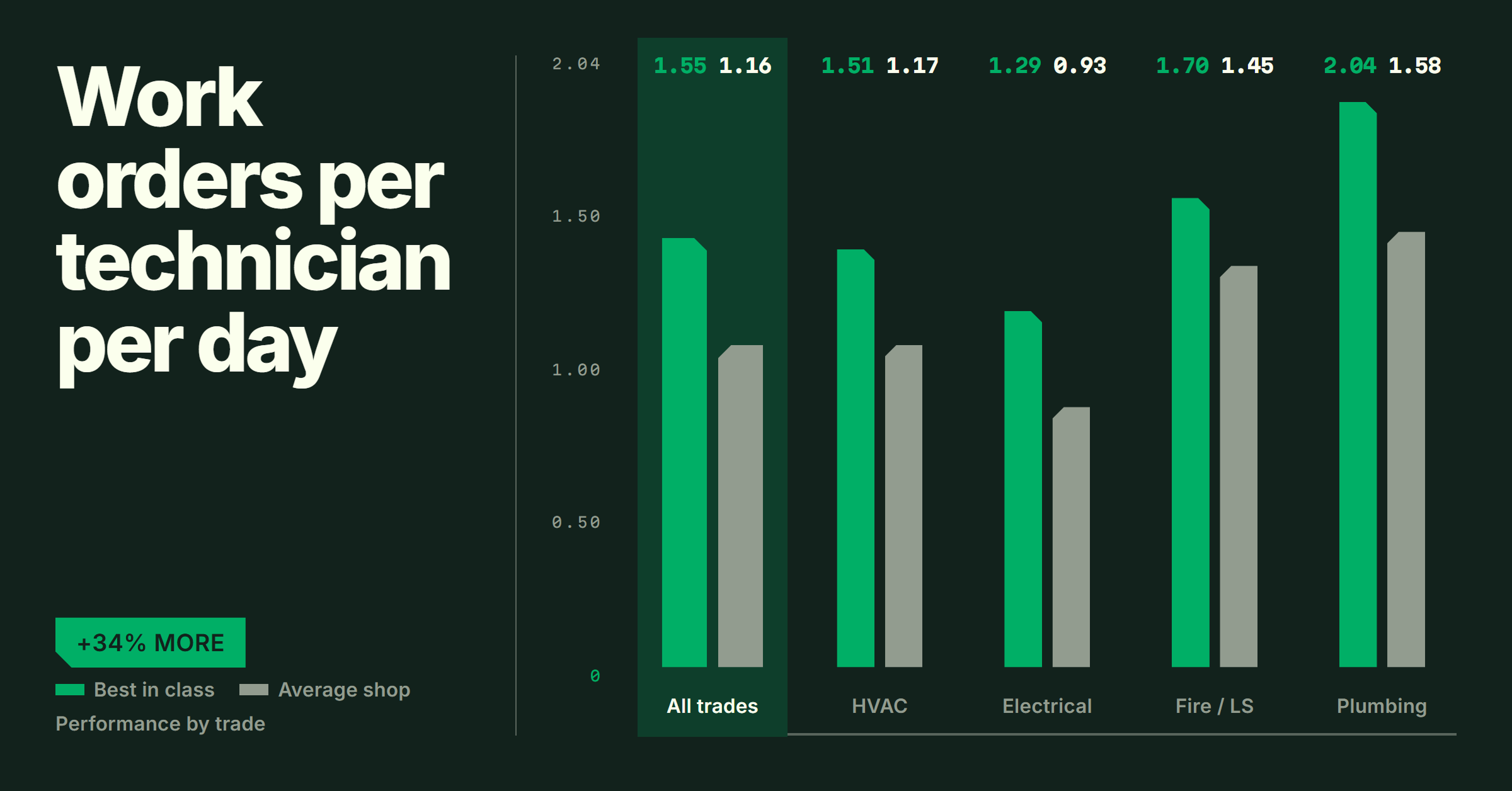
A 34% gap in daily completed work separates average and best-in-class commercial contractors. See how small dispatch mistakes compound across a full crew and year.
What would 34% more completed work each day look like for your crew?
According to the Torque 2026 Commercial Contractor Benchmark Report, the average commercial contractor on BuildOps completes 1.16 work orders per technician per day. Best-in-class contractors complete 1.55.
One day might not mean much, but across a whole crew, consistently, the value starts to add up in a real way.
For a 20-technician team working 250 days a year, the benchmark translates to approximately 5,800 completed work orders at the average rate versus 7,750 at the best-in-class rate—a difference of roughly 1,950 completed work orders annually.
That is capacity your business may already have, it’s just getting lost between jobs.
It’s bigger than an empty time slot
Commercial work is complex. A work order may represent a multi-day visit, a maintenance event, or a job requiring specific skills and certifications. That makes volume less useful than a like-for-like view of how effectively your team moves work through the day.
The benchmark points to three common sources of lost daily capacity:
- Dead time between jobs
- A mismatch between the technician and the required skills
- Callbacks that consume a schedule slot without producing a new completion
Each issue can look like an unavoidable part of the day. Together, they create a system that keeps technicians busy without keeping the board productive.
A technician driving across town, waiting for information, or returning to correct avoidable work may still appear fully scheduled. But a full schedule is not the same as an efficient one. The question is not simply whether every hour is occupied. It is whether the day is organized to turn available technician time into completed work.
Small gains compound across the year
Increasing completed work does not require every technician to do dramatically more work every day. Small, repeatable gains can add up quickly when they are sustained across the crew.
One better route, one fewer unnecessary return trip, one more accurate skill match, one callback prevented before it takes a slot; these are all small wins that create big gains when that same improvement repeats across hundreds of workdays.
Start by looking a the board you already have, and measuring where the day goes
Track completed work orders per technician per day for one month. Then separate the days and visits affected by travel, skill mismatches, scheduling conflicts, and rework. This gives you a more useful diagnosis than a simple utilization percentage.
A few questions can reveal where capacity is leaking:
- How much time is spent traveling between visits that could have been grouped more efficiently?
- Are technicians being assigned work that matches their skills and certifications?
- How often does a callback take the place of a planned visit?
- Which jobs remain open because the schedule, information, or assignment was not ready?
The goal is not to squeeze more from your team. It is to remove the friction that prevents qualified technicians from completing the right work at the right time.
The board is a ticket to growth
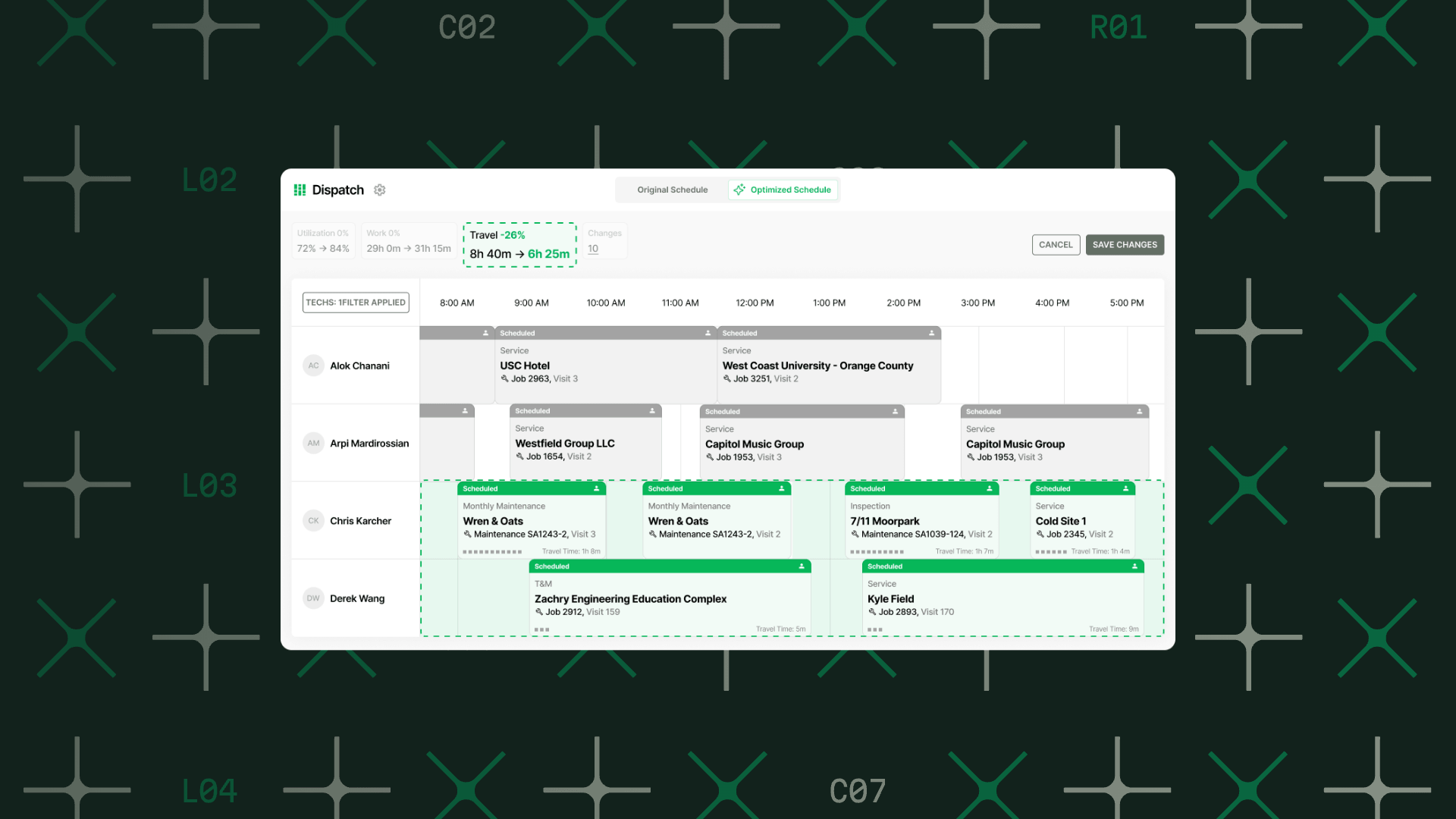
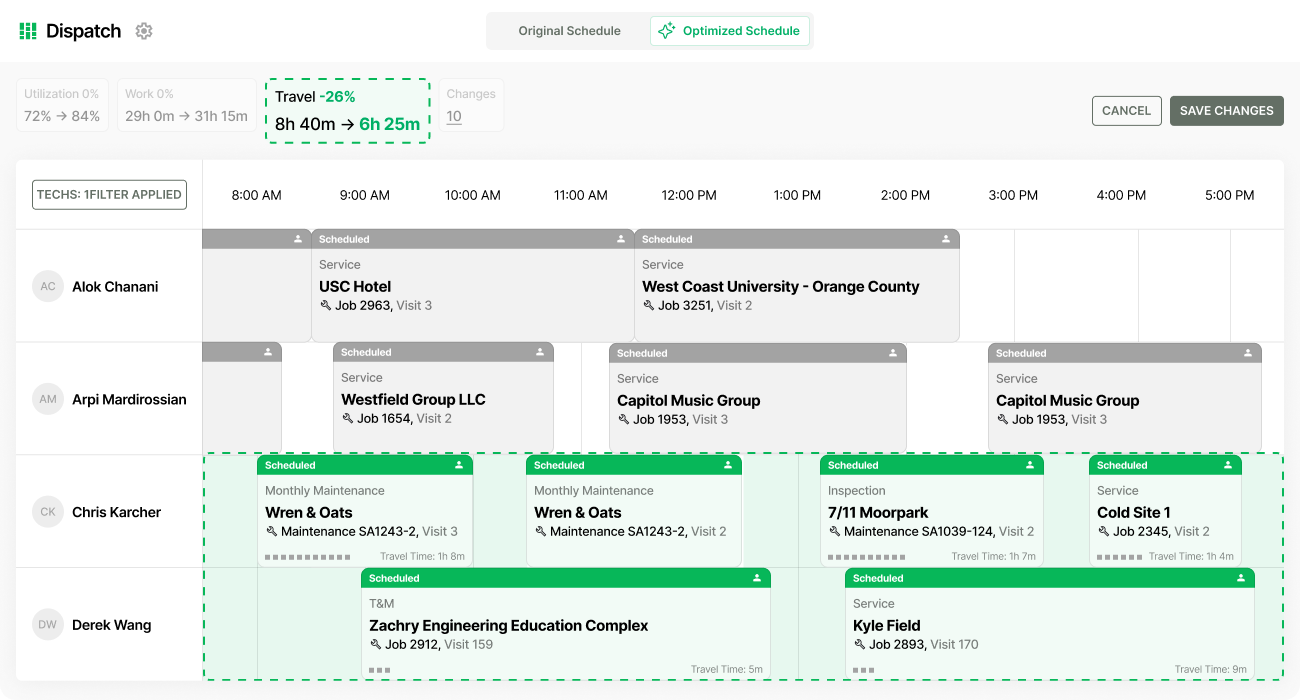
A dispatch board should do more than show where technicians are. It should help your team make better assignment decisions, protect customer commitments, reduce avoidable travel, and turn more available capacity into completed work.
Because small gains compound across a full crew, across a full year, and eventually, across the growth your operation is equipped to take on.