Choosing the Best FieldEdge Alternatives for Your Team

FieldEdge is a well-known field service management software that helps SMB and mid-market contractors manage quoting, scheduling, dispatching, and invoicing from a single dashboard.
With features like a unified dispatch board and real-time technician visibility, it provides helpful day-to-day scheduling and dispatching capabilities. As your field service management business grows into larger, longer-term, or multi-property projects, its limited CRM functionality, basic reporting, and lack of dedicated marketing, lead generation, and service agreement management may start to feel restrictive.
To help you evaluate your options and make a confident switch to a FieldEdge alternative, we cover the following:
- 5 questions when choosing a software alternative
- Top 10 FieldEdge alternatives with field service management
- 6 migration strategies for switching from FieldEdge
- 4 important FieldEdge alternatives FAQs answered
To start, let's walk through the key criteria you should weigh before comparing platforms, so you know exactly what to look for when evaluating FieldEdge competitors side by side.
5 questions when choosing a software alternative
Your FieldEdge alternative should easily handle your everyday essentials—quoting, scheduling, dispatching, and invoicing. But if you’re seriously shopping around, you’re likely bumping up against FieldEdge’s limits.
FieldEdge is a solid fit for small and mid-sized trade businesses. It keeps the wheels turning for day-to-day operations. But once you start taking on bigger projects, managing more properties, or needing clearer insight into performance, you’ll need software that can actually keep pace.
Here’s how to evaluate FieldEdge competitors and spot a platform that will scale with you.
1. Is it built for commercial projects, residential work, enterprise, or your specific project level?
Choose a field service management solutions platform that fits your operation's size and complexity. Ideal for SMBs with high daily call volume, FieldEdge can fall short for growing commercial and enterprise teams that need deeper project management, multi-property support, and tighter operational controls. Pick a system that matches your main market so it scales with where your business is headed.
Questions to ask yourself about this when looking for an alternative:
- Is the tool designed for commercial, residential, general, enterprise, or some other type of work?
- Can the system handle your projects and workflows without being too complex for what you need?
- Will this tool work for all team members that will need to use it?
- Can this platform scale alongside your business as you take on larger or longer-term projects?
2. Is it specifically compatible with the industry niche you work in?
Each trade has its own compliance rules, workflows, and field realities. FieldEdge supports HVAC, plumbing, and electrical contractors, but its feature set stays fairly general — missing the deeper, trade-specific tools that specialized HVAC-R, fire protection, or refrigeration teams rely on to manage on-site field services efficiently.
Choose a platform with workflows tailored to your trade, so your team finishes jobs faster and avoids clunky workarounds.
Questions to ask yourself about this when looking for an alternative:
- Does the tool have functionality and features suited to my industry?
- Does this provider have a page on their website dedicated to my particular industry?
- Are they able to showcase product use cases that are specific to my industry?
3. Does it have the features you need to manage your customers and projects?
Prioritize capabilities based on your day-to-day needs and the types of customers you serve. Things like field service CRM software, reporting, invoicing, scheduling, dispatch, and service management tools are all critical to keeping operations running smoothly.
Pick a tool with your must‑have features and, if needed, add‑ons like field tracking or route optimization. FieldEdge may lack the depth needed for CRM, marketing, and lead gen. Choose a platform with strong built‑in tools for growth and long‑term customer relationships.
Questions to ask yourself about this when looking for an alternative:
- Does this have the core features I need?
- Does it have the higher-level or top-tier features I need, either built in or as add-ons?
- Are the base features easy enough to use that I'll be able to train my whole team effectively?
- Are these features actually available now, or is the sales team making promises based on things still "in development"?
4. What kind of tool implementation and customer support am I going to receive?
During onboarding, you'll need the software team's support to train your staff and migrate your existing systems. Without a dedicated specialist, this transition can drag on for weeks or months and disrupt your operations.
In field service, downtime leads to lost business, dispatching errors, and bad data. Make sure any tool you evaluate offers clear documentation and responsive support that can quickly resolve issues when they arise.
Questions to ask yourself about this when looking for an alternative:
- Is the new software offering me a person dedicated to my account that can help me through the transition?
- How available will their customer service team be later on?
- Are they going to bail on me the second they make the sale and not stick around through the migration process?
5. How hard is it going to be to transition to this new system?
If you're switching from FieldEdge, you need a tool that's easy to migrate to, lets you bring over what already works, and then improves the areas that weren't cutting it. If your accounting already runs on QuickBooks, look for field service management software compatible with QuickBooks so your financial data stays synced without extra workarounds.
Questions to ask yourself about this when looking for an alternative:
- Does the new tool have the customizations I need to bring in my workflows and other critical information?
- Do I have any data the new tool can't take in, and am I losing anything critical in the migration?
- Is the time it takes to make this transition going to make up for itself in operational efficiency later?
- How can I measure how much time the new system will save me once I get it up and running?
Top 10 FieldEdge alternatives with field service management
Switching platforms is a significant commitment, and getting it wrong can cost your team time, money, and momentum. To help you land on the best fit, we break down the top FieldEdge competitors below, highlighting what each one does well and where they stand out.

1. Best for commercial projects: BuildOps

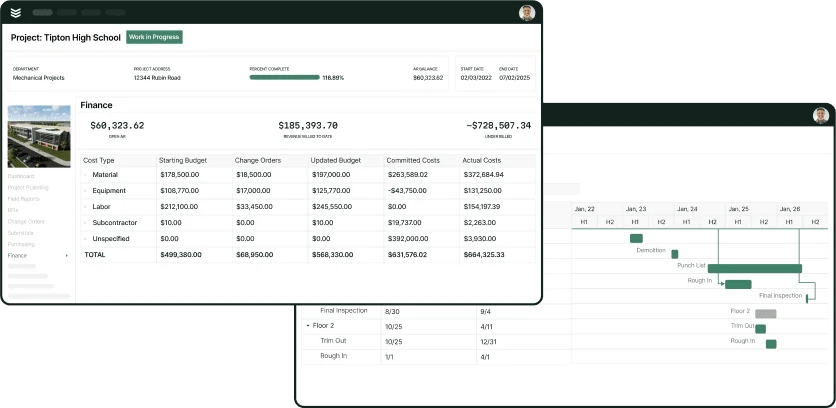
BuildOps is your command center for the entire operation—now powered by AI. Run projects faster, with more control, and zero guesswork. Purpose-built for commercial contractors, BuildOps combines deep industry know-how with intelligent automation to handle the complex demands of construction and field service teams.
From AI-assisted scheduling and smarter recurring service management to streamlined invoicing, payments, and real-time job costing, BuildOps keeps your workflows tight, your teams aligned, and your cash flow predictable—so you stay on track and get paid on time, every time.
Cost: Schedule a demo to get a custom quote
Capterra Rating: 4.6/5
Standout Feature: BuildOps unifies field service and projects on one AI‑powered platform, making it easy to manage recurring work and long‑term customer relationships across repairs, preventative maintenance, installation, and construction projects.
Why It's Best For Commercial: FieldEdge is designed for SMBs and mid-market service businesses, handling day-to-day scheduling and dispatching well at that scale. BuildOps is a dedicated ERP engineered to handle the full complexity of commercial operations, from enterprise customers managing large teams across multiple locations to contractors juggling dozens of active projects at once.
Link To a Platform Tour: Schedule a no-pressure demo.
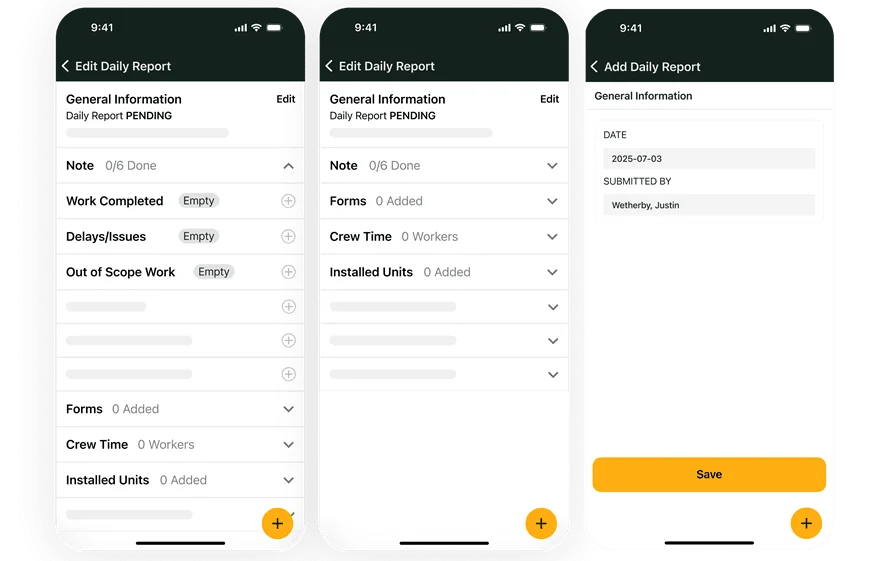
What BuildOps has that FieldEdge doesn't: FieldEdge handles quoting, scheduling, and dispatching from a single dashboard, but it's built for SMBs and mid-market teams — not complex commercial work. BuildOps is purpose-built for commercial field service, with AI-powered Smart Dispatch, advanced service agreement management, and custom reporting across every field — capabilities FieldEdge doesn't offer at any tier.
A) A specialized field service ERP designed for commercial clients
FieldEdge handles scheduling, dispatching, and invoicing well for small to mid-sized service businesses, but it's a general-purpose FSM tool — not a platform engineered for the scale and complexity of commercial construction.
BuildOps is a field service ERP designed to handle the needs of enterprise companies that have a wealth of clients (and data) and need a robust reporting tool to help them understand these customers.
We're made for construction professionals and poised to help organizations keep their businesses running smoothly and efficiently.
B) Robust reporting & analytics that drive deeper insights
FieldEdge includes performance dashboards and profitability insights, but the depth of its reporting is limited. You won't find granular technician performance data, estimated conversion rates by business unit or lead source, or the ability to slice data across every dimension of your operation.
BuildOps, on the other hand, understands the critical importance of custom reporting, and lets you generate a report from every single field in our platform. These powers insights that enable your team to make decisions with extreme confidence every time.
C) Establish recurring service agreements with commercial clients
FieldEdge's basic plan includes built-in service agreements tied to quoting, and its Premier plan adds automated renewals and tracking.
However, these tools are designed for SMB-scale recurring maintenance — not the complex, multi-property commercial maintenance contracts that larger operations require.
As an FSM designed specifically for commercial clients, BuildOps has dedicated capabilities for managing service agreements, helping teams establish workflows that keep operations running smoothly (and payments coming in on time!).
D) Seamless scheduling & dispatching to make sure operations stay on track
FieldEdge's unified dispatch board is one of its strongest features, giving dispatchers clear visibility into technician availability, job status, and open slots from a single screen.
Anyone looking for an alternative is going to want capabilities that match or exceed that standard.
Here at BuildOps, we understand that some techs are better qualified for certain jobs. Our job is to empower you to assign the best individual to the best job to help you maximize your operational output and increase productivity.
Our Smart Dispatch board empowers you to do just that, allowing you to leverage your team's skillsets and availability for greater success.
Toggle between Assigned and Unassigned views with a single click to gain instant access to technician availability, so you can fill open slots and improve productivity.
2. Best for residential: Jobber
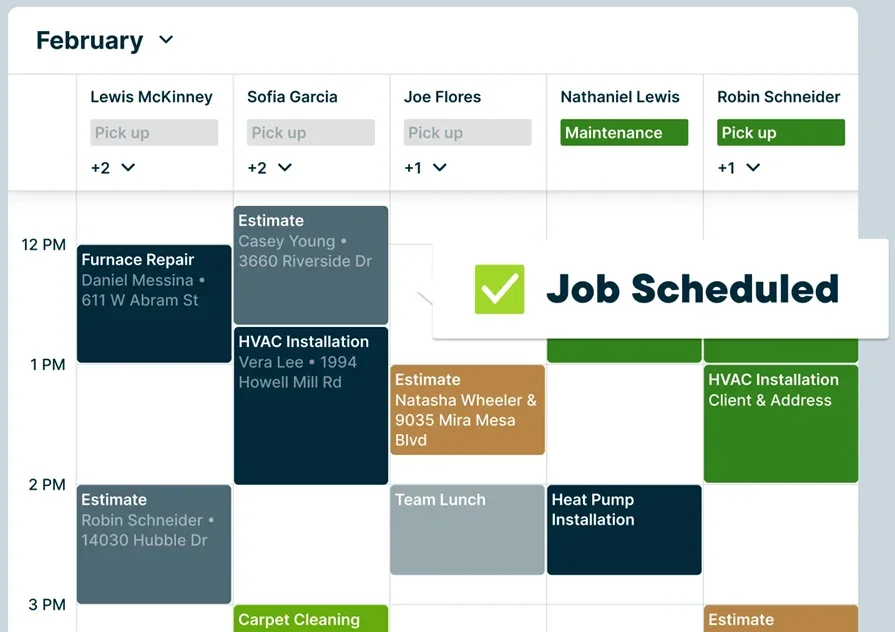
Jobber is a field service platform trusted by over 350,000 home service professionals, bringing together quoting, scheduling, dispatching, invoicing, and payments in a clean, intuitive interface.
It also includes tools you won't find in FieldEdge, like a built-in website builder with SEO, a marketing suite with automated review requests and referral programs, and Jobber AI for voice-powered quoting and scheduling. However, its focus on home service and small business workflows means it may lack the depth commercial contractors need for managing complex, multi-phase projects.
Cost: Core at $19/mo (1 user), Connect at $65/mo (1 user), Grow at $97/mo (1 user), or $299/mo (10 users), Plus starting at $344/mo (15 users). Annual billing available at lower rates.
Capterra Rating: 4.6/5
Standout Feature: Jobber's CRM is designed to help teams manage clients from their very first interaction, from generating leads and closing jobs to increasing profits and managing customers throughout their lifetime.
Why It's A Good FieldEdge Alternative: FieldEdge and Jobber both serve the trades, but Jobber is made for tradespeople who want to spend less time on admin and more time on the jobs themselves. If you're moving away from FieldEdge because you want a simpler, more intuitive tool with built-in marketing capabilities for residential work, Jobber delivers exactly that.
What Jobber has that FieldEdge doesn't: Jobber includes a full marketing suite with automated Google review requests, referral programs, and email campaigns, plus Jobber AI Voice, which lets techs create quotes, update schedules, and send messages using just their voice while they're in the field.
3. Best for general contractors: Workiz
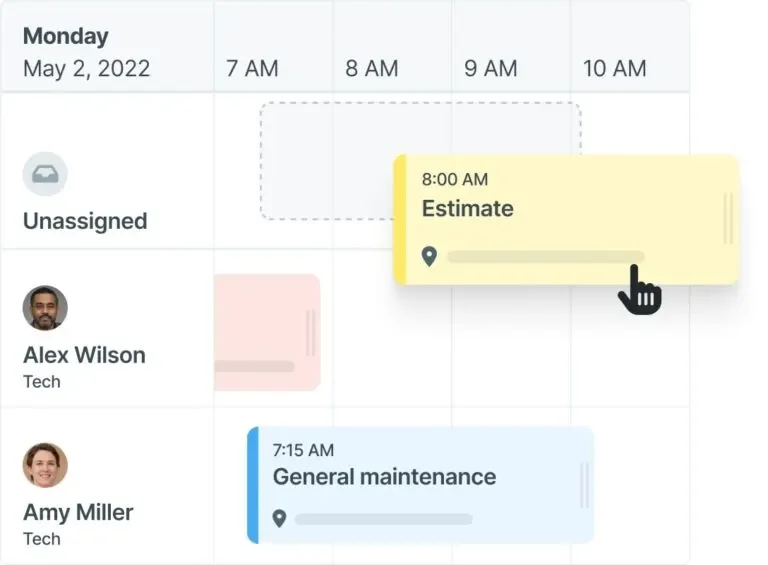
Workiz is an FSM platform trusted by over 120,000 field service professionals, positioning itself as "built by the pros for the pros."
Their system brings together scheduling, dispatching, invoicing, CRM, inventory management, and a full built-in phone system with AI-powered call answering, all from a single dashboard.
However, because of its focus on small businesses and general contractors, its offerings may not be comprehensive enough to serve commercial contractors managing complex, multi-phase projects.
Cost: Free tier available with limited features (includes basic scheduling, mobile app, and up to 20 invoices, jobs, & estimates); paid plans require contacting Workiz for custom pricing
Capterra Rating: 4.4/5
Standout Feature: Workiz Genius Answering is an AI-powered call answering and dispatching tool that picks up missed or overflow calls 24/7, books jobs, answers customer questions, and handles dispatching, so you never lose a lead to voicemail.
Why It's A Good FieldEdge Alternative: Workiz caters to growing field service businesses that need an affordable, easy-to-implement platform with strong communication tools. FieldEdge lacks built-in phone capabilities and AI-powered lead capture — Workiz fills that gap directly.
What Workiz has that FieldEdge doesn't: Workiz offers an AI-powered communication suite that FieldEdge doesn't, including a built-in phone system with call recording and masking, 24/7 AI call answering and job booking, automatic AI lead capture from emails, and AI call insights.
4. Best for revenue-driven teams: ServiceTitan

ServiceTitan is a project management and FSM platform trusted by over 100,000 contractors across both residential and light commercial trades.
It covers a wide range of industries, from traditional ones like HVAC, plumbing, and electrical to specialized niches like roofing, garage doors, pest control, irrigation, painting, and chimney sweep. With dedicated solutions for service & replacement, construction, and enterprise operations, ServiceTitan helps teams get a platform customized to their unique needs.
Cost: Starter, Essentials, and The Works packages available. Per-technician pricing; contact directly for a custom quote.
Capterra Rating: 4.4/5
Standout Feature: ServiceTitan's Adaptive Marketing solution ties your ad spend directly to incoming revenue, showing you in real time which campaigns are driving calls and which are wasting budget, so you can optimize every marketing dollar.
Why It's A Good FieldEdge Alternative: One of FieldEdge's biggest gaps is the absence of marketing, sales pipeline management, and lead generation capabilities. ServiceTitan fills that gap head-on with a full CRM and sales management suite, including pipeline management, deal tracking, quotes and proposals, and sales insights and reporting — all as part of their core product offering.
What ServiceTitan has that FieldEdge doesn't: ServiceTitan includes robust CRM and sales management capabilities with pipeline visualization, deal tracking, automated sales plays, and sales performance reporting — none of which FieldEdge offers.
It also features Atlas, an AI-powered assistant that helps techs troubleshoot equipment, find parts, and pull manuals directly in the field.
Check out our feature comparison of how BuildOps and ServiceTitan stack up against each other.
5. Best for customer-focused teams: FieldPulse
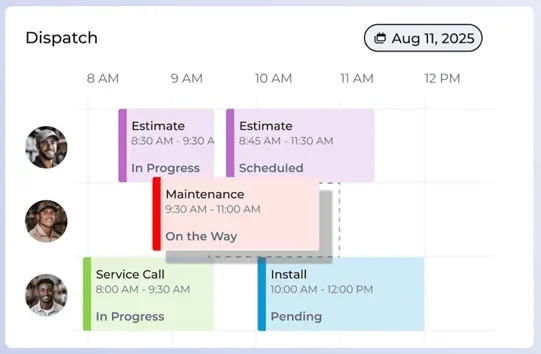
FieldPulse is an FSM platform that excels at CRM, analytics, and workflow customization, helping teams manage their customers and operations from a single, adaptable system.
They serve a wide range of industries, including HVAC-R, electrical, plumbing, garage door, locksmith, property management, appliance repair, commercial equipment, and fire and security.
With over 60 prebuilt reports, custom workflow automation, and a dedicated customer portal, FieldPulse gives teams deep visibility into every aspect of their business.
Cost: Essentials, Professional, and Enterprise packages available. Per-technician pricing; contact directly for a custom quote.
Capterra Rating: 4.6/5
Standout Feature: FieldPulse's Dashboards & Reporting engine includes over 60 prebuilt reports and the ability to create custom reports, giving you granular visibility into scheduling, job costing, customer trends, and team performance without needing to upgrade to a higher tier.
Why It's A Good FieldEdge Alternative: FieldEdge has a basic CRM that lets you manage customer records and track service history, but FieldPulse takes customer relationship management several steps further with a fully integrated CRM, custom workflows that adapt to your specific processes, and a customer portal that lets clients book appointments, approve proposals, and pay invoices on their own.
What FieldPulse has that FieldEdge doesn't: FieldPulse's Operator AI is a 24/7 AI-powered dispatcher that answers phone calls, books appointments, and handles after-hours requests — a capability FieldEdge doesn't offer.
FieldPulse also includes Engage, a built-in VoIP phone system that keeps personal numbers private and stores all customer voicemails and text messages inside the app, along with a Sales Suite and custom workflow builder that FieldEdge lacks.
Compare how BuildOps stacks up against FieldPulse.
6. Best for high-volume service teams: Service Fusion
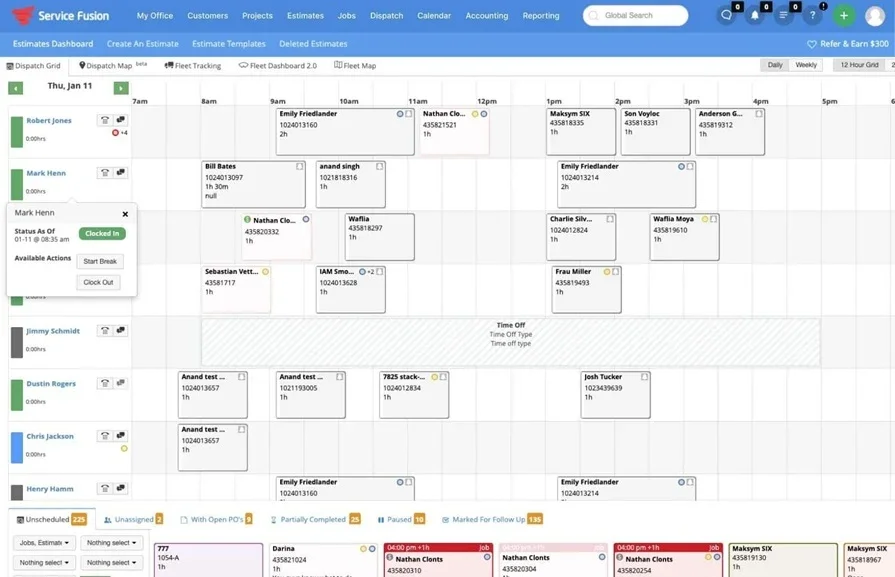
Service Fusion is an FSM platform trusted by over 6,500 customers and 40,000+ active users, with more than 5 million jobs created annually on the platform.
It covers a wide range of trades — from HVAC and plumbing to solar, roofing, carpet cleaning, and concrete — and offers scheduling & dispatch, estimate creation, customer management, GPS fleet tracking, invoicing & payments, and a technician mobile app, all from a single dashboard.
Its flat-rate pricing with unlimited users makes it especially attractive for teams running a high volume of daily service calls. However, its reporting depth and lack of dedicated marketing or lead generation tools may limit teams that need more than core FSM functionality.
Cost: Tiered plans (Starter, Plus, Pro) with flat monthly rates and unlimited users. Annual plans available at discounted rates.
Capterra Rating: 4.5/5
Standout Feature: Service Fusion's unlimited-user pricing model means growing teams can add dispatchers, techs, and office staff without per-seat cost increases — a significant advantage for high-volume operations scaling headcount quickly.
Why It's A Good FieldEdge Alternative: FieldEdge's per-user pricing can become expensive as your team grows. Service Fusion removes that barrier entirely with flat-rate plans that include unlimited users, making it a strong fit for high-volume service teams that need to scale without watching their software bill climb with every new hire.
What Service Fusion has that FieldEdge doesn't: Service Fusion includes ServiceCall.ai, a built-in VoIP phone system designed for service contractors, along with FusionPay for integrated payment processing and homeowner financing options — none of which FieldEdge offers natively.
7. Best for growing teams: Housecall Pro
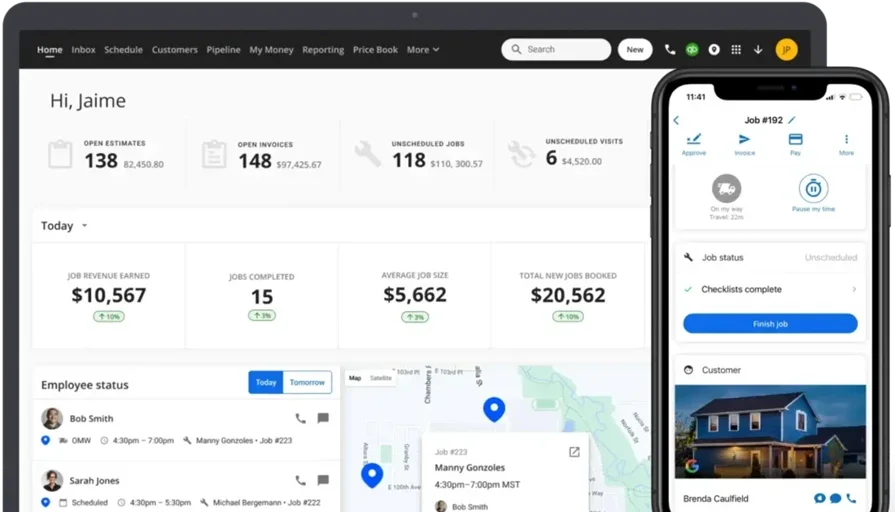
Housecall Pro is a popular field service management platform trusted by over 200,000 pros, with more than 100 million jobs completed on the platform.
It brings together scheduling, dispatching, invoicing, and payments in a clean, mobile-friendly interface, and also includes built-in review management, a customer-facing booking portal, and an AI team that handles calls, books work, and manages admin around the clock.
However, its focus on smaller-scale residential operations means it may lack the depth needed for teams managing complex commercial projects or multi-property service agreements.
Cost: Basic at $59/mo (1 user), Essentials at $149/mo (1–5 users), MAX pricing at $299/mo (up to 8 users)
Capterra Rating: 4.7/5
Standout Feature: Housecall Pro's online booking portal lets customers schedule appointments directly from your website or Google Business Profile, reducing back-and-forth communication and helping growing teams capture new business without adding admin overhead.
Why It's A Good FieldEdge Alternative: FieldEdge lacks built-in marketing and customer engagement tools entirely. Housecall Pro fills that gap with automated Google and Facebook review requests, email marketing campaigns, and a branded online booking page — all included without needing third-party add-ons.
What Housecall Pro has that FieldEdge doesn't: Housecall Pro includes a full AI team — including a Customer Service Rep AI that answers calls and books jobs 24/7 — along with built-in review management, email marketing, online booking, and business coaching.
FieldEdge doesn't offer any of these marketing, AI, or lead generation capabilities.
See how Housecall Pro stacks up against BuildOps.
8. Best for cross-functional teams: mHelpDesk
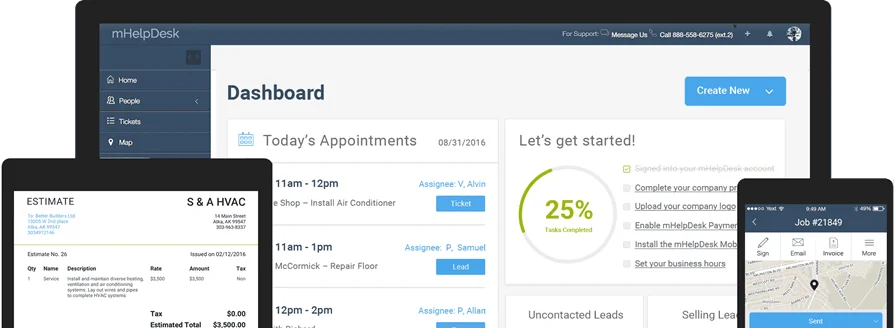
mHelpDesk serves a wider mix of industries than most FSM platforms, from construction and trades to healthcare, hospitality, education, utilities, real estate, and insurance.
This broad experience helps them support cross-functional teams and uncover productivity insights, but it also means they may lack the deep, purpose-built workflows that dedicated construction and trades contractors need.
Cost: Contact directly for a quote
Capterra Rating: 4.3/5
Standout Feature: Personalized onboarding means setup is tailored to your specific business from day one. mHelpDesk starts early with a pre-launch review process, then assigns personal trainers to help your team learn and adapt to the new solution quickly so you can realize its full potential right away.
Why It's A Good FieldEdge Alternative: FieldEdge focuses primarily on HVAC, plumbing, and electrical contractors. If your team operates across multiple service lines or departments — or handles non-traditional verticals alongside core trade work — mHelpDesk delivers the versatility that FieldEdge's narrower focus can't match.
What mHelpDesk has that FieldEdge doesn't: mHelpDesk caters to far more niche and non-traditional industries than FieldEdge, including fencing, flooring, landscaping, painting, pools, insulation, home media, IT, security, solar, windows & doors, tree removal, and more — giving cross-functional teams a single platform that covers all their verticals without needing separate tools for each.
9. Best for lean teams: Kickserv
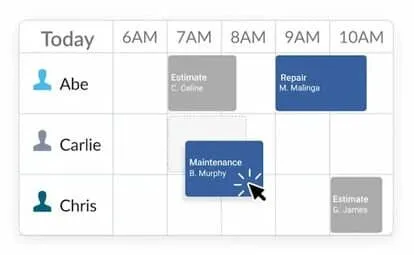
Kickserv is an FSM platform that streamlines estimating, job management, invoicing, and CRM in one easy-to-use system.
With built-in online payments via credit card, Apple Pay, and Google Pay, it speeds up billing so small teams can quote accurately, stay on schedule, and get paid on time.
Cost: $60/mo for 5 users, $119/mo for 10 users, and $199/mo for 20 users
Capterra Rating: 4.4/5
Standout Feature: Kickserv's Customer Center is a self-service portal where customers can request services, approve estimates, track job progress, and make payments on their own — reducing admin overhead for lean teams that don't have dedicated office staff.
Why It's A Good FieldEdge Alternative: FieldEdge is designed for SMBs and mid-market teams, but its pricing requires contacting sales for a custom quote, and its feature set can feel like more than a small crew actually needs. Kickserv covers the core FSM essentials with transparent, affordable pricing that's purpose-built for lean teams looking to streamline operations without the complexity.
What Kickserv has that FieldEdge doesn't: Kickserv lets you organize customers and jobs with tags, colors, and icons, then find them instantly using smart search and filters — a visual organization system that makes it faster to locate records and manage your pipeline compared to FieldEdge's standard interface. It also offers a Customer Center self-service portal that FieldEdge doesn't include.
10. Best for project-focused teams: Knowify
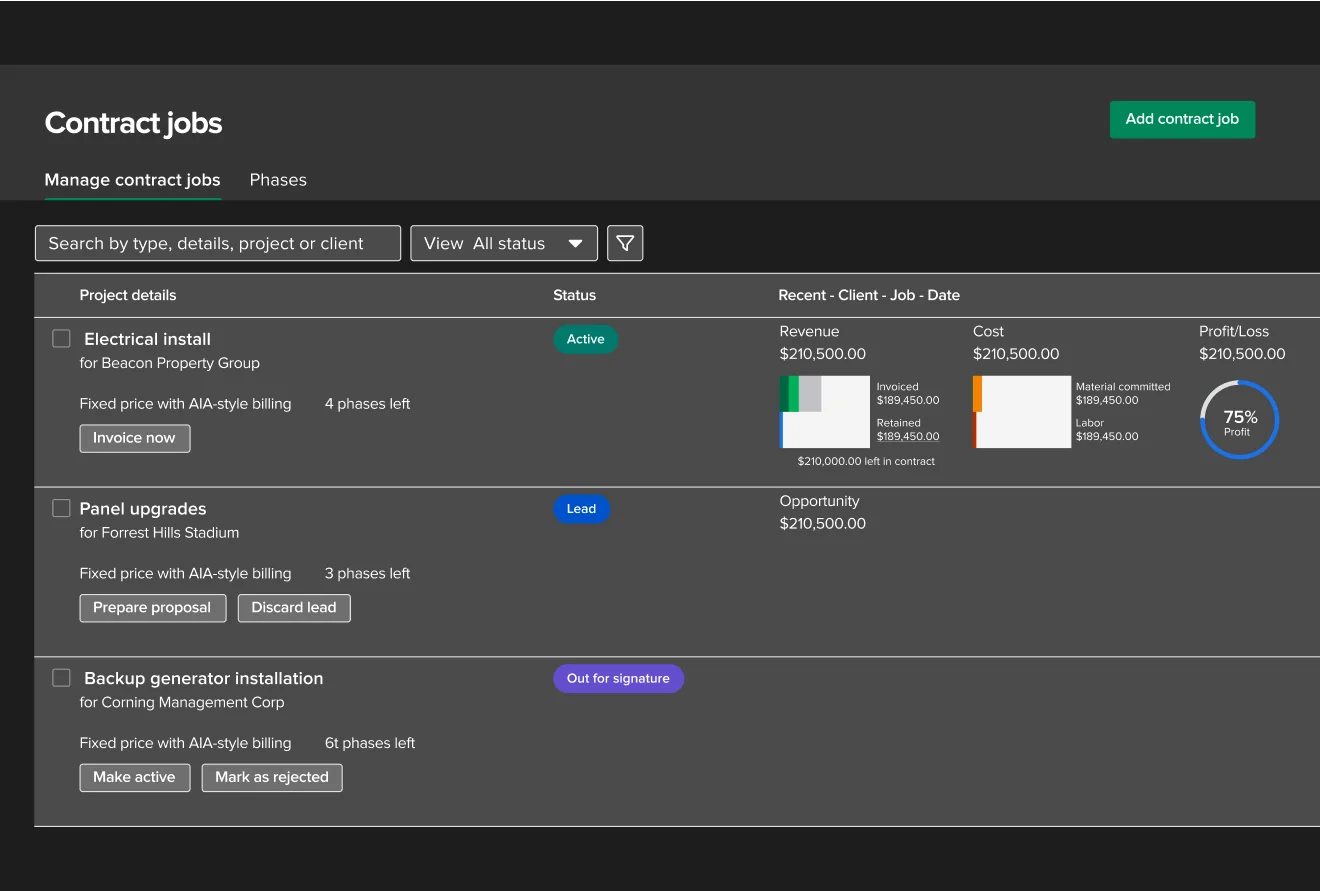
Knowify is a construction management platform for trade contractors that centralizes estimating, project management, time tracking, and accounting in one workflow.
It provides clear job costing and budget visibility, and its built-in QuickBooks integration — rated the #1 QuickBooks integration in construction — keeps your books synced without double entry.
Cost: Plans start at $99/month; contact for a custom quote
Capterra Rating: 4.5/5
Standout Feature: Knowify's job costing engine lets teams track budgeted vs. actual costs in real time across labor, materials, and subcontractor expenses — so you always know exactly where a project stands financially before it's too late to course-correct.
Why It's A Good FieldEdge Alternative: FieldEdge handles scheduling and dispatching well for day-to-day service calls, but it doesn't give project-focused teams the depth of job costing, budget tracking, and contract management they need to stay profitable on longer or more complex jobs. Knowify fills that gap directly, giving teams granular financial visibility into every project without needing to piece together data from multiple systems.
What Knowify has that FieldEdge doesn't: Knowify includes dedicated contract management with AIA-style billing, change order tracking, RFIs & submittals, and progress invoicing — capabilities that FieldEdge doesn't offer.
For teams that manage projects with multiple phases, subcontractors, or milestone-based payments, this level of financial control is a significant operational advantage.
Check out our comparison breakdown of Knowify vs BuildOps if you want to learn about them more closely.
6 migration strategies for switching from FieldEdge
Organizations outgrowing FieldEdge are usually looking for what it just doesn’t offer—deeper CRM, stronger reporting, real marketing tools, and robust agreement management—so migration is never a simple 1:1 swap. You'll move your data and restructure it to fully benefit from the new system, keeping your field service operations running smoothly throughout the transition.
Below, we look at six essential migration tips when switching to a FieldEdge alternative.
1. Outline all essential steps and determine a realistic timeline
Migration to a modern platform doesn’t happen overnight—but it’s worth doing right. Move fast, protect your data, and fine-tune your setup so everything runs smoothly and you’re ready to unlock your new system’s full power.
Teams need to make a realistic plan that considers how long it will take to install the new system, migrate your data, train your team, and establish ongoing maintenance routines, guiding the migration process and keeping it on track.
2. Appoint a team and designate clear responsibilities
Set up your data and tools correctly from day one. Appoint a dedicated migration team that includes stakeholders from all key departments — including whoever manages your field service dispatching workflows — so that the final solution works for everyone on your team.
3. Automate the migration process as much as possible
Automate as much of your system migration as possible to quickly transfer all available data and customer information, even if you’re only moving a small amount — including field service invoicing records and billing history — making adjustments in your new system to leverage new features and capabilities.
4. Record and document the process for future reference
Ad-hoc fixes won’t scale. Document your entire migration and setup so you can repeat the process and quickly troubleshoot future issues. Treat this documentation the same way you'd approach field service reporting—structured, consistent, and accessible to your whole team so they can troubleshoot issues and keep your business running smoothly (with no down time).
5. Test and fix issues during the migration process
You don't want day-one issues that cause downtime or prevent you from using new features. Continuously test during migration to ensure data is in sync and all features work. Ensure you're measuring reliable field service metrics and KPIs that actually help you identify where your strengths and weaknesses are.
With all issues sorted out prior to launch, you'll be ready to get rolling and maximize your efficiency on day one.
6. Leverage customer support available from your vendor
Vendors know their products better than anyone and can help you get maximum value from every feature. Coordinate closely with their customer support team during onboarding and migration so they can streamline the process, properly map your data into their system, and help you use advanced customer profiles and organizational hierarchies.

4 important FieldEdge alternatives FAQs answered
Before you're ready to make your selection, there are a few more things to cover. Here, we answer some of the most commonly asked — and important — questions about choosing a FieldEdge alternative.
1. What are the main reasons people look for a FieldEdge alternative?
The main reason people look to replace FieldEdge is that they need capabilities the platform doesn't offer — particularly built-in marketing tools, dedicated service agreement management, and deeper custom reporting.
Onboarding and integration limitations are another common pain point: one user on G2 states that there is a "Lack of capabilities within one single dashboard, integrations are poorly connected and come at higher costs than competitors with little in house benefits".
Here at BuildOps, we provide an all-in-one solution with AI-powered reporting baked into everything we do — every single field can produce an accompanying report to help you analyze and optimize your performance.
2. How does field service software like FieldEdge work?
Field service management software like FieldEdge simplifies your team's operations by helping you create estimates, schedule jobs, dispatch techs, manage invoicing and payments, and maintain your client list. When used effectively, these tools help teams save time and improve operational efficiency.
3. What are the biggest factors that affect the price of FieldEdge competitor software?
There are several things that dictate the price of FSM software, from basic offerings to add-on features and available integrations. Below are the main factors:
- Number of users: Most tools price by the number of seats, so user count is a major cost driver.
- Available features & add-ons: A more robust feature set and advanced capabilities typically come at a higher cost.
- Industry specializations: Make sure the tool has functionality designed for your niche so you can manage workflows seamlessly.
- Setup & implementation: The time it takes to get up and running is critical — make sure you can onboard and get operational quickly.
While many variables influence price, they don't all carry the same weight — and every provider packages those variables in their own way. Ultimately, your job isn't to chase the cheapest option; it's to choose the software that aligns with how your business actually operates and what it genuinely needs.
4. How can I most effectively compare and price FieldEdge alternatives?
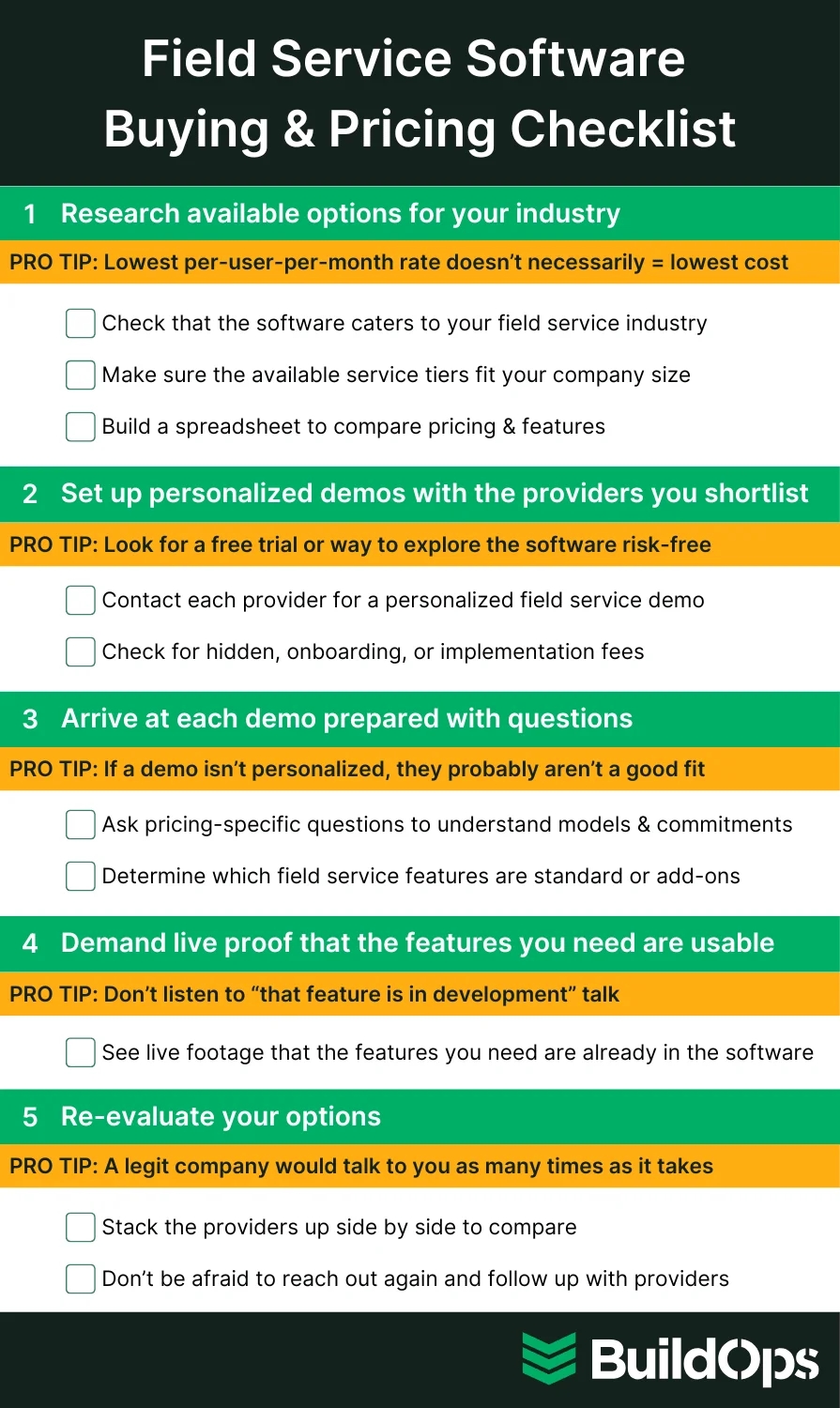
Ask the provider for a personalized, live demo focused on your real workflows and challenges, so they can show exactly which features help you most and avoid vague promises about features that may never ship.
Choosing a FieldEdge alternative is a critical decision that will shape how efficiently you manage operations and complete jobs. Research options that fit your industry and specific needs so you get the tools to work faster and more effectively. To do this, check out our guide on how to price field service software.
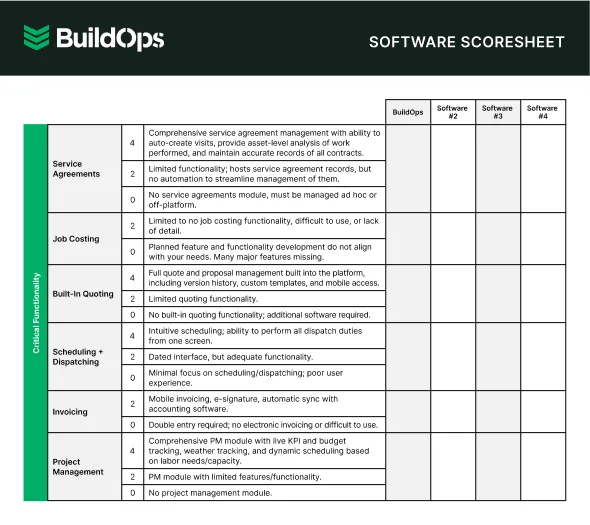
To make sure you have every step covered, we've developed a handy field service software buying and pricing checklist:
BuildOps is the modern, AI-powered operations platform built specifically for commercial service contractors—and a serious upgrade from FieldEdge. Designed for high-volume MEP teams, fire safety crews, refrigeration techs, and mechanical service teams.
BuildOps unites your office and field in one system, uses AI to surface real-time insights, crush manual data entry, and optimize every schedule, and streamlines workflows, so your team can deliver exceptional service at scale and grow faster than ever.