Master AI Predictive Construction Equipment Maintenance
Construction equipment will fail. The danger is when it fails mid-pour, mid-lift, mid-install, and your profit bleeds out in overtime, delays, and last-minute rentals. Fixed schedules and run-to-failure don’t see what’s happening inside the machine.
AI-powered predictive maintenance does. By reading live data from sensors, telematics, and job history, it flags issues before they become breakdowns, so your team can plan the fix instead of scrambling for it.
And when that intelligence is connected to your construction field service management workflow, it stops being a standalone insight and starts driving real operational decisions: smarter dispatching, tighter scheduling, and fewer emergency calls that blow up your margins.
In this guide, we'll cover:
- Why AI-powered predictive maintenance matters for construction companies
- How does AI predictive maintenance work?
- 5 benefits of AI-powered predictive maintenance for construction equipment
- How AI is used in predictive maintenance for construction equipment
- Examples of AI in construction equipment predictive maintenance
- Top 3 AI-powered predictive maintenance tools for construction equipment
Let's start with why predictive maintenance has become a priority for construction companies, and where traditional approaches fall short when your crews, assets, and schedules all live inside the same system.
Why AI-powered predictive maintenance matters for construction companies
Construction equipment never fails on your timeline. A blown hose or seized compressor doesn’t just cost a repair; it stalls crews and kills margin. AI-powered predictive maintenance spots failures before they hit, using live sensor data and machine learning so the job keeps moving.
Preventive vs predictive maintenance for construction equipment
Preventive maintenance runs on the calendar, not the condition of the machine itself. Every 500 hours or every quarter, the equipment gets serviced regardless of how it is actually performing. This approach helps reduce catastrophic failures, but it cannot reveal whether a component is still healthy or quietly approaching failure between those scheduled visits.
Predictive maintenance changes that approach entirely. It tracks the machine in real time, watching vibration trends, temperature spikes, and pressure changes, then flags issues based on what is happening in the field instead of on preset dates. In construction, where equipment moves from site to site and operates under constantly shifting loads, that difference often marks the boundary between a maintenance strategy that truly prevents downtime and one that merely delays it.
{{related-content-block="/resources/ai-construction-software"}}
How does AI predictive maintenance work?
At a high level, AI predictive maintenance follows four steps, each one building on the last to move your team from raw equipment data to a clear maintenance decision.
- Data collection: Sensors on your equipment capture vibration, temperature, pressure, and current draw in real time. That data feeds into a centralized system alongside maintenance history and runtime hours.
- Data processing & anomaly detection: Machine learning models baseline how each asset normally runs. When something drifts, a compressor running hot, a hydraulic pump cycling off-pattern, the system flags it before your crew ever notices.
- Failure prediction and diagnostics: The AI maps that anomaly against historical failure data to tell you what's likely to fail, why, and how much time you have. Not a generic alert. A specific diagnosis.
- Actionable alerts and scheduling: That diagnosis routes directly into your maintenance workflow, notifying the people who need to know, recommending a service window, and giving your team lead time to schedule downtime around the project instead of reacting to it.
The result: your maintenance decisions are based on what the equipment actually needs, not what the calendar says. That's where the operational benefits start compounding.
5 benefits of AI-powered predictive maintenance for construction equipment
When AI is applied to equipment maintenance, the payoff shows up in the places contractors feel most: uptime, labor efficiency, parts spend, and margin protection. Here are five benefits that matter on active construction jobs.
- Reduced unplanned downtime: AI detects early-stage failures such as bearing wear, hydraulic pressure drift, and abnormal motor draw before they shut a machine down mid-job. That means fewer emergency stops and fewer days lost waiting on repairs that could have been scheduled in advance.
- Lower maintenance and parts costs: Instead of replacing components on a fixed calendar regardless of condition, predictive models tell you what actually needs attention. You stop over-servicing healthy equipment and stop under-servicing machines that are degrading faster than the schedule assumes.
- Extended equipment lifespan: Catching small issues early, such as a compressor running hot or a pump cycling off-pattern, prevents the cascading damage that turns a minor fix into a major rebuild. Over time, that adds years of productive life to excavators, cranes, generators, and HVAC rooftop units.
- Smarter labor and crew allocation: When your team knows which machines need service and when, dispatchers can plan maintenance around project phases instead of reacting to breakdowns. Crews stay on productive work, and your maintenance techs are not pulled off scheduled jobs to handle emergencies.
- Stronger margin protection across contracts: Unplanned equipment failures do not just cost you the repair; they trigger overtime, rental fees, schedule penalties, and scope disputes. Predictive maintenance compresses that risk by giving you lead time to act, keeping project budgets intact and protecting the margins you bid on.
The operational shift here is straightforward: you move from reacting to equipment problems to preventing them, and every benefit above compounds the further you scale your fleet and your job count.

AI analyzes sensor data, runtime patterns, and historical failure records across your construction equipment fleet to flag components trending toward failure, giving your team time to schedule repairs, source parts, and avoid the unplanned downtime that derails active projects.
The top AI use cases in field service show how leading contractors are connecting predictive equipment insights to dispatching, documentation, and field execution to keep every job on track.
How AI is used in predictive maintenance for construction equipment
Contractors are already reshaping how they handle scheduling, documentation, estimating, and field execution with smarter tools and systems. The broader AI use cases in construction show how wide the impact has become.
In equipment maintenance specifically, advanced technology tackles a focused, high-stakes challenge: keeping machines running on active jobs where every hour of downtime costs money. Now, let’s look at some common use cases in predictive maintenance.
1. Real-time equipment condition monitoring and anomaly detection
AI constantly scans equipment sensor data and compares it to performance baselines. The moment patterns shift, it flags issues, often weeks before anyone on-site would notice.
For contractors, this quietly rewrites fleet maintenance. Instead of hoping techs spot problems, AI reveals wear and tear as it emerges in the data. Pairing this with equipment capture tools for field contractors that log asset details, photos, and service history at every visit gives your team a complete, real-time picture of every machine in the fleet, not a snapshot from the last scheduled inspection.
2. Maintenance-driven dispatching and scheduling
Once AI spots a part heading toward failure, it doesn’t pause. It pushes the job into your dispatching workflow, assigns the right tech, reserves the parts, and fits the service call around your project milestones, not the other way around.
This is where predictive maintenance connects to equipment dispatch software, the same platform coordinating operators and assets can now factor in predicted maintenance needs alongside daily job assignments. The result is fewer reactive scrambles, tighter crew utilization, and maintenance that happens on your terms instead of the machine's.
3. Workforce alignment and skills-based maintenance assignment
Predictive maintenance doesn’t fire off generic alerts; it flags specific issues and pairs them with the right tech. AI routes each predicted failure to the person with the skills, certifications, and proximity to fix it on the first visit. For contractors already facing a tight labor market and modernizing how they build and retain their workforce, that means fewer repeat trips and better use of every tech on the team.
Examples of AI in construction equipment predictive maintenance
Predictive maintenance data only matters if it changes how work gets executed. Here are three examples of how AI-driven equipment insights connect to the operational workflows contractors rely on every day.
Faster scheduling and assignment
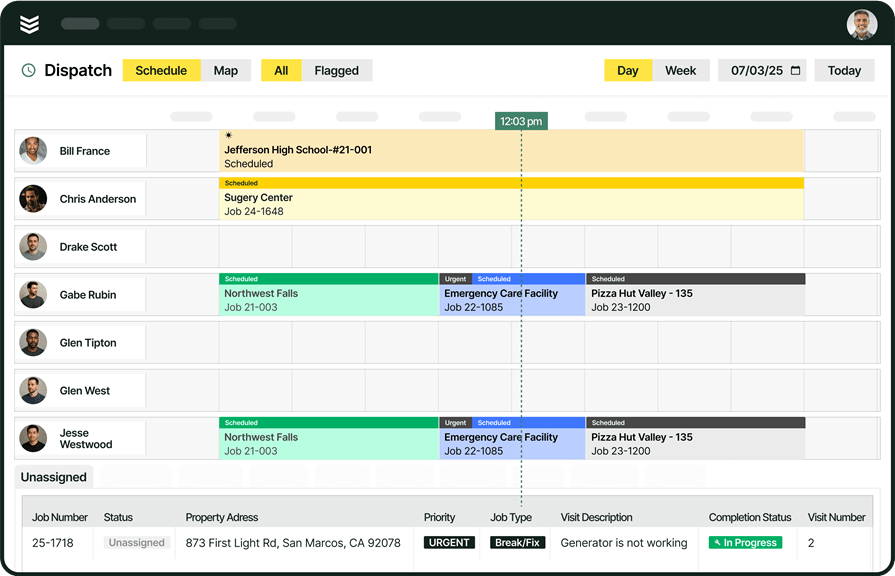
When AI spots a pump losing pressure or a motor pulling too much current, the work doesn’t wait for a failure. The platform assigns the right tech, fits the call between project milestones, and pushes it to the field in seconds, so maintenance protects the schedule instead of disrupting it.
Contractors using scheduling software and smart dispatch software built for commercial operations can route predicted maintenance tasks through the same board that manages daily service calls, so dispatchers aren't toggling between systems or rebuilding the day every time an equipment alert comes in.
Contractor quote comparison and compliance
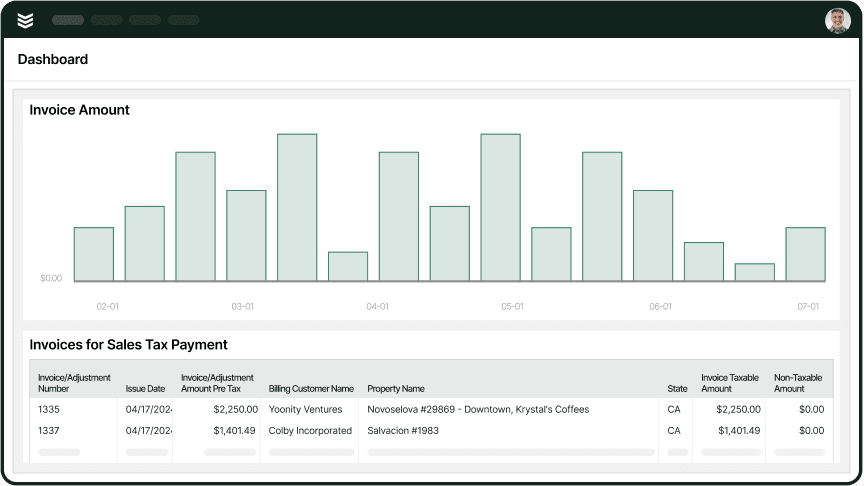
Predictive maintenance doesn’t just stop breakdowns; it gives you data to control costs. When AI flags a repair early, you can shop quotes, check prices against past jobs, and lock in terms before work starts, instead of paying whatever a rush job demands.
Connecting predictive insights to your invoicing, payments processing, and quote-to-contract workflows means the repair moves from diagnosis to documented, approved, and billed work, with full cost visibility at every step instead of a surprise on the P&L.
Asset management and tracking
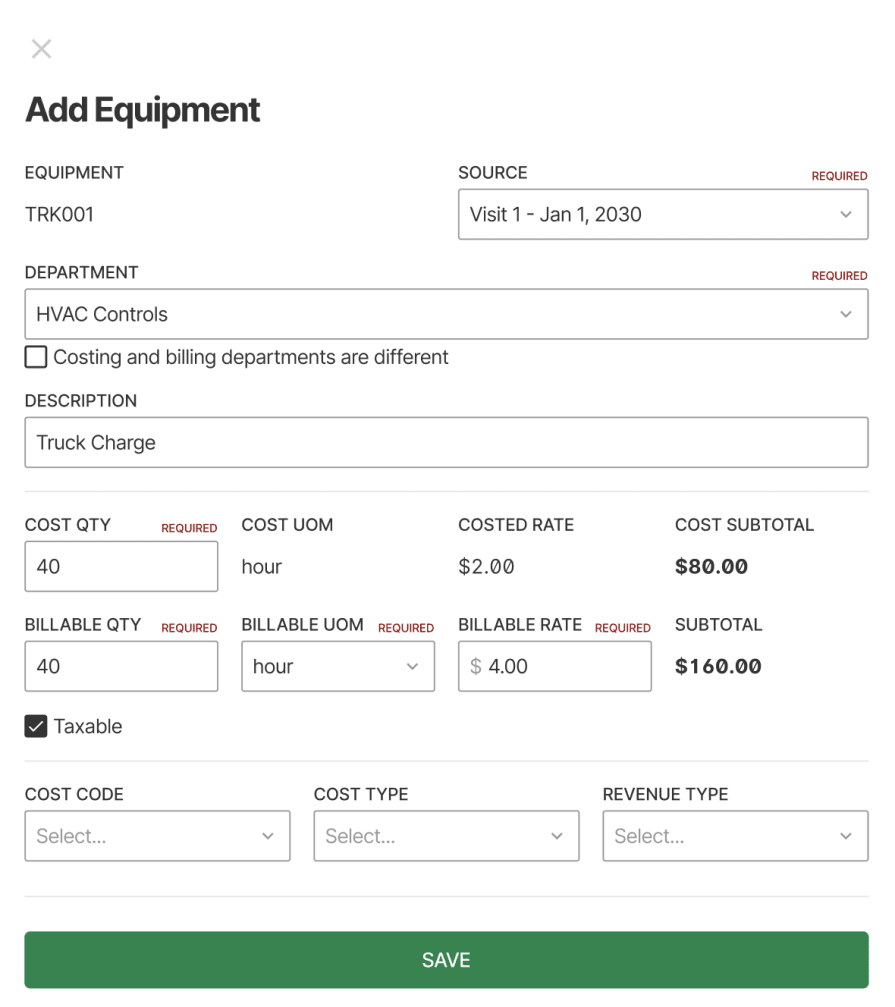
Strong asset data makes predictive maintenance work. When every sensor reading, repair, and parts swap rolls up into one clean equipment record, your AI finally has something useful to learn from, and it gets sharper with every job.
Contractors using fleet management tools alongside a structured field service asset management strategy can track every unit across every site, surface high-cost or high-risk assets before they become liabilities, and give predictive algorithms the clean, continuous data they need to deliver accurate failure forecasts instead of generic alerts.
Top 3 AI-powered predictive maintenance tools for construction equipment
Predictive maintenance isn’t just about smart sensors. It’s about what you do with the data. Most tools can collect equipment info. Very few can turn early warning alerts into real, profitable service calls. Here are three platforms that actually close that gap, bridging predictive insights with what happens in the field.
1. Best for commercial contractors: BuildOps
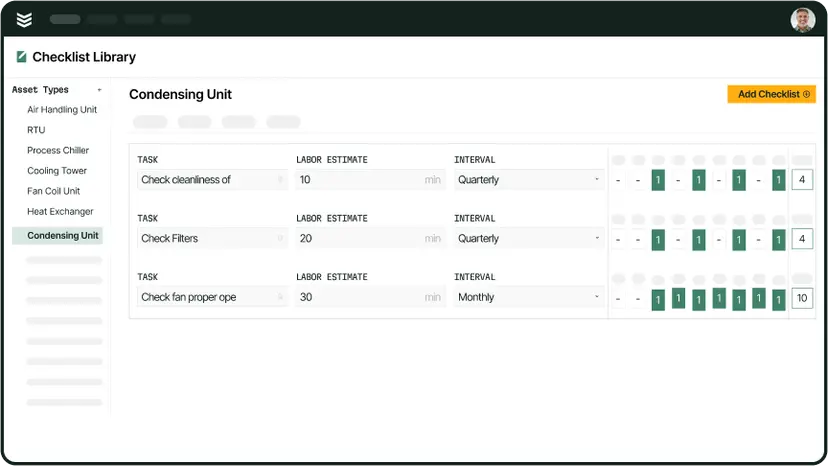
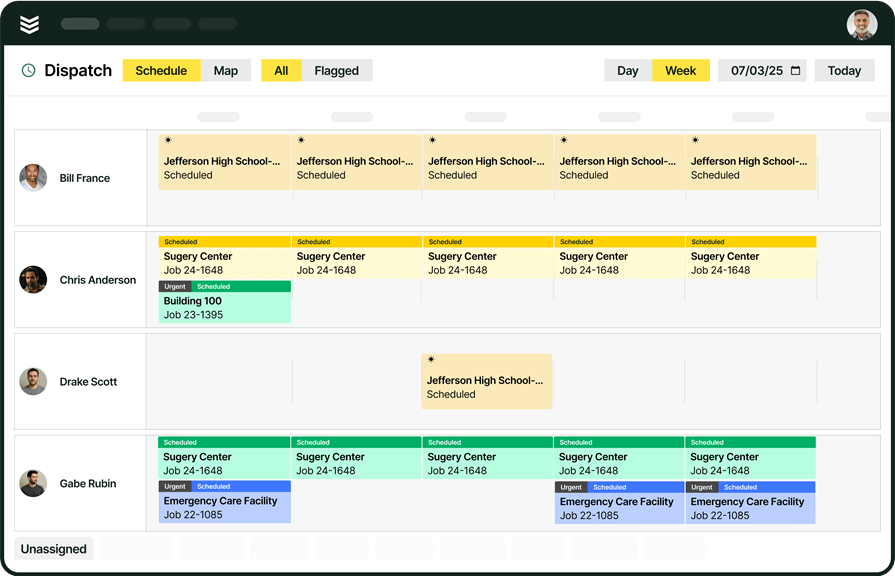
For commercial contractors, BuildOps transforms predictive insights into field execution. It bridges the gap between AI-driven equipment anomaly alerts and active service workflows, automating the dispatch, technician assignment, and parts procurement processes before a predicted failure occurs. By connecting diagnostic sensor data directly to your job management platform, BuildOps ensures that when equipment flags a maintenance need, your team is already prepared to act—minimizing downtime and protecting operational margins across your entire fleet.
Whether your team is running HVAC filter changes, plumbing inspections, or electrical panel PMs under long-term service agreements, BuildOps keeps every contract on schedule and every job documented from dispatch to close-out.
How pricing works: BuildOps offers tailored pricing based on user count, feature set, and contract scale—structured for teams that need flexibility rather than rigid bundles.
Features beyond equipment predictive maintenance:
- Real-time dispatch and crew workload visibility
- Automated preventive maintenance task lists and checklists
- Service agreement management and visit reminders
- Full asset history and job performance reporting
- Mobile job documentation and technician close-out tools
What sets it apart for commercial teams: BuildOps focuses specifically on field service contractors running complex, multi-property PM programs. It gives operations leads and dispatchers full control over service schedules, maintenance task lists, job statuses, and field team routing, all from one platform designed for the pace of commercial service work.
Rating: 4.4 on Capterra from 177 user reviews
2. Best for residential service contractors: ServiceTitan
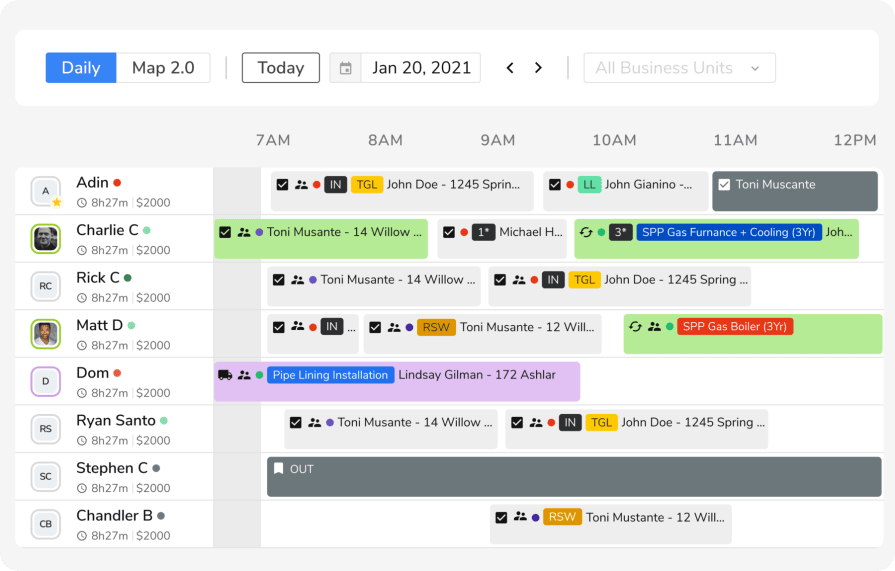
ServiceTitan is designed for high-volume residential service workflows, but its architecture is optimized for standard, time-based maintenance rather than AI-driven predictive insights for heavy construction equipment. Because it lacks native integration with equipment sensor telemetry and advanced machine learning diagnostics, it cannot trigger automated maintenance workflows based on real-time failure predictions. Contractors are often forced to rely on manual scheduling and calendar-based triggers rather than data-backed AI maintenance interventions.How pricing works: ServiceTitan uses custom pricing based on user count and selected features. Quotes vary depending on company size and scope.
Features beyond equipment predictive maintenance:
- Manual preventive maintenance scheduling tools
- Standard asset logs and service history tracking
- Customer communication and residential booking
- Field technician mobile forms and invoicing
What sets it apart for residential teams: ServiceTitan is built for quick-turn residential service visits, with tech-facing apps and customer engagement tools centered around short-duration jobs and repeat residential clients, rather than the long-term, predictive lifecycle of construction fleets.
Rating: 4.3 on Capterra from 335 user reviews
Compare ServiceTitan vs BuildOps right here.
3. Best for general field service contractors: Jobber
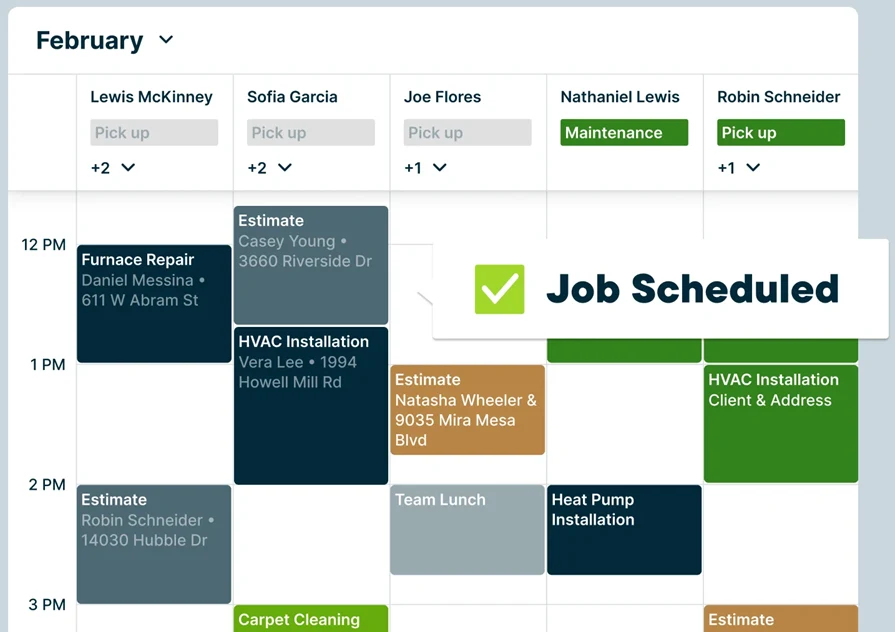
Jobber provides a practical foundation for general field service tasks like scheduling and billing, but it is not engineered for the rigorous data and AI integration requirements of construction equipment predictive maintenance. It lacks the advanced machine learning models necessary to process equipment sensor data for anomaly detection, meaning contractors cannot automate maintenance based on AI failure predictions, limiting operations to traditional, reactive, or calendar-based maintenance schedules.
How pricing works: Jobber runs on tiered pricing based on users and feature access. Plans are straightforward, but options can feel restrictive as service volume grows.
Features beyond equipment predictive maintenance:
- General calendar and route management
- Basic recurring job scheduling for standard maintenance
- Manual asset service logging
- Streamlined billing for routine service calls
What sets it apart for general teams: Jobber's clean interface and low barrier to entry make it a starting point for contractors handling straightforward, non-predictive recurring service work, though it lacks the infrastructure to scale with AI-driven asset health programs.
Rating: 4.6 on Capterra from 1,462 user reviews
AI-driven fleet maintenance isn’t about cool dashboards. It’s about protecting margin.
BuildOps turns sensor data into action: the right tech, on the right asset, at the right time. Scheduled around critical milestones, documented, and billed in one system.
Instead of juggling tools for monitoring, dispatch, and invoicing, you get a single platform: real-time anomaly detection, skills-based assignments, centralized equipment history, and repair data flowing straight into your financials.
Result: fewer surprises, less idle time, and tighter control of job profitability on every project you have in motion.
If your team is ready to move from reactive equipment management to a system that prevents downtime before it hits the job, schedule a demo and see how it works in practice.