Managing Electrical Projects From Jobsite to Back Office



Key Takeaways
- Electrical project management connects scheduling, field reporting, drawings, materials, change activity, resource planning, and billing across the commercial job lifecycle.
- Commercial electrical contractors can reduce project breakdowns by giving PMs, foremen, purchasing, finance, and leadership one shared view of job status, costs, documents, and follow-up.
- The right project management software for electrical contractors should support connected workflows, practical field reporting, project financial visibility, and phased adoption of AI.
Commercial electrical contractors in the electrical service industry often manage projects through disconnected updates, untracked materials, scattered drawings and RFIs, and billing records that do not reflect the latest job activity. Those gaps can delay the next phase, leave crews waiting for materials, weaken change documentation, and hide margin problems until the project is already nearing closeout.
Electrical project management connects field updates, project documents, materials, change activity, and billing to the same commercial job from setup through closeout. A shared workflow gives PMs, foremen, purchasing, finance, and leadership clearer visibility into current work and emerging issues. The next section examines the project management capabilities electrical contractors need to keep those roles aligned.
What electrical contractors need from project management
Commercial electrical work can move from switchgear and data center installs to tenant buildouts, service and project work, and multi-site work. Each job brings its own schedule, documents, labor needs, material commitments, and billing requirements. Project management has to hold all of that together while the work is active.
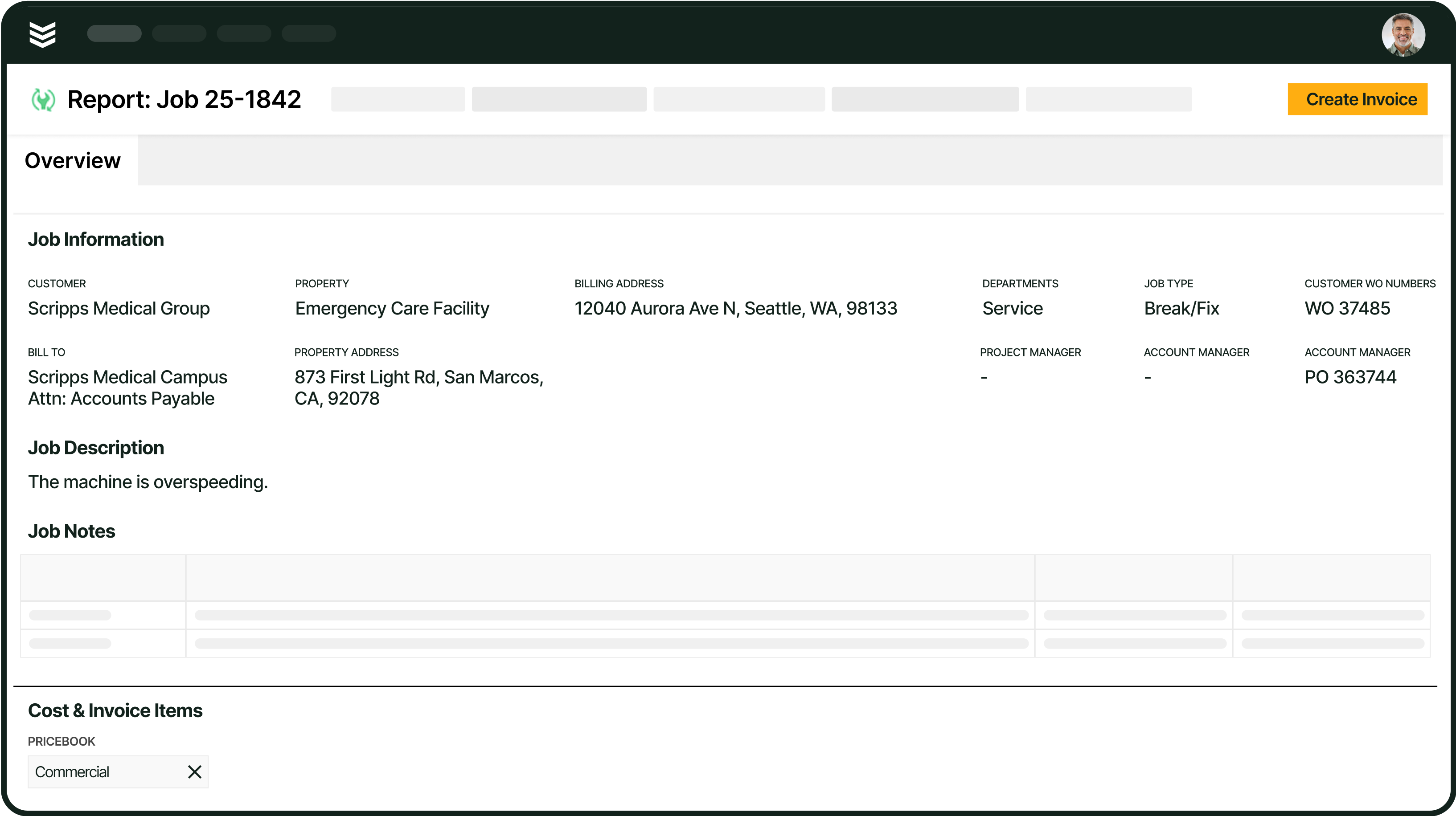
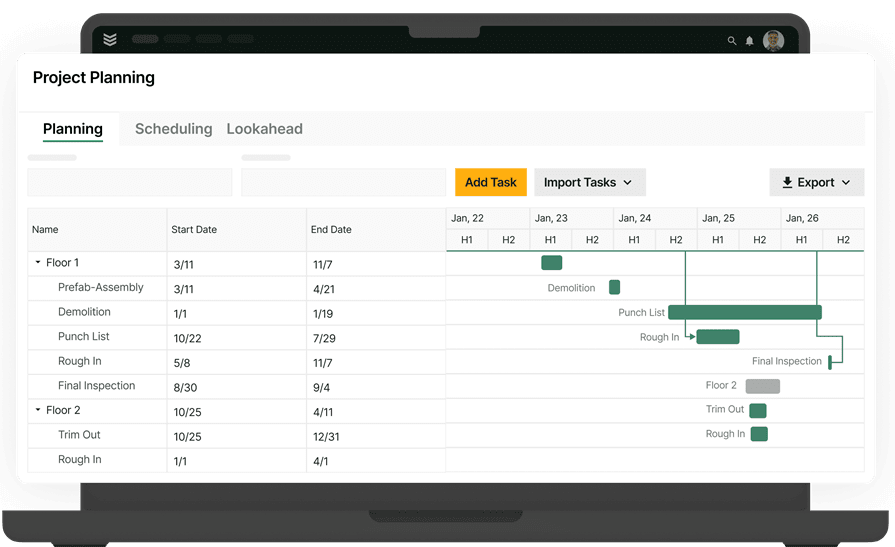
Project management for electrical contractors should give PMs, foremen, purchasing, finance, and leadership a shared, up-to-date view of the same commercial job. PMs need project status, budget context, scope changes, and open work. Field leaders need a simple way to record completed work, delays, photos, labor, equipment, and materials. Purchasing and finance need material, subcontract, billing, and cost activity tied to the project.
Connected project workflows keep setup, tasks, field reports, change orders, purchasing, budgets, cost codes, committed costs and material activity, and billing progress tied to one commercial electrical job. Field leaders can record updates where work happens, while office teams act on current information instead of chasing texts, paperwork, or separate trackers. The right project management software can provide the shared system that fits your needs and keeps these activities visible through closeout.
{{related-content-block="/resources/electrical-contractor-project-management-software"}}
Core workflows that keep electrical projects moving
Once a commercial electrical project is active, day-to-day project management depends on a small set of connected workflows. Scheduling, field reporting, drawings, materials, and crew planning all affect one another, so electrical contractors need a process that keeps project information moving between the jobsite, office, purchasing team, and finance.
1. Smart scheduling and dispatch
Commercial electrical schedules change as access windows move, inspections are rescheduled, materials arrive late, or one phase affects the next. Electrical contractors need a clear way to adjust crews and priorities without rebuilding the plan through calls, texts, and separate spreadsheets.
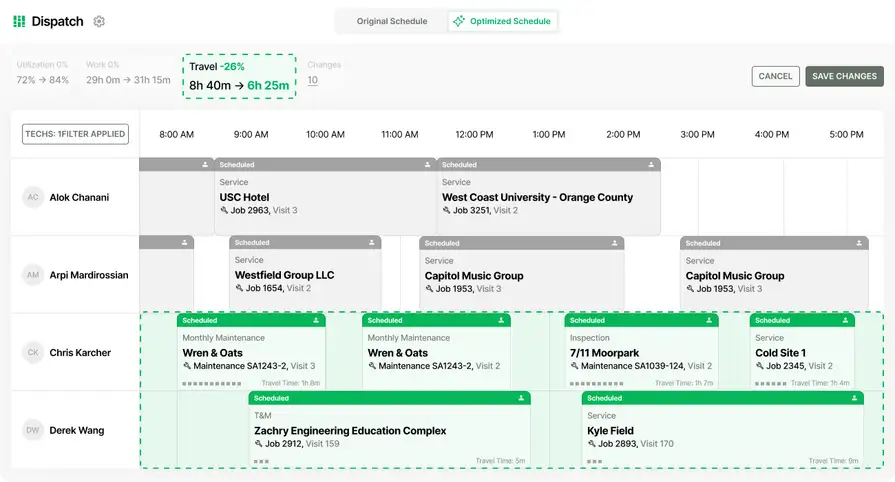
Scheduling & dispatch helps teams coordinate labor, availability, job requirements, and changing field conditions from a shared schedule. That gives project managers and field leaders a clearer view of who is assigned, what work is approaching, and where a schedule change may affect the rest of the project.
2. Daily field reporting and execution
Electrical project managers need current information about completed work, labor, delays, quantities, equipment, materials, photos, and punch items. When those updates remain in texts, calls, or handwritten notes, the office has to reconstruct the day before it can make decisions.
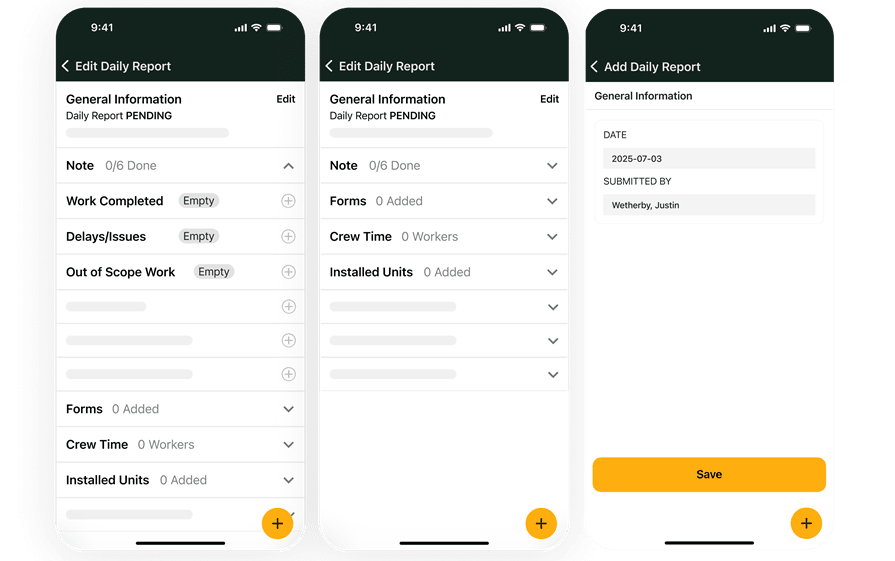
A consistent field execution workflow lets foremen and field leaders capture project activity from the jobsite and send it back to the office as structured project information. Daily Reports, lists, forms, photos, labor updates, and job notes give PMs a clearer view of what happened and what needs follow-up while the electrical work is still moving.
3. Document control and drawing access
Electrical work depends on current drawings, panel schedules, specifications, RFIs, submittals, markups, and installation details. When the latest document is difficult to find, crews can lose time waiting for direction or working from information that no longer reflects the job.
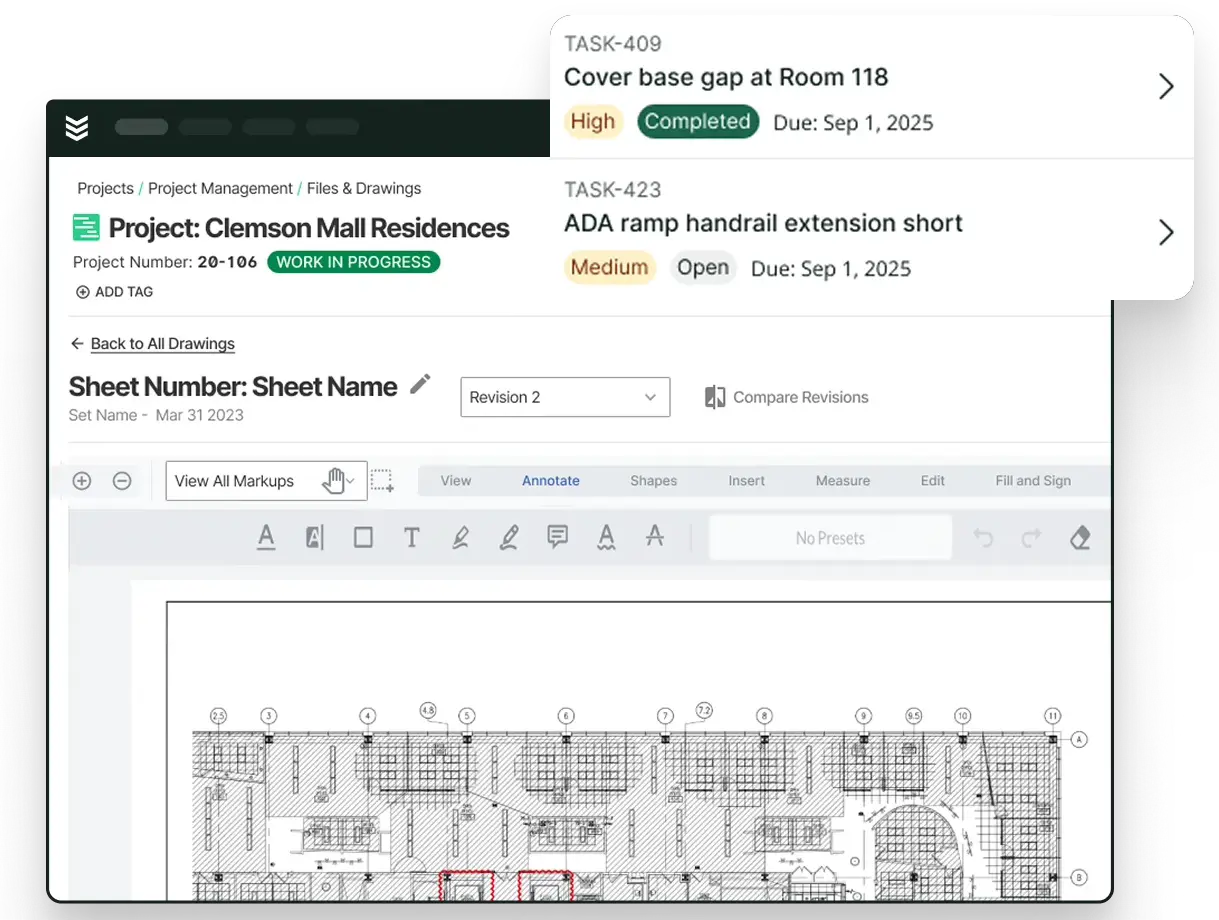
Document control keeps drawings, RFIs, submittals, and project files connected to the commercial electrical job. Field and office teams can work from the same project record, while photos, markups, responses, and communication history remain tied to the issue they support.
4. Materials and subcontract coordination
Electrical projects often depend on timely commitments for switchgear, panels, conduit, wire, fixtures, controls, and specialty subcontract work. A late order or unclear scope change can affect labor planning, installation sequencing, and the project budget at the same time.
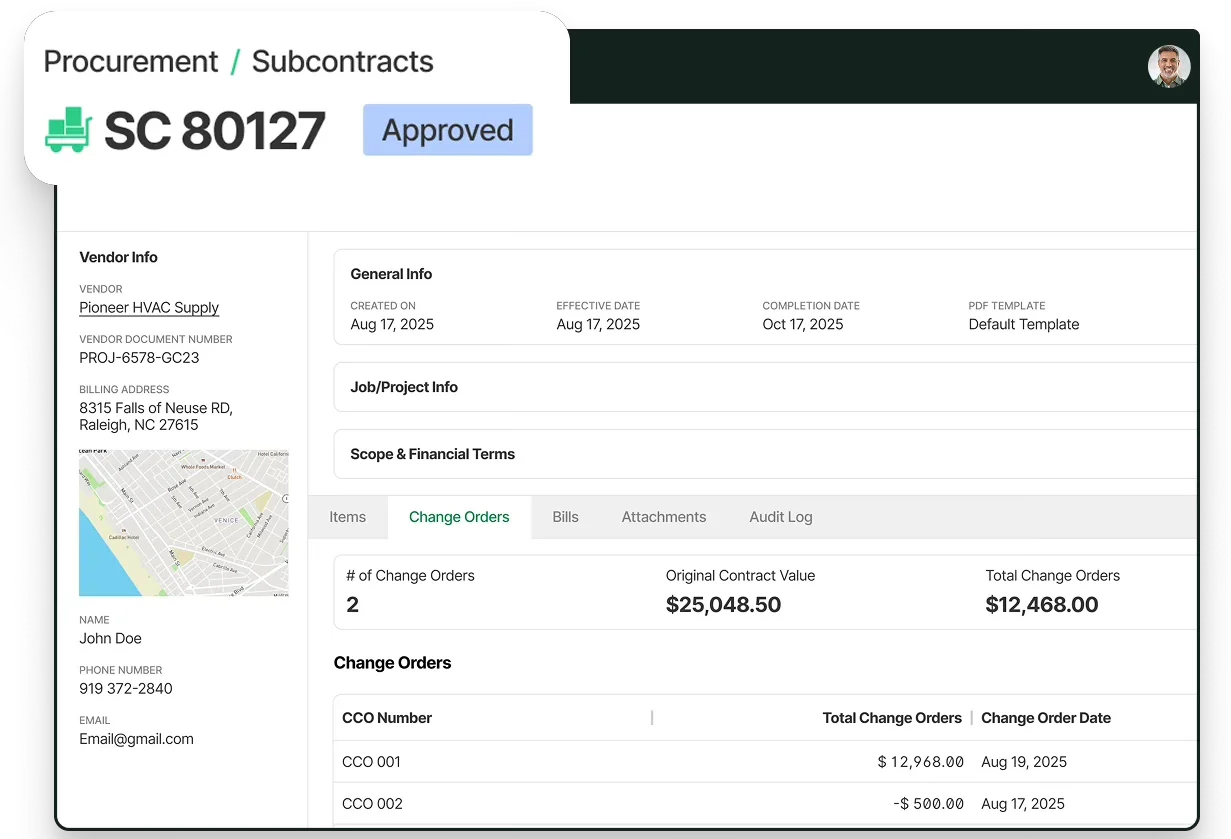
Materials & subcontracts keeps purchase orders, subcontract activity, commitment changes, and project budget context closer to the work. PMs can see what has been ordered, what remains outstanding, and how purchasing decisions affect the commercial electrical project instead of tracking commitments across separate inboxes and spreadsheets.
5. Resource planning and project visibility
Electrical contractors may need to balance service calls, retrofit work, tenant improvements, new installations, commissioning, and closeout activity across the same crews. Without a forward view of labor and project timing, staffing pressure can appear only after a phase is already behind.
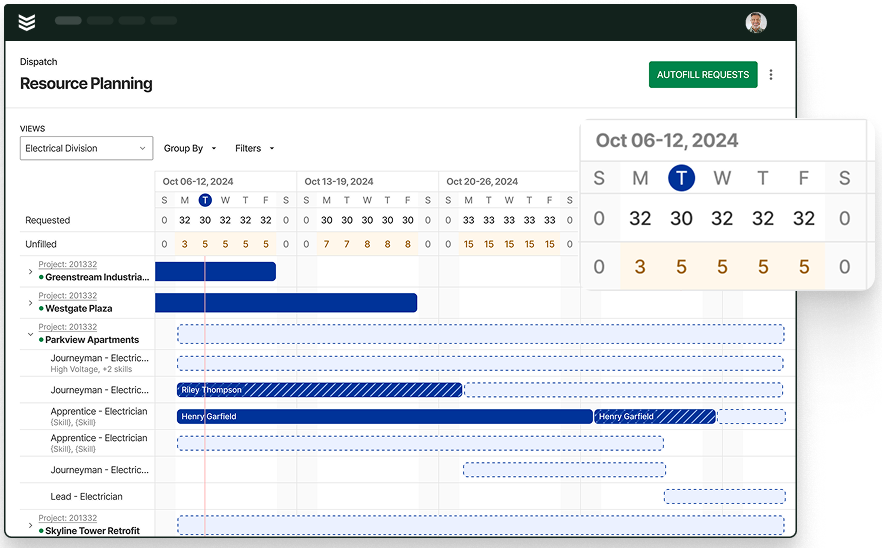
Resource planning helps teams map labor across projects, review upcoming demand, and make earlier decisions about staffing and sequencing. That visibility is especially useful when multiple electrical jobs compete for the same skilled crews, certifications, or critical weeks on the schedule.
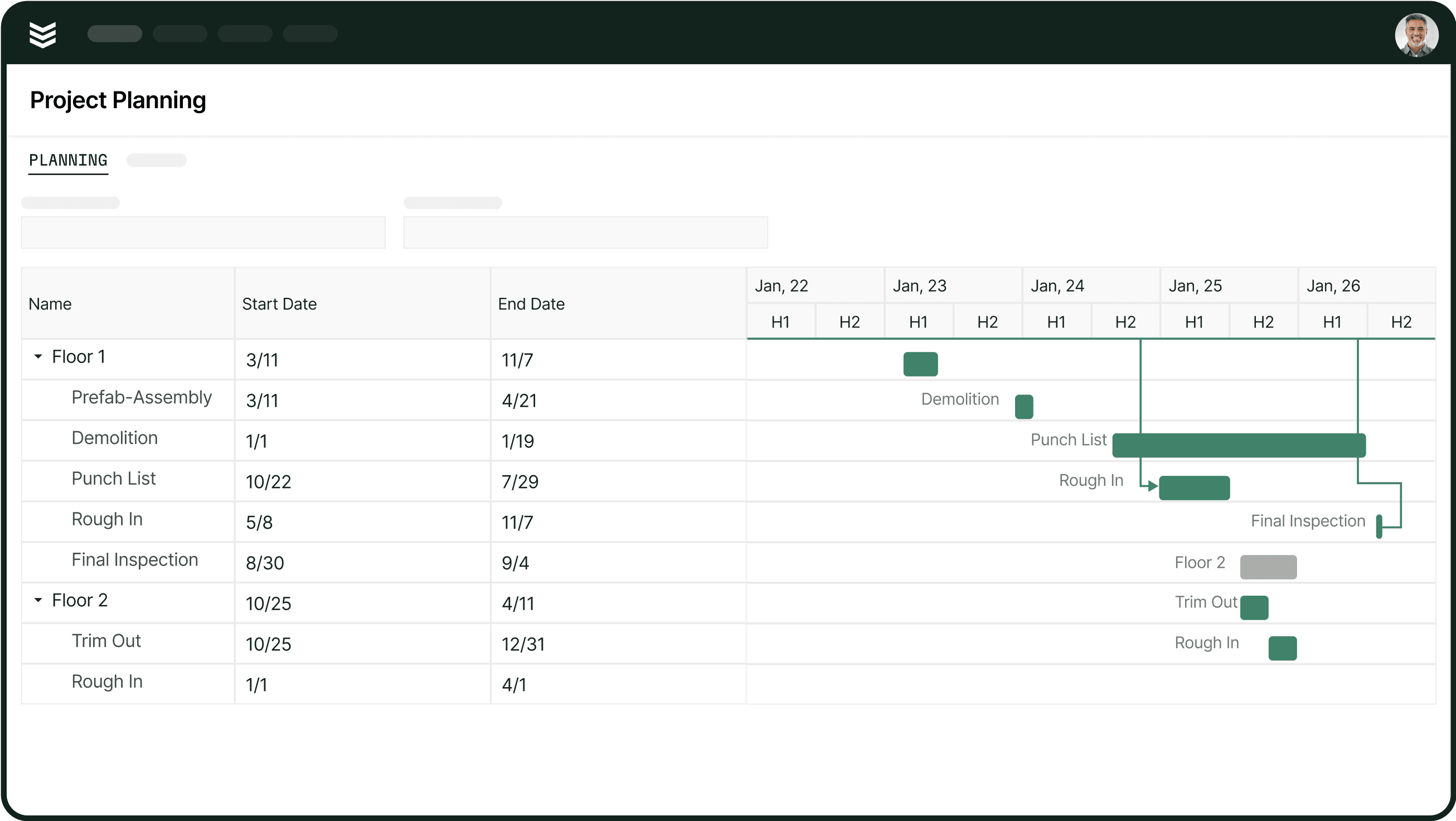
Why project management breaks down on commercial electrical jobs
Commercial electrical project management can break down when job information lives in separate systems. Field updates, drawings, RFIs, purchase activity, and change documentation become difficult to reconcile, making it harder for PMs to see current scope, schedule, labor, materials, and cost status while work is active.
Commercial electrical contractors can also lose visibility when service calls, installation work, and closeout tasks compete for the same people and resources. Separate workflows can slow handoffs and leave labor updates, material commitments, or change activity outside the shared project record, causing teams to work from different versions of the job.

Effective electrical project management uses a shared workflow from setup through closeout. Project management software can connect schedules, field reports, drawings, materials, change activity, and financial information, while AI can help surface issues earlier and support follow-up using structured project data.
How to evaluate project management software for electrical contractors
When comparing electrical project management software, focus on how well each platform supports day-to-day commercial work across the field, office, purchasing, and finance teams.
- Can it support electrical service and project work in one system? - Ask this to confirm that shared crews, customer information, and project handoffs do not get split across separate workflows.
- Does it keep one project record from setup through closeout? - Look for connected phases, budgets, field reports, documents, change orders, purchasing, and billing review.
- Can field leaders send usable updates from the jobsite? - Ask to see how the system captures Daily Reports, labor, equipment, materials, photos, delays, and notes for PM review.
- How does it manage drawings, RFIs, and submittals? - Confirm that teams can find current documents and preserve the context, revisions, and communication history tied to each issue.
- Can purchasing and material commitments stay tied to the project budget? - Ask how the platform tracks purchase orders, subcontract activity, commitment changes, and outstanding materials before they affect the job.
- Can PMs see project health before month-end? - Look for current visibility into labor, committed costs, budgets, billing progress, actual costs, and project status while work is active.
- Will it standardize project workflows across PMs and crews? - Ask whether the system supports repeatable phases, cost codes, reporting, change control, purchasing, and billing processes instead of relying on individual spreadsheets.
Once the core workflow is in place, adopting AI for field service in phases can complement electrical project management by connecting field data to reporting, scheduling, and billing while teams build trust in new workflows.
{{related-content-block="/resources/adopting-field-service-ai"}}
Common questions about project management asked by electrical contractors
The questions below reflect the most common topics electrical contractors raise during implementation conversations and product demos, including field reporting, estimating handoffs, project financials, documents, integrations, and user access.
1. Can one system handle electrical service and project work?
Yes. A connected system can support service and project workflows while keeping shared labor, scheduling, reporting, and customer information aligned. Ask how the platform manages handoffs between service calls, quoted work, and longer commercial projects.
2. Can field leaders submit daily reports from the jobsite?
Yes. Mobile workflows can help field leaders record labor, equipment, completed work, photos, notes, and delays from the jobsite. Ask how quickly PMs can review those updates and whether office teams must reenter the information.
{{related-content-block="/resources/how-holmes-electric-manages-cybersecurity-and-data-accessibility-with-buildops"}}
3. How are drawings, RFIs, and submittals managed?
Project documents should remain connected to the job record, with revisions, responses, attachments, and communication history easy to find. Ask the vendor to demonstrate how field and office teams access current documents and track open issues.
4. How can electrical PMs track actual costs against the budget?
Project financial tools can compare budgets, actual costs, contract value, billing progress, and forecasts while work is active. Ask whether PMs can see project-level financial status before accounting closes the period.
Commercial electrical contractors need project management that connects scope, field updates, change activity, materials, and financial visibility throughout the job. A shared workflow helps PMs, foremen, purchasing, and finance stay aligned from project setup through closeout.
BuildOps helps electrical contractors manage project setup, field activity, change control, materials, and billing in one platform. With OpsAI, teams can surface project issues earlier, reduce manual follow-up, and maintain cleaner job records across electrical service and project work.
If disconnected tools are slowing decisions on your electrical projects, book a demo to see how BuildOps can support your team.