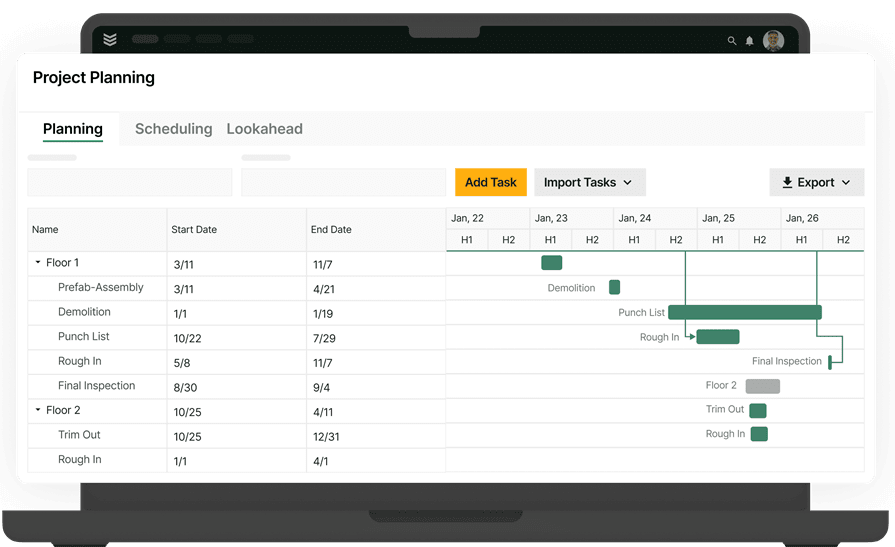
Connecting Crews, Documents, and Costs Across MEP Projects



Key Takeaways
- Commercial MEP project management connects mechanical/HVAC, electrical, and plumbing workflows from project setup through field execution, billing, and closeout.
- Effective MEP project management keeps crews, project managers, purchasing, and finance aligned on field updates, documents, materials, scope changes, labor, and project costs.
- The right MEP project management software supports trade-specific phases and shared service-project workflows without forcing teams to rebuild job information across separate tools.
Commercial MEP contractors often lose project control in the handoffs between field, office, purchasing, and billing. A field issue may never become a tracked action, a drawing question may sit in a message thread, and a material commitment may be hard to find. When scope changes surface without clear backup, project managers have less time to understand ownership, schedule impact, and next steps while the job is active.
Effective MEP project management gives commercial mechanical and HVAC, electrical, and plumbing teams a consistent way to move information from the jobsite into the decisions that keep work progressing. The sections below explain what each trade needs from project management and how those needs shape the way crews, project managers, purchasing, and finance work together.
What commercial MEP contractors need from project management
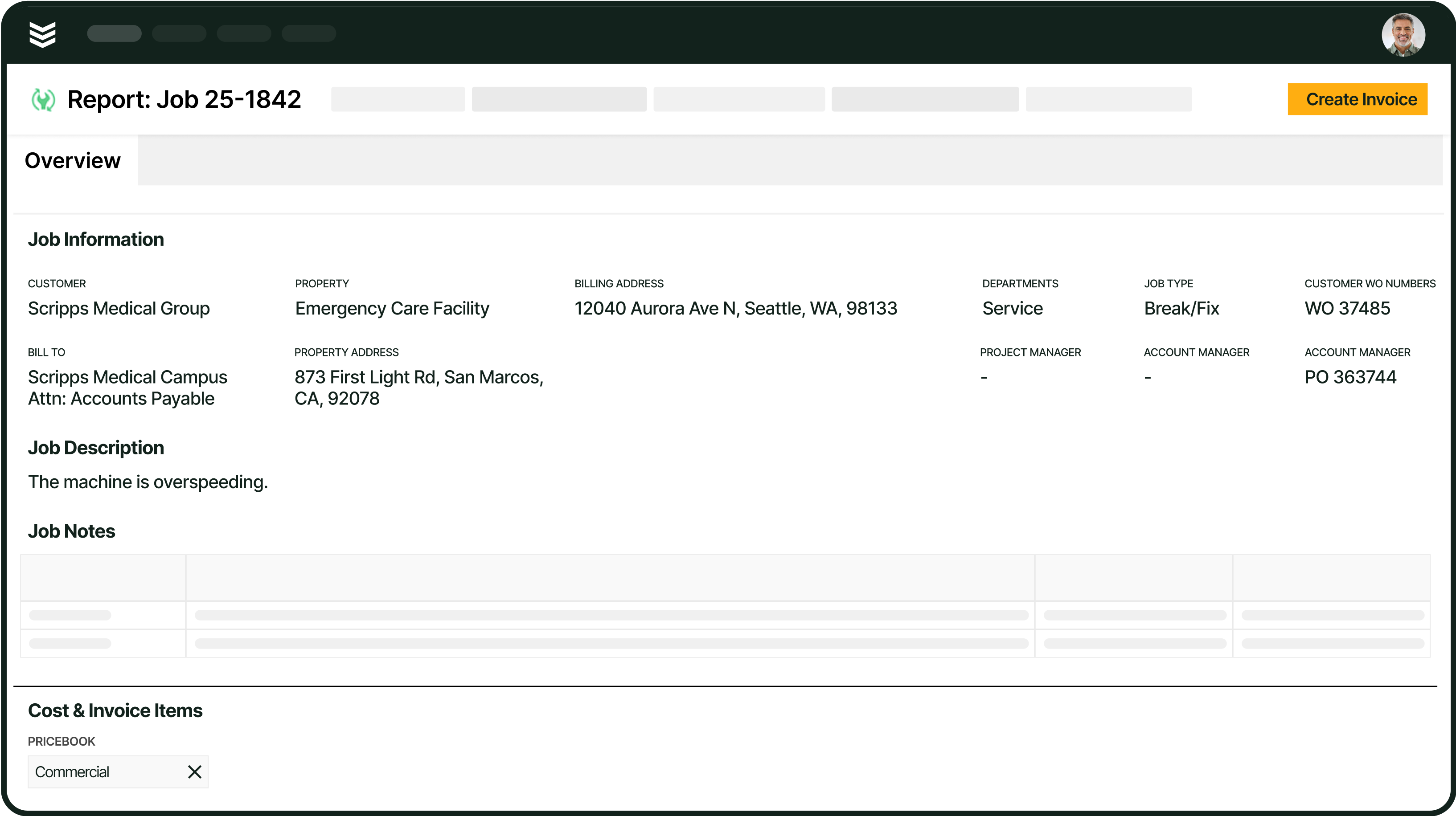
MEP in project management covers the planning, coordination, and documentation needed to manage a commercial job across its active phases. Each role needs different project context: PMs monitor progress and commitments, foremen report field conditions, purchasing tracks materials, finance follows project costs, and leadership reviews performance.
Trade-specific responsibilities vary across commercial MEP work. Mechanical and HVAC contractors coordinate equipment and service commitments, electrical contractors manage drawings, switchgear, labor, and materials, and plumbing contractors manage piping phases, site utilities, service work, and longer-term projects. The subsections below show how project management supports each workflow.
Mechanical and HVAC contractors
- Coordinate RTUs, VRF systems, chillers, boilers, controls, tenant improvements, and modernization work alongside service commitments.
- Track phases, labor, equipment, material commitments, field conditions, and service-to-project handoffs.
- Capture completed work, delays, photos, materials, and out-of-scope conditions from the field across commercial HVAC work.
Electrical contractors
- Manage switchgear, data center installations, tenant buildouts, and modernization work across commercial projects.
- Keep drawings, RFIs, submittals, labor, materials, and closeout records tied to the same commercial electrical job.
- For commercial electrical contractors, connect field conditions and out-of-scope work to Daily Reports, drawings, change orders, purchasing, and billing.
Plumbing contractors
- Coordinate backflow devices, water heaters, site utilities, piping phases, service work, and longer-term project work.
- Keep field reports, materials, equipment, subcontractor activity, and scope updates tied to the same project record.
- For commercial plumbing work, support handoffs between emergency service, scheduled maintenance, and longer projects.
Within commercial construction project management, mechanical and HVAC contractors coordinate building systems, electrical contractors manage power and related installations, and plumbing contractors coordinate piping and water systems. Each trade works through its own crews, materials, documents, and milestones. The next section looks at the core workflows that keep these moving parts connected.
{{related-content-block="/resources/commercial-construction-project-management"}}
Core workflows that keep MEP projects moving
Commercial MEP project management depends on more than a schedule. Mechanical and HVAC, electrical, and plumbing contractors need connected workflows for labor, field updates, drawings, materials, scope changes, and financial follow-through. The workflows below show how those needs come together across service calls, retrofit work, tenant improvements, modernization, and longer commercial projects.
1. Smart dispatch and scheduling
MEP schedules change as service calls, access windows, shutdowns, deliveries, and project phases compete for the same crews. Contractors need a practical way to adjust assignments without losing sight of fixed project commitments or the work that still needs to happen next.
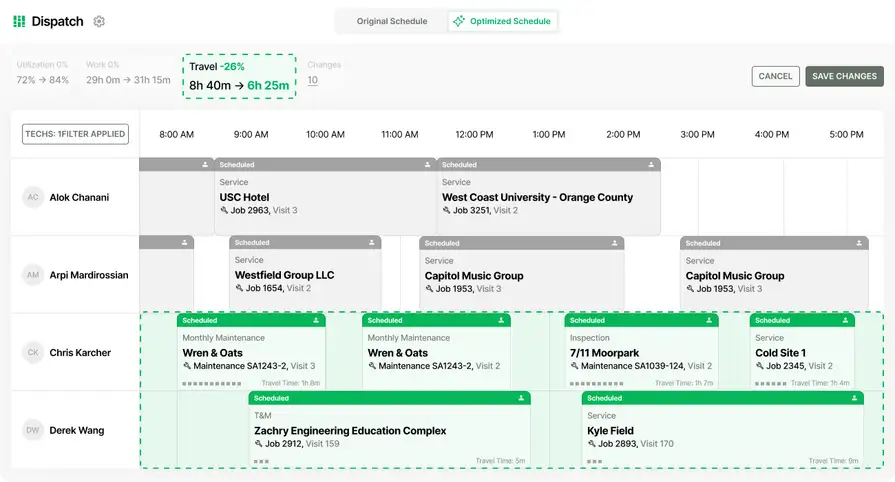
For teams that coordinate service calls around project commitments, scheduling & dispatch helps dispatchers review technician availability, skills, certifications, location, and visit requirements. Smart Dispatch proposes a draft schedule for review, while dispatchers keep control of what goes live. Project commitments can remain fixed while service calls are arranged around them.
2. Project setup, phases, and budgets
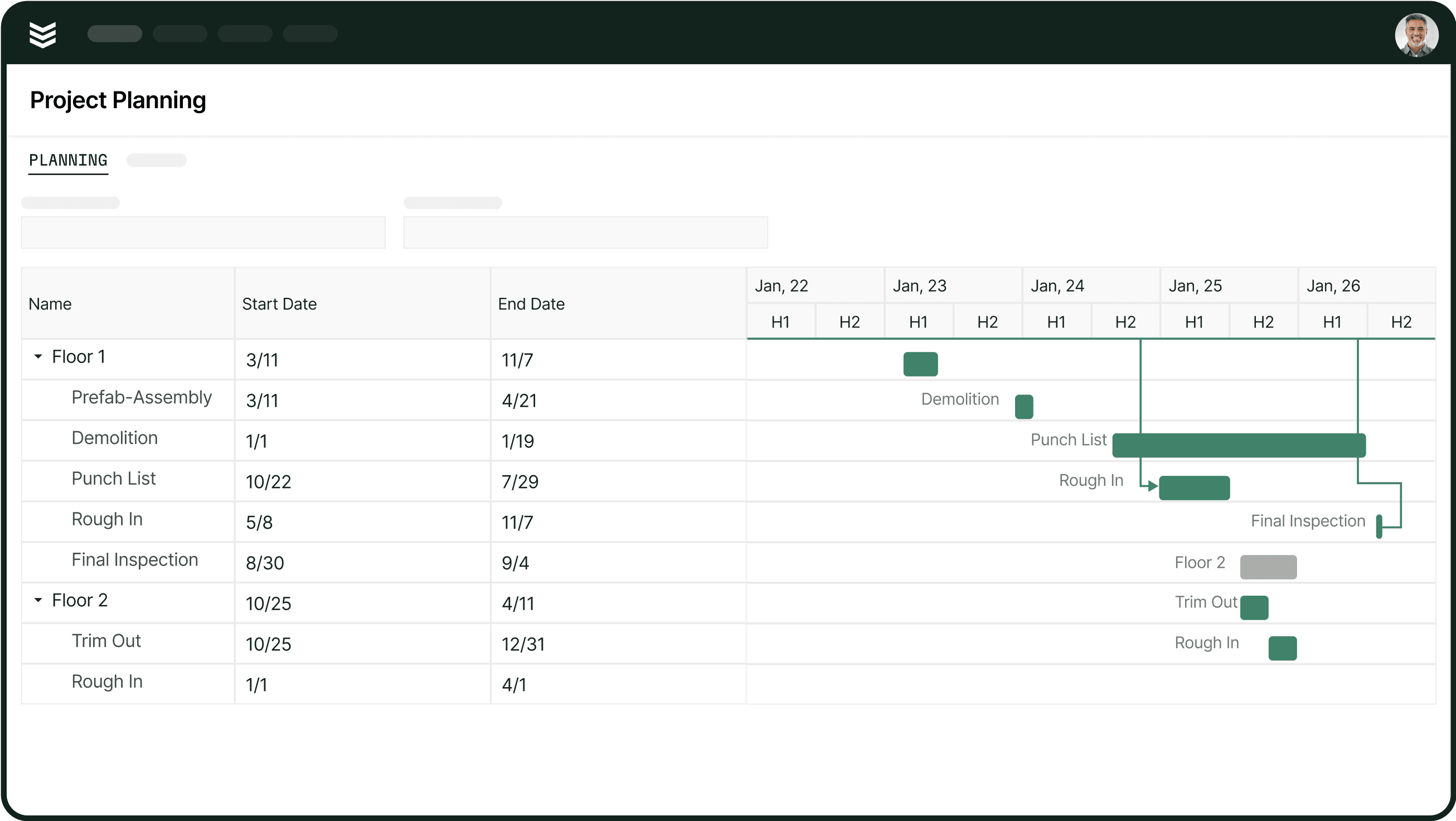
Strong MEP construction project management starts with a project record that reflects how the work will be delivered. Project managers can organize project information, phases, cost codes, budgets, and billing details during setup, giving the office a baseline for tracking progress and cost movement. Quoted and Time & Material projects use different setup flows, so the project record should reflect the job type from the start.
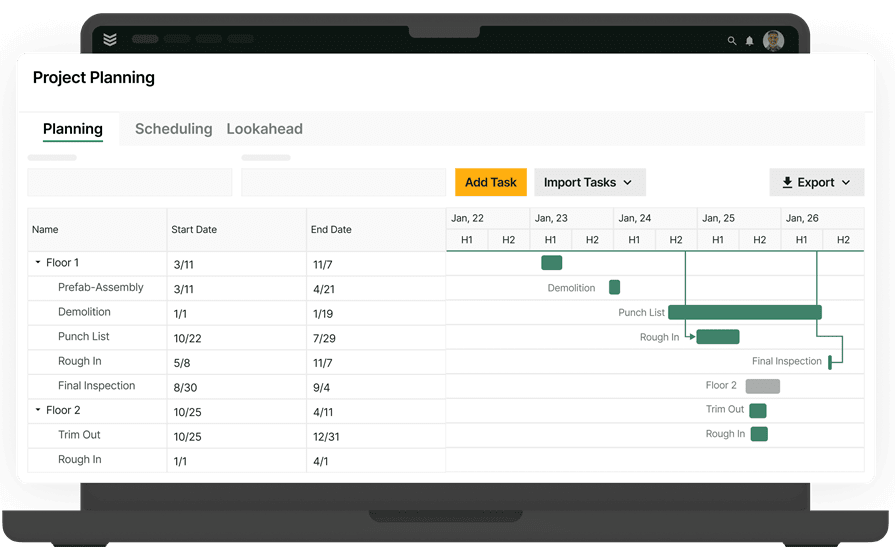
The phase structure should fit the trade. Mechanical and HVAC work may move from equipment delivery and installation into controls and startup. Electrical work may progress through rough-in, equipment installation, testing, and commissioning. Plumbing work may follow underground piping, rough-in, trim, testing, and closeout. A shared setup gives each team a practical way to connect labor, materials, documents, and billing to the same commercial job.
3. Daily field reporting and execution
Project managers need field information while work is active, not after someone rebuilds the day from texts and paper notes. A consistent field-execution workflow gives crews a place to record completed work, delays, photos, labor, equipment, materials, subcontractor activity, notes, and out-of-scope conditions. Related forms and lists can support safety, QA/QC, and follow-up work.
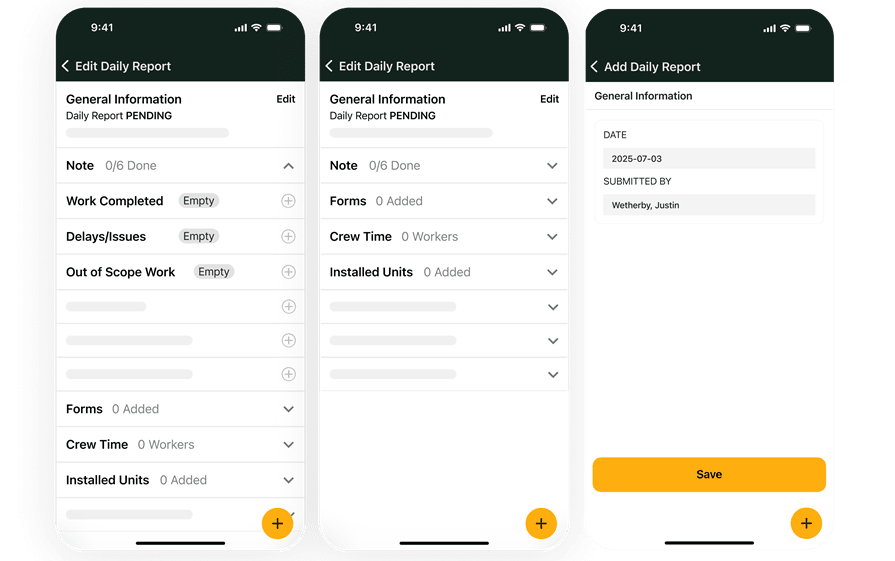
A connected field execution workflow gives each trade a usable record from the jobsite. Mechanical and HVAC crews can document equipment work and site conditions. Electrical crews can capture progress, blockers, and installation updates. Plumbing crews can record piping work, materials used, and issues that affect the next phase. That information reaches PMs and the office without forcing someone to reenter it later.
4. Document control, drawings, RFIs, and submittals
MEP work depends on current drawings, specifications, RFIs, submittals, markups, and approvals. When those records sit in separate folders or message threads, field leaders spend time asking which document is current and PMs spend time reconstructing the context behind an issue.
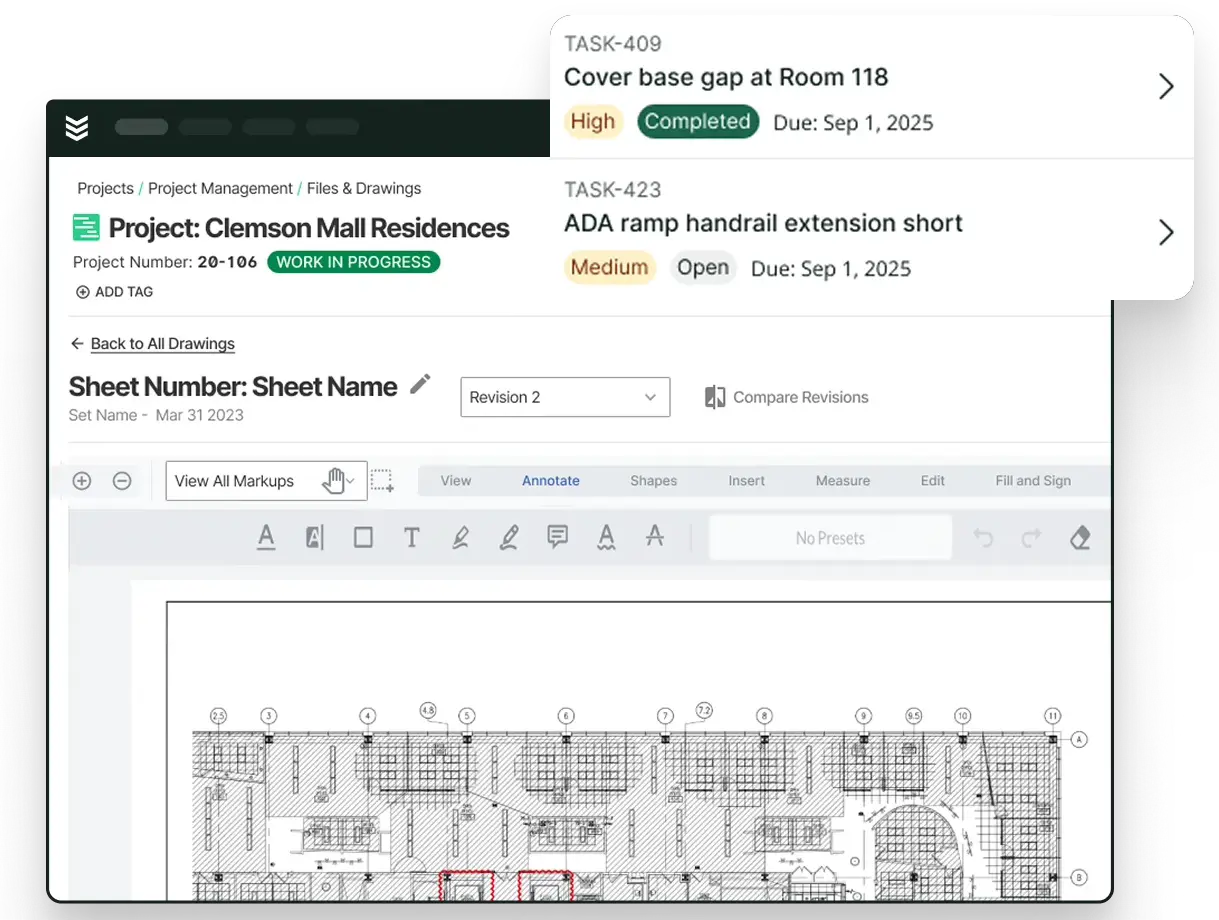
Document control keeps project files and field questions tied to the job record. Mechanical and HVAC teams can connect equipment and controls information to the work. Electrical teams can keep drawing questions and responses with the related project documents. Plumbing teams can track piping, fixture, and equipment documentation through review and closeout. The field and office can work from the same project history instead of separate versions.
5. Materials, bills of materials, and subcontract coordination
Materials affect schedule, cost, and field readiness across every MEP trade. Project teams need to know what the job requires, what has been ordered, what is still outstanding, and how vendor or subcontract commitments affect the budget.
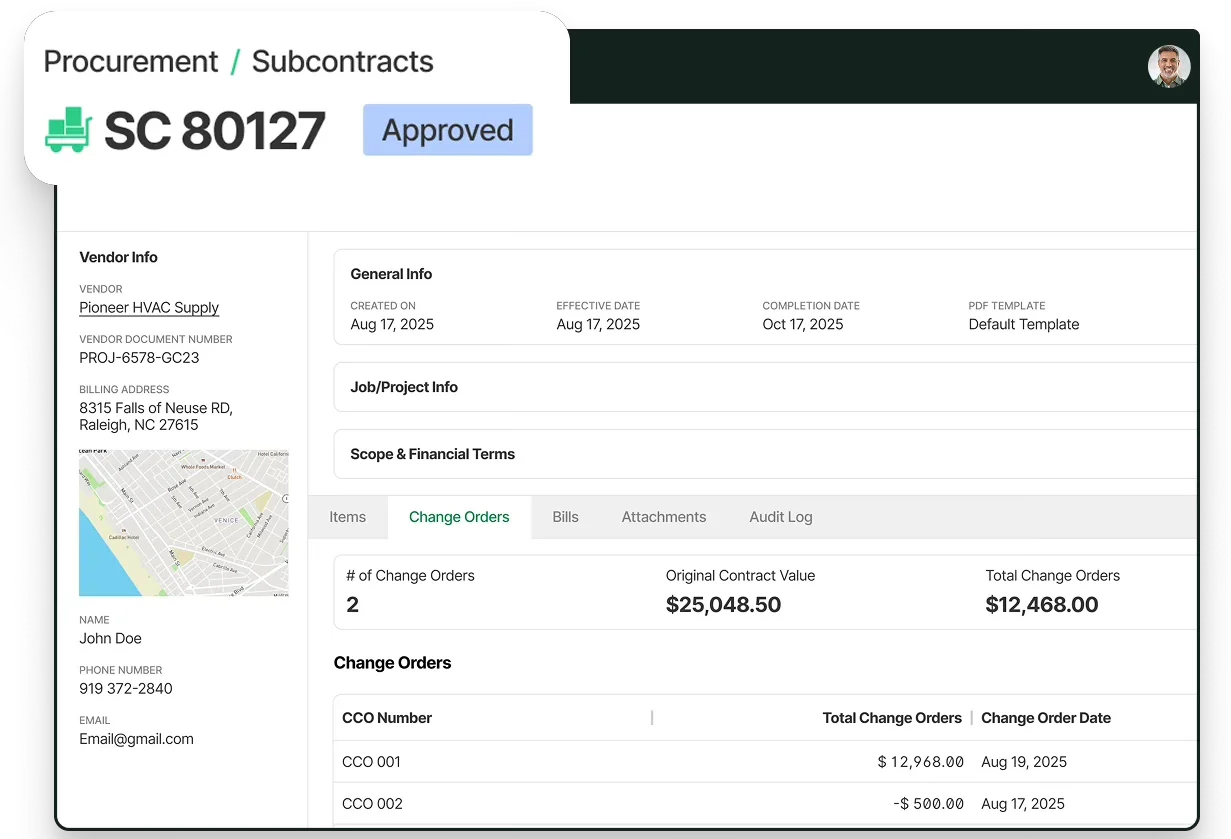
Materials & subcontracts connects purchase orders, bills of materials, field orders, subcontract records, and commitment changes to the project. Mechanical and HVAC teams can track long-lead equipment and controls. Electrical teams can follow switchgear, panels, conduit, wire, and specialty work. Plumbing teams can coordinate pipe, valves, fixtures, water-heating equipment, and subcontract support without maintaining a separate tracker.
6. Change orders and scope tracking
Commercial MEP work changes when field conditions differ from the plans, equipment selections shift, or the customer requests work outside the original scope. Project teams need to capture the change early, connect it to supporting information, and track it through review instead of relying on a conversation that may never reach purchasing or billing.
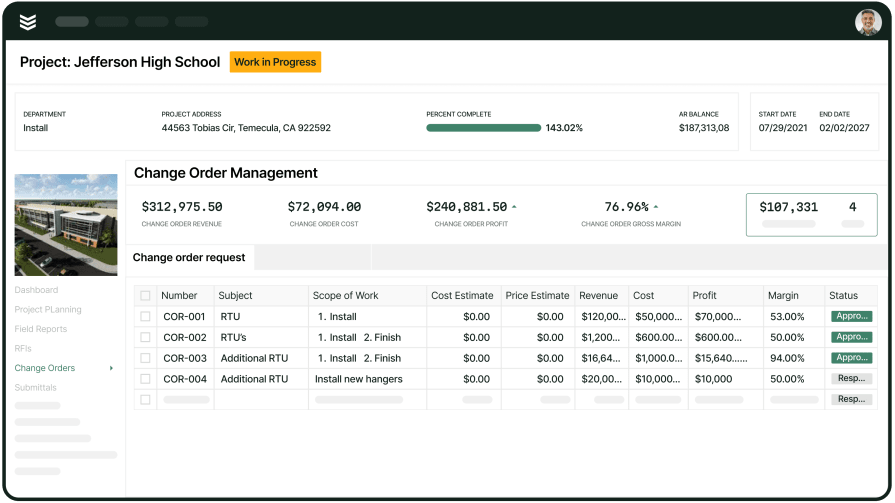
BuildOps lets teams create a Potential Change Order (PCO), link it to a Daily Report, RFI, or drawing, and convert it into a formal Change Order Request (COR) when the change is ready for pricing and review. That gives mechanical and HVAC, electrical, and plumbing PMs a clearer record of what changed, why it changed, and how the change may affect cost or schedule.
7. Resource planning and crew allocation
MEP contractors often move the same people between service work and commercial projects. Without a forward view of labor demand, a team may discover a staffing gap after a phase is already under pressure or assign a crew that lacks the skills needed for the work.
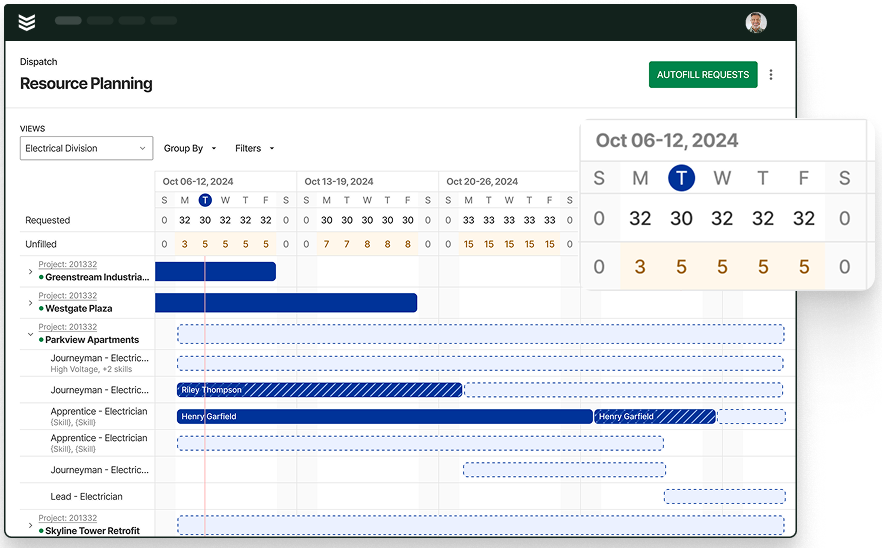
Resource planning gives PMs and operations leaders a broader view of labor across projects and service work. Mechanical and HVAC teams can plan around chiller, controls, or equipment needs. Electrical teams can account for qualified labor across installation and commissioning phases. Plumbing teams can plan crews around rough-in, testing, service, and closeout work while keeping the wider labor picture visible.
8. Project financials, billing, and closeout
Project management is not complete when the field work ends. Commercial MEP contractors also need to track budget movement, committed costs, billing progress, project documents, and the backup needed for payment and closeout.

Project financials gives PMs a forward-looking view of projected cost, committed cost, budget movement, billing progress, and change exposure. For project work, pay applications connect billing to the project’s schedule of values and approved change orders, so finance can review billing from the same project context.
Together, these workflows give commercial MEP contractors a project management workflow that follows the work from planning and crew coordination through field execution, documentation, purchasing, change control, billing, and closeout. The next section looks at where MEP project management breaks down when those workflows remain separated.
Why MEP project management breaks down on commercial jobs
MEP project management breaks down when job information is split across texts, spreadsheets, shared folders, and separate systems for service and project work. Field updates, drawings, purchasing activity, and change backup become harder to reconcile, leaving project managers without a current view of scope, schedule, labor, materials, and cost while the job is active.
Commercial MEP contractors face added pressure when the same crews support service calls and project phases. Mechanical and HVAC teams may move between equipment work and service, electrical teams may balance installation work with service commitments, and plumbing teams may handle emergency calls alongside planned maintenance and projects. When those handoffs stay disconnected, updates lag and the office spends time rebuilding the job story.

The problem is usually not a lack of effort. It is a lack of structure around how information moves between the field, office, purchasing, and finance. The next section explains what commercial MEP contractors should look for when evaluating project management software for a workflow that supports all three trades.
How to evaluate MEP project management software
Evaluating MEP project management software starts with the workflow, not a feature list. The questions below help commercial contractors compare how a system supports mechanical/HVAC, electrical, and plumbing teams across planning, field execution, documentation, resource coordination, materials, and project financials.
- Can we keep every trade and project record in one place? Use the demo to confirm that mechanical/HVAC, electrical, and plumbing teams can work from one current job record instead of rebuilding information across separate systems.
- Can field crews capture project updates without extra office work? Watch how quickly a foreman can submit Daily Reports, photos, labor, materials, and out-of-scope conditions, then see how that information reaches the project team.
- Can we coordinate service calls around project commitments and trade requirements? Test whether the system accounts for skills, certifications, availability, access windows, and fixed commitments when dispatchers review a proposed service schedule.
- Can we connect drawings, RFIs, submittals, and scope changes? Look for a clear path from a field question or potential change to its supporting document, decision, owner, and next action.
- Can we see materials and subcontract commitments before they affect the job? Ask the vendor to show how bills of materials, purchase orders, field orders, subcontract records, and commitment changes stay tied to the project and budget.
- Can project managers and finance see the project’s financial direction? Ask the vendor to demonstrate how projected costs, committed costs, budget movement, change exposure, billing progress, and pay-application backup appear together, while confirming how the workflow connects with your ERP.
The right project management for MEP contractors should support each trade’s terminology and phases without creating three disconnected systems. The questions below address common considerations for commercial contractors comparing MEP project management workflows, apps, and software.
Common questions about MEP project management
Commercial MEP contractors usually want to know how project management will fit into the work they already perform. These questions address the service and project handoffs, field visibility, project controls, and trade-specific needs that come up when teams evaluate an MEP project management workflow.
1. Can one system handle both service work and project work?
Yes. BuildOps supports service calls and multi-month project work on one operating layer, so teams can work from connected service and project information instead of maintaining separate systems.
2. How do field updates stay connected to the project record?
Field teams can capture Daily Reports, photos, labor, equipment, notes, and out-of-scope conditions from the jobsite. Project managers can then review those updates with the related project information, giving the office current context without rebuilding the job from texts, paper, or spreadsheets.
3. Can MEP project management support schedules, phases, and pay applications?
Yes. Project teams can organize phases, cost codes, budgets, and project commitments, then use project financial workflows to track projected and committed costs, change activity, billing progress, and pay-application backup. The exact setup should reflect the contractor’s project types, schedule of values, and accounting workflow.
{{related-content-block="/resources/buildops-omnia-mechanical-group"}}
4. How does MEP project management support mechanical, electrical, and plumbing teams?
BuildOps gives commercial MEP contractors a shared project workflow for field execution, documents, change activity, materials, commitments, and projected financial visibility. Each trade can organize its own phases, materials, field conditions, and closeout requirements within that workflow.
Commercial MEP contractors need project management that keeps mechanical/HVAC, electrical, and plumbing work connected from setup through closeout. A shared workflow helps PMs, foremen, purchasing, and finance coordinate field updates, documents, materials, scope changes, and project financials without rebuilding job information across separate tools.
BuildOps helps MEP contractors manage project setup, field activity, change control, materials, and billing in one platform. With OpsAI, teams can surface project issues earlier, reduce manual follow-up, and maintain cleaner job records across mechanical/HVAC, electrical, and plumbing service and project work.
If disconnected tools are slowing decisions across your MEP projects, book a demo to see how BuildOps can support your team.