Choosing a Contractor AI: OpsAI vs Atlas vs Procore AI

Contractor software shouldn’t stop at a chatbot. Real value comes from improving dispatching, documentation, invoicing, and tech matching across field service AI workflows. Choose the wrong platform, and your team is still buried in manual work with a shinier interface.
This guide covers what separates real AI capability from marketing fluff, and how the top platforms stack up:
- 9 features to look for in an AI field service platform
- BuildOps OpsAI vs ServiceTitan Atlas vs Procore AI
- How to choose the right AI-powered field service solution for your business
We'll start with the nine capabilities that matter most when evaluating AI-powered field service software, so you have a clear checklist before diving into any platform comparison.
9 features to look for in an AI field service platform
AI-powered contractor software streamlines field service workflows from dispatch to invoicing by leveraging predictive and generative capabilities to cut errors and administrative time.
1. AI-powered workflows & automation
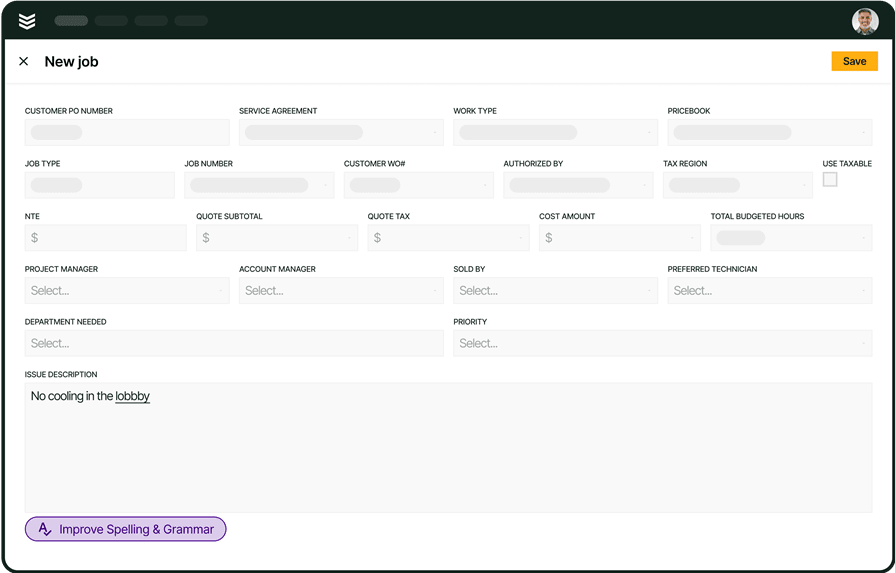
The core of modern contractor software, an AI engine for field service auto-generates invoice summaries, cleans up daily logs, and uses machine learning to recommend the best nearby tech, significantly reducing manual overhead across dispatching, documentation, and reporting.
2. AI-optimized scheduling & dispatching
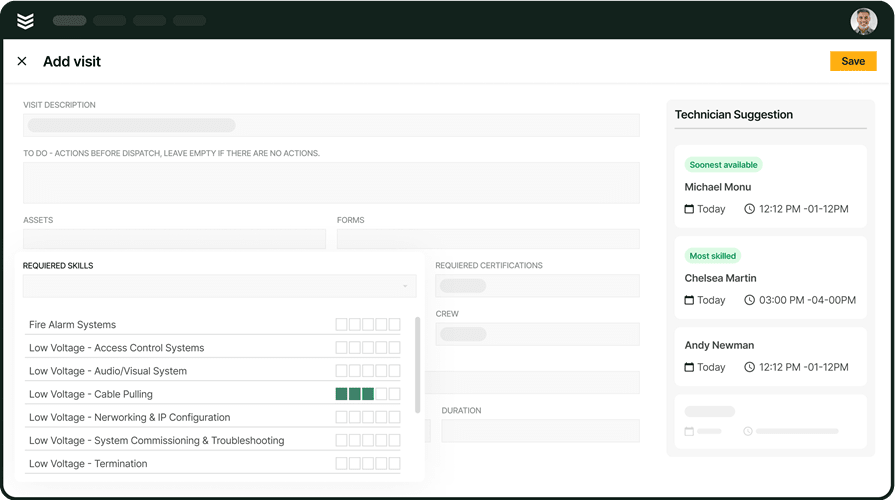
A dedicated smart dispatch software layer, powered by AI, optimizes real-time job assignments based on technician skill, availability, and location, while predictive algorithms handle real-time reassignments and queue prioritization to maximize efficiency. A strong scheduling platform integrates this intelligence for seamless operations.
3. Technician mobile app & AI field access
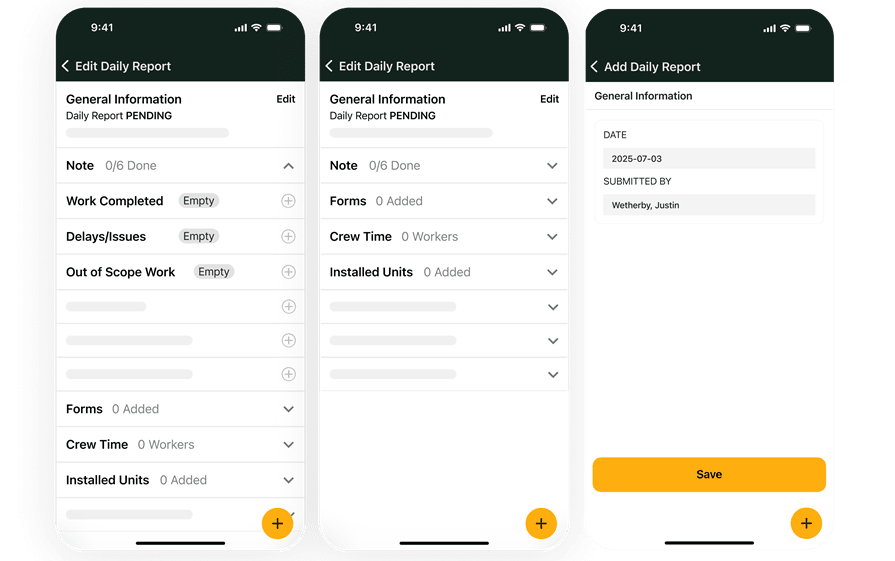
The technician mobile app uses generative AI to instantly clean up and structure talk-to-text field notes, putting essential job details, service records, and documentation on a phone or tablet. This cuts documentation time while ensuring high-quality, searchable data.
4. AI-assisted Invoicing & payments
An integrated invoicing system is enhanced when AI can scan purchase orders, auto-populate invoice line items, and write professional summaries from a tech's field notes. This process, combined with a connected payments module, drastically shrinks billing cycles and reduces disputes by ensuring accuracy.
5. AI-driven Service quoting & estimating
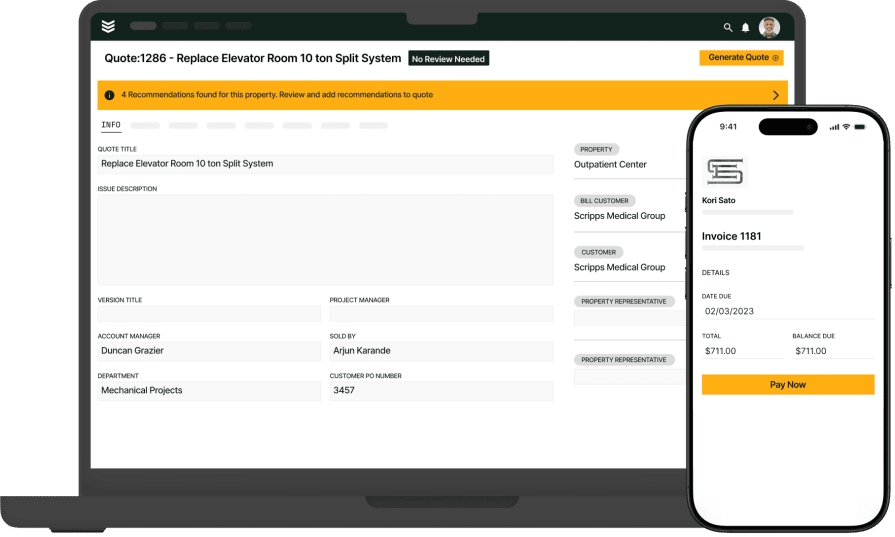
Service quoting software leverages historical job data and predictive pricing models to suggest the optimal price, enabling faster and more accurate estimates. This AI-driven approach significantly improves win rates for both single services and complex multi-site maintenance bids.
6. AI reporting & predictive analytics
A reporting platform utilizes machine learning to track performance, revenue, and customer satisfaction, surfacing crucial business intelligence in customizable dashboards. AI enables predictive analytics to forecast needs and inform smart, data-driven decisions without manual spreadsheet work.
7. AI for service agreements & maintenance contracts
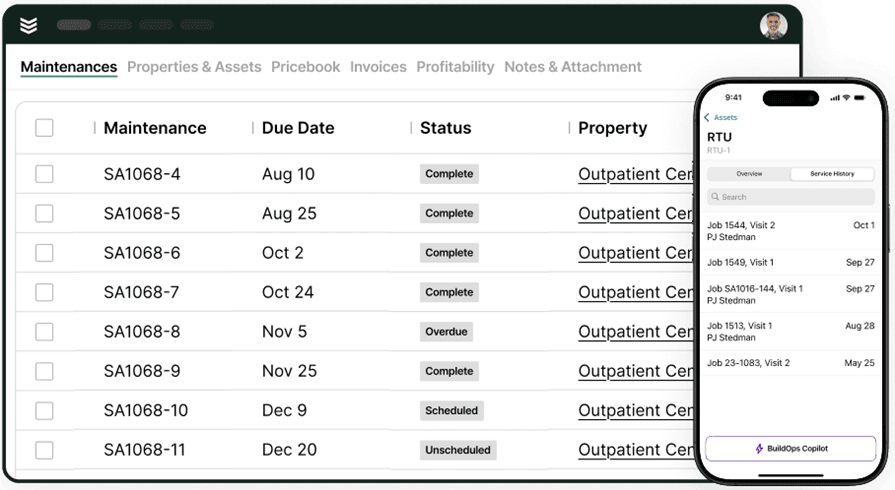
The service agreements feature benefits from AI by automatically scheduling, tracking, and invoicing routine work based on contract terms. This consistency, powered by automation, eliminates missed visits and protects reliable recurring revenue streams.
8. AI route optimization & fleet tracking
A fleet management tool utilizes AI for real-time GPS tracking and dynamic route optimization. This capability helps dispatchers instantly reroute the nearest available truck to urgent calls, leading to lower fuel costs, faster response times, and better SLA compliance across large service territories.
9. AI-powered CRM, pipeline & time tracking
A field service CRM uses AI to track service history, score leads by conversion likelihood, and automate follow-ups. Integrating this with built-in time tracking ensures that AI-derived labor cost data for every job is accurate, closing the loop between sales and efficient operations.
BuildOps OpsAI vs ServiceTitan Atlas vs Procore AI
Knowing what contractor AI features to look for is one thing. Seeing how three major platforms actually deliver on them is another. BuildOps OpsAI, ServiceTitan Atlas, and Procore AI each take a different approach to embedding AI into contractor workflows — and each one targets a different segment of the industry.
Here's a side-by-side snapshot before we dig into the details:
Each platform has carved out a lane. The question is which lane matches your operation. Below, we break down what each one actually does, where it excels, and where it falls short for commercial field service teams.
1. Best for commercial contractors: BuildOps’ OpsAI
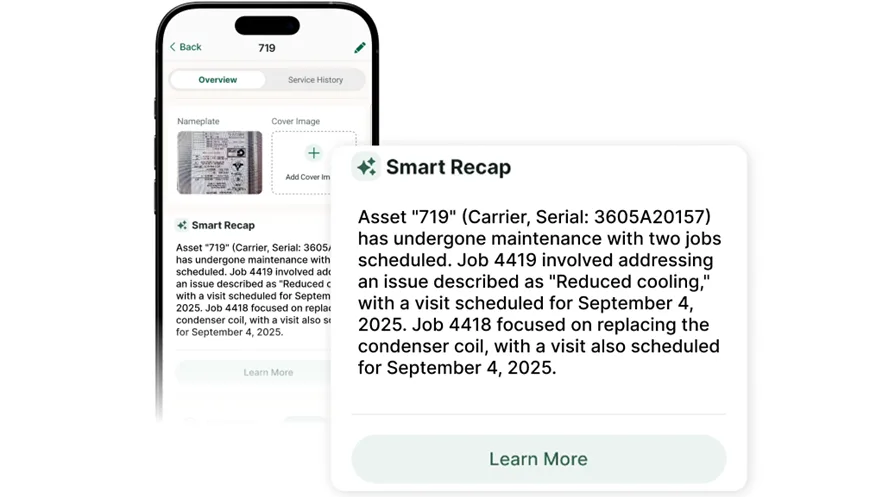
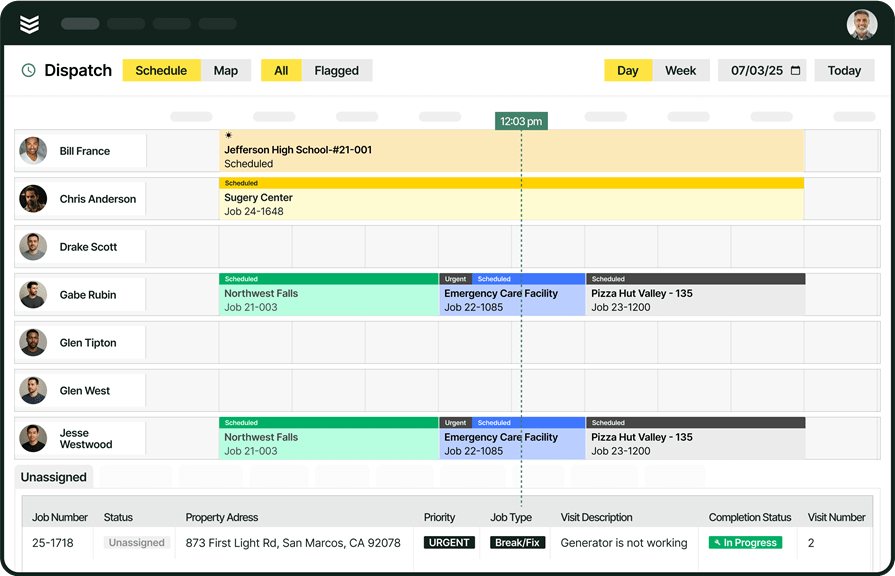
BuildOps built OpsAI directly into its field operations platform, so AI touches every workflow a commercial contractor runs — not one or two features with a chatbot bolted on top. From the dispatch board, OpsAI uses machine learning to recommend the closest qualified tech based on certifications, location, and current workload. On the documentation side, it cleans up talk-to-text field notes, auto-generates invoice summaries from job data, and scans purchase orders to populate line items without manual entry. The result is a platform where AI handles the repetitive overhead that bogs down office staff and field techs alike.
What separates OpsAI from competitors is how deeply it connects across modules. A tech's field notes feed directly into invoicing. Dispatch decisions inform scheduling forecasts. Customer asset hierarchies — tracking every property, unit, and piece of equipment a client owns — give the AI context that generic platforms simply don't have. For commercial contractors managing multi-site service agreements, complex customer hierarchies, and high-volume dispatching, that connected intelligence compounds. It means fewer missed details, faster billing cycles, and dispatchers who spend minutes instead of hours filling the board each morning.
BuildOps also gives contractors full visibility through AI-powered reporting dashboards that surface revenue trends, technician utilization, and job profitability without manual spreadsheet work. Combined with a technician mobile app that puts generative AI in every tech's pocket, the platform closes the loop between field and office in real time.
Key features: AI-powered smart dispatch with tech matching based on skill, proximity, and availability; generative AI documentation that auto-cleans field notes and generates invoice summaries from job data.
Implementation: BuildOps offers guided onboarding with a dedicated implementation team that maps your existing workflows into the platform before go-live.
Rating: 4.4 on Capterra from 177 user reviews
2. Best for residential contractors: ServiceTitan Atlas
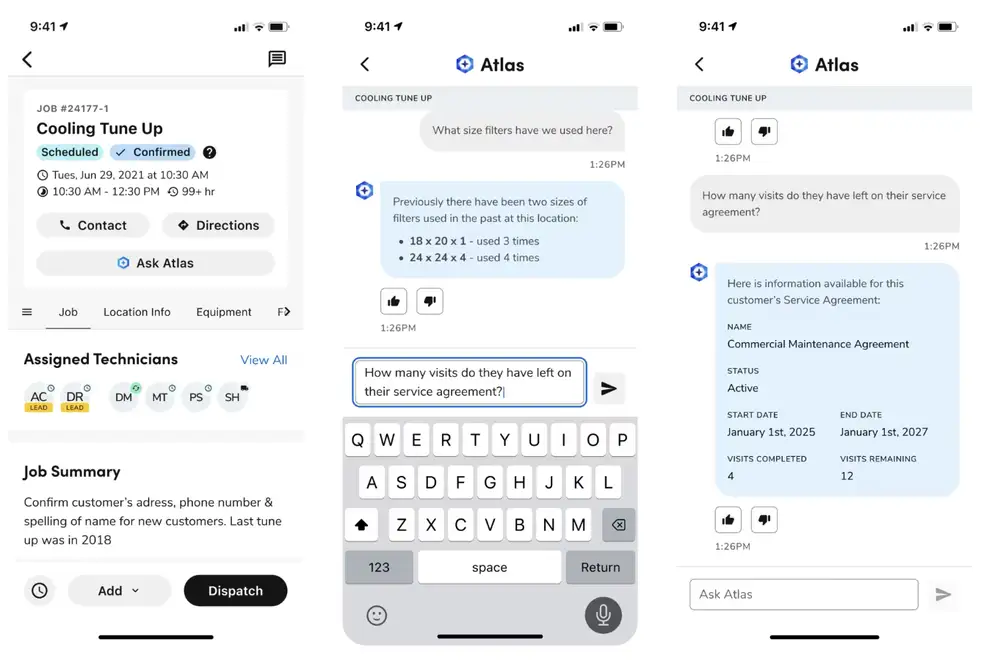

ServiceTitan’s Atlas is the company's AI layer designed to help residential and home-service contractors capture revenue from every customer interaction. Atlas focuses heavily on the front end of the customer lifecycle — analyzing inbound calls in real time, coaching CSRs on booking rates, and surfacing job-costing insights so managers can see which services are most profitable. For high-volume residential shops running hundreds of calls per week, that kind of intelligence can directly impact top-line revenue by reducing missed bookings and identifying upsell opportunities before a tech even arrives on site.
Atlas uses AI for marketing performance tracking, linking ad spend to booked revenue. It also features pricebook intelligence to analyze job margins and suggest rate adjustments, helping contractors keep pricing competitive. These capabilities make Atlas ideal for residential HVAC, plumbing, and electrical companies that need to maximize revenue from every customer interaction.
However, Atlas lacks the workflow depth and focuses on call handling and revenue analytics, but does not extend to dispatching, documentation cleanup, PO scanning, or invoice generation. Commercial contractors dealing with complex service agreements or large tech fleets will find gaps in Atlas, leading to significant manual overhead for office staff in areas like scheduling and asset tracking.
Key features: AI-powered call analytics with real-time CSR coaching; marketing attribution that ties ad spend directly to booked and completed jobs.
Implementation: ServiceTitan typically requires a multi-week onboarding process with platform configuration, data migration, and team training sessions.
Compare ServiceTitan and BuildOps directly to dig in deeper to their tracking features.
3. Best for general contractors: Procore AI
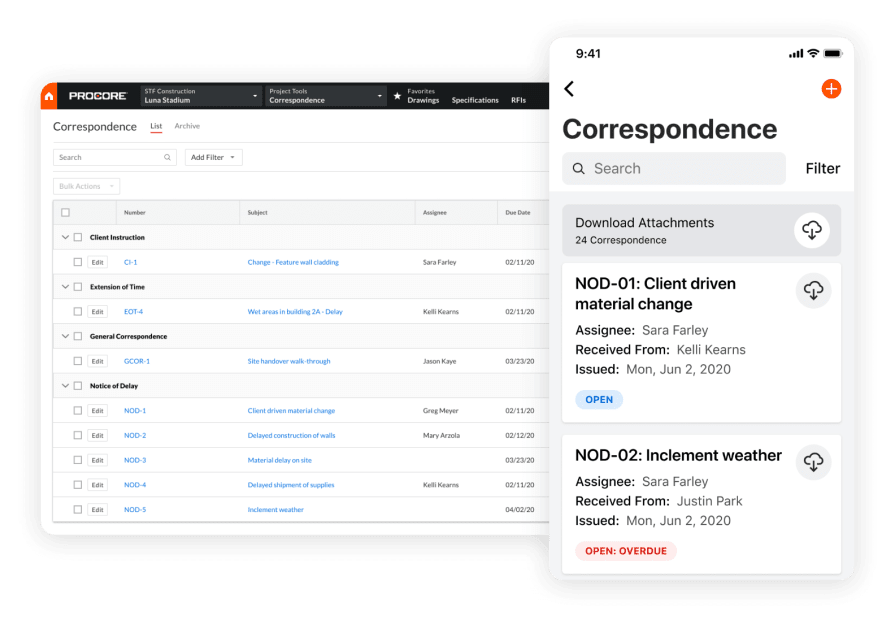
Procore approaches AI from a construction project management angle rather than a daily field service operations perspective. Its AI capabilities center on document intelligence — automatically processing RFIs, submittals, and change orders to flag risks, surface relevant specs, and reduce the manual review burden on project managers. For general contractors and specialty contractors overseeing large-scale construction projects, Procore's AI helps keep complex builds on track by predicting schedule risks and identifying cost overruns before they escalate.
Procore excels at project management—covering bidding, BIM, financials, and resource planning—using AI to analyze portfolio-level trends across multiple job sites.
However, it lacks the field service tools commercial contractors need, such as AI-driven dispatching, documentation cleanup, and real-time tech matching. Procore’s intelligence remains focused on project oversight.
Key features: AI-powered document intelligence for RFIs, submittals, and change orders; predictive project analytics that flag schedule and budget risks across active job sites.
Implementation: Procore's onboarding is typically scoped based on company size, number of active projects, and selected product modules, with implementation timelines varying accordingly.
Rating: 4.5 on Capterra from 2,658 user reviews
{{related-content-block="/resources/ai-for-contractors"}}
How to choose the right AI-powered field service solution for your business
Contractor AI software can improve scheduling, dispatching, invoicing, documentation, customer management, and integrations—but only when AI is built into the full platform, not just a single feature. Use these questions to compare how deeply AI is embedded across each tool.
- AI depth & workflow coverage – Does the software apply AI across multiple workflows, or is it limited to one feature like a chatbot or automated reminders? Can it generate documentation from field notes, optimize dispatching based on certifications and proximity, or surface financial insights from job data?
- Automation & operational control – Does the platform streamline daily operations, or is it just a digital filing system with a new label? Can it automate job assignments, optimize routes, send customer reminders, and track service history with minimal manual work?
- Real-time field-to-office sync – Does the system sync instantly between the office and field? If job details change mid-day, will techs be notified right away? Can managers monitor job progress and technician locations without constant phone calls?
- Scalability across job types & locations – Will the software grow with the business? Can it support more technicians, job sites, and work orders without slowing down? Does it handle multi-location operations, complex service agreements, and emergency dispatches?
- Ease of adoption for office & field teams – Is it easy for both office staff and field techs to use? Can teams create work orders, dispatch jobs, update statuses, and capture signatures without extra steps?
- Integrations & connected systems – Does the software integrate with the tools contractors already use, like accounting, payroll, CRM, and payments? Can data flow between systems without duplicate entry or manual updates?
{{related-content-block="/resources/adopting-field-service-ai"}}
The trades are stretched thin, and that’s not changing anytime soon. OpsAI helps your team get more done without adding headcount or piling on busywork.
Most competitors tack AI onto a few features. BuildOps puts OpsAI across the entire workflow—from dispatch and scheduling to documentation, billing, PO scanning, and tech matching. It’s not just more AI. It’s smarter, more connected, and built for the way commercial contractors actually work.
Want to see how far ahead it is? Book a demo and walk through your day-to-day in BuildOps.